
Five Years On: What Stoic Philosophy Taught Me About My Russian Blue's Empty Urn
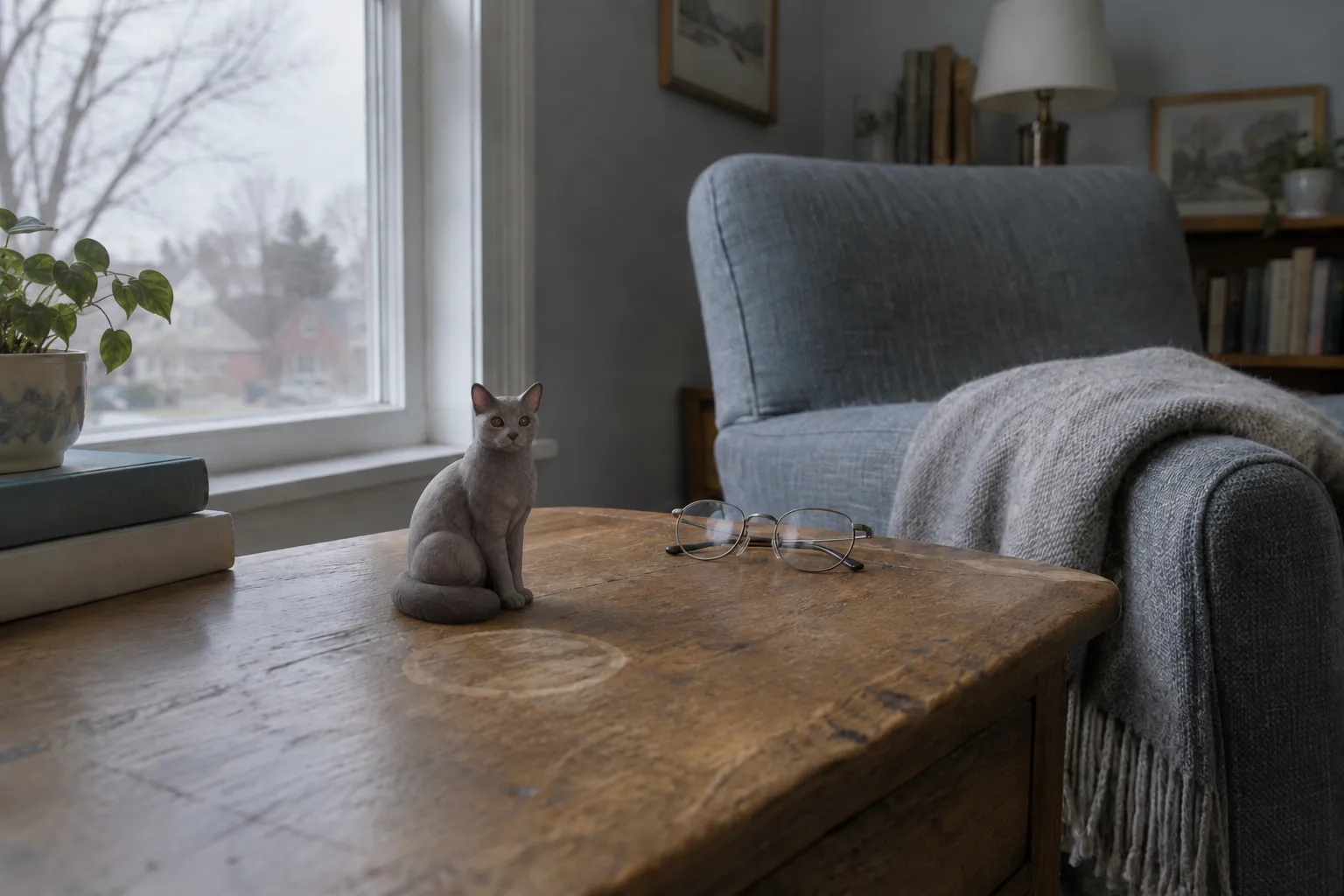
The vet's office had that smell you already know — antiseptic and warm fur and something underneath it that you would recognize anywhere. You held her one last time. Five years later, you still do.
Grieving a Russian Blue cat can stretch across years, and that is not a failure — pet grief has no prescribed timeline and looks different for every person. Stoic philosophy offers one grounding frame: distinguish what you cannot control (the loss) from what you can (how you honor the bond). Memory, ritual, writing, and art can all hold that presence.
Quick Takeaways
- Grief over a pet has no fixed schedule; long-term grief is a normal variation, not a sign something is wrong with you.
- Stoic thinking reframes loss around what remains within your care: your attention, your rituals, your remembering.
- A physical anchor — a photograph, a written record, or a sculpted keepsake — can give a wandering grief somewhere to land.
- Support, remembrance, and creative expression help some people; there is no single correct path.
- If the empty urn still holds weight after years, that weight is a measure of the bond, not a problem to solve.
The Urn That Was Never Really Empty
You call it empty, but you both know that isn't true.
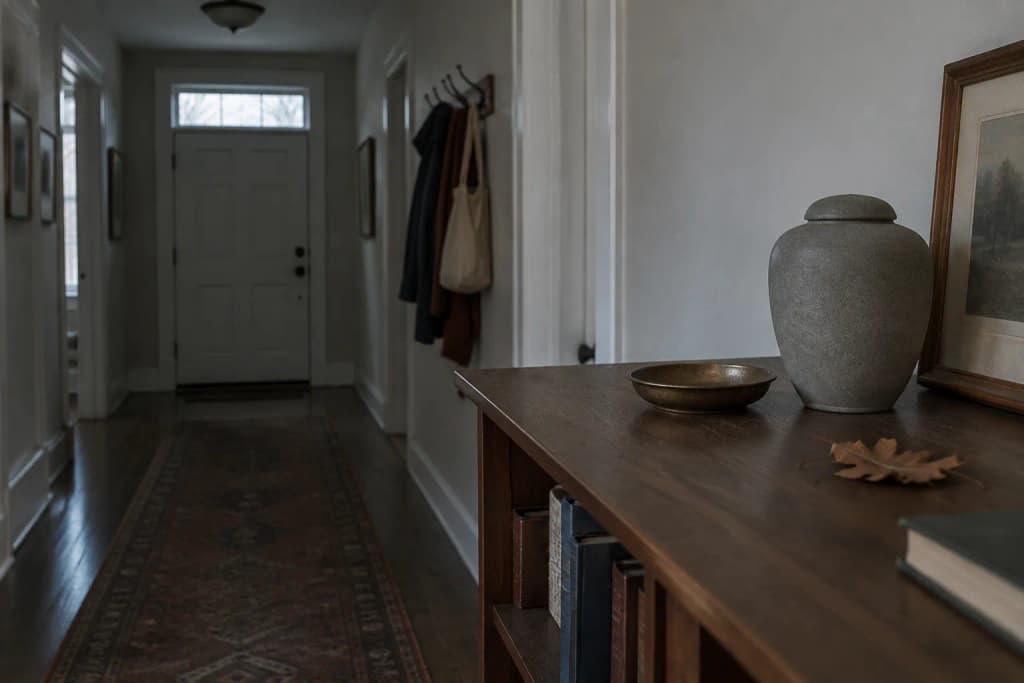
The urn holds what the crematorium returned to you, yes. But the thing you keep circling back to — the thing that made you stop in the hallway this morning — is that it holds a shape she used to fill. A silver-blue coat. A weight against your chest at 3 a.m. A particular way she watched you from across the room with those green eyes, patient, like she had all the time in the world.
She didn't. Neither do we. That is the whole of it, and it is the thing the ancient Stoics kept returning to across their letters and journals: everything you love is on loan.
That sounds cold when you read it fast. It is not meant to be. The Stoics were not trying to talk you out of love. They were trying to help you hold it without being destroyed by its ending. There is a difference, and five years into this, you have probably started to feel where that difference lives.
Grief responses vary between people, and remembrance, writing, and art can support some of them, according to Cornell University's pet loss resources. That's not a prescription. It's permission. Permission to keep grieving on your own clock, and permission to build something that gives the grief a place to rest.
Why Five Years Is Not "Too Long"
Somewhere in the first year, someone probably told you it would pass. Maybe they meant well. Maybe they had never held a cat through her last breath.
Here is what you deserve to hear plainly: pet grief has no prescribed timeline, and it varies between people. That is Cornell's language, and it matters, because you may have spent five years quietly wondering whether your continued grief is a kind of malfunction. It is not. It is the residue of a real relationship.
A Russian Blue is a specific kind of companion. That coat — dense, plush, the color of fog over water — was a thing you touched every day. The smell of her fur after she'd been sleeping in the sun. The way the whole apartment smelled faintly of her even when she wasn't in the room. Scent is stubborn. It outlasts the animal. You can be five years out and catch something in a stranger's home, or on an old blanket you never washed, and be right back in the vet's office with the antiseptic and the warmth and the goodbye.
That is not you failing to move on. That is memory doing exactly what memory does with the people and creatures we bind ourselves to.
The Isolation Nobody Warns You About
There is a particular loneliness in long-term pet grief, and it is worth naming because so few people will name it for you.
The world grants you a window. A few weeks, maybe a season. After that, the condolences stop, and an unspoken expectation settles in: you should be back to normal now. So you learn to keep it quiet. You don't mention that you still talk to her sometimes. You don't say that the urn on the shelf is the first thing you look at and the last. You carry it alone because you've absorbed the idea that carrying it out loud, this many years later, would be strange.
It isn't strange. But the isolation is real, and pretending it away only tightens it.
This is where a small ritual can do more than you'd expect. Not because it fixes anything — nothing fixes this — but because ritual takes something private and gives it a form you can actually hold. Lighting a candle on her day. Keeping her collar somewhere you'll see it. Setting a photograph or a small figure where the light hits it in the morning. These are ways of saying, out loud, in the physical world: this bond happened, and I still honor it.
What Stoicism Actually Says About Losing What You Love
Let's be careful here, because Stoicism gets flattened into "just don't feel things," and that is a betrayal of what the philosophy actually teaches.
The Stoic practice most relevant to you is the dichotomy of control — the discipline of separating what is up to you from what is not. Her death was not up to you. The illness, the timing, the biology of a small body — none of it was in your hands, and no amount of replaying it will move it into your hands. That is the part you release, not because it doesn't hurt, but because gripping it only tears at you.
What remains up to you is everything downstream of the loss. How you remember her. Whether you let the bond become a source of gratitude or only a source of ache. What you build in the sacred space her absence left behind.
There is a second Stoic practice worth sitting with: the deliberate contemplation of impermanence. The Stoics practiced looking directly at the fact that everything they loved would end. Not to become numb, but to become present — to love the thing more precisely because it would not last. When you understand that the mornings with her were always going to be finite, the ones you had become almost unbearably valuable. That valuation doesn't diminish with her death. It survives her. It becomes her legacy in you.
This is the reframe that can turn an empty urn into a full one. The urn does not hold her. You do. The urn is just the marker for the place in you where she still lives.
Giving the Bond a Physical Anchor
Grief that has nowhere to go tends to loop. It circles the same memories, the same guilt, the same last day, because it has no object to rest on except the fact of the absence itself.
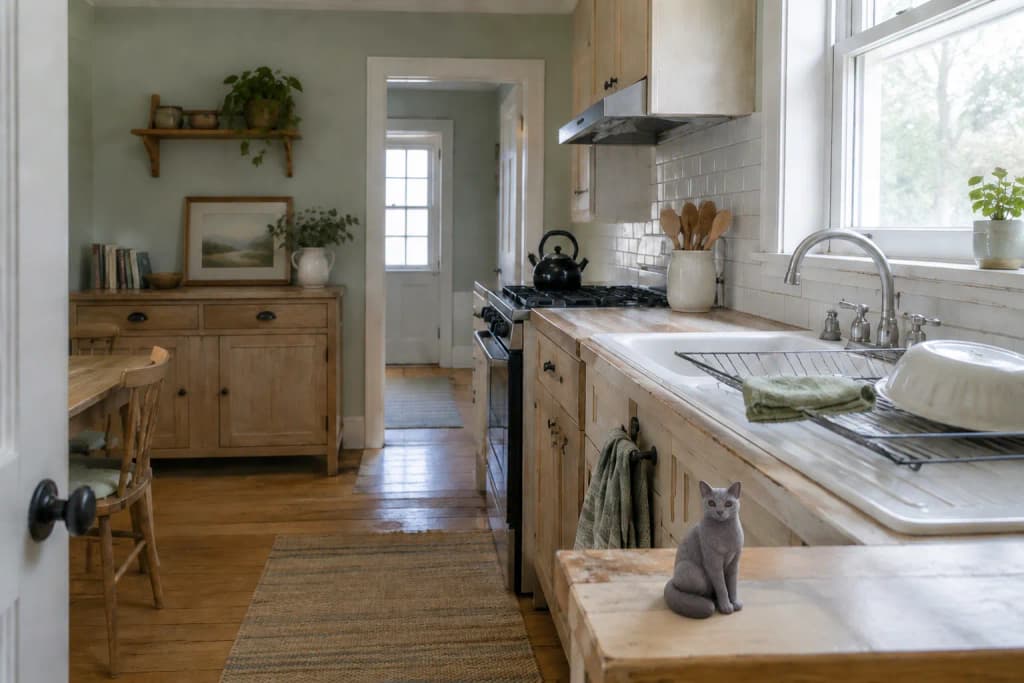
One of the oldest human responses to this is to make something. A gravestone. A written account. A portrait. Cornell names writing and art among the things that can support grief for some people, and there is a reason those two show up together: both take the formless weight inside you and give it edges. Something you can look at. Something you can return to on purpose instead of being ambushed by.
For a lot of people, a photograph is enough, and if it is enough for you, let it be enough. A well-chosen photo on the wall is a legitimate and beautiful anchor.
But photographs flatten. They freeze one angle of one moment. For some people — maybe you — the thing they miss most is not a moment but a presence. The three-dimensional fact of her. The way she occupied space. That is a different kind of absence, and sometimes it asks for a different kind of object.
This is where a small sculpted keepsake enters the conversation, not as a replacement for grief and not as a fix, but as one option among several for people who want the bond to have a form they can hold in their hands.
What a Sculpted Portrait Is — and Isn't
Let's be honest about what this kind of object actually is, because you deserve that honesty more than you deserve a sales pitch.
A custom memorial figurine is an artistic interpretation, not a photocopy of your cat. At PawSculpt, an artist reviews your reference photographs and digitally sculpts a portrait — a considered likeness, a sculpted portrait rather than a photo-exact replica. You confirm that artist preview before anything is printed, which means you are not gambling on how it will turn out. You see it. You shape it. You approve it.
The figures are small — 2.5 to 6 inches — the kind of object that sits on a shelf or a nightstand where the morning light reaches it. The approved model is printed in full color on a Mimaki 3DUJ-553, equipment that supports more than 10 million colors, and finished with a transparent protective coat before a final surface inspection. That coat is meant for a piece kept indoors, on display; it is a keepsake for a shelf, not an outdoor monument.
For a Russian Blue specifically, the thing that matters is that particular coat — the silver-blue that photographs never quite capture right, the calm green gaze. A full-color sculpted portrait is one way to hold that coloring in three dimensions. Whether that is meaningful to you or beside the point is entirely yours to decide.
Building a Ritual Around Remembering
The object, if you choose one, is only part of it. The deeper practice is the ritual you build around remembering — and rituals are yours to design.
Some people set an anniversary. Not a day of collapse, but a day of deliberate attention — a walk, a candle, a few minutes with the photograph or the figure, a conscious turning-toward instead of the usual flinching-away. The Stoics would recognize this: it is the practice of contemplating impermanence on purpose, in a container you control, rather than letting it ambush you in the grocery store.
Some people write. A letter to her. A list of the specific things — the way she'd knead the blanket, the particular smell of her after a nap, the sound of her landing on the floor from the windowsill. Writing forces specificity, and specificity is a kind of resurrection. The details you write down are the details you keep.
Some people build a small sacred space. A shelf. The urn, a photograph, maybe a custom sculpture that holds her form, the collar, a candle. Not a shrine to sadness — a place where the bond is visible and honored, so it doesn't have to live only in the ache.
None of these is required. All of them are permission.
Counter-Point: When a Keepsake Might Not Be What You Need
Here is where intellectual honesty demands a pause, because everything above could read as though the answer is obviously to make an object. It isn't always.
For some people, a physical keepsake becomes a way to avoid the grief rather than move through it. If you find yourself hoping an object will make the feeling stop — will finally close the wound so you don't have to feel it anymore — an object will disappoint you. Nothing external closes that wound, and a beautiful figure on a shelf that you're using to skip the actual grieving may leave you more frustrated, not less.
There is also a Stoic caution worth taking seriously. The philosophy warns against over-attaching to externals — against locating your peace in things outside your control, including physical objects. A keepsake held loosely, as a marker of a bond, is one thing. A keepsake gripped as the container of your peace is another. The Stoics would gently point you back inward: the memory lives in you, and no object is required to make it real.
And practically: grief that stays sharp for years, that interferes with your ability to function or find any light, is worth bringing to a person trained to help. Cornell notes that professional resources exist and help some people. A figurine is a keepsake. It is not care, and it is not a substitute for it. If you need the second thing, please seek the second thing.
So hold the idea of an object lightly. It is one path among photographs, writing, ritual, community, and support — not the destination.
The Presence That Outlasts the Coat
Five years on, the thing you may be arriving at is quieter than the grief that started this.
The Stoics believed that what we love shapes us permanently — that a person or a creature who truly enters our life becomes part of the way we see and move through the world. In that sense, she is not in the urn and never was. She is in the way you learned to be gentle. In the specific patience you learned watching her watch you. In the person you became because she was, for a while, yours.
That is the legacy. Not the ashes. Not even the figurine, if you choose one. The change she left in you, which no death can retrieve.
The empty urn was never really the point. The full life it marks is.
Frequently Asked Questions
Is it normal to still grieve my cat five years later?
Yes. Pet grief has no prescribed timeline and varies between people, according to Cornell's pet loss resources. Long-term grief is a normal variation, not a sign something is wrong with you.
How does Stoicism help with pet loss?
Stoicism separates what you cannot control, like the loss itself, from what you can, like how you remember and honor the bond. It also treats deliberately contemplating impermanence as a way to value the time you had rather than only mourn its ending.
Can a memorial keepsake actually help with grief?
For some people, yes. Cornell notes that writing and art can support grief. A keepsake can give a wandering grief a place to rest — though it is not a fix and never a substitute for professional support.
Is a PawSculpt figurine an exact copy of my cat?
No. It is a sculpted portrait, an artistic interpretation created from your reference photographs, not a photo-exact replica. You confirm the artist preview before anything is printed.
How big are the memorial figurines and how are they finished?
They range from 2.5 to 6 inches, are printed in full color on a Mimaki 3DUJ-553, and finished with a transparent protective coat for indoor shelf display before a final surface inspection.
What if a keepsake isn't the right choice for me?
That is completely valid. A photograph, a written record, ritual, or community may serve you better. And grief that stays severe for years is worth bringing to a trained professional — a keepsake is a marker, not care.
If You Want to Give the Bond a Form
If, after all of this, you find that you want something you can hold — a small three-dimensional marker for the presence that still lives in you — that is a thoughtful choice to make slowly, not a wound to patch quickly.
PawSculpt creates custom full-color memorial figurines as sculpted portraits from your reference photos. An artist reviews your photographs and digitally sculpts the piece; you confirm the preview before it's printed, with the first preview typically delivered within seven days after complete references, and five revisions included so the likeness feels right to you. There's no separate shipping fee at checkout for worldwide delivery, though international customers remain responsible for any local customs duties or import fees.
Take your time. The bond isn't going anywhere — that's rather the point.