
The Shock of Sudden Loss: How Creative Expression Saved My First Pet's Memory
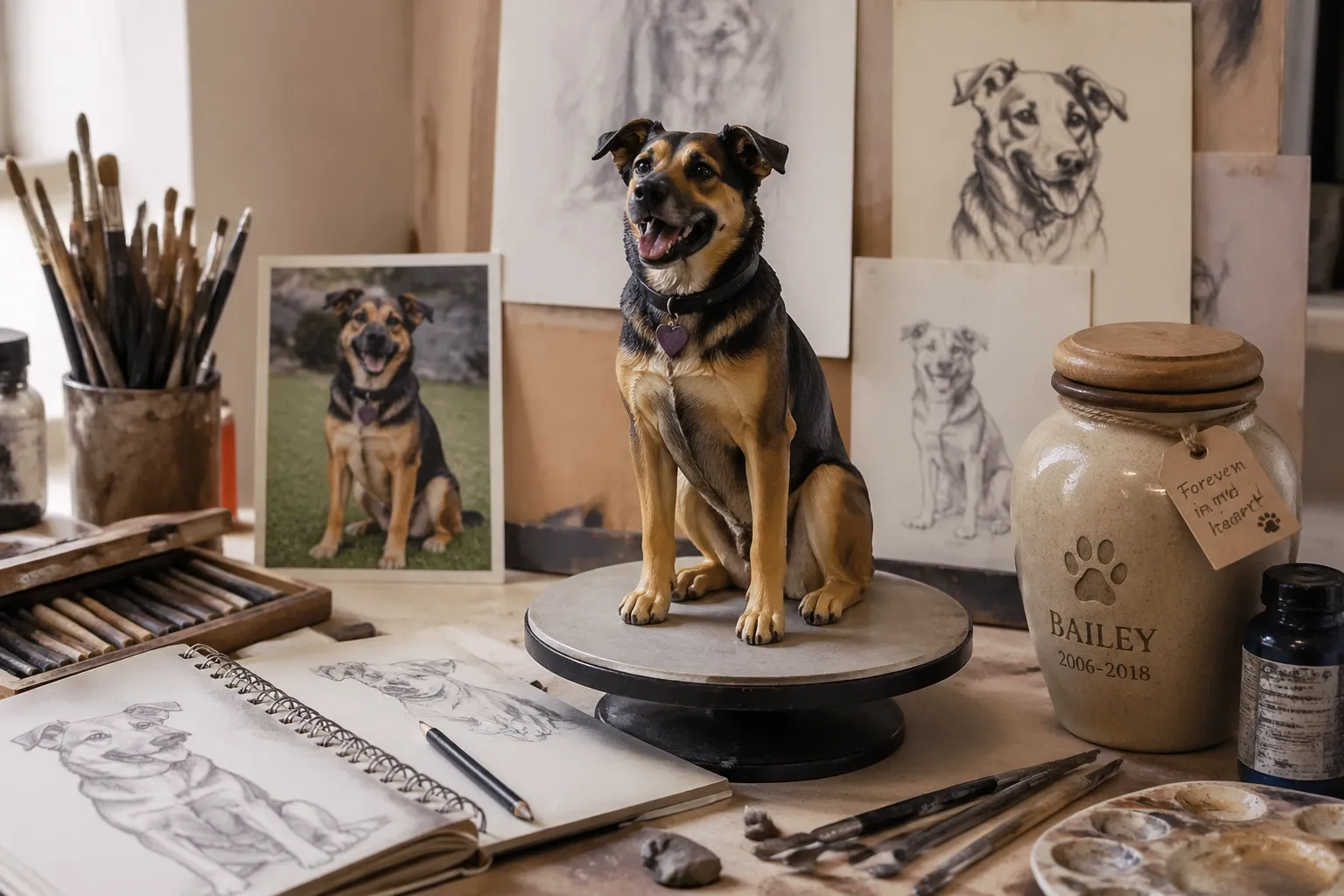
The cereal bowl knocks the counter, and for one second after first pet loss, your eyes still go to the kitchen corner where the water dish used to catch the morning light.
Quick Takeaways
- Treat shock like disorientation, not denial — reduce decisions for 72 hours and protect routines.
- Use creative expression early — sketch, map rooms, or record habits before memory edits details.
- Choose one tangible memorial anchor — it helps the mind locate love in physical space.
- If you want a lasting visual keepsake, explore custom pet figurines — they preserve markings and posture with unusual specificity.
Why the first pet loss feels spatial, not just emotional
Most articles about pet grief talk about sadness as an internal experience. Worth noting: the first real shock often arrives as a spatial problem. The house changes shape.
A hallway feels longer because no one meets you halfway. A chair becomes strangely formal because it no longer has fur on the cushion. The kitchen corner where the food bin sat starts looking overexposed, like a stage after the actors leave. That is not you being dramatic. It is your brain trying to reconcile attachment memory with altered space.
We’ve seen this pattern again and again working with grieving pet families. People rarely say, “I miss him in the abstract.” They say, “I still step around her spot by the stove.” Or, “I can’t look at the rug near the back door.” The standout insight here is simple: after a first pet loss, grief often lives in rooms before it turns into words.
That matters because the advice you follow should match the kind of pain you’re actually having. If your grief is showing up as a house full of invisible habits, generic journaling prompts may not be enough. What helps more is creative expression tied to place, routine, and physical objects.
The shock and denial stage is often a body-in-space experience
“Shock and denial” can sound clinical, almost cold. But in real homes, it looks like this: opening a cabinet for treats before remembering there is no reason to. Pausing near the leash hook. Hearing the refrigerator hum and waiting for paws that don’t come.
One customer told us she kept leaving six inches of room beside her at the kitchen island. No one had asked her to do that. Her body did it automatically. That’s the kind of detail people don’t always admit because it sounds small. It isn’t small. It’s a map of love.
And yes, many pet owners feel fear of forgetting almost immediately—sometimes within the first 24 hours. Not the big facts. The tiny ones. The exact tilt of the ears while waiting for breakfast. The route from sofa to hallway. The way your pet occupied distance.
"The first shock of grief is often architectural—the house no longer agrees with your memory."
A commonly overlooked truth: memory edits fast
Here’s the counterintuitive part. We tend to think grief sharpens memory forever. In practice, memory often starts simplifying quickly, especially after sudden loss.
Within days, many people can remember the idea of their pet better than the exact details. The coat pattern becomes more generic. The stance gets blurrier. The shape of the muzzle softens into a category. That’s one reason creative expression helps so much: it captures specifics before the mind starts tidying them into symbolism.
This is especially important after sudden loss, where there was no long anticipatory period to observe, photograph, or mentally rehearse goodbye. The emotional impact is obvious. The practical consequence is less discussed: you may have fewer organized memories than someone who had months to prepare.
What we recommend in the first 72 hours
We’re selective about advice here because the internet tends to throw 27 coping tips at grieving people. Honestly, that’s too many. Our top recommendations for the first three days are these:
- Do one room-walk each day.
- Write down five physical specifics.
- Photograph the empty places.
- Delay major object decisions for a week if possible.
The mistake most people make is trying to “be strong” by making the house look normal immediately. What actually helps more than instant tidying is controlled, intentional transition. Your nervous system needs that.
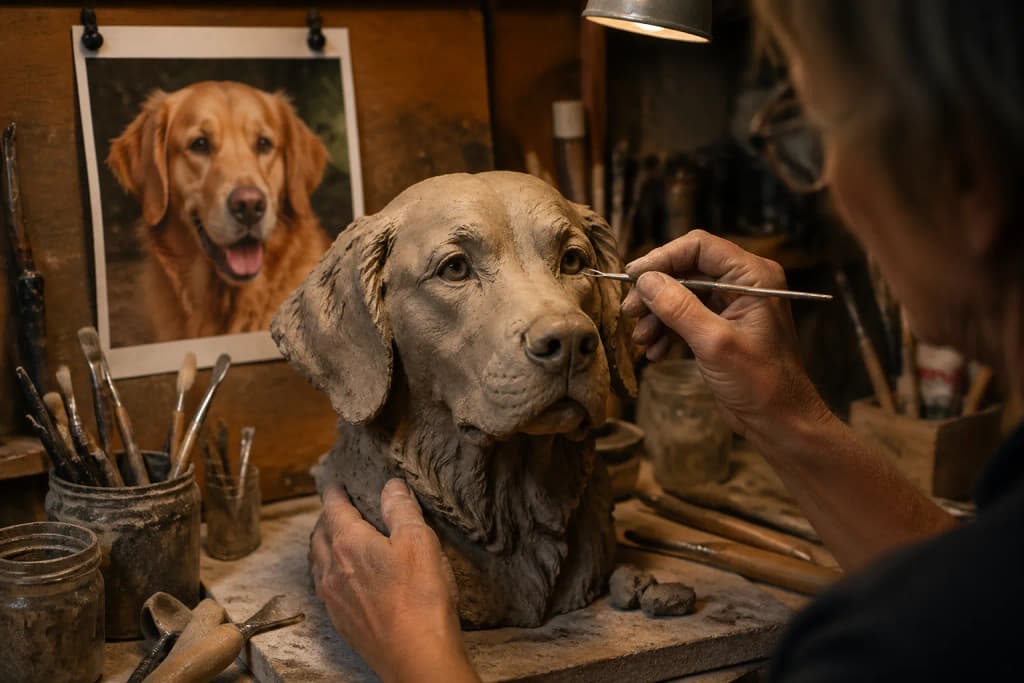
Creative expression grief: why making something works when talking doesn’t
People often assume creative expression grief means making polished art. We disagree. The best version is usually low-stakes, almost documentary. Think record-keeping with heart.
We’ve worked with families who made shadow boxes, voice-note archives, porch garden markers, digital slideshows, clay paw impressions, and memory shelves. But the ones that seemed to support healing most consistently had one trait in common: they captured specificity, not just sentiment.
That distinction matters.
A generic memorial says, “I loved my pet.” A strong memorial says, “She slept under the left window and hated the vacuum but tolerated thunderstorms if touched between the shoulders.” The second kind does more for the grieving brain because it preserves a relationship, not just an emotion.
Why creative work can reduce the panic of forgetting
The first pet often occupies a developmental role in our lives. They may have been there during college, the first apartment, early marriage, a move across states, the lonely years, the becoming-an-adult years. So their death can destabilize not just your present, but your personal timeline.
Creative expression interrupts that collapse.
A family we remember clearly made a “house map” after losing their senior dog without warning. On a page, they drew the kitchen mat, the hallway corner, the patio door, the bedroom threshold. Then they filled each location with one behavior. It sounds almost too simple. But it gave them relief because the dog’s life was no longer dissolving into one giant ache.
That’s the overlooked part: creativity organizes grief by giving memory somewhere to live.
The best forms of creative expression after sudden loss
Not all memorial activities are equally helpful in the early phase. Here are our top picks, ranked for emotional usefulness after sudden loss:
| Creative practice | Best for | Time needed | Why it helps |
|---|---|---|---|
| Room map memory sketch | Shock and disorientation | 15-20 minutes | Restores spatial memory and routine patterns |
| Voice-note recollections | People who can’t write yet | 5 minutes each | Captures details before memory edits them |
| Photo curation by behavior | Fear of forgetting personality | 30-60 minutes | Sorts memories into lived habits, not dates |
| Memory shelf with one object | Overwhelm from too many belongings | 10 minutes | Creates one clear focal point for grief |
| Custom figurine or portrait planning | Need for long-term tangible anchor | 20-40 minutes | Translates memory into a stable physical form |
The standout here is the room map memory sketch. It sounds unglamorous. It is also one of the most effective exercises we know for the shock phase because it works with how grief actually enters the home.
A brief but important note on guilt
Many pet owners feel guilty about what they did or didn’t do in the final day. And with sudden loss, guilt often attaches to absurdly specific details: the delayed appointment, the work call you took, the time you thought they were “just tired,” the fact that you were annoyed one hour before everything changed.
This is more common than people say.
One family told us the mother couldn’t stop replaying the morning because she had stepped over the dog bed while carrying groceries and said, “Move, buddy,” in a rushed tone. That sentence haunted her far more than the actual medical facts. Why? Because grief looks for a moment it can control.
Here is the comfort, and we mean this plainly: guilt is often the mind’s attempt to rewrite powerlessness into responsibility. If you keep circling one tiny interaction, it does not prove you failed. It often proves you loved deeply enough to wish you’d had control you never truly had.
If guilt is severe, persistent, or tied to traumatic circumstances, support from a pet-loss counselor can make a real difference. The Association for Pet Loss and Bereavement is a credible place to start.
"Grief keeps asking for a different ending. Creative expression gives that energy somewhere kinder to go."
Personal Aside
We’ll be real: our team is not especially impressed by memorial advice that treats grief like a tidy staircase. In actual homes, people don’t move neatly from denial to acceptance. They circle the same doorway ten times. They keep the collar in a drawer, then take it out, then put it back. That messiness is not failure. It’s evidence that love had a physical address.
The memorial options that actually help after first pet loss
There are dozens of memorial ideas online. Most are presented as equal. They aren’t. Our editorial view: the best memorials after a first pet loss do three jobs at once.
They should:
- Preserve details
- Create a repeatable ritual
- Fit the real scale of your grief
If a memorial is beautiful but impossible to engage with, it won’t help much. If it’s easy but too vague, it may not satisfy the fear of forgetting. And if it demands too many decisions too early, it can backfire.
Our ranking criteria
Here’s what we look for when evaluating memorial options for grieving pet families:
- Specificity — Does it capture your pet’s actual appearance or habits?
- Accessibility — Can you use or visit it without emotional exhaustion?
- Longevity — Will it still matter six months from now?
- Spatial fit — Does it belong naturally somewhere in the home?
- Emotional regulation — Does it ground you rather than flood you?
That last one is huge. A memorial should not only trigger tears. It should also offer containment—a place where emotion can land.
Comparing memorial options with real-world usefulness
Not every option suits every household. Here’s the practical view.
| Memorial option | Specificity | Effort level | Best placement | Emotional effect |
|---|---|---|---|---|
| Framed photo | Medium | Low | Hallway, desk, bedroom | Familiar, accessible |
| Paw print impression | High for one feature | Low-Medium | Shelf, keepsake box | Tactile, intimate |
| Memorial garden | Low-Medium | Medium-High | Yard, patio | Ritual-based, seasonal |
| Ashes container memorial | Medium | Low | Private shelf or niche | Anchoring, solemn |
| Custom figurine | High | Medium | Entry table, office, mantel | Detailed, relational |
| Photo book by routine | High | Medium | Coffee table, bedside | Narrative, shareable |
Our top pick for many families is a combination, not a single object: one private memorial and one visible memorial. For example, an ashes container memorial in a quieter room and a more expressive visual keepsake in a shared living area.
That pairing works because grief has two modes. One is contemplative. The other is relational. You need a place for both.
The overlooked issue with ashes container memorials
Let’s talk about something many people feel but don’t say: receiving ashes can be both comforting and deeply disorienting.
An ashes container memorial is meaningful because it creates a physical center. But it can also intensify a surreal feeling—especially after sudden loss—because the container is final in a way your mind may not yet accept. Some people expect instant comfort and instead feel distance. That is normal.
The mistake most people make is placing the ashes in the “most honorable” spot right away, then avoiding that area because it feels too intense. Our advice is more practical:
- Choose a location with emotional tolerability, not symbolic perfection
- Avoid high-traffic chaos for the first few weeks
- Add one softening element nearby: a framed photo, candle, small textile, or written note
- Reassess placement after 2-4 weeks
A family we worked with moved their dog’s ashes three times. First the living room mantel (too exposed). Then a bedroom dresser (too intimate). The final spot was a hallway console near a sunny window—somewhere they could pass, pause, and continue. That middle distance turned out to be exactly right.
Why tangible memorials often outperform digital ones
We like digital archives. They’re practical. But for acute grief, they have a weakness: they live behind a screen, mixed in with grocery apps, work emails, and vacation photos. They do not alter a room.
A tangible memorial does.
This is where physical keepsakes—figurines, framed prints, urn displays, paw casts—can do something a folder of images cannot. They occupy shared space. They signal, without explanation, that someone mattered here.
And increasingly, families are choosing detailed objects that preserve markings, posture, and expression with unusual fidelity. At PawSculpt, we’ve seen how a 3D pet sculpture can become that kind of anchor. Not because it replaces the pet (nothing does), but because it gives memory a precise form. The color, patterning, and stance remain available to the eye.
For readers who are evaluating options, the notable difference is process. PawSculpt figurines are digitally sculpted by master 3D artists, then precision 3D printed in full color. The hues and markings are reproduced directly in full-color resin, not added later as a surface layer. A protective clear coat is applied at the end, which gives sheen and durability while preserving the authentic fine texture of the print.
That specificity matters after sudden loss because vague memorials can leave people unsatisfied. You’re not trying to memorialize “a dog.” You’re trying to hold onto your dog’s exact face in the hallway light.
Shock and denial after sudden loss: what actually helps in the first month
A lot of grief advice becomes less useful because it ignores time windows. What helps on day two is not always what helps in week three. So let’s break the first month into stages that are actually recognizable.
Days 1-3: reduce decisions, increase gentle structure
In our experience, the first 72 hours after sudden loss are characterized by cognitive scatter. You lose track of basic tasks. Messages blur together. Small choices feel weirdly heavy.
This is not the time to redesign your coping strategy. It is the time to reduce friction.
Here’s our best-of list for the first three days:
- Use one note on your phone for all memorial decisions
- Eat in a different spot once daily if the usual feeding area feels too charged
- Ask one trusted person to field updates
- Set a 10-minute window to touch belongings, then stop
- Avoid late-night sorting
Why these? Because in acute shock, the brain struggles with unstructured exposure. Short, bounded contact usually works better than marathon grieving sessions.
A commonly overlooked aspect: nighttime intensifies pet grief because routines were often physically close—bedtime, last potty trip, couch contact, hallway checks. Plan for that. Don’t leave evenings empty if you can help it.
Week 1: create one “memory container”
By days 4-7, many people feel pressure to “do something meaningful.” Our top advice is not to do everything. Pick one memory container.
This can be:
- a box with collar, tag, and note
- a shelf with one framed image and candle
- a digital album sorted by rituals
- a figurine order folder with selected photos
- a journal dedicated only to pet memories
One order that stuck with us came from a man who lost the cat he’d had since graduate school. He couldn’t bear a whole room memorial. Too much. So he made one cabinet shelf into a small archive: food scoop, tag, printed photo, vet sympathy card. That narrow physical boundary helped more than a large tribute would have.
Because grief often needs containment before expansion.
"The memorial that helps most is the one you can return to without bracing."
— The PawSculpt Team
Weeks 2-3: expect emotional contradictions
This is the phase people find confusing. The administrative tasks may be done. Messages slow down. The house starts functioning again. And then, often, the harder emotions emerge.
Many pet owners feel relief mixed with grief after a difficult illness or traumatic final stretch. Let’s name that directly. If part of you feels relieved that medications, accidents, pacing, seizures, or constant vigilance have ended, that does not make your love smaller. It means your nervous system has stopped living in emergency mode.
This is more common than you might think.
We’ve heard from owners who said the first uninterrupted night of sleep made them cry harder than the funeral arrangements did. Not because they were forgetting. Because relief can expose how exhausted they were.
- Write two columns: “What I miss” and “What was hard.”
- Fill each with at least five specifics.
- Read both lists without forcing them to agree.
This matters because grief is not a courtroom. You do not need to prove pure sorrow to demonstrate love.
Weeks 3-4: decide what kind of remembrance you need next
By the end of the first month, the question changes. Not “How do I survive today?” but “What shape should this bond take now?”
This is where families often benefit from choosing among three memorial functions:
| What you need | Best memorial type | Why it works |
|---|---|---|
| A private place to grieve | Ashes container memorial, memory box | Offers quiet, protected access |
| A visual reminder in daily life | Framed photo, figurine, shelf display | Keeps connection integrated into home |
| A narrative record | Album, journal, video montage | Preserves chronology and personality |
The standout point: choose by function, not trend. A memorial garden may be lovely, but if you live in a small apartment and need something near your work desk, it is the wrong tool. A photo album may be beautiful, but if looking at screens makes you spiral, a physical object may be better.
And if you’re considering a visual keepsake, this is often the stage when families start gathering the right images for a detailed piece. For anyone exploring memorial keepsakes, use photos that show:
- natural daylight rather than harsh flash
- at least one front-facing image
- one side profile
- one full-body pose that feels characteristically “them”
- close-ups of distinctive markings
We’re not huge fans of heavily filtered images for this purpose. The more true-to-life the source material, the better the final remembrance usually feels.
How to use creative expression to preserve details before memory fades
This is the heart of the article, really. Not because creativity erases grief. It doesn’t. But because it can save the parts of memory that tend to vanish first.
Most people preserve milestones. Far fewer preserve micro-habits. Yet micro-habits are often what we miss most.
Not “the camping trip.” The pause before jumping onto the sofa. The way your pet stood half in the kitchen, half in the hallway as if unwilling to commit to either room. The exact angle of waiting by the treat drawer.
The four memory categories worth capturing now
We suggest documenting your pet in four categories. This gives a fuller record than a random photo dump.
1. Appearance details
Write down:
- coat patterns and asymmetries
- ear shape
- paw size
- nose color changes
- fur texture in specific places
This helps because visual memory compresses fast.
2. Spatial habits
Write down:
- favorite corners
- preferred distances from people
- sleeping positions by room
- route through the house
- where your pet waited during meals
This category is often missing from memorials, and honestly, it should not be. Space was part of their personality.
3. Sound and timing
Record:
- tags jingling at certain speeds
- meow or bark differences
- staircase rhythm
- bedtime noises
- feeding-time routines
Even a 20-second voice memo can become precious later.
4. Social quirks
Note:
- who they followed
- who they ignored
- greeting rituals
- tolerated annoyances
- odd loyalties and preferences
That’s the relational blueprint.
A practical creative ritual we strongly recommend
If you want one structured activity, do this over three evenings:
Night 1: The House List
Walk room to room and write one memory per space.
Night 2: The Body List
Write ten physical details from nose to tail.
Night 3: The Routine List
Write the day from your pet’s perspective: wake-up, meals, patrols, naps, waits, bedtime.
By the end, you’ll have something far more useful than a vague grief journal. You’ll have a relational record.
A customer once turned those three lists into the reference packet for a custom memorial object. The result mattered to her because it reflected behavior, not just appearance. And that is often the difference between a keepsake that is merely nice and one that feels accurate.
Why accuracy matters more than perfection
We need to say this because memorial culture can get oddly polished. You do not need a perfect tribute. You need an honest one.
That may mean including the silly details:
- the chewed baseboard corner
- the chair no one else was allowed to use
- the side-eye during vacuuming
- the dramatic flop exactly in the middle of the walkway
These details can feel too mundane to “count.” But they are often the core of memory.
"You do not heal by making memory prettier. You heal by making it more exact."
One tangible option for people afraid of forgetting the face
For many readers, the deepest fear is visual erosion—forgetting the face accurately. That fear is especially common after sudden loss because there was no gradual transition into memorial planning.
A high-detail figurine can be a meaningful option here, provided you choose one that values realism over generic cuteness. At PawSculpt, families often come to us because they want a keepsake that captures unique markings, posture, and expression rather than a broad breed type. The figures are hand-modeled digitally with care, then brought to life through full-color 3D printing, with color printed directly into the resin itself. The final protective clear coat helps preserve the vivid finish and authentic surface detail.
That process is worth noting for one reason: after grief, people tend to respond strongly to specific visual recognition. The white blaze in the right place. The amber eye tone. The little asymmetry in the ears. Those details can create the sudden, stabilizing reaction of “yes, that’s them.”
If that appeals to you, gather your clearest images and compare memorial styles before deciding. A figurine is not the only good choice. But for some families, it becomes the standout one because it occupies real space and maintains form from every angle.
For broader support around mourning and companion-animal loss, the AVMA’s pet loss resources are also worth bookmarking.
What we’ve learned from pet families: the hidden emotions no one says first
Here’s the section we wish more grief articles included. Not because it is dramatic, but because it is true.
People often bring us their memorial plans only after wrestling with emotions they think are abnormal. They are not abnormal. They are common, if rarely spoken aloud.
Shame about grief intensity
A first pet can destabilize people in a way that surprises them. Especially adults who have managed major life events competently. They think, “Why am I undone by this?”
Because this bond lived in repetition, not ceremony. Daily care creates attachment through accumulation. Meals, doors, walks, medication, waiting, watching, sleeping nearby. Remove that, and the emptiness appears dozens of times per day.
One customer—a physician, very composed—apologized repeatedly for crying during a design conversation. She said she felt ridiculous because she had “handled human losses better.” We told her the same thing we’ll tell you: grief intensity is not a ranking system. It reflects proximity, routine, and dependence patterns as much as it reflects love.
Feeling judged by others
This one is more widespread than most people realize. Maybe a coworker expects you back to normal in two days. Maybe a relative says, “You can always get another one.” Maybe your social circle doesn’t understand why the house feels unusable.
That sense of being judged can push people into hidden grieving, which usually makes the experience harder.
Our recommendation is practical. Prepare one sentence you can use without explaining everything:
- “I’m having a real grief response, and I need a little more time.”
- “This loss affected my daily life more than most people realize.”
- “I’m okay discussing logistics, but not giving a summary right now.”
You do not owe a polished defense of your attachment.
Second-guessing euthanasia timing
For families who did have to make that decision, second-guessing euthanasia timing is one of the most painful loops. Too soon? Too late? One more day? One less day? This mental replay can become relentless.
We are not veterinarians, so medical decisions belong with your care team. But emotionally, we can say this with confidence: people who loved deeply almost always imagine an alternative timeline. That’s part of the burden of being the decision-maker.
A family we worked with kept returning to one sentence: “He still wagged his tail that morning.” They treated it like evidence against themselves. But a tail wag does not cancel suffering. Brief brightness and declining health often coexist. That contradiction is exactly what makes timing so difficult.
If you are caught here, write down:
- what your pet was still able to enjoy
- what had become consistently hard
- what your veterinarian emphasized
- what your pet no longer had access to in daily comfort
You are not building a legal defense. You are restoring context.
Anxiety about getting another pet
This tends to appear earlier than people expect. Sometimes within weeks. And it comes with weird emotions: longing, guilt, even panic.
The common fear is, “If I consider another pet, am I replacing my first one?” No. But we will add a nuance most articles miss: the first new pet often threatens the architecture of memory, not the love itself. People worry the new routines will overwrite the old ones.
That is why a stable memorial matters. If you have one designated place—a shelf, ashes container memorial, photo wall, or figurine—memory does not have to fight for territory. It already has a location.
That makes moving forward less frightening.
Choosing a memorial that supports healing, not just display
By now, you may know you want something tangible. The next question is how to choose well.
We’d rank memorial selection with the same seriousness people use for interior objects they live with every day—because that’s what this becomes. Not a one-time purchase. A recurring point of contact.
Ask these five questions before choosing
1. Do I want privacy or visibility?
Some people need a memorial in a bedroom corner or study shelf. Others need it where daily life happens. Neither is better. But deciding this first will narrow your options fast.
2. Do I need exact likeness or symbolic comfort?
If your biggest fear is forgetting markings and expression, choose a likeness-driven piece. If you want a calmer, more abstract reminder, symbolic items may fit better.
3. Can I tolerate seeing it every day right now?
This is crucial. A memorial that is too emotionally intense may end up hidden away.
4. Does this object belong naturally in my space?
The wrong scale or style can make a memorial feel displaced. The right one feels integrated.
5. What function will it serve in six months?
Our favorite question. Because acute grief passes through phases. Your memorial should still feel relevant later.
What to expect from a custom figurine process
If you decide on a figurine, here is the general process to expect from a high-quality provider such as PawSculpt:
- You select photos that show markings, face shape, and body posture clearly.
- Artists model the pet digitally, refining proportions and identifying features.
- The figurine is produced through full-color 3D printing, where color is built directly into the resin material.
- A protective clear finish is added for sheen and durability.
- You receive a keepsake with vivid detail and the natural fine texture of advanced 3D print production.
We’re being careful here not to overpromise specifics that can change; for current service details, readers should check PawSculpt’s custom pet figurine page directly.
But from a grief-support perspective, here’s what matters most: a strong figurine gives you recognition from multiple angles. That’s different from a framed image. You can walk past it. See the profile. Notice the chest marking. Experience memory in three dimensions.
The right photos make a big difference
We’re selective about photo advice because bad photo guidance wastes time. These are the image types that tend to help most:
| Photo type | Why it matters | Best tip |
|---|---|---|
| Front face | Captures eyes, nose, expression | Use daylight and eye-level angle |
| Side profile | Shows muzzle and ear shape | Avoid blur from movement |
| Full body standing or sitting | Defines proportions and stance | Include paws if possible |
| Marking close-up | Preserves unusual coat details | Photograph distinct patches clearly |
| Favorite pose | Adds personality | Choose natural posture, not forced posing |
What surprises people is that the “best” memorial photo is not always the cutest one. It’s the one that is most informative.
A note on remaining pets and the changed home
If you have other animals in the house, they may react to altered space too. Some search rooms. Some sleep in unusual places. Some become clingier at thresholds and doors.
Research and veterinary guidance suggest that remaining pets can respond to routine disruption and the absence of a companion. The ASPCA’s guidance on grieving pets is useful if you are watching behavioral changes.
Our practical view: don’t force memorial interactions on other pets. Let them approach changed spaces at their own pace. Keep meal, walk, and sleep schedules as consistent as possible. Stability helps everyone.
A gentler way to carry the memory forward
At some point, the kitchen corner stops feeling like an emergency. It becomes something else—a site of witness. You notice the light on the floor and remember who used to wait there, and the memory hurts, yes, but it also becomes legible. Specific. Yours.
That shift often happens when grief is given form.
Not closure. We’re not huge fans of that word here. More like shape. A room map. A shelf. An ashes container memorial placed where your heart can tolerate it. A voice note. A figurine that catches the exact white patch on the chest. Something that says, with clarity, this life happened here.
If you need one next step, make it small and concrete: choose one place in your home and assign it to remembrance. Then place one object there within the next 48 hours. Not ten objects. One.
And if your fear is that first pet loss will slowly blur the details that matter most, protect those details now. Memory is loving, but it is not always precise. Your care can be.
Frequently Asked Questions
How long does shock and denial last after pet loss?
For many people, shock and denial are strongest in the first several days and may remain noticeable for one to two weeks. But they rarely disappear in a straight line. A routine trigger—opening the back door, hearing kibble in a container, passing the leash hook—can bring that sensation back suddenly.
What usually helps is not forcing yourself to “accept it faster,” but adding gentle structure. Short room walks, one memorial spot, and fewer unnecessary decisions tend to calm the nervous system better than dramatic clean-outs.
Is creative expression really helpful for pet grief?
Yes—especially if you treat it as documentation, not performance. The most effective forms of creative expression grief are often simple: voice notes, room maps, lists of physical details, and photo sorting by routine.
This works because grief can scramble recall. A creative practice preserves specifics before memory smooths them into something more general. You are not making art for an audience. You are making a record of attachment.
Is it normal to feel guilty after losing a pet suddenly?
Very normal, and often deeply specific. People fixate on the last rushed morning, a delayed appointment, a moment of irritation, or one symptom they didn’t identify early enough.
That guilt can feel persuasive, but it often grows out of helplessness. The mind would rather believe “I should have done something” than face how little control sudden loss can leave you. If guilt becomes relentless, a pet-loss support group or counselor can help interrupt the loop.
What is the best memorial after a first pet loss?
Our top editorial answer: the best memorial is one that is specific, sustainable, and emotionally tolerable. It should preserve the details that matter and fit naturally into your home.
For many people, that means combining a private object—like an ashes container memorial or memory box—with a visible reminder such as a framed photo or detailed figurine. One helps with quiet reflection. The other keeps the bond present in everyday space.
Can an ashes container memorial help with grief?
Yes, but placement matters more than people expect. An ashes container memorial can provide a strong sense of anchoring because it gives grief a physical location.
Still, some families place it somewhere too emotionally intense and then avoid it. Choose a spot you can approach without bracing—often a calm, middle-distance location works better than the most symbolic one.
What photos work best for a custom pet memorial figurine?
Use clear, natural-light photos that show your pet from the front, side, and full body if possible. Distinctive markings, chest patches, ear shapes, and favorite resting posture all help create a more accurate likeness.
For those considering a figurine, gathering photos early can be especially helpful after sudden loss, when visual memory may feel urgent and fragile.
Ready to Celebrate Your Pet?
Every pet has a story worth preserving. Whether you're honoring a beloved companion who's crossed the rainbow bridge or celebrating your furry friend's unique personality, a custom PawSculpt figurine captures those details that make your pet one-of-a-kind. For many families navigating first pet loss, that kind of tangible, accurate remembrance becomes a steady visual anchor.
Visit pawsculpt.com to learn more about our process and guarantees