
Fostering a Rescue Kitten Changed My Brain: A Neuroscience Look at the Foster Family Bond
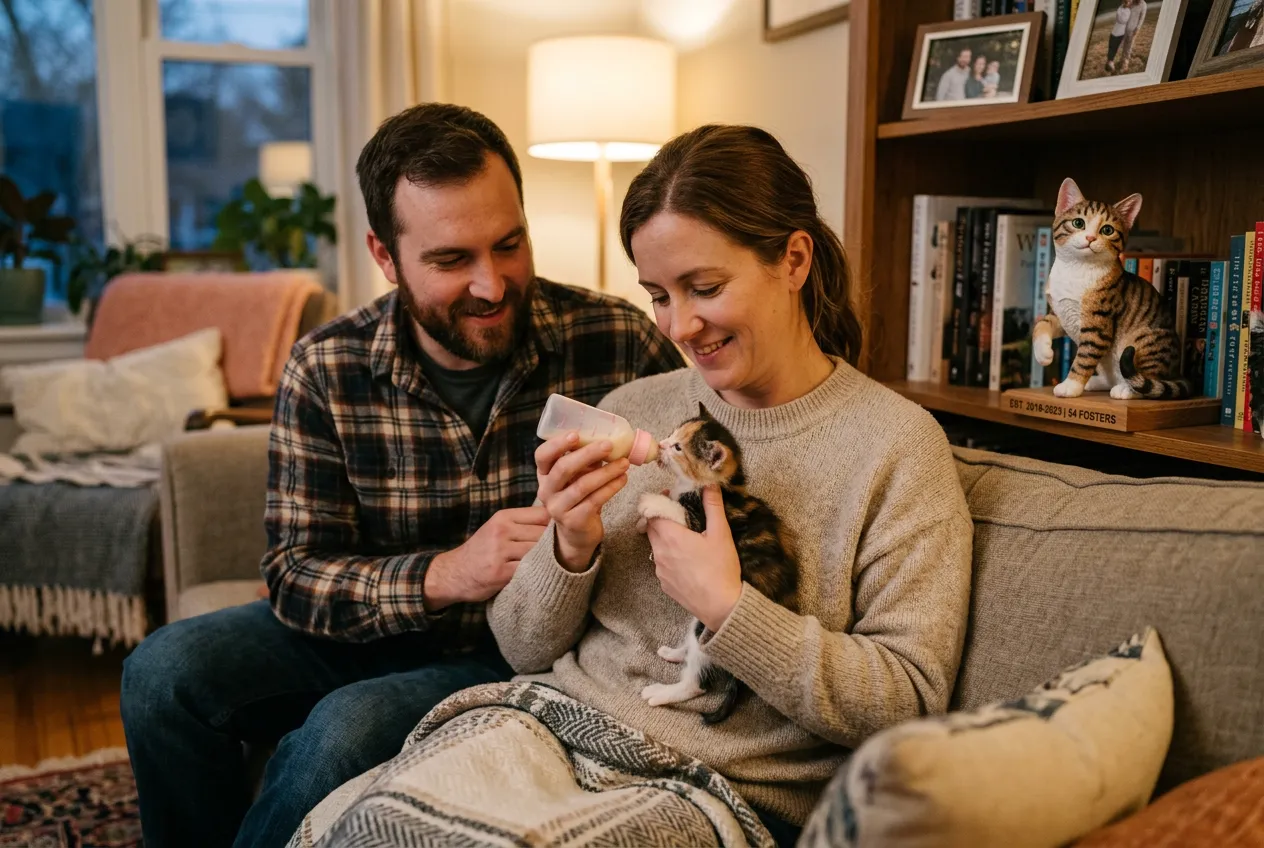
Have you ever glanced at the empty passenger seat of your car—the one still covered in a fine layer of cat hair from a foster kitten you returned three weeks ago—and felt a pang so sharp it made you grip the steering wheel? That reaction isn't sentimentality. It's neuroscience. And understanding the fostering rescue kitten benefits that rewire your brain might be the most compelling reason to open your home to a temporary cat.
Quick Takeaways
- Fostering a kitten triggers measurable neurochemical changes — oxytocin, dopamine, and serotonin shift within the first 72 hours of cohabitation
- The "foster fail" impulse is a brain response, not a character flaw — understanding why helps you foster more effectively without guilt
- Short-term fostering benefits your family's stress resilience long-term — even a two-week stint leaves a lasting neurological imprint
- Preserving the memory of a foster pet matters more than you think — tangible keepsakes like custom pet figurines help families process the bittersweet goodbye
- Kids who foster animals develop stronger empathy circuits — the neuroscience of pet bonding shows measurable changes in developing brains
The Neuroscience of Pet Bonding: What Actually Happens in Your Brain
Here's what most fostering guides won't tell you: the bond you form with a rescue kitten isn't a watered-down version of "real" pet ownership. Neurologically, it's nearly identical.
When you pick up a foster kitten for the first time—that warm, vibrating handful of fur pressing against your chest—your brain launches a cascade of chemical events. Oxytocin, the same hormone released during parent-infant bonding, floods your system within minutes of sustained physical contact. A 2019 study published through the National Institutes of Health found that human-animal interactions trigger oxytocin release patterns remarkably similar to those seen between human mothers and their infants.
But oxytocin is just the opening act.
Dopamine follows. That's your reward chemical—the one that makes you check on the kitten at 2 a.m. even though you told yourself you wouldn't. Your brain is literally rewarding you for caregiving behavior. Then comes serotonin, the mood stabilizer, which rises with routine care activities like feeding, grooming, and play.
Here's the counterintuitive part that most people miss: the temporary nature of fostering may actually intensify these neurochemical responses. Your brain, sensing the impermanence, doubles down. It's the same reason vacation romances feel so vivid. Scarcity amplifies attention. And attention amplifies bonding.
| Neurochemical | Trigger Activity | Timeline | Effect on Foster Parent |
|---|---|---|---|
| Oxytocin | Holding, petting, eye contact | Within 5-15 minutes | Deepened attachment, reduced anxiety |
| Dopamine | Feeding, play, kitten "firsts" | Within 24-48 hours | Reward-seeking caregiving behavior |
| Serotonin | Routine care, stable presence | 3-7 days | Improved mood, emotional regulation |
| Cortisol (decrease) | Purring, co-resting | 1-2 weeks | Lower baseline stress levels |
We'll be real—this table isn't just academic trivia. Understanding these timelines helps you anticipate the emotional rollercoaster. When you're sobbing on day ten because the rescue organization found an adopter, you're not being dramatic. Your neurochemistry has literally restructured itself around this animal.
"Every foster family we've worked with says the same thing: 'I didn't expect it to hit me this hard.' That's not weakness—that's biology doing exactly what it's supposed to do."
— The PawSculpt Team
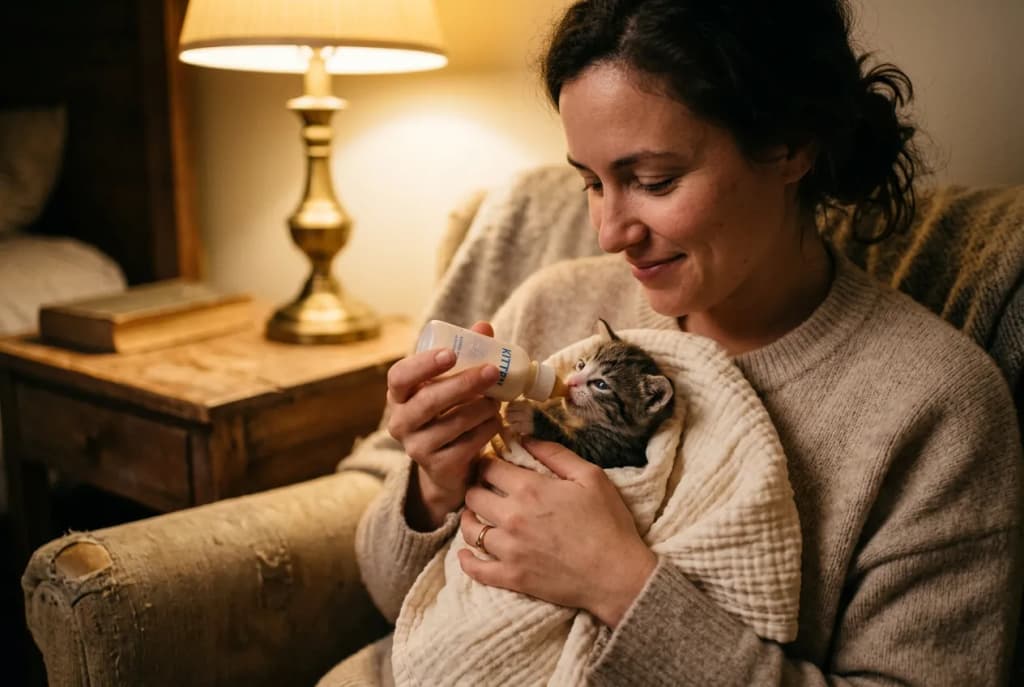
Why Your Brain Treats a Foster Kitten Like Family (Even When You Know Better)
There's a corner of your living room right now. Maybe it's next to the couch, maybe it's by the window. If you've fostered before, you know exactly which corner we're talking about—the one where the carrier sat, where the blanket was, where the kitten claimed its first square foot of territory in your home.
Your brain mapped that space. And it did so with shocking speed.
The Spatial Memory Factor Nobody Talks About
Neuroscientists call it environmental encoding. Your hippocampus—the brain's memory center—doesn't just remember the kitten. It remembers the kitten in context. The spot on the bed. The particular shelf it climbed. The gap between the refrigerator and the wall where it hid for the first six hours.
This is why the goodbye feels so spatial. You don't just miss the cat. You miss the cat there, in that exact spot, in that particular relationship to your furniture and your daily movements. The empty space on the windowsill isn't just empty. It's conspicuously, aggressively empty. Your brain keeps flagging it as wrong.
One customer we worked with described it perfectly: "I kept walking around the ottoman for three days after we returned our foster. I was stepping around a cat that wasn't there anymore." That's not a metaphor. That's your hippocampus refusing to update its spatial map.
The Myth of "Just a Foster"
Let's bust this one wide open.
Myth #1: "You won't get as attached because you know it's temporary."
Reality: Your limbic system doesn't read the foster contract. Attachment circuits activate based on proximity, care, and sensory input—not intellectual understanding of timelines. Many foster families report bonding intensity equal to or greater than with their permanent pets, precisely because the compressed timeframe creates heightened awareness.
Myth #2: "Fostering is practice for 'real' pet ownership."
Reality: Fostering IS real pet ownership—it's just time-limited. The neuroscience of pet bonding doesn't distinguish between a two-week foster and a fifteen-year companion. The depth of the bond correlates with quality of interaction, not duration. A foster parent who spends four hours a day with a kitten for two weeks may form a stronger neurological bond than someone whose cat lives in the house for years but receives minimal engagement.
Myth #3: "It gets easier every time you foster."
Reality: Partially true, but not in the way people think. What gets easier is your cognitive coping—your prefrontal cortex gets better at managing the emotional response. The emotional response itself? It stays roughly the same intensity. You just learn to ride the wave instead of being pulled under by it. Experienced foster parents don't feel less. They process better.
The Foster Cat Family Experience: How Every Member's Brain Responds Differently
Something fascinating happens when a foster kitten enters a household with multiple people. Each family member's brain responds along different pathways, at different speeds, and with different intensities.
Adults: The Caregiving Circuit
For adults, fostering primarily activates the caregiving neural network—a distributed brain system involving the prefrontal cortex, anterior insula, and supplementary motor area. This is the same network that fires when you hear a baby cry or see someone in distress.
But here's what's worth noting: this network responds differently based on your attachment history. Adults who had secure attachments in childhood tend to bond with foster kittens faster and experience less anxiety about the eventual goodbye. Adults with more anxious attachment styles often bond more intensely but experience significantly more distress at separation.
Neither response is wrong. But knowing your pattern helps you prepare.
Practical tip: If you're someone who tends toward anxious attachment, designate a specific "transition ritual" before the foster period ends. Photograph the kitten in each room. Write a short note about its personality quirks. These actions give your prefrontal cortex something constructive to do while your limbic system processes the loss.
Kids: Building Empathy Architecture
This is where the fostering rescue kitten benefits get genuinely remarkable.
Children's brains are still building their mirror neuron systems—the neural networks responsible for empathy, perspective-taking, and emotional regulation. Fostering a kitten gives these systems a workout that's hard to replicate through any other childhood experience.
When a seven-year-old watches a scared kitten slowly learn to trust, that child's mirror neurons are firing in real time. The child is literally practicing empathy at a neurological level. And when the kitten leaves for its forever home, the child experiences a form of grief that—while painful—teaches the brain something critical: you can love something, let it go, and survive the loss.
We've heard from dozens of families who say fostering transformed their kids. Not in a vague, feel-good way. In specific, observable ways:
- Kids who previously struggled with emotional regulation became more patient
- Siblings who fought constantly found common ground in kitten care
- Children who were anxious about change became more adaptable
The key is how parents frame the experience. Don't minimize the goodbye. Don't say "it's just a cat" or "we'll get another one." Instead, acknowledge the loss fully and help your child understand that the sadness is proof of how much love they gave.
Other Pets: The Overlooked Brain
Your resident dog or cat has a brain too, and it's responding to the foster kitten in ways that deserve attention.
Resident pets experience their own neurochemical shifts. A dog who becomes protective of a foster kitten is experiencing oxytocin-driven bonding. A resident cat who hisses and retreats is experiencing a cortisol spike—genuine stress—that needs management, not dismissal.
| Family Member | Primary Neural Response | Peak Bonding Period | Post-Foster Impact |
|---|---|---|---|
| Primary caregiver | Caregiving circuit activation | Days 3-7 | Elevated baseline empathy for 4-6 weeks |
| Secondary adult | Gradual dopamine engagement | Days 7-14 | Increased openness to future fostering |
| Children (5-12) | Mirror neuron development | Days 1-3 | Measurable empathy gains lasting months |
| Resident dog | Pack-bonding oxytocin | Days 5-10 | Possible mild depression post-departure |
| Resident cat | Territorial cortisol, then gradual acceptance | Days 10-21 | Variable—some grieve, some seem relieved |
The standout insight here: your resident pets may need as much post-foster support as your human family members. The dog who keeps sniffing the corner where the kitten's litter box sat isn't being cute. That dog is processing an absence.
"A foster kitten doesn't just pass through your home. It rearranges the emotional furniture—and every family member feels the shift."
The Neurochemistry of Letting Go: Why Foster Goodbyes Hit So Hard
The chair is empty again. The crate is folded up and leaning against the garage wall. The house sounds different—you notice the specific frequency of silence that a kitten used to fill with chirps and the soft thud of paws on hardwood.
Let's talk about what's happening in your brain during this moment, because understanding it is genuinely therapeutic.
The Cortisol Spike
When you hand a foster kitten to its new family, your body responds with a cortisol surge—the same stress hormone released during any perceived loss. Your amygdala, the brain's threat-detection center, doesn't differentiate between "kitten went to a loving home" and "something important was taken from me." It just registers: gone.
This cortisol spike typically peaks within 24-48 hours of the goodbye and gradually normalizes over 5-10 days. But—and this is the part nobody tells you—micro-spikes can recur for weeks, triggered by environmental cues. The sound of a food bowl. A toy you forgot to pack. The weight of nothing on your lap at 9 p.m.
The Dopamine Withdrawal
Remember how your brain was rewarding you with dopamine every time you fed, played with, or checked on the kitten? That reward stream just stopped. Your brain notices. It's not unlike the restlessness you feel after finishing a great book or ending a vacation. Your reward circuits are looking for the next hit of caregiving satisfaction—and finding nothing.
This is, honestly, one of the most compelling arguments for serial fostering. Not to avoid the grief (you can't), but to give your dopamine system a healthy outlet. Many experienced foster families keep a gap of one to two weeks between fosters—enough time to grieve, not enough time for the caregiving circuits to fully deactivate.
The Counterintuitive Gift of Foster Grief
Here's something we genuinely believe more people need to hear: the grief you feel after a foster goodbye is not a bug. It's the entire point.
That grief is evidence that you provided a kitten with genuine love and safety during its most vulnerable period. The depth of your pain directly correlates with the quality of care you gave. A kitten that was truly loved in foster care arrives at its forever home with a fundamentally different neurological baseline than one that was merely housed.
You didn't just keep a kitten alive. You shaped its brain. You taught its nervous system that humans are safe. That touch means comfort. That the sound of footsteps means food is coming, not danger.
The ASPCA notes that socialized foster kittens are adopted faster and returned less frequently than those without foster experience. Your grief bought that kitten a better life. Full stop.
"The pain of letting go is the receipt for love well spent."
Practical Neuroscience: Optimizing Your Foster Experience
Enough theory. Let's get tactical. Based on what we know about the neuroscience of pet bonding, here are specific strategies to make your foster experience healthier for everyone involved—human, feline, and canine.
The First 72 Hours: Setting the Neural Foundation
The first three days are neurochemically critical. This is when your brain decides how deeply to invest.
- Create a dedicated "bonding zone" — a specific room or area where most interactions happen. This concentrates your spatial memories and makes the post-foster transition cleaner (you can close the door to that room for a few days after the goodbye).
- Limit initial handling to 10-15 minute sessions with breaks. This prevents cortisol flooding in the kitten (which would impair bonding) while building anticipation in your dopamine system.
- Involve all family members from day one. The kitten's brain is forming attachment hierarchies, and your family members' brains are competing for caregiving roles. Early inclusion prevents jealousy and ensures everyone gets the neurochemical benefits.
- Establish a scent exchange immediately. Place a worn t-shirt near the kitten's sleeping area. Scent is the most direct pathway to the limbic system for both humans and cats.
Days 4-14: The Deepening Period
This is when the bond solidifies. Your oxytocin levels have stabilized at an elevated baseline. The kitten has mapped your home. Routines are forming.
The mistake most people make during this phase: over-engagement. It's tempting to spend every free moment with the kitten, but this actually creates an unhealthy cortisol dependency in the animal. The kitten needs to learn to self-soothe, and you need to maintain your own emotional boundaries.
What actually helps more than constant attention: predictable rhythms. Feed at the same times. Play at the same times. This regularity builds serotonin in both you and the kitten. Serotonin is the neurochemical of trust and stability—far more valuable for long-term wellbeing than the dopamine rush of novelty.
The Final Days: Preparing Your Brain for Goodbye
Start the transition at least three days before the handoff. Not emotionally—you can't pre-grieve effectively. But practically.
- Take photos and video. Not just cute poses. Capture the kitten in its specific spots—the windowsill, the corner of the couch, the weird gap behind the bookshelf. These spatial records help your hippocampus process the transition.
- Write down three personality quirks. "She always sneezed twice before eating." "He attacked the doorstop every morning at 6:15." These details fade fast, and losing them feels like a second loss.
- Prepare a physical anchor. This is where tangible keepsakes become genuinely important from a neurological perspective. Your brain processes abstract loss poorly but handles concrete objects well. A photo on your phone is good. Something you can hold in your hands is better.
Some foster families keep a small toy. Others create scrapbook pages. And increasingly, families are turning to more lasting options—like having a custom 3D-printed figurine created from their favorite foster photo. The advantage of something three-dimensional is that it engages more sensory pathways than a flat image. You can hold it. Turn it. Place it on the shelf where the kitten used to sit. Your brain recognizes the spatial relationship and finds a measure of peace in the continuity.
The Long Game: How Fostering Reshapes Your Brain Over Months and Years
Most articles about fostering focus on the acute experience—the cute phase, the hard goodbye, the recovery. But the neuroscience of pet bonding reveals something far more interesting about the long-term effects.
Neuroplasticity and the "Foster Brain"
Your brain is plastic. It physically restructures itself based on repeated experiences. People who foster multiple kittens over months or years develop measurably different neural patterns than non-fosters.
Specifically, serial fosters show:
- Enhanced emotional regulation — the prefrontal cortex develops stronger connections to the amygdala, allowing faster recovery from stress
- Increased compassion fatigue resistance — paradoxically, repeated exposure to vulnerable animals builds resilience rather than depleting it (up to a point—burnout is real and deserves its own conversation)
- Broader empathy generalization — the empathy developed through animal care transfers to human relationships
This last point is the one that surprises people most. Foster parents consistently report becoming more patient with coworkers, more understanding with family members, and more tolerant of strangers' behavior. The kitten taught their brain a skill that generalized outward.
The Memory Consolidation Effect
Here's a genuinely fascinating neurological detail: your brain consolidates foster memories differently than everyday memories.
Because foster experiences are emotionally charged, they're processed through the amygdala-hippocampal pathway rather than the standard cortical memory system. This means foster memories are stored with higher fidelity, more sensory detail, and greater emotional vividness than, say, your memory of last Tuesday's lunch.
This is why you can remember the exact markings on a kitten you fostered four years ago but can't remember what you wore yesterday. Your brain flagged that kitten as important. It allocated premium storage.
And this is also why preserving those memories matters. The brain wants to revisit them. It wants to process, re-process, and integrate them. Giving it tools to do so—photos, written records, physical mementos—supports healthy memory consolidation rather than unresolved emotional loops.
Some families we've worked with at PawSculpt have ordered figurines of foster kittens months or even years after the foster period ended. The digital sculpting process works from photos, so even if the kitten is long settled in its forever home, a detailed 3D-printed replica can be created that captures its unique markings and personality. The full-color resin captures fur patterns and coloring directly in the material—no surface coating, just the actual colors printed voxel by voxel into the piece. For families who've fostered dozens of kittens, a small shelf of figurines becomes a physical timeline of love given and received.
The Ripple Effect on Future Pets
One more long-term benefit that deserves attention: fostering changes how you relate to your permanent pets.
Foster parents develop a heightened awareness of animal body language, stress signals, and emotional needs. This translates directly to better care for their own animals. Your resident cat benefits from every kitten you foster, because each foster experience makes you a more attuned, more responsive pet parent.
It's a rising tide that lifts all boats—or, more accurately, all paws.
The Emotional Complexity Nobody Warns You About
We'd be doing you a disservice if we painted fostering as purely positive. The neuroscience of pet bonding reveals some uncomfortable truths that the feel-good fostering narratives tend to skip.
The Guilt Spectrum
Foster parents experience guilt on multiple axes:
- Guilt about bonding too much ("Am I making this harder for everyone?")
- Guilt about not bonding enough ("What if I'm not giving this kitten what it needs?")
- Guilt about relief ("I felt relieved when the foster left, and I'm ashamed of that")
- Guilt about the next one ("How can I bond with a new kitten when I still miss the last one?")
All of these are normal. All of them reflect healthy neural processing. The guilt about relief is especially common and especially underreported. Your brain was under sustained caregiving stress. When that stress lifts, relief is a physiological response, not a moral failing.
The "Foster Fail" Neuroscience
Let's talk about foster fails—when you adopt the animal you were supposed to foster temporarily. About 17-25% of fosters result in adoption, depending on the rescue organization.
Your brain's role in this decision is more significant than most people realize. The oxytocin bond, the dopamine reward loop, the spatial mapping, the cortisol fear of separation—all of these create a powerful neurological argument for keeping the animal. Your rational brain may know that fostering more animals saves more lives. Your limbic system doesn't care about statistics. It cares about this kitten, right here, in that spot on the couch.
Neither choice is wrong. But understanding that the "foster fail" impulse is partly neurochemical—not purely emotional—can help you make a more balanced decision. Give yourself 48 hours after the impulse hits before committing. Let the initial cortisol spike settle. If you still want to adopt after the neurochemistry calms down, that's a decision made with your whole brain, not just your amygdala.
Building a Foster-Friendly Home: The Neuroscience-Informed Setup
Most fostering guides give you a supply list. Litter box, food, carrier. Fine. But here's what a neuroscience-informed setup looks like—one designed to optimize bonding for both you and the kitten while protecting everyone's emotional health.
Spatial Boundaries That Serve Everyone
Designate a "transition room" that can be closed off after the foster period. This isn't about being cold—it's about giving your hippocampus a clean break. When the kitten leaves, you close that door for 48-72 hours. Your spatial memory system gets a clear signal: that chapter is closed.
Create one shared space where the kitten interacts with the whole family. This becomes the bonding zone. Keep it consistent. Same room, same time of day, same general arrangement. Consistency builds serotonin.
Avoid letting the kitten sleep in your bed unless you're prepared for the most intense oxytocin bonding possible. Co-sleeping with a foster kitten is the neurochemical equivalent of lighting a bonding bonfire. Beautiful, but hard to walk away from.
The Sensory Environment
- Sound: Leave a radio on low in the kitten's room. This provides auditory continuity and prevents the startle response that spikes cortisol.
- Scent: Rotate worn clothing items near the kitten's bed. Scent-based bonding is the oldest and most powerful mammalian attachment pathway.
- Light: Maintain natural light cycles. Melatonin regulation affects both your and the kitten's stress hormones.
- Touch: Aim for 15-20 minutes of direct physical contact per session, 3-4 times daily. This is the sweet spot for oxytocin release without cortisol buildup from overstimulation.
| Setup Element | Purpose | Neurochemical Impact | Common Mistake |
|---|---|---|---|
| Transition room | Clean spatial boundary | Aids hippocampal processing post-foster | Letting kitten roam entire house from day one |
| Consistent bonding zone | Serotonin through routine | Stabilizes mood for all family members | Changing locations daily |
| Scent items | Limbic system bonding | Deepens attachment through oldest neural pathway | Using artificial scents instead of worn clothing |
| Controlled touch sessions | Oxytocin optimization | Maximizes bonding without cortisol flooding | Constant handling without breaks |
| Separate sleeping area | Boundary preservation | Prevents unsustainable attachment intensity | Co-sleeping from night one |
What Happens After: The Neuroscience of Moving Forward
The house feels bigger. That's the first thing most foster families notice. Not literally, obviously—but the spatial awareness shifts. Rooms that felt full now feel like they're missing a piece. The distance between the couch and the window seems longer without a small body crossing it twelve times an hour.
This perception is real. Your brain allocated spatial attention to the kitten's movement patterns. Now those patterns are gone, and the freed-up processing power makes the empty space feel more prominent. It's the neurological equivalent of removing a painting from a wall—the blank space draws more attention than the painting ever did.
The Recovery Timeline
Based on what neuroscience tells us and what we've observed across hundreds of foster family conversations:
- Days 1-3: Acute cortisol spike. You'll feel it physically—tightness in the chest, disrupted sleep, appetite changes. This is normal.
- Days 4-7: Dopamine withdrawal. Restlessness, checking the foster room out of habit, phantom sounds (you'll swear you heard a meow).
- Days 7-14: Serotonin recalibration. Your mood stabilizes. The sadness shifts from sharp to dull. You start telling funny stories about the kitten.
- Days 14-30: Memory consolidation. Your brain is filing the experience into long-term storage. This is when photos, videos, and physical keepsakes become especially valuable—they give the consolidation process concrete anchors.
- Day 30+: Integration. The experience becomes part of your identity narrative. You're not "someone who had a foster kitten." You're "a foster parent." The distinction matters neurologically—it shifts from episodic memory to self-concept.
Honoring the Bond Without Getting Stuck
The goal isn't to "get over" a foster kitten. The goal is to integrate the experience in a way that enriches your life and prepares you for the next one.
Concrete strategies that work:
- Name the feeling. Neuroscience research on affect labeling shows that simply naming an emotion ("I feel grief") reduces amygdala activation by up to 50%. Don't just feel it—say it.
- Create a ritual. Light a candle on the day they leave. Write a letter to the kitten's new family. Post a photo with a caption. Rituals give your brain a structured way to process transitions.
- Stay connected. Many rescue organizations facilitate updates from adopters. Seeing your foster kitten thriving in its forever home provides a dopamine reward that partially offsets the separation cortisol.
- Touch something real. This is where physical objects—a paw print, a collar, a custom figurine from a service like PawSculpt—serve a genuine neurological function. They give your brain a tangible anchor for an intangible bond. The act of holding something physical activates somatosensory processing that pure memory cannot.
The Bigger Picture: Fostering as a Form of Neurological Self-Care
We've covered a lot of brain chemistry. But zoom out for a moment.
The foster cat family experience, at its core, is an exercise in one of the most difficult and rewarding human capacities: loving without possessing. It's a skill that most of us struggle with in every relationship—romantic, familial, platonic. Fostering a kitten is a compressed, high-intensity training ground for this skill.
Your brain learns that love doesn't require permanence to be real. That care doesn't require ownership to be meaningful. That goodbye doesn't erase what came before.
These are lessons that generalize far beyond the foster room.
We've seen families who started fostering kittens and ended up volunteering at shelters, mentoring at-risk youth, or simply becoming more present in their existing relationships. The neural pathways built through fostering—empathy, caregiving, emotional regulation, graceful release—are transferable skills of the highest order.
And honestly? In a world that often feels fractured and disconnected, the simple act of opening your home to a vulnerable animal—knowing you'll have to let go—might be one of the most neurologically healthy things you can do.
The empty carrier in your car isn't a symbol of loss. It's a symbol of capacity. Your brain proved it can love fiercely, care deeply, and keep going.
That's not just fostering. That's the whole human experience, compressed into a few weeks with a very small cat.
Frequently Asked Questions
What are the mental health benefits of fostering a rescue kitten?
Fostering triggers a powerful cocktail of neurochemicals—oxytocin from physical contact, dopamine from caregiving rewards, and serotonin from routine care. These chemicals reduce baseline stress and anxiety, improve mood stability, and build empathy circuits that persist long after the foster period ends. The benefits aren't just emotional—they're structural changes in how your brain processes relationships and stress.
How long does it take to bond with a foster kitten?
Faster than you'd expect. Oxytocin release begins within minutes of first physical contact. Most foster parents report feeling genuinely attached within 3-7 days. The bond deepens significantly during days 7-14 as routines solidify and the kitten's personality emerges. By the two-week mark, your brain has fully incorporated the kitten into its spatial and emotional maps.
Is it normal to grieve after returning a foster cat?
Completely normal—and neurologically predictable. You'll experience cortisol spikes (stress), dopamine withdrawal (restlessness), and spatial disorientation (the house feels wrong). Acute grief typically lasts 3-7 days, with residual waves continuing for 2-4 weeks. Phantom sounds—swearing you heard a meow—are especially common during the first week. None of this means you shouldn't foster again.
How do I explain fostering and letting go to my kids?
Don't minimize the sadness. Children's mirror neuron systems are developing, and authentic emotional processing is far healthier than forced cheerfulness. Explain that the kitten needed a temporary safe place, your family provided it, and now the kitten has a forever home because of their love. Let kids participate in goodbye rituals—writing a letter, choosing a photo—to give their brains structured ways to process the transition.
What is a "foster fail," and is it okay to adopt my foster kitten?
A foster fail is when you adopt the animal you were fostering. It happens in roughly 17-25% of cases, and there's no shame in it. The key is making the decision with your full brain. Give yourself 48 hours after the adoption impulse first hits—let the initial cortisol spike settle and the dopamine surge normalize. If you still want to adopt after that cooling period, you're making a balanced decision rather than a purely neurochemical one.
How can I preserve memories of a foster kitten after they leave?
Photograph the kitten in its specific spots around your home—these spatial records help your hippocampus process the transition. Write down three personality quirks before they fade. Physical keepsakes engage more neural pathways than digital ones: paw prints, a kept toy, or a custom 3D-printed figurine created from your favorite photo all give your brain tangible anchors. The goal is supporting memory consolidation, not avoiding grief.
Ready to Celebrate Your Foster Pet?
Every foster kitten leaves paw prints—on your floors, your furniture, and your neural pathways. Whether you're honoring a foster who changed your family forever or celebrating the one currently asleep on your lap, a custom PawSculpt figurine captures the markings, posture, and personality that made that kitten yours, even temporarily. Digitally sculpted by master 3D artists and precision-printed in full-color resin, each piece preserves the fostering rescue kitten benefits that rewired your brain—in a form you can hold.
Visit pawsculpt.com to explore the full process, materials, and service details