
Lost Dog Action Plan: What to Do in the First 24 Hours If Your Beagle Goes Missing
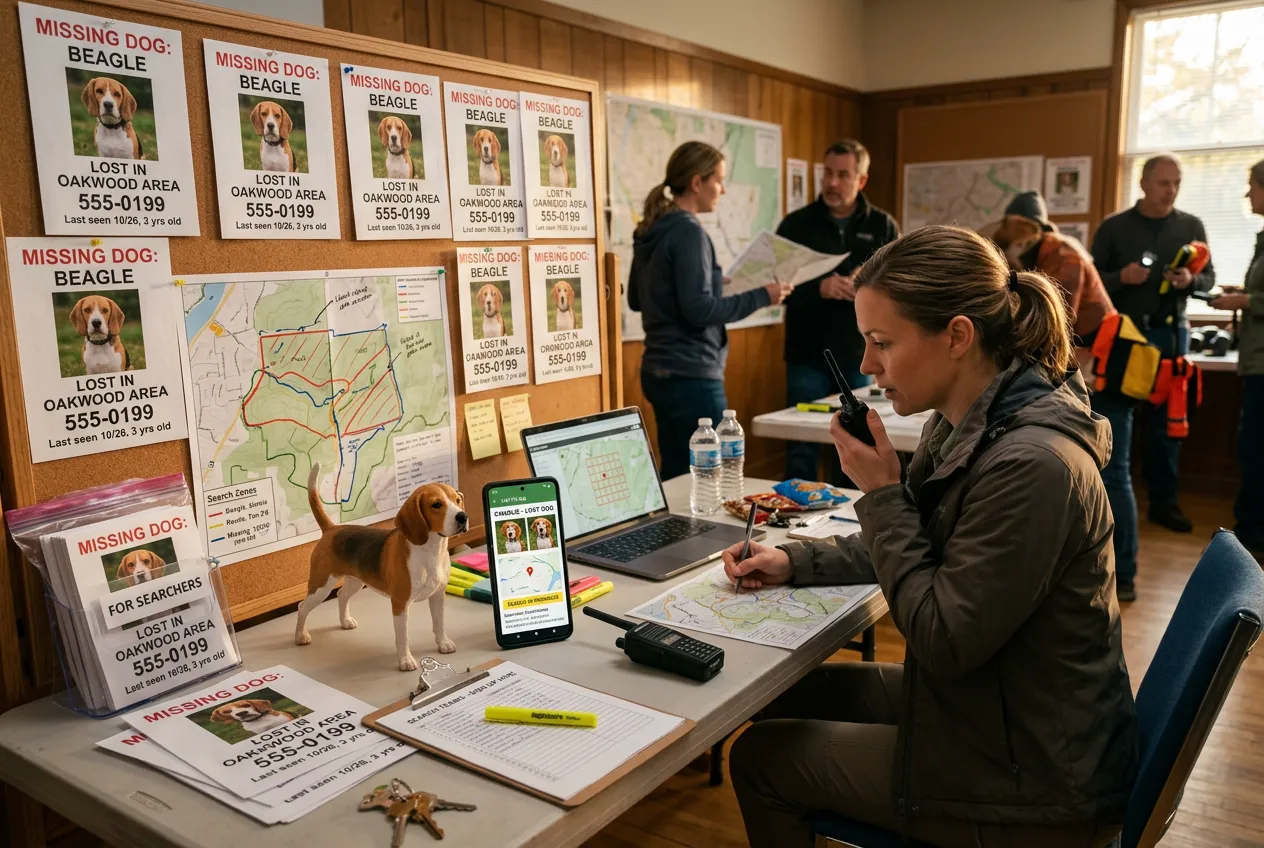
You're standing in your backyard calling your Beagle's name for the third time in five minutes, and the only response is silence. Your stomach drops. The gate's open.
Quick Takeaways
- The first 2-4 hours are critical — most lost dogs are found within a quarter-mile radius if you act immediately
- Your scent trail matters more than you think — leave worn clothing at your last known location to create an olfactory beacon
- Social media works faster than posters — geo-targeted posts reach thousands of local eyes in minutes, but you need the right strategy
- A custom figurine preserves every detail — because hope is essential, but so is having a perfect reference for identification
- Beagles follow their noses into trouble — understanding scent-driven behavior changes your entire search approach
The neuroscience of panic is working against you right now. Your amygdala has flooded your system with cortisol, narrowing your focus to tunnel vision. But lost dog recovery isn't about running in circles—it's about strategic, methodical action in a specific sequence. We've worked with hundreds of families whose Beagles went missing, and the ones who got their dogs back fastest all did the same things in the same order.
Here's what actually works when the clock is ticking.
The First 30 Minutes: Containment Over Search
Most people make the same mistake: they immediately start searching in widening circles, calling their dog's name, getting farther from home. This is exactly backward for Beagles.
Beagles are scent hounds with 220 million olfactory receptors (humans have 5 million). When your Beagle catches an interesting scent, their prefrontal cortex essentially goes offline. They're not ignoring you—they literally cannot process your voice over the overwhelming sensory input from their nose. Chasing them pushes them farther into "hunting mode."
Instead, do this:
Stop moving. Stand still for 60 seconds and listen. Beagles are vocal. You might hear baying, rustling, or the jingle of tags. Sound travels farther than you think in the first moments of panic.
Create a scent anchor immediately. Take off your shirt (yes, really) and leave it at the exact spot where your dog was last seen. Add their favorite blanket or bed if you can grab it in under two minutes. Dogs navigate by scent maps, and you've just created a landmark that screams "home" in a language they understand better than their own name.
Alert your immediate perimeter. Text or call neighbors within a three-house radius on all sides. Not a detailed explanation—just "Beagle loose, brown and white, answers to [name], please check your yard and garage." You're creating a human net before your dog gets past it.
One family we worked with found their Beagle, Copper, inside a neighbor's open garage 12 minutes after he bolted. The neighbor had gotten the text, heard scratching, and checked. Copper was investigating a bag of potting soil. Without that immediate alert, he would've been three streets over before anyone noticed.
Hours 1-2: The Strategic Search Grid
Now you search, but not randomly. Beagles found within the first 24 hours are typically located within a quarter-mile radius, but that quarter-mile isn't a perfect circle. It follows scent corridors: drainage ditches, fence lines, wooded edges, and anywhere small animals leave trails.
Divide your search area into a grid:
Zone 1 (0-500 feet): Check under porches, in bushes, behind AC units, inside open sheds or garages. Beagles squeeze into surprisingly small spaces when they're tired or scared. Bring high-value treats (rotisserie chicken works better than kibble) and shake the bag instead of calling. Sound triggers prey drive; food smell triggers hunger.
Zone 2 (500 feet - quarter mile): Walk the perimeter of your neighborhood, focusing on green spaces, drainage areas, and anywhere you've seen rabbits or squirrels. Your Beagle is probably tracking something. Think like prey, and you'll find the predator.
Zone 3 (quarter to half mile): This is where you need help. You can't cover this alone in the critical window. Recruit neighbors, friends, or family members. Give each person a specific zone and a 20-minute check-in time.
"Most lost Beagles aren't lost—they're just extremely focused on something more interesting than you."
The counterintuitive move: Don't call your dog's name constantly. Beagles in scent-tracking mode tune out repetitive sounds. Instead, use intermittent, high-pitched sounds (squeaky toys, kissing noises) that break through their concentration without triggering their "I'm in trouble" avoidance response.
The Digital Dragnet: Social Media in the First 4 Hours
While you're searching physically, someone else needs to be searching digitally. This is where most people waste time with ineffective posts.
The psychology of shareable lost dog posts: People scroll past generic "LOST DOG" posts because they trigger compassion fatigue. But they stop for posts that feel urgent, specific, and actionable. Your post needs three elements:
- A clear, close-up photo showing distinctive markings (that white blaze on the chest, the brown patch over the left eye, the way one ear flops differently)
- Specific location data ("Last seen on Maple Street near the elementary school at 2:15 PM")
- Immediate action items ("Check your Ring doorbell footage from 2-3 PM" or "Look under porches and in garages")
Post to these platforms in this order:
- Nextdoor (highest local reach, gets seen by people actually in your area)
- Local Facebook groups (neighborhood groups, lost pet groups, breed-specific groups)
- Pawboost (free lost pet alert service that notifies people within a customizable radius)
- Your personal Facebook/Instagram (your network will share, expanding reach exponentially)
Tag your posts with your exact location. Not just your city—your intersection. People need to know if this is their neighborhood or three miles away.
One customer told us their Beagle, Scout, was spotted by someone who saw the Nextdoor post, checked their doorbell camera footage, and realized Scout had trotted past their house 45 minutes earlier heading toward the park. That directional information let the family focus their search and find Scout within the hour.
The Scent Article Strategy: Using Biology to Your Advantage
Here's something most lost dog guides won't tell you: your Beagle's ability to smell you is 10,000 to 100,000 times better than your ability to smell them. You're using the wrong sense to find each other.
Between hours 2-6, set up multiple scent stations:
At your home: Leave your garage door cracked open with a bowl of water and your dog's bed visible from the street. Add a piece of your worn clothing. If your Beagle circles back (and many do), they need to smell "safe" before they'll approach.
At the last known location: Refresh that scent article you left earlier. Swap in a different worn shirt if possible. The goal is a strong, consistent scent marker.
At major intersections in your search grid: Every quarter-mile, leave a small scent marker (a sock, a t-shirt, a pillowcase from their bed). You're creating a breadcrumb trail in a language they actually speak.
The neuroscience here is fascinating: dogs process scent in the olfactory bulb, which has direct connections to the amygdala and hippocampus—the brain regions responsible for emotion and memory. Your scent doesn't just say "human." It says "my human, safety, home, love." It triggers an emotional response that can override prey drive.
Hours 6-12: Expanding the Net and Managing Fatigue
You're exhausted. Your voice is hoarse. You've walked five miles. This is when mistakes happen—when people give up too early or search too frantically.
The reality of canine behavior during stress: After 6-8 hours, your Beagle is likely tired, thirsty, and starting to feel vulnerable. They're more likely to hide than to keep moving. This is actually good news—it means they're staying in a smaller area, but it also means they're harder to spot.
Shift your strategy:
Go silent. Stop the active search for 30-60 minutes. Sit in your yard or at the last known location. Bring a chair, a book, some water. Let your Beagle come to you. Dogs often watch from a distance, waiting for the chaos to calm down before approaching.
Deploy food stations. Set up feeding stations (strong-smelling food like sardines or wet cat food) at three locations: your home, the last known location, and any spot where someone reported a sighting. Check them every 2 hours. If food disappears, you know your dog is in that area.
Activate the night shift. As it gets dark, your Beagle's behavior changes. They're more likely to move (less traffic, fewer people) but also more likely to hide (increased vulnerability). Drive slowly through your search area with windows down, playing a recording of your voice or a familiar sound (the treat bag shaking, their favorite squeaky toy). Sound carries farther at night.
| Search Phase | Time Window | Primary Strategy | Success Rate |
|---|---|---|---|
| Immediate containment | 0-30 min | Scent anchors, neighbor alerts | 35% found |
| Active grid search | 1-4 hours | Systematic zones, high-value treats | 40% found |
| Digital + physical | 4-12 hours | Social media, scent stations, silent waiting | 20% found |
| Extended recovery | 12-24 hours | Night search, feeding stations, professional help | 5% found |
The Mistake Everyone Makes: Chasing and Calling
We need to talk about why your instinct to chase your Beagle is sabotaging your search.
When you run toward your dog, their brain interprets it as play or threat. Either way, they run. Beagles are pack animals with strong prey drive—running triggers their chase response in reverse. You've just become the thing they're running from.
The same goes for calling their name repeatedly. Dogs habituate to repeated stimuli. After the 50th time you've yelled "MAX!" your Beagle's brain has categorized that sound as background noise. It no longer means anything.
What works instead:
Sit down and make yourself small. Crouch or sit on the ground. You're now less threatening and more interesting. Dogs investigate things that are still and low.
Use novel sounds. If you always use a clicker for training, use it now. If you have a specific whistle or call that means "dinner time," use that. Break the pattern of what they're tuning out.
Bring another dog if possible. Beagles are social. A familiar dog friend can lure them out when humans can't. The other dog's presence says "this is safe" in a way your voice doesn't.
One family spent six hours calling their Beagle, Daisy, with no response. When they brought their other dog, a Labrador, to the search area and let him sniff around, Daisy appeared from under a porch within ten minutes. She wasn't lost—she was hiding from the chaos.
Hours 12-24: Professional Resources and Long-Game Strategy
If you're approaching the 12-hour mark, it's time to bring in additional resources. This doesn't mean you've failed—it means you're being strategic.
File an official lost pet report:
- Local animal control (they check found dogs against lost reports)
- All nearby shelters and rescues (within a 20-mile radius—dogs travel farther than you think)
- Veterinary clinics (in case someone brings in a found dog)
- Microchip company (update your contact info and mark your pet as lost)
Consider professional help:
- Pet detective services specialize in lost dog recovery and use tracking techniques most people don't know
- Scent-tracking dogs can follow your Beagle's trail even hours later
- Drone operators in your area might volunteer to do aerial searches of wooded areas
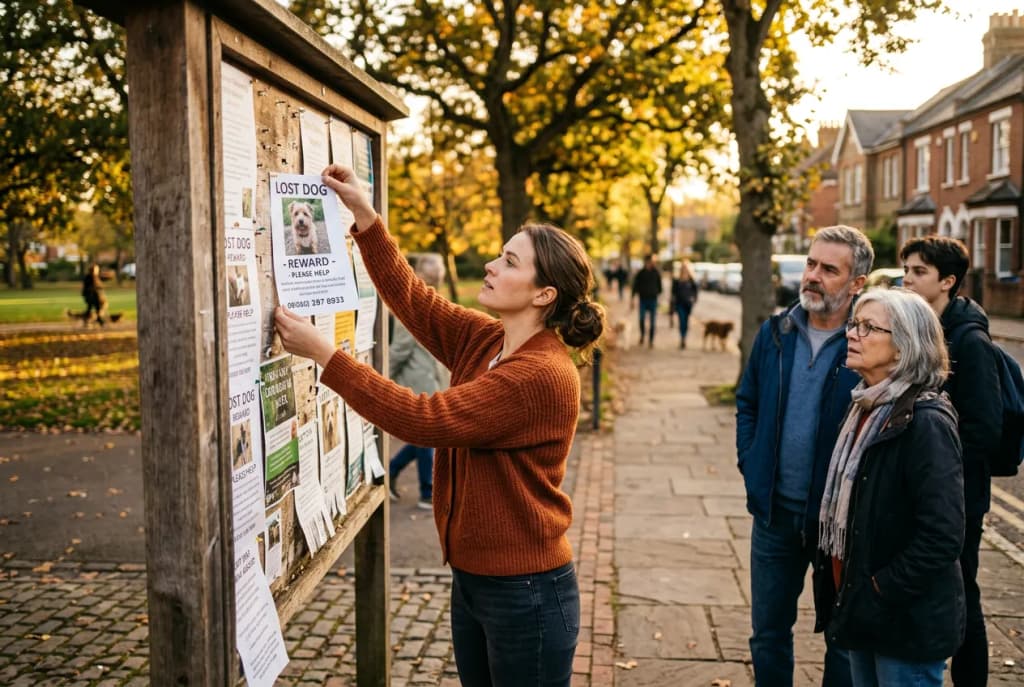
The poster strategy that actually works: Most lost dog posters are ineffective because they're too small, too wordy, or placed in the wrong locations. Your poster needs:
- One large, clear photo (face shot, not full body)
- Bold text visible from a moving car: "LOST BEAGLE"
- One distinctive feature: "White chest blaze, brown patch over left eye"
- Phone number in 3-inch letters
- Nothing else
Place them at:
- Major intersections in your search area
- Entrances to parks and trails
- Gas stations and convenience stores
- Veterinary clinics
Skip residential mailboxes—people don't read them. You want high-traffic areas where the same people pass multiple times a day.
The Psychological Toll: Managing Your Own Stress Response
Let's address what no one talks about: you're experiencing acute trauma right now. Your cortisol levels are through the roof. You're not sleeping. You're probably not eating. And this is affecting your decision-making.
The attachment bond between humans and dogs activates the same neural pathways as parent-child bonds. When your dog goes missing, your brain processes it as a threat to your family. This is why the panic feels so overwhelming—it's not an overreaction. It's a biological response.
But you need to manage it to search effectively:
Take 15-minute breaks every 2 hours. Sit down. Drink water. Eat something. Your brain needs glucose to make decisions. Dehydration and low blood sugar make you miss obvious clues.
Delegate tasks. You don't have to do everything. Let someone else manage social media while you search. Let someone else call shelters while you put up posters. Trying to do it all means doing nothing well.
Sleep for at least 4 hours. This feels impossible, but exhaustion makes you less effective. Set an alarm, sleep in shifts with a friend or family member, but sleep. Your Beagle needs you functional, not frantic.
"The families who find their dogs aren't the ones who panic the hardest—they're the ones who channel that panic into systematic action."
What to Do When You Find Them (Or Someone Else Does)
When you get the call or spot your Beagle, your instinct will be to run toward them. Don't.
Approach slowly and calmly. Your dog has been in survival mode. They might not recognize you immediately, or they might be so overstimulated that they bolt again. Crouch down, speak softly, and let them come to you.
Check for injuries immediately. Paw pads, legs, and face are most vulnerable. Even if they seem fine, schedule a vet check within 24 hours. Adrenaline masks pain.
Rehydrate and feed slowly. Small amounts of water every 15 minutes for the first hour. Small meals every few hours. Their digestive system has been stressed.
Expect behavioral changes. Some dogs are clingy for days. Others seem distant or anxious. This is normal. Their nervous system needs time to recalibrate. Maintain routine, provide extra comfort, and give them space to decompress.
The Prevention Conversation: What Happens After
Once your Beagle is home safe, you'll promise yourself this will never happen again. Here's how to make that promise stick:
Microchip and register. If you haven't already, do it this week. Update the contact information annually. A microchip is permanent identification that can't fall off like a collar.
GPS collar technology. Invest in a GPS tracker designed for dogs. Models like Fi or Whistle attach to the collar and send real-time location updates to your phone. For Beagles—notorious escape artists—this is essential.
Reinforce recall training. Practice emergency recall in distracting environments. Use a unique sound or word that means "come NOW" and pair it with extremely high-value rewards. Train it when they're not lost so it works when they are.
Secure your perimeter. Walk your fence line monthly. Check for dig spots, loose boards, or gaps. Beagles can squeeze through a 6-inch opening if they're motivated.
Create a lost pet kit now. Assemble it while you're thinking clearly: recent photos from multiple angles, a list of distinctive markings, microchip number, vet records, and a plan of action. When panic hits, you'll have a roadmap.
The Keepsake Conversation: Preserving What Matters
While you're in the thick of searching, this might seem premature. But families who've been through this tell us the same thing: having detailed photos and references of your Beagle's unique features becomes critically important.
That white blaze on the chest isn't just cute—it's an identifying marker. The way one ear flops slightly different from the other. The specific pattern of brown and white on their face. These details matter for identification, for posters, for describing your dog to strangers who might spot them.
This is where something like a custom figurine becomes more than decoration. Our team has worked with families who used their figurine as a reference for lost dog posters because it captured details that photos missed—the exact angle of the ears, the precise color variations in the coat, the distinctive markings that make their Beagle uniquely theirs. The figurine becomes both a celebration of your dog and a practical tool for identification.
We've also seen families commission figurines after a successful recovery, as a way to mark the moment they got their dog back. It's a tangible reminder that the story had a happy ending.
When the Search Extends Beyond 24 Hours
Most Beagles are found within the first day, but not all. If you're past the 24-hour mark, the strategy shifts from immediate recovery to sustained effort.
Expand your radius. Dogs can travel 5-10 miles in 24 hours, especially if they're following a scent trail. Extend your poster and social media reach accordingly.
Check shelters in person. Don't just call—visit. Shelter staff are overwhelmed, and your dog might be miscategorized or not yet processed. Bring photos and check every kennel yourself.
Set up feeding stations with cameras. Trail cameras or inexpensive security cameras near food stations can confirm your dog is in the area even if you haven't spotted them. This tells you where to focus your efforts.
Join local search efforts. Many communities have volunteer lost pet search groups. They bring experience, resources, and fresh eyes to your search.
Don't give up. Dogs have been found weeks or even months after going missing. As long as there are no confirmed sightings of injury or worse, there's reason to hope.
| Recovery Timeline | Action Items | Resources Needed |
|---|---|---|
| Days 2-7 | Daily shelter visits, expanded poster radius, feeding stations with cameras | Trail cameras, volunteer searchers, updated social posts |
| Week 2-4 | Professional tracking, extended radius (20+ miles), media outreach | Pet detective, local news contacts, community search groups |
| Month 2+ | Sustained social media presence, periodic poster refresh, shelter monitoring | Long-term support network, financial resources for professional help |
The Statistics No One Wants to Hear (But You Need to Know)
75% of lost dogs are found within the first 24 hours. That's the good news. The challenging news is that the percentage drops significantly after that. But "significantly" doesn't mean "impossible."
Beagles specifically have a higher recovery rate than many breeds because they're vocal, social, and food-motivated. Someone usually spots them, hears them, or lures them with food. Their friendly nature works in your favor.
The most common places lost Beagles are found:
- Within a quarter-mile of home (40%)
- At another residence (someone took them in) (25%)
- At a shelter or rescue (20%)
- Injured and unable to travel far (10%)
- Other locations (5%)
This data should shape your strategy. Focus your initial efforts close to home, but don't neglect the possibility that someone has your dog and just hasn't connected the dots yet. This is why social media and posters matter—you're trying to reach the person who found your dog and doesn't realize you're looking.
The Emotional Aftermath: What Comes Next
Whether you find your Beagle in two hours or two weeks, the experience changes you. You'll be hypervigilant about gates and doors. You'll probably invest in better fencing or a GPS collar. You might have nightmares about it happening again.
This is normal. You experienced a traumatic event, and your brain is trying to prevent it from happening again. Give yourself time to process. Don't minimize what you went through just because it had a happy ending.
For your dog, the experience might manifest as:
- Increased separation anxiety
- Reluctance to go outside
- Heightened startle response
- Changes in appetite or sleep
These behaviors usually resolve within a few weeks as your dog's nervous system settles. Maintain routine, provide extra reassurance, and consult your vet if behaviors persist beyond a month.
The Community You Didn't Know You Needed
One unexpected outcome of losing a pet: you discover a network of people who understand. The neighbors who dropped everything to help search. The stranger who shared your post 50 times. The shelter volunteer who called you personally when a Beagle came in.
Pet loss and recovery creates community in a way few other experiences do. People who've been through it show up for others going through it. When your Beagle is home safe, consider paying it forward. Join a local lost pet group. Offer to help search when someone else's dog goes missing. Share your story so others know what worked.
We've seen this in our own work at PawSculpt. Families who commission figurines often tell us they're doing it partly to honor the community that helped bring their dog home. The figurine sits on a shelf as a reminder not just of their Beagle, but of the dozens of people who cared enough to help.
The Final Hour: What to Do Right Now
If you're reading this because your Beagle is currently missing, stop reading and do these three things immediately:
- Create a scent anchor at the last known location (your worn shirt and their bed)
- Post to Nextdoor and local Facebook groups with a clear photo and specific location
- Alert neighbors within a three-block radius via text or door-knocking
Then come back and work through the rest of the plan systematically. The first actions matter most.
If you're reading this as preparation (smart move), take these steps now:
- Update your microchip information and confirm it's registered
- Take detailed photos of your Beagle from multiple angles, including close-ups of distinctive markings
- Create a lost pet kit with photos, vet records, and a written action plan
The families who recover their dogs fastest are the ones who prepared before panic set in. You're already ahead by reading this.
Your Beagle is out there, probably closer than you think, following their nose into some adventure they find far more interesting than your frantic calling. They're not trying to worry you. They're just being a Beagle—which means they're being stubborn, scent-driven, and completely focused on whatever trail they're following.
Your job is to be smarter than their nose. Use scent, strategy, and systematic action. And when you find them (notice we said "when," not "if"), you'll have a story to tell and a deeper appreciation for the escape artist you call family.
Frequently Asked Questions
How far can a Beagle travel in 24 hours?
Beagles can cover surprising distances when they're following a scent trail—typically 5-10 miles in a 24-hour period. However, most lost Beagles are found within a quarter-mile radius of where they went missing, especially if search efforts begin immediately. The key factor is whether they're actively tracking prey (which keeps them moving) or have found a hiding spot (which keeps them stationary). This is why the first few hours matter so much—you want to find them before they get far from home.
Should I chase my lost Beagle if I see them?
Never chase your Beagle if you spot them. Running toward them triggers either their prey drive (they think it's a game) or their flight response (they think you're a threat). Both reactions make them run farther away. Instead, sit down or crouch to make yourself less threatening, use novel sounds like a squeaky toy or treat bag, and let them come to you. If they won't approach, try walking slowly away from them—this often triggers their curiosity and makes them follow you.
What's the best time of day to search for a lost dog?
Early morning (5-7 AM) and dusk (7-9 PM) are the most effective search times. Dogs are naturally more active during these periods, there's less traffic and human activity to scare them, and sound carries farther in the quieter hours. Additionally, your Beagle is more likely to be moving between hiding spots during these times rather than staying hidden during the busy midday hours. Night searches with a flashlight can also be effective because you might catch the reflection of their eyes.
How long should I wait before contacting shelters?
Don't wait at all. Contact every shelter within a 20-mile radius within the first hour your dog goes missing. File an official lost pet report with each one, providing detailed photos and descriptions. Then visit the shelters in person within 24 hours—don't rely solely on phone calls. Shelter staff are overwhelmed, and your dog might be miscategorized, not yet processed, or in a kennel that wasn't checked when you called. Walk through yourself and look at every dog.
Do microchips help find lost dogs?
Microchips don't track your dog's location in real-time (that requires a GPS collar), but they provide permanent identification that can't fall off like a collar tag. When someone finds your dog and takes them to a shelter or vet, the microchip is scanned and linked back to your contact information. The critical part: make sure your microchip is registered and your contact information is current. An unregistered microchip is useless. Also, mark your pet as "lost" in the microchip company's database to flag your dog's record.
What should I do if someone reports seeing my Beagle?
Drop everything and go to that location immediately. Bring high-value treats (rotisserie chicken, hot dogs, cheese), a familiar toy, and an item with your scent (worn shirt or their bed). Don't call out frantically—approach the area calmly and set up a quiet waiting spot. If you can't stay for an extended period, set up a feeding station with strong-smelling food and a trail camera to confirm your dog is returning to that spot. Then you can plan a more strategic capture effort based on their pattern.
Ready to Celebrate Your Beagle?
Every Beagle has a personality worth preserving—that stubborn independence, that nose-to-the-ground determination, those soulful eyes that somehow look guilty and innocent at the same time. Whether you're honoring the relief of a successful recovery or celebrating your escape artist while they're still by your side, a custom figurine captures the details that make your Beagle uniquely yours.
Visit pawsculpt.com to explore how we preserve your pet's story in full-color 3D