Why Your Geriatric Sphynx Needs Less Stimulation Than You Think
Wet sand clung to your ankles as your geriatric Sphynx enrichment experiment ended before it began; your cat turned from the bright shoreline, not stubborn but spent.
Quick Takeaways
- Shorter sessions work better — aim for 3-5 minutes, then watch recovery time closely
- Warmth is enrichment — heated beds, sun patches, and soft blankets often soothe more than toys
- Overstimulation can look like boredom — tail twitching, skin rippling, and sudden withdrawal are clues
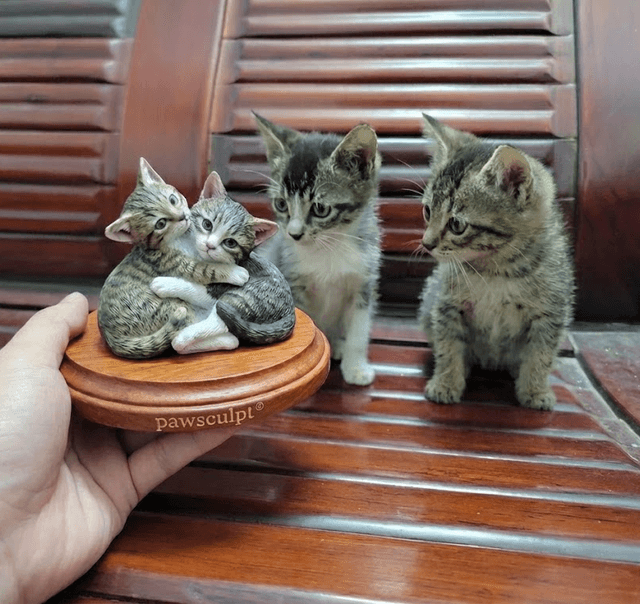
- Memory matters too — preserve your cat’s presence with custom pet figurines that honor their changing years
Why senior cat overstimulation is so easy to miss in Sphynx cats
People tend to read a Sphynx through the wrong lens. The breed’s face is alert, their body is exposed, their ears seem tuned to every rustle of the room. They look like creatures built for intensity. And in youth, many are—curious, social, theatrical in the best way.
But old age changes the meaning of alertness.
A senior Sphynx can appear engaged while already nearing its limit. The eyes track movement. The neck cranes. The body follows halfway. Then comes the small retreat most owners miss: a tighter curl through the spine, a quick skin twitch, a turn toward heat or fabric or a familiar lap. It doesn’t look dramatic, so it often isn’t recognized as fatigue.
That’s the first overlooked truth: geriatric cats often don’t need more stimulation; they need more protection from unnecessary input.
We’ve seen this pattern in conversations with pet families again and again. Someone says, “She seems restless, so I added more toys.” Or, “He cries at night, so I started doing longer play sessions.” And sometimes that helps. But with an aging Sphynx, the more accurate question is not, How do I make life busier? It’s Which sensations still feel nourishing, and which now feel expensive?
Expensive in energy. Expensive in body heat. Expensive in recovery.
The breed-specific piece most guides skip
A lot of senior cat advice is written for coated cats. That matters. A Sphynx doesn’t move through the world buffered by fur. The temperature of the windowsill matters more. The texture of the throw blanket matters more. The draft under the door matters more. Even being picked up with cool hands can matter more.
And because skin is more directly exposed, stimulation isn’t only mental. It’s tactile and thermal, sometimes all at once.
Picture a family trying to brighten their older cat’s day. They buy a crinkle tunnel, a battery toy, a cat tree near a busy window. The cat investigates each item for a minute or two, then spends the afternoon under a blanket that smells faintly of laundry detergent and sleep. They worry she’s depressed. Maybe she isn’t. Maybe she’s recovering.
That’s the counterintuitive insight: what looks like under-engagement may actually be an intelligent act of self-preservation.
"A senior pet’s retreat is often wisdom, not withdrawal."
Overstimulation doesn’t always look wild
With dogs, people imagine overstimulation as obvious frenzy. With cats—especially older ones—it can look almost polite. A geriatric Sphynx may:
- Turn away after brief play
- Groom suddenly after being handled
- Shift from lap-seeking to lap-leaving in seconds
- Ripple the skin across the back
- Flatten posture without fully hiding
- Lose interest in food right after activity
- Sleep heavily for hours after visitors leave
Those aren’t necessarily emergencies. But they are communication.
For medical concerns—pain, appetite loss, vocalization changes, weakness—we always urge readers to involve a veterinarian. The AVMA’s guidance on senior pet care is a helpful starting point, especially if you’re unsure whether a behavior change is aging, illness, or stress.
The emotional trap owners fall into
Here’s the part that goes deeper than enrichment schedules.
Many people increase stimulation because they are grieving in advance.
That may sound heavy, but it’s true. You notice your cat sleeping more. You notice the jumps are smaller, the room is crossed more slowly, the appetite is fussier when the house is cold. And because love often disguises itself as action, you begin trying to “make up for” aging with novelty.
More toys. More outings. More invitations to play.
Underneath that effort is a tender, painful wish: Stay vivid. Stay with me in the old way.
But aging doesn’t work like that. A beautiful old Sphynx is not a diminished younger cat. They are a different animal now, with a different economy of pleasure.
And once you understand that, your care gets gentler—and often more effective.
Geriatric Sphynx enrichment should focus on regulation, not entertainment
Most articles frame enrichment as adding stimulation. For senior Sphynx cats, a better frame is regulating the day so pleasure arrives in digestible amounts.
Think of it like a gallery, not an amusement park.
You don’t need twelve attractions. You need the right light, the right pacing, and room to linger.
What enrichment really means for an older Sphynx
For a geriatric Sphynx, enrichment often includes:
- Thermal comfort
- Predictable social contact
- Low-effort sensory novelty
- Accessible vantage points
- Short movement bursts
- Recovery-friendly rest spaces
That list surprises people because only one item sounds like “play” in the conventional sense. But enrichment is not the same as exertion. It means supporting a life that still feels interesting, safe, and self-directed.
One of our customers described her elderly Sphynx’s favorite ritual better than any textbook could. Every morning, she warmed a blanket in the dryer for a few minutes, laid it across the sofa arm, and the cat would climb onto it, knead twice, and settle while she drank coffee. That was the event. That was the joy.
And honestly? It was enough.
A better daily rhythm than “wear them out”
The mistake most people make is trying to tire out an older cat the way they once did. Senior cats, particularly hairless breeds with extra thermal demands, can become depleted before they become satisfied.
Try a rhythm like this instead:
- Warm first
- Offer one focused activity
- Watch for subtle stopping signals
- Transition into recovery
- Repeat later only if baseline returns
This matters because recovery time is part of enrichment. Without it, even a pleasant activity can become draining.
A practical schedule you can actually use
Here’s a sample daily pattern for an aging Sphynx. It’s not rigid, and your veterinarian’s guidance should always come first if your cat has health issues. But it gives shape to the day.
| Activity | Frequency | Duration | Why it works for seniors |
|---|---|---|---|
| Warm-up cuddle or heated bed time | 2-4 times daily | 10-20 minutes | Supports body comfort before activity |
| Gentle interactive play | 1-3 times daily | 3-5 minutes | Prevents exhaustion while preserving engagement |
| Food puzzle or scent-based enrichment | 1 time daily | 5-10 minutes | Encourages curiosity without intense movement |
| Lap time or quiet companionship | As desired | 10-30 minutes | Social fulfillment with low sensory demand |
| Grooming or skin check | Several times weekly | 2-5 minutes | Combines care, touch, and observation |
Why smell matters more than many owners realize
For this article’s angle, this is the piece we most wanted to linger on.
Aging changes sensory tolerance, but it also changes sensory preference. A senior Sphynx may begin favoring not exciting smells, but anchoring ones: your sleep shirt, the wool throw from the chair where afternoon sun lands, the warmed cotton bed that holds a trace of skin and home. These scents say, in effect, nothing surprising is required of you here.
That’s enrichment too.
Try rotating one familiar scent object rather than introducing multiple new ones at once:
- A cotton pillowcase you used overnight
- A fleece blanket your cat already favors
- A warmed towel with the home scent intact
- A cardboard box lined with a shirt you no longer mind sacrificing to cat ownership
Avoid strongly fragranced products. Senior cats can be less tolerant of intense detergents, room sprays, and “fresh” cleaning scents than owners expect. We’re not huge fans of perfumed pet spaces anyway. To a cat, “clean” does not necessarily mean “comforting.”
"The best enrichment for an old cat often feels less like entertainment and more like recognition."
— The PawSculpt Team
The commonly overlooked signs that your senior cat is getting too much input
Overstimulation is often treated as a behavioral problem. It’s usually a mismatch problem.
The room is too bright. The play session is too long. The visit is too loud. The surface is too cool. The toy moves too erratically. The cuddle starts warm and ends with too much handling. None of these sounds severe on its own. Together, they can push a geriatric Sphynx into shutdown.
Micro-story: the living room everyone thought she loved
We remember hearing from a family whose older Sphynx had started leaving the room every evening around 7 p.m. They assumed she was becoming antisocial. But that was simply the hour the television rose in volume, dinner smells filled the air, two children moved in and out of the room, and the heat from the day dropped out of the windows.
The cat wasn’t rejecting the family. She was escaping a stack of inputs her younger body might once have tolerated.
That distinction changes everything.
Watch for clusters, not single signs
One sign alone doesn’t prove overstimulation. But a cluster often does. Pay attention if you notice two or more of these after activity:
- Rapid skin rippling or flinching across the back
- Abrupt grooming after touch or play
- Tail tip twitching paired with stillness
- Pinned or slightly rotated ears
- Hiding in warm enclosed spaces
- Reduced appetite after visitors or long play
- Extended sleep beyond your cat’s usual post-activity rest
- Nighttime vocalization after a busy day
- Mild irritability during routine handling
The “after” is important. Senior cat overstimulation often appears in the recovery window, not at the exact moment the input is happening.
Myth vs. Reality
| Myth | Reality |
|---|---|
| An older Sphynx who sleeps more is bored and needs constant activity. | Sleep is often healthy energy conservation, especially when warmth and aging joints are factors. |
| More toys automatically mean better geriatric Sphynx enrichment. | Too many choices can create noise. One well-timed, low-effort activity often works better. |
| If a cat isn’t hiding, they’re handling stimulation fine. | Many seniors stay visible while quietly dysregulated. Look for subtle body-language changes. |
The sensory stack most homes accidentally create
Here’s a simple framework we use because it helps owners stop thinking in categories and start thinking in layers. Ask yourself what is happening in these five channels at once:
- Temperature: Is the room warm enough?
- Sound: TV, guests, kitchen noises, traffic?
- Touch: Cool surfaces, frequent petting, rough blankets?
- Smell: Cooking odors, candles, cleaning products, other pets?
- Motion: Fast toys, people moving around, outdoor activity at windows?
An elderly Sphynx can tolerate some stimulation in one or two channels. Problems often begin when all five stack together.
A rainy evening is a good example. The porch smells like wet wood and soil, a scent some cats find intriguing. But if windows are open, the air cools; if the family is gathered, the room grows louder; if the cat is repeatedly invited to interact, their threshold may vanish quickly. What looked like “fun family time” becomes too much.
What actually helps more than a new toy
Most owners expect us to recommend a better toy here. Sometimes that’s useful. But what often helps more is editing the environment.
Start with subtraction:
- Lower TV volume by 15-20%
- Reduce evening visitor handling
- Keep one room especially warm and dim
- Offer one soft texture your cat consistently chooses
- Remove strongly scented cleaning products from cat-rest areas
- Shorten interactions before your cat asks to leave
This matters because senior comfort is cumulative. Small reductions in sensory friction can improve appetite, sleep, and sociability far more than another purchase.
For broader senior-care reading, the PetMD guide to caring for senior cats is useful, especially for understanding how behavior changes can overlap with health changes.
How to build gentle geriatric Sphynx enrichment at home
The right environment for an older Sphynx should feel almost compositional—like arranging light in a painting. Warmth is the background wash. Scent is the undertone. Texture is the frame. Novelty is not absent, but used sparingly, with intention.
Start with warmth as a primary enrichment tool
Because Sphynx cats lack a fur coat, body temperature management is not just comfort—it shapes behavior.
If your cat is cool, they may seem lethargic, clingy, avoidant, or “moody.” Sometimes owners misread this as a personality change or cognitive decline. Then they offer more stimulation when the first need is simpler: heat.
Useful options include:
- Heated cat beds designed for pets
- Sun spots near draft-free windows
- Layered fleece or soft cotton blankets
- Pre-warmed bedding (warm, not hot)
- Elevated perches away from cold floors
One family we worked with described a remarkable shift after moving their older Sphynx’s bed from a tile-adjacent corner to a raised chair layered with a wool throw and cotton cover. The cat didn’t become more playful overnight. But she became more available—more willing to interact, more interested in food, less brittle in mood.
That’s what good enrichment does. It gives the cat enough comfort to choose life outwardly again.
"Old age doesn’t always ask for more. Sometimes it asks for softer."
Use novelty like seasoning, not the whole meal
Novelty has a place. But with seniors, especially sensitive ones, too much novelty can feel like work.
Try these low-intensity enrichment ideas:
- Rotate one toy every 4-7 days, not all at once
- Offer a paper bag one afternoon, then remove it
- Place a safe perch near a lightly active window for 10 minutes
- Introduce a scent cloth from another room rather than a whole new object
- Use food enrichment that requires sniffing and licking, not frantic batting
We’re partial to enrichment that respects dignity. An old cat shouldn’t have to perform athletic optimism to be considered mentally engaged.
Create “yes spaces” that require little from them
A yes space is an area where your cat can do the things they still enjoy without climbing, competing, or enduring environmental stress.
A good yes space for a geriatric Sphynx usually includes:
- A warm resting surface
- Easy access from the floor or a low step
- One visual point of interest
- One familiar scent
- No obligation to interact
That last point matters. Restorative environments fail when every visit becomes a summons: “Come play.” “Come say hi.” “Come see this.” Let some spaces remain places where your cat is simply allowed to be old.
A home setup comparison that makes decisions easier
Use this table to rethink your cat’s main zones.
| Home Area | High-Stimulation Version | Senior-Friendly Version | Best Use |
|---|---|---|---|
| Window perch | Cold sill, street noise, bright sun | Padded perch, partial shade, draft-free | Short visual enrichment |
| Living room bed | Near TV, foot traffic, strong smells | Side chair, warm blanket, quieter corner | Social rest |
| Play zone | Multiple toys scattered | One toy presented intentionally | Brief active session |
| Feeding area | Busy kitchen path | Calm, warm, predictable location | Better appetite and confidence |
| Night sleep area | Open, cool room | Enclosed soft bed with familiar scent | Deeper recovery sleep |
Don’t underestimate touch fatigue
Sphynx cats are often stereotyped as endlessly cuddly. Many are affectionate, yes. But aging changes tactile thresholds.
A senior Sphynx may still want closeness while wanting less handling. That means they might prefer:
- Leaning against your leg rather than being held
- Resting under a blanket beside you rather than on your chest
- Short forehead rubs rather than full-body petting
- Contact initiated on their terms, then paused
This is one of the most loving shifts an owner can make—learning that presence and touch are not identical.
The scent of your sleeve, the steady heat of your body through fabric, the familiar indentation on a cushion where you always sit together... these can comfort without demanding.
Senior cat overstimulation at night: why evenings often go wrong
A lot of owners report the same paradox. Their geriatric Sphynx sleeps all day, seems detached by late afternoon, then becomes unsettled after sunset—wandering, vocalizing, or seeming unable to settle.
The common assumption is that the cat needs more daytime exercise. Sometimes that’s true. But often, especially with seniors, the issue is that the day was too expensive, and evening is when the nervous system shows the bill.
The hidden burden of the “normal day”
Let’s imagine a pretty ordinary schedule:
- Vacuum at 10 a.m.
- Delivery at noon
- Sunny but drafty window perch in the afternoon
- A grandchild visit at 4 p.m.
- Cooking smells and kitchen noise at 6 p.m.
- Longer play session before bed because you feel guilty they “slept all day”
Nothing here sounds unreasonable.
But for an older Sphynx, that day may contain cold, noise, handling, novelty, smell shifts, and exertion with too little recovery. Nighttime restlessness is not always under-stimulation. Sometimes it is accumulated sensory debt.
That idea alone changes many households.
How to reduce evening dysregulation
Try these practical adjustments for 7-10 days before deciding whether your cat “needs more”:
- Protect one uninterrupted afternoon nap block
- Warm the evening environment early
- Shorten bedtime play
- Lower scent load after dinner
- Use a bedtime cue
- Track restlessness against stimulation
A simple tracking method
You don’t need an app. A pen and a sticky note work.
Each evening, jot down:
- Activity level
- Visitors/noise
- Temperature changes
- Play duration
- Appetite
- Night settling time
Within a week, many owners realize their cat’s rough nights follow busy afternoons—not idle ones.
The guilt piece, because it matters
We should say this plainly: if you’ve been trying harder and your cat seems less comfortable, that does not mean you failed.
It means you loved in the most human way possible—through effort.
But cats, especially old cats, sometimes ask for a different kind of devotion. Less choreography. More attention. Less stimulation. More interpretation.
And yes, there is grief in that adjustment. Not because your cat is disappearing, but because your relationship is changing form.
The art of preserving who your senior Sphynx is becoming
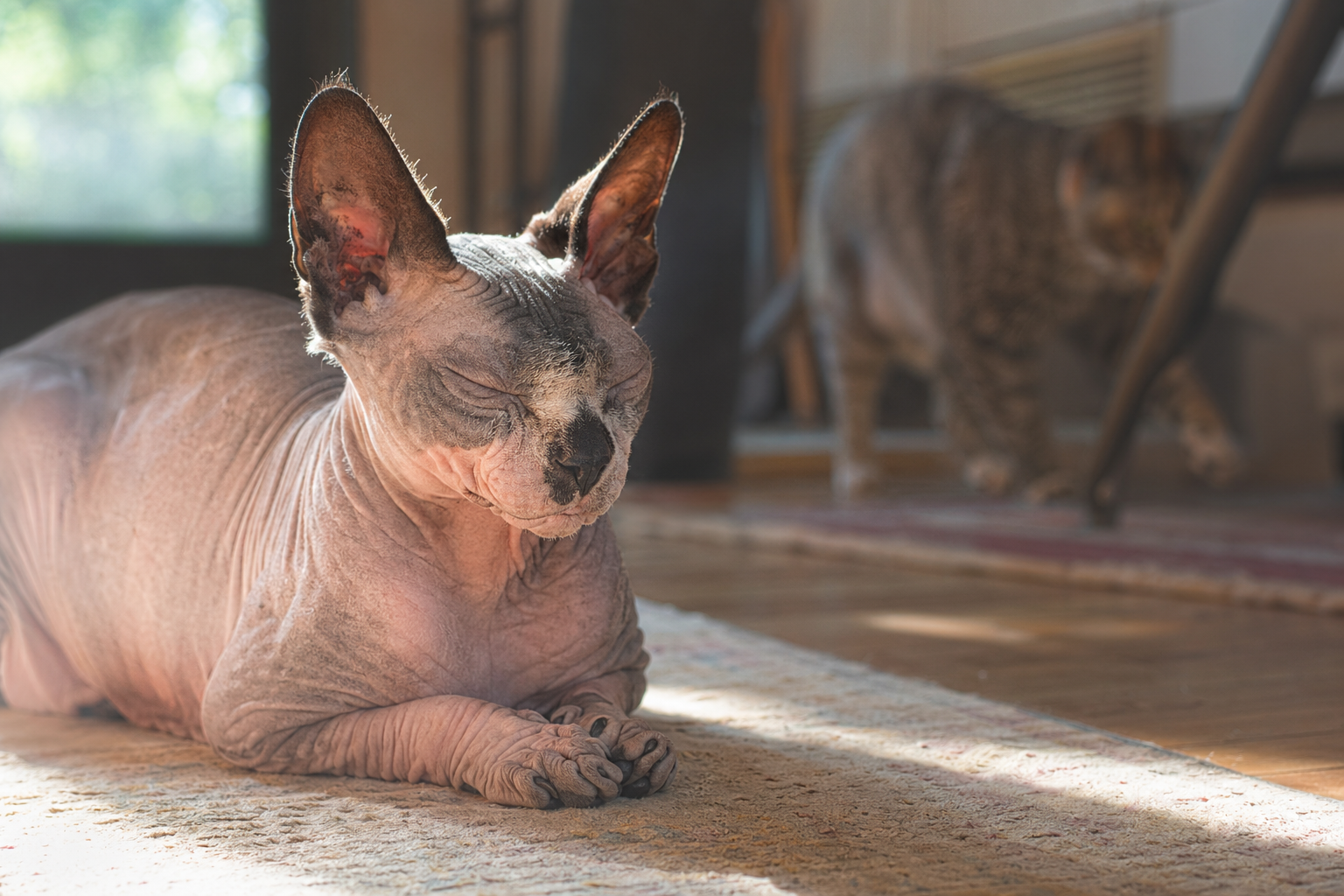
Aging has a strange aesthetic. It sharpens some details even as it softens others. The younger cat’s athletic leap may fade, but the old cat develops a new gravitas: the folded paws in the heated bed, the way the skin gathers at the shoulder, the pale crescent of light across the flank during afternoon sleep, the scent of warmed fabric and skin after a nap.
These are not lesser details. They are late details.
And late details deserve to be kept.
Why pet owners start documenting more in the senior years
In our years working with pet families, we’ve noticed something consistent: people begin photographing their pets differently as they age. Fewer action shots. More close views. More sleeping poses. More images of the exact place on the couch where the cat always settles, or the sweater they claim each winter, or the blanket that smells faintly of home and lanolin and a dozen ordinary evenings.
That instinct is wise.
You are no longer documenting performance. You are documenting presence.
If you want to preserve this season of life, try collecting:
- The favorite sleeping pose
- The blanket or sweater they always choose
- The profile view that shows their expression at rest
- The curled tail, folded paws, or shoulder line unique to age
- A note about scent memories: warmed cotton, skin after sleep, rain through the porch screen, the bed they always return to
One order that stayed with us came from a family who wanted to honor a living senior Sphynx before anything urgent happened. They told us they didn’t want a memorial after the fact alone; they wanted to celebrate the cat’s current self—the narrowed eyes in the sun, the elegant ears, the soft gravity of age. That struck us as profoundly right.
Tangible memory can be part of care, not only grief
People often wait until loss to create keepsakes. But there is something powerful about making room for memory while your pet is still here.
A photo book can do this. So can a written ritual log. And for families who want something sculptural, 3D pet sculptures can preserve the visual language of a pet’s later years in a way a phone gallery often cannot. PawSculpt’s figurines are digitally sculpted by master 3D artists, then precision 3D printed in full color, with your pet’s markings reproduced directly in resin and protected with a clear coat.
That matters especially for a Sphynx, where tone, posture, folds, and expression carry so much of the cat’s identity.
We’ll be real: no object replaces a living animal. It shouldn’t. But a well-made keepsake can become an anchor for attention. A reminder to see what is here, now.
What photos work best if you want to preserve your senior cat’s details
Whether you’re creating a personal archive or exploring custom pet figurines, the same principles help.
| Photo Type | Why it matters | Best tip |
|---|---|---|
| Eye-level profile | Captures facial structure and expression | Shoot in soft daylight, not overhead artificial light |
| Resting pose | Shows true senior posture | Photograph when relaxed, not mid-movement |
| Close-up of skin tone and markings | Important for Sphynx coloration nuances | Avoid heavy filters that flatten natural variation |
| Favorite object included | Adds personality and context | Include the blanket, chair, or bed they love most |
| Full-body side angle | Helps preserve proportions | Keep background uncluttered for a clearer silhouette |
If you’re curious about more ways pet families preserve meaningful moments, the PawSculpt blog is a thoughtful place to browse. Not because every reader needs a figurine, but because many need ideas for how to make memory visible.
"You are not preserving perfection. You are preserving evidence of a bond."
Why older pets often produce the most meaningful keepsakes
Young pets are spectacular. Old pets are legible.
By that we mean: age reveals the relationship. The preferred chair. The habitual curl. The facial expression reserved only for one person. The way a senior cat becomes inseparable from textures, routines, and rooms.
A keepsake rooted in those details tends to matter more than one based on generic “cute” appeal. That’s true whether you frame a photograph, write a page in a journal, or commission a figurine from a company like PawSculpt.
The point is not to freeze time. It is to notice time honestly.
Frequently Asked Questions
How much enrichment does a geriatric Sphynx need?
Usually less than people think, and in shorter bursts. For many older Sphynx cats, 3 to 5 minutes of focused activity once or twice a day is enough, especially if the rest of the day includes warmth, calm companionship, and easy access to favored resting spots. The quality of recovery matters as much as the activity itself.
What are signs of senior cat overstimulation?
Look for patterns after stimulation, not just during it. Common signs include skin rippling, abrupt grooming, turning away, crouching, hiding under blankets, reduced appetite after social activity, and nighttime restlessness following busy days. If the behavior is new, intense, or paired with medical symptoms, talk to your vet.
Is my senior Sphynx bored or overstimulated?
It can be hard to tell, because both can look like disengagement. But boredom usually improves with a small, well-timed invitation to interact, while overstimulation often gets worse after additional input. If your cat retreats, sleeps heavily, or seems “off” after play, visitors, or environmental noise, dial things back and observe.
What kind of enrichment is best for an older Sphynx cat?
The best geriatric Sphynx enrichment often centers on warmth, scent, gentle novelty, and low-effort agency. Think heated beds, a familiar blanket, a calm window perch, a short wand session, or a scent object that smells like home. Older cats often prefer regulation over excitement.
Why does my senior cat seem restless at night after sleeping all day?
Because daytime sleep doesn’t always mean the day was restful. Many senior cats accumulate sensory debt from noise, drafts, visitors, handling, cooking smells, and overlong play sessions. Evening can be when that overload finally surfaces.
Should I make keepsakes for my senior pet before loss?
Yes—if it feels meaningful to you. Many families find comfort in preserving the living details of a pet’s later years, whether through photos, journals, or memorial keepsakes created while the pet is still present. It can be an act of attention, not just anticipation.
Ready to Celebrate Your Pet?
Your older cat does not need to be busy to be deeply alive. Sometimes the most loving response to aging is to notice the rituals, textures, and expressions that still make your companion unmistakably themselves—and to honor them while they’re here.
If your journey with geriatric Sphynx enrichment has made you more attentive to those details, a custom PawSculpt figurine offers one beautiful way to preserve them. PawSculpt pieces are hand-modeled digitally with care, then brought to life through full-color 3D printing so your pet’s unique look lives on in vivid resin.
Create Your Custom Pet Figurine →
Visit pawsculpt.com to learn more about our process and guarantees