
6 Multi-Pet Household Myths That Are Ruining Your Shiba Inu's Enrichment
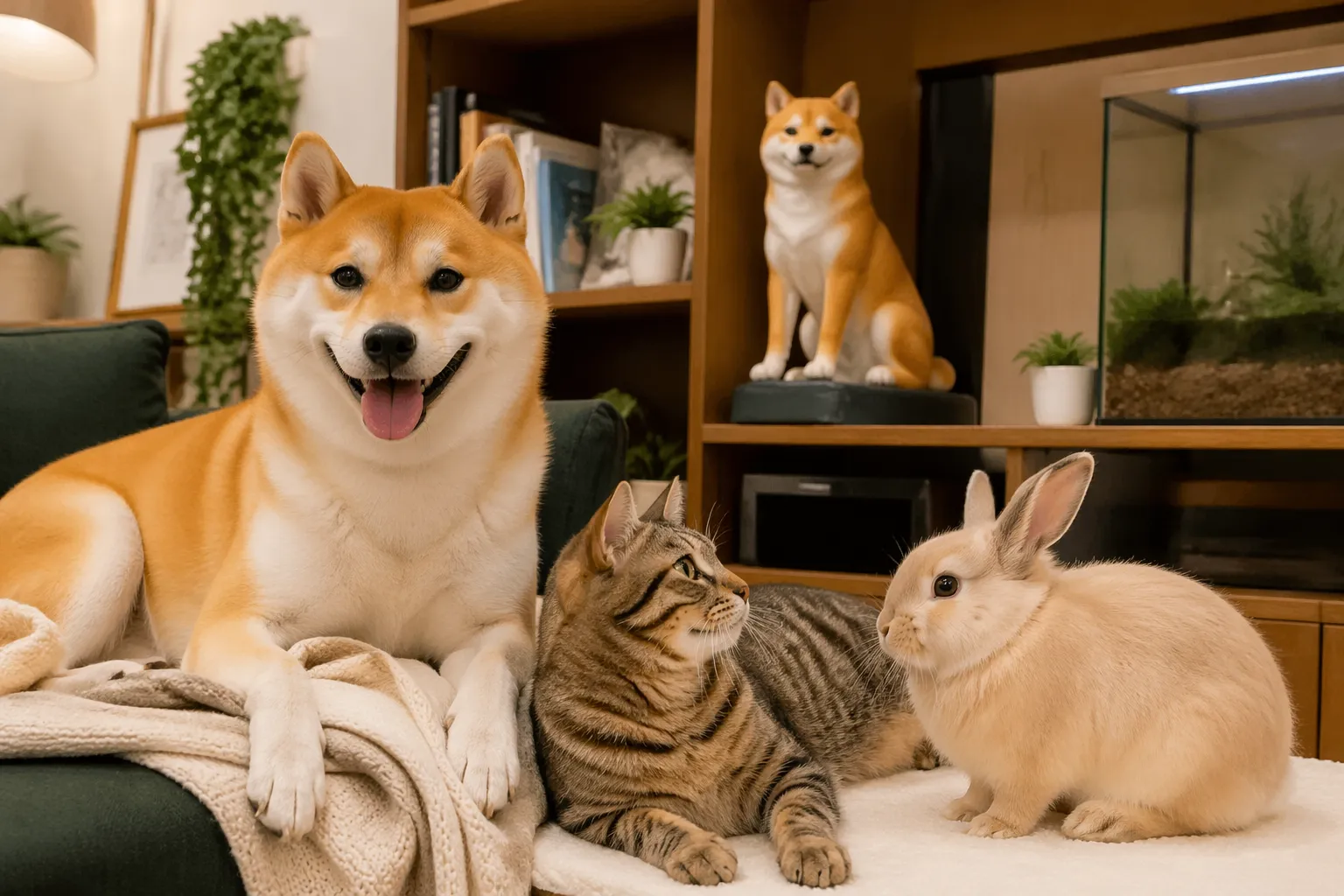
Three winters ago, shiba inu care in this bedroom meant a fox-curled dog posted at the doorway, amber coat bright against the quilt; tonight, the same spot is crowded by a cat tree, a chew basket, and a bored Shiba blinking at movement instead of choosing it.
Quick Takeaways
- Shared space is not shared enrichment — build species-specific stations your Shiba can leave and re-enter.
- More pets can reduce stimulation — competition often replaces curiosity in the average household routine.
- Watch the doorway, not the toy bin — traffic patterns reveal stress faster than play choices.
- Use scent rituals deliberately — preserve comforting smells and even explore custom pet figurines as memory anchors.
- Rotate access, not just objects — ten private minutes can outperform an hour of group activity.
Why multi-pet household enrichment fails Shibas in a very specific way
Most articles on pet enrichment myths assume a simple equation: more animals equals more stimulation. That sounds efficient. It is often wrong.
A Shiba Inu is not a generic social dog. The breed tends to be observant, selective, environmentally aware, and highly sensitive to control over space. According to the American Kennel Club's Shiba Inu breed guide, Shibas are alert, active, and strong-willed. Those traits are charming until a home starts running on group compromise. Then the very qualities that make a Shiba brilliant can make enrichment quietly fail.
Here is the overlooked angle: in a multi-pet household, the damage usually does not come from obvious conflict. It comes from constant low-grade interruption. A cat cuts across the hallway. Another dog reaches a snuffle mat first. A rabbit enclosure changes the room layout. A younger pet turns every puzzle toy into a race. None of that looks dramatic. But to a Shiba, it changes the cost of engagement.
And if the cost of engagement goes up, curiosity goes down.
That is the pattern many owners miss. They buy more toys, add more classes, schedule more “fun,” and wonder why their dog seems less satisfied. The mistake is assuming enrichment is about quantity. For Shibas, it is often about control, predictability, and clean access.
The micro-story most owners recognize too late
One family we worked with described their Shiba as “suddenly lazy” after they added a second dog and two foster kittens. The dog still ate, still walked, still occasionally zoomed through the yard. But inside, he stopped using his food puzzle, abandoned his window perch, and began sleeping under the bed where the air smelled faintly of detergent and an old blanket he had claimed years earlier.
Nothing was “wrong” in the dramatic sense. No fights. No obvious fear.
But the household had become too busy for him to engage without being interrupted every few minutes. What looked like laziness was actually withdrawal from inefficient enrichment.
That distinction matters because the fix is different.
The first framework: stimulation vs. agency
If you want to understand your Shiba’s behavior in a complex home, sort every activity into two categories:
- Stimulation: something interesting happens around your dog.
- Agency: your dog gets to choose, control, start, stop, and revisit the activity.
Many homes are rich in stimulation and poor in agency.
Think about the signs:
- Toys are available, but another pet often claims them first
- Walks happen, but always in a group pace
- Rest spots exist, but they are placed in traffic lanes
- Training occurs, but with interruptions from other animals
- Food games are offered, but completion feels contested
A Shiba may tolerate this for weeks, then begin opting out.
Here’s the counterintuitive insight: an under-enriched Shiba in a multi-pet home can look calm. Not frantic. Not destructive. Just disengaged, harder to motivate, and strangely flat. People call this maturity. Sometimes it is. Sometimes it is a dog conserving effort because participation no longer pays off.
"The richest room in the house can still be poor enrichment if your dog has no control inside it."
What successful enrichment actually measures
We encourage owners to stop asking, “How many enrichment items do we have?” and start asking four sharper questions:
- Can my Shiba access it without social friction?
- Can my Shiba leave and return without losing the opportunity?
- Can my Shiba use it without being watched, bumped, or chased?
- Does the activity fit this breed’s rhythm of observation first, action second?
That last one is especially important. Shibas often assess before they engage. They watch the room. They gauge who is moving where. They map routes. If another pet turns every setup into immediate chaos, your Shiba may simply never start.
A practical comparison
This table shows why “busy” and “enriching” are not the same thing.
| Household Setup | Looks Enriching? | What the Shiba Experiences | Likely Result in 2-6 Weeks |
|---|---|---|---|
| Shared toy basket in common room | Yes | Unclear ownership, interruption risk | Lower toy engagement |
| Group walk with two other pets | Yes | Pace mismatch, reduced sniff choice | Mental fatigue without satisfaction |
| Snuffle mat used near other animals | Yes | Resource tension, rushed foraging | Faster quitting |
| Private mat work in bedroom | Modest | Predictable access, scent familiarity | Longer focus and calmer recovery |
| Rotating solo yard time | Simple | Full movement choice, no social traffic | More confident exploration |
The surprise for many owners is that the simplest option on paper often works best in practice.
Why smell matters more than people think
Most enrichment content leans on movement and problem-solving. Important, yes. But in a crowded home, scent continuity is one of the strongest stabilizers you have.
A Shiba’s familiar blanket, a favored patch on the rug, the porch after rain, the corner of a bed where fur and sun-warmed fabric carry a known smell—these are not sentimental extras. They are orientation points. They tell your dog, “This is still your map.”
And when a household changes—new pet, foster rotation, medical recovery, aging companion—that map can blur fast.
We have heard owners describe the exact moment this hits them: they wash every shared blanket to “freshen the house,” then notice their Shiba pacing more, settling less, and sniffing longer at closed bedroom doors. Clean is not always comforting. Not immediately.
So keep one or two stable scent anchors in the home:
- a blanket washed less frequently
- a bed cover that stays in one spot
- a crate mat with familiar odor
- a low-traffic resting area your Shiba can claim
This is especially useful after a household change or pet loss. And yes, loss changes enrichment too—often dramatically.
The memory layer most care articles skip
In our years working with pet families, we’ve seen something that standard behavior guides rarely discuss: household enrichment and household memory are linked.
When one pet dies, the surviving animals are not the only ones adjusting. Owners often reorganize the home fast—moving beds, donating toys, cleaning fabric, closing off rooms because it hurts to look. Understandable. But those changes can accidentally strip the environment of continuity for the pets still living there.
That is why some families keep one shelf, one basket, one quiet corner intact for a while. Others create a non-disruptive memorial—a framed photo, collar display, or one of the custom pet figurines that holds a pet’s markings and posture in a tangible way without turning the room into a shrine. The point is not decor. The point is environmental continuity with emotional honesty.
PawSculpt’s approach resonates here because the object is digitally sculpted by master 3D artists, then precision 3D printed in full color, so a pet’s coat pattern becomes part of the resin itself. The result has visible texture, real depth, and a preserved presence that feels grounded rather than overly polished. For many families, that makes the room feel arranged—not erased.
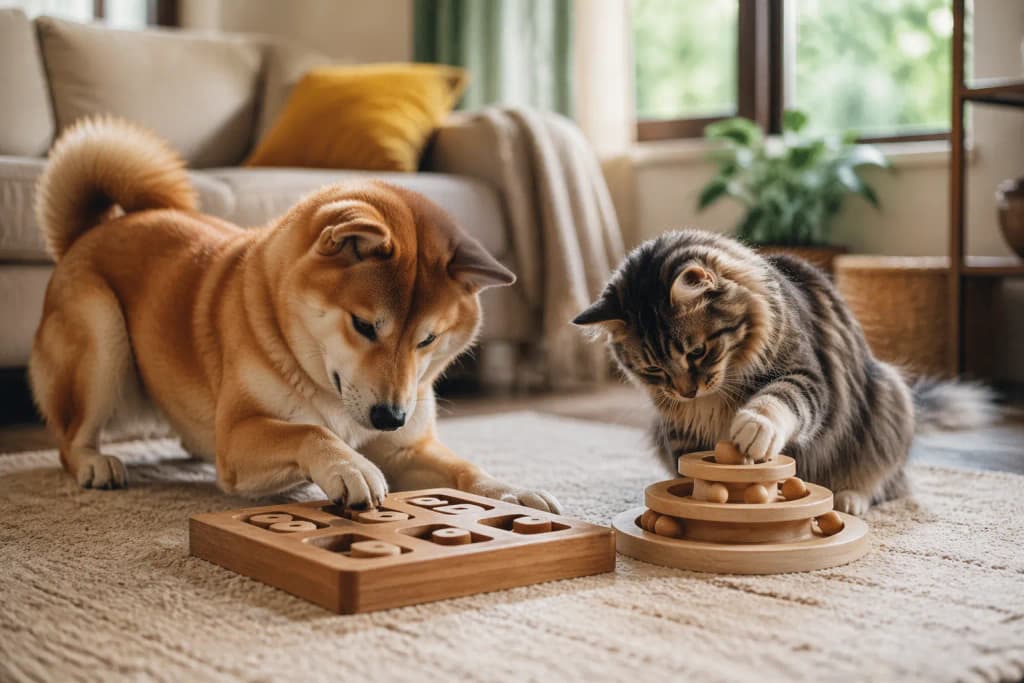
Myth 1 and Myth 2: “They keep each other entertained” and “more toys solves boredom”
These two myths travel together, and they cause more enrichment mistakes than almost any others in shiba inu care.
Myth 1: “They keep each other entertained”
Sometimes they do. Often they don’t. And even when they do, the entertainment may not be restorative.
A Shiba playing chase with another dog can look fulfilled. But if the game is repetitive, one-sided, or socially tense, it may increase arousal without providing the decompression your dog actually needs. Think of it as junk stimulation—intense, attention-grabbing, not very nourishing.
A household we observed had a Shiba and a young herding mix who wrestled twice daily. The owners were thrilled because “they tire each other out.” Yet by week four, the Shiba had become more possessive around doorways and less interested in food puzzles. Why? The play had replaced other forms of engagement, especially solo sniffing, object investigation, and quiet problem-solving.
The commonly overlooked part: fatigue is not the same as enrichment.
A dog can be tired and still undernourished mentally.
What actually helps more than constant play
Build a three-lane enrichment system:
- Solo lane: activities your Shiba does alone
- Parallel lane: activities near another pet without direct interaction
- Social lane: brief, well-matched interaction windows
Most homes over-rely on the social lane.
For a Shiba, the ideal weekly pattern usually includes:
- daily solo sniff work: 10-20 minutes
- parallel decompression time: 10 minutes in the same room, separate stations
- short social bursts: 3-8 minutes, then reset
If your dog is avoiding interaction, do not force “friendship time.” Reduce the social lane first and rebuild choice.
Myth 2: “More toys solves boredom”
We’ll be real: we are not huge fans of giant toy baskets for most multi-pet homes.
Why? Because abundance can create visual clutter without usable value. A Shiba often does better with fewer, clearer options than with a heap of objects carrying other pets’ saliva, scent, and recent claims. That heap may smell like competition more than fun.
One customer told us her dog ignored a living room basket of thirty toys but came alive for one old fleece tug kept in a closed bedroom drawer. The difference was not novelty. It was context. The toy appeared under controlled conditions, held the right scent, and arrived without social pressure.
A better toy rotation model
Instead of offering everything at once, divide toys by function:
| Toy Type | Best Use in a Multi-Pet Household | How Often | Common Mistake |
|---|---|---|---|
| Foraging toys | Private feeding or solo decompression | Daily | Using near faster pets |
| Tug toys | One-on-one interaction with owner | 3-4 times weekly | Leaving out for resource conflict |
| Chews | Calm settling after arousal | Several times weekly | Offering in traffic-heavy spaces |
| Scented soft toys | Comfort and low-intensity engagement | Rotate weekly | Washing too often |
| Puzzle toys | Focus building and confidence | 2-5 times weekly | Making them too hard too fast |
The logic is simple: assign environment before object. The room matters as much as the toy.
"In multi-pet homes, enrichment fails less from a lack of love than from too many overlapping signals."
— The PawSculpt Team
Personal Aside
We’ve noticed something odd and surprisingly consistent: the “favorite” object in a home is often not the most expensive toy. It’s the one that still smells like a specific season of life—a blanket from puppyhood, a sun-warmed bed cover, the edge of a robe that followed late-night storms and early walks.
The bedroom test
Because your required opening setting matters here in a practical way, let’s stay in the bedroom for a moment. Bedrooms often reveal the truth of a multi-pet household faster than living rooms do.
Why? Bedrooms contain:
- stable fabrics
- concentrated familiar scent
- clearer rest hierarchies
- fewer novelty objects
- stronger owner association
Watch where your Shiba chooses to settle when all pets are free. If your dog repeatedly chooses the far side of the bed, under-bed corners, or the doorway where airflow carries the smell of familiar laundry and skin, that is data. It may signal a need for lower social intensity—not a need for more excitement.
And if your dog only plays in the bedroom but not in common areas, don’t dismiss that as quirky. It means enrichment safety is location-dependent.
Myth 3 and Myth 4: “Fair means equal” and “group activities are best for bonding”
These myths sound compassionate. They are also one of the fastest ways to flatten a Shiba’s motivation.
Myth 3: “Fair means equal”
In homes with multiple animals, owners understandably want fairness. Same treats. Same walk length. Same toy count. Same training time.
But equal is not the same as fair.
A Shiba’s enrichment profile may need more observational time, more distance, shorter social sessions, and more control over approach. Giving every pet the exact same setup can create chronic mismatch. The bold truth: trying to make everything equal often means no one gets what actually works.
A family with a Shiba, a senior Beagle, and a young cat once scheduled nightly “family floor time.” Same room. Same 20 minutes. Same scatter feeding game. The Beagle loved it. The cat treated it as a hunting event. The Shiba took two mouthfuls, then stared at the hallway and stopped participating altogether.
The owners thought he was being aloof. He was being rational.
A smarter fairness model: proportional enrichment
Think in terms of proportional fairness:
- each pet gets what supports its nervous system
- each pet gets access scaled to its speed and confidence
- each pet gets routines that fit species and age
- each pet gets undisturbed time
That might look like:
- 15 minutes of solo scent work for the Shiba
- 10 minutes of food foraging for the Beagle
- vertical play for the cat
- separate recovery spaces for all three
That is fair, even if it is not identical.
The four kinds of “same” that backfire
- Same schedule — useful for meals, not always for play
- Same space — easy for humans, hard for territorial or selective pets
- Same difficulty level — frustrating when one animal solves faster
- Same social expectation — especially rough on independent breeds
If your Shiba is regularly “opting out,” inspect which type of sameness is causing friction.
Myth 4: “Group activities are best for bonding”
Group activities are efficient for humans. That does not make them best for dogs.
Here is the counterintuitive part: in many homes, separate experiences create better group harmony than forced togetherness does. If each pet gets its needs met individually, the shared hours become calmer. If each pet is underfilled individually, the shared hours become competitive.
We see this constantly in customer stories. One of our customers described a breakthrough after she stopped insisting on one big evening walk with both dogs. Instead:
- the Shiba got a 20-minute “sniff and choose” walk
- the younger dog got a brisk training walk later
- both dogs spent 8 minutes doing parallel chewing on separate mats afterward
The result was not less bonding. It was less friction.
"Bonding is not measured by how much time pets spend together, but by how little they have to defend themselves."
Why group walks can quietly fail Shibas
Group walks are popular because they save time. Yet in dog behavior terms, they often compress choice:
- pace is set by the fastest mover
- sniff duration is cut short
- leash tension transfers between animals
- visual scanning increases
- owner attention is divided
A Shiba can complete that walk and still feel mentally unfinished.
What helps more is a split model:
- primary walk for the Shiba alone or with one calm companion
- secondary shared outing only if the energy is right
- re-entry routine at home with private decompression
That re-entry routine is where many owners lose the plot. Pets come in, water bowls clink, paws skid on the floor, the room smells like outside dirt and damp fur, everyone is aroused, and then people wonder why the rest of the evening feels edgy.
For 5-10 minutes after a walk, reduce stimulation:
- dim the path into the main room
- separate entry if possible
- offer water at different stations
- use mats, not loose toys
- avoid immediate high-energy greeting
A simple assessment tool
If you want to know whether group activities are helping, track these five indicators for two weeks:
| Indicator | Healthy Response | Warning Sign | What It Usually Means |
|---|---|---|---|
| Post-activity settling | Lies down within 10 minutes | Pacing or scanning | Too much arousal |
| Return to toys later | Re-engages calmly | Avoids room or objects | Activity felt socially costly |
| Doorway behavior | Neutral entry/exit | Blocking, freezing, hovering | Space tension |
| Appetite after activity | Normal | Delayed or rushed eating | Stress spillover |
| Sleep quality that night | Deep rest | Startle waking, frequent moving | Nervous system still activated |
Use behavior, not good intentions, as your scorecard.
The memory-and-bonding connection
There is another layer here that generic behavior articles usually skip: how owners interpret “bonding” through visible togetherness. We understand why. Shared scenes comfort us. Two pets on one rug. A dog under the bed while the cat curls on the duvet. Everyone gathered near the same window while rain darkens the porch. It looks like harmony.
Sometimes it is. Sometimes one animal is simply enduring proximity because the household has not offered better options.
That is not a moral failure. It is just a design issue.
At PawSculpt, families often send photos that reveal this beautifully—one pet leaning into the camera while another sits half a step back, alert but separate, dignified in that very Shiba way. A good likeness preserves not only markings but posture, spacing, and attention. That is part of why some people treasure 3D pet sculptures so deeply: they capture relationship geometry, not just appearance.
Myth 5: “If there’s no aggression, the household dynamics are fine”
This myth causes delayed intervention. By the time aggression appears, the household has usually been broadcasting smaller warnings for weeks or months.
The behavioral signs people dismiss
In a multi-pet household, stress often shows up as:
- taking longer routes through rooms
- pausing at thresholds
- choosing elevated or tucked-away rest areas
- abandoning food projects midway
- licking lips during another pet’s approach
- changing sleep location repeatedly
- guarding owner attention with body placement rather than overt growling
None of these signs look dramatic on social media. They look subtle. Mild. Easy to rationalize.
But subtle does not mean unimportant.
According to guidance from VCA Animal Hospitals on pet behavior and stress signals, changes in routine behavior, body language, and appetite can all indicate underlying strain. We are not vets, and for medical causes you should absolutely check with your veterinarian. Still, from a home-design standpoint, these signals often point to too much social friction around everyday activities.
The overlooked metric: route efficiency
Here’s the thing most articles miss. Watch your Shiba’s route efficiency.
A comfortable dog takes direct paths.
A conflicted dog starts taking detours.
That means:
- circling around furniture to avoid another pet
- waiting to approach the water bowl
- abandoning a bed if another animal passes nearby
- choosing under-bed access instead of open floor movement
This is not random. It is household mapping.
- Pick three times of day: morning, evening, post-walk
- Record where each pet pauses, yields, or blocks
- Note any spots where your Shiba hesitates for more than two seconds
- Rearrange one obstacle or station, then observe again
You will often find the problem faster than if you stare at toy usage alone.
Micro-story: the water bowl nobody noticed
A customer once told us her Shiba had become “finicky” about drinking. No medical issue showed up on the vet check. The actual problem? The second dog had started lounging near the kitchen threshold in the afternoons. The water bowl was still accessible in theory, but not in comfort.
They moved one bowl to the bedroom hallway and one to the office. Drinking normalized within 48 hours.
That is household dynamics in action. Not dominance. Not stubbornness. Logistics.
Why scent changes can trigger social stress
We promised to lean into smell, because it matters deeply here.
Multi-pet homes are layered scent systems. Food. fur. damp paws. litter dust. laundry soap. rain on the porch boards. the sweet-musty warmth of a dog bed after a nap. And Shibas notice all of it.
If one pet goes to the vet, comes back carrying disinfectant and clinical odor, the social equation may wobble for hours. If you deep-clean all bedding at once, the shared scent field resets abruptly. If a new pet’s blanket enters the room carrying shelter smell, old stress, or detergent your dog has never encountered, curiosity and caution may spike together.
What helps:
- avoid washing every pet textile on the same day
- reintroduce returning pets calmly after vet visits
- keep one stable scent object in each core room
- add new smells gradually, not all at once
This advice sounds small. It is not.
A diagnostic table you can actually use
Here is a quick way to interpret what you are seeing before it escalates.
| Subtle Sign | Often Misread As | What It More Likely Indicates | Useful Adjustment |
|---|---|---|---|
| Sleeping under bed | Quirkiness | Need for low-traffic refuge | Create protected rest zones |
| Ignoring puzzle toy | Boredom | Activity feels socially costly | Move puzzle to private area |
| Hesitating at doorway | Stubbornness | Predicting interruption | Clear traffic bottlenecks |
| Following owner closely | Clinginess | Competing for secure access | Add solo routines and stations |
| Sudden room switching | Restlessness | Scent or social instability | Preserve familiar fabrics/placements |
The phrase “socially costly” is worth holding onto. It explains a lot.
The aggression trap
Many owners wait for a clear red line—snapping, growling, a fight. But by then the lower-level stress has already shaped the dog’s habits.
The better standard is this: if your Shiba has to calculate too much before engaging, enrichment is already compromised.
That calculation may include:
- Who else is here?
- Will I be followed?
- Will the toy be taken?
- Can I finish?
- Can I rest after?
A dog living inside those calculations all day may still behave “well.” Yet the cumulative effect can be withdrawal, startle-proneness, touch sensitivity, or stubborn-seeming refusal.
Honestly, this is why generic enrichment checklists underperform in real homes. They count objects, not friction.
Myth 6: “Rotation and novelty matter more than routine”
Novelty has become enrichment culture’s favorite buzzword. And yes, novelty can be useful. But for many Shibas in busy homes, routine beats novelty more often than owners expect.
The novelty trap
A new lick mat. A new foraging box. A new training game. A subscription box full of exciting textures. It all looks enriching—and some of it is.
But if your dog is already navigating shifting pet relationships, doorway traffic, and variable access to resources, novelty can become one more thing to process. The issue is not that new objects are bad. The issue is novelty layered on instability.
- orientation
- access
- engagement
- recovery
That sequence is how many Shibas stay confident.
Build a ritual, not a random activity menu
- 5 minutes transition after household bustle or walks
- 10-15 minutes solo enrichment in one chosen location
- 2-3 minutes low-demand interaction with you
- settle period with chew or bed rest
- optional brief group time only if everyone is calm
This works because it reduces decision load. Your dog learns not just what happens, but what happens next.
A Shiba that knows the sequence often engages more deeply.
Why routine preserves identity in a crowded home
This may sound almost philosophical, but it has practical value: routines protect a pet’s sense of self inside a household where every day contains compromise.
That is especially important for breeds like the Shiba, whose personality often includes a very distinct style of preference. A preferred corner. A preferred angle on the bed. A preferred pause before stepping outside. A preferred toy carried but not chewed. Those are not trivial quirks. They are part of the dog’s behavioral identity.
When a home gets crowded, that identity is often the first thing to blur.
And that blurring is exactly why some keepsakes matter so much to people too. We have seen families choose a figurine not only after loss, but during life transitions—before a move, after introducing a new pet, while a senior dog is still with them but slowing down. They want to preserve a certain expression, a certain upright sit, a certain look from the foot of the bed where morning light catches red fur. That is one reason memorial keepsakes and celebration pieces resonate: they hold form against change.
What to do this week: the 7-day Shiba reset
If your dog seems under-enriched in a multi-pet household, start here.
Day 1: Map the friction
Notice where your Shiba hesitates, reroutes, or quits.Day 2: Create one protected enrichment zone
Bedroom corner, office rug, gated hallway—simple is fine.Day 3: Separate feeding challenge from social space
Offer one puzzle or forage activity privately.Day 4: Introduce parallel calm
Two pets in one room, different stations, no direct interaction.Day 5: Cut one group activity in half
Replace the saved time with solo sniffing or decompression.Day 6: Preserve one scent anchor
Do not wash everything. Keep one familiar textile stable.Day 7: Review outcomes
You are looking for:- quicker settling
- longer focus
- more direct movement
- calmer sleep
- renewed interest in one favored activity
This is not a miracle plan. But within 7 to 14 days, many owners can see whether friction—not lack of options—was the actual problem.
"A dog that stops choosing is not always stubborn. Sometimes the room has become too expensive."
What if one pet has died?
This article is about living household dynamics, but many multi-pet homes change because one companion is gone. That loss can scramble routines for everyone.
The common advice is to “keep pets busy.” We think a better first step is to keep the environment legible.
That means:
- maintain a few familiar routes and resting areas
- avoid removing every scent item at once
- preserve feeding timing where possible
- keep solo attention consistent
- expect shifts for several weeks, not just several days
Some families also want a physical anchor while the home recalibrates. A framed photo is lovely. A collar on a hook can be enough. And for others, a full-color figurine becomes the right object because it preserves posture, markings, and expression in three-dimensional space. With PawSculpt, the piece is hand-modeled digitally with care, then brought to life through full-color 3D printing in resin, followed by a protective clear coat. No applied paint layer, no artificial glossiness pretending to be perfection—just color built into the material itself, with the natural texture that makes the result feel authentic.
We mention that here for one reason only: tangible memory can stabilize a room. Not magically. Not instantly. But sometimes meaningfully.
A practical shiba inu care plan for multi-pet household success
Let’s turn all of this into something operational.
The weekly baseline that works for most Shibas
This is a good starting template for healthy adult dogs. Adjust for age, health, and temperament—and if you’re dealing with anxiety, pain, or sudden behavioral change, consult your veterinarian or a credentialed behavior professional.
| Activity | Frequency | Duration | Why It Matters |
|---|---|---|---|
| Solo sniff walk | Daily | 15-25 min | Builds agency and reduces social compression |
| Private enrichment task | Daily | 10-15 min | Restores confidence around resources |
| Parallel calm with another pet | 4-6x weekly | 5-10 min | Teaches coexistence without pressure |
| One-on-one training | 3-5x weekly | 3-8 min | Sharpens communication and focus |
| Protected rest window | Daily | 30-90 min | Prevents constant social vigilance |
The strongest routine is usually not the most elaborate one. It is the one your dog can predict and trust.
The “if-then” guide for common problems
Use this framework when troubleshooting:
- If your Shiba ignores toys in common rooms, then test the same toy in a private zone.
- If your Shiba seems tired but unsettled, then reduce social play and increase solo sniffing.
- If your Shiba follows you constantly, then add secure stations instead of more excitement.
- If your Shiba only relaxes in the bedroom, then replicate bedroom conditions elsewhere: softer fabric, lower traffic, familiar smell.
- If your Shiba has become less playful after adding another pet, then audit interruption frequency, not toy inventory.
That last one matters. Interruption frequency is the invisible tax in many homes.
Photo-taking as a behavior tool (an unexpected one)
This may seem like a tangent, but stay with us. Taking thoughtful photos of your dog can actually improve your understanding of household dynamics.
Why? Because photos freeze posture you miss in real time.
Take images during:
- rest in preferred locations
- doorway pauses
- parallel time with another pet
- post-walk settling
- object engagement in different rooms
Review them later. You may notice:
- ears set slightly back near one area
- repeated body angle away from another pet
- stronger expression in one room than another
- looser posture during solo activities
We’ve seen families use this unintentionally while preparing reference photos for custom pieces. The process of selecting images often reveals what they value most: “This is the look she had only in the bedroom,” or “This was his calm face on the porch after rain.” Those observations are behavior data wrapped in sentiment.
If you ever do want to preserve that version of your dog, that is where a service like PawSculpt can feel especially meaningful. The team works from photos to create a digitally modeled likeness, then uses advanced full-color 3D printing technology to reproduce markings directly in resin. The craft is modern, but the emotional function is old and human: hold onto what mattered before the room changes again.
The mistake most people make in the first month
They add. More toys. More classes. More shared time. More novelty.
What usually helps first is subtraction:
- less interruption
- less forced togetherness
- less clutter
- less competition around resources
- less unpredictable washing/rearranging of core scent items
Then, once your Shiba starts choosing again, add complexity carefully.
That sequence matters.
Signs your reset is working
Within 1-3 weeks, many owners report:
- faster approach to enrichment stations
- fewer pauses at thresholds
- more complete foraging sessions
- deeper daytime naps
- more “spontaneous” play initiation
- calmer coexistence with other pets
Notice the word spontaneous. That is the metric we like best.
Because when enrichment is truly working, you stop having to sell the activity.
The deeper point: enrichment is also about dignity
This article is not really about toys. Not ultimately.
It is about whether your Shiba gets to remain fully recognizable as themselves inside a busy home.
A dog with dignity gets:
- places to withdraw without social penalty
- access to preferred activities without interference
- routines that make sense
- time alone with you
- objects and scents that preserve continuity
That sounds simple. It is not always easy. But it is the work.
And for those of us who live closely with animals, dignity is what we miss most when a season changes. The shape on the quilt. The alert pause at the bedroom threshold. The warm smell left on a blanket after sleep. The tiny grain of fur caught in sunlit fabric. Not grand moments. Specific ones.
Those are often the moments worth preserving—whether in routine, in photographs, or in tangible keepsakes that continue the visual language of your home.
Frequently Asked Questions
Is a Shiba Inu good in a multi-pet household?
Yes, many are—but success depends less on friendliness and more on setup. Shibas often do best when they have clear routes, separate resources, and permission to opt out of social activity. A home that respects choice usually works better than one that pushes togetherness.
Why does my Shiba ignore toys when other pets are around?
Because the toy may not be the problem. In many cases, your dog is calculating interruption risk, resource tension, or lack of clean access. Test the same object in a private space before deciding your Shiba is bored.
How much solo enrichment does a Shiba need each day?
For most healthy adult dogs, 10 to 20 minutes of solo enrichment daily is a strong baseline, especially alongside a sniff-centered walk. Some need more during household transitions, after adding a pet, or when group routines dominate the day.
What are signs of stress in a multi-pet household?
Look for subtle changes: hesitating at doorways, rerouting through rooms, leaving puzzles unfinished, changing nap spots, or shadowing you more than usual. These signs often appear well before overt conflict, which is why they matter.
Does more pet play always mean better enrichment?
No. Play can be stimulating without being satisfying. If your Shiba seems tired but not settled, reduce chaotic group play and increase solo sniffing, private food work, and low-pressure parallel time.
Should I change the house quickly after one pet dies?
Usually, no. It is often better to keep the environment recognizable for a while—maintain a few routines, preserve some scent continuity, and avoid removing every object at once. If grief is affecting your remaining pets or you, slower changes tend to be easier on the whole household.
Ready to Celebrate Your Pet?
Every pet has a story worth preserving. In a busy home, those details can blur faster than you expect—the watchful sit at the bedroom door, the exact tilt of a Shiba’s ears, the red-gold markings that catch morning light. Thoughtful shiba inu care is partly about enrichment, and partly about noticing what makes your dog unmistakably themselves.
Visit pawsculpt.com to learn more about our process and guarantees