7 Grooming Myths Your Young Adult Poodle Doesn't Believe (And Neither Should You)
The slick click of the clipper guard hitting the coffee table is your soundtrack for poodle grooming—and your young adult dog is already side-eyeing you like, really, we’re still believing that myth?
Quick Takeaways
- Adult coat changes everything — reset your routine once puppy fluff gives way to denser curls.
- More bathing isn’t always cleaner — over-washing often creates tangles, dryness, and more brushing.
- Shorter isn’t lower-maintenance — coat length, skin health, and behavior all interact.
- Use grooming as observation time — track ears, paws, skin, and posture every session.
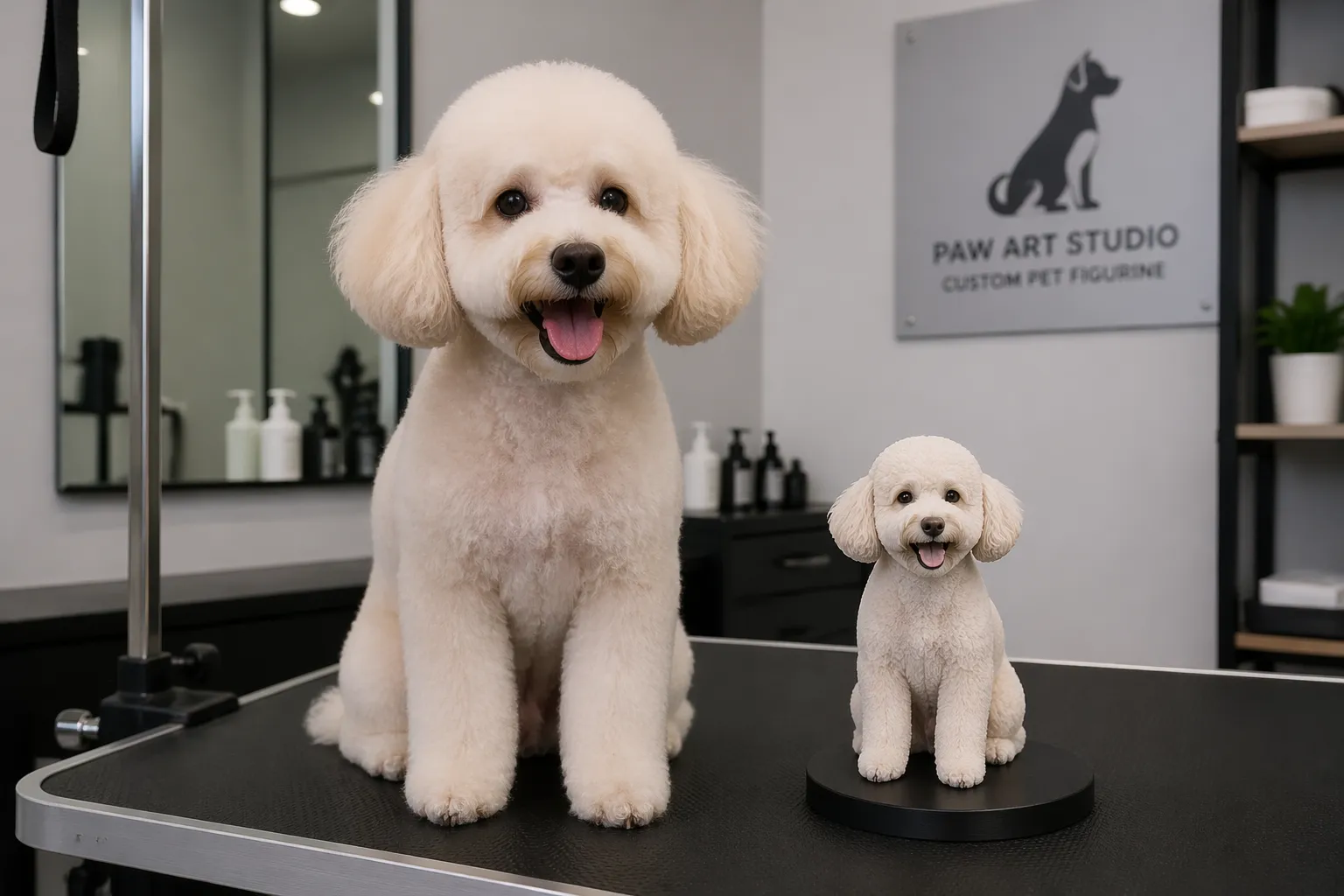
- Save their signature look — many owners turn favorite coat stages into custom pet figurines and lasting keepsakes.
Why young adult poodle care gets misread
Here’s the part a lot of dog grooming myths skip: a young adult dog is not just an older puppy with a bigger body. Around that transition from puppy coat to adult coat, your poodle’s grooming needs can get harder before they get easier. That catches people off guard.
We’ve seen this pattern again and again. A dog who tolerated a quick brush at 6 months suddenly mats behind the ears at 13 months. A coat that looked airy and forgiving starts grabbing every burr, every drop of drool, every tiny knot from a harness rub. Owners think they’re doing something wrong overnight. Usually, they’re not. The coat changed. The system didn’t.
That’s the unique angle most articles miss: young adult poodles don’t need “more grooming” so much as a different grooming logic. The cause-and-effect chain matters.
If the coat texture gets denser, then your brush technique has to change.
If your dog is more active, then friction points matter more than overall coat length.
If grooming sessions become emotionally loaded, then even perfect tools won’t save a bad routine.
A quick example. One customer we worked with had a sporty standard poodle who did great with baths, hated line brushing, and developed mats only under the collar and at the “elbows” where the front legs moved. The owner kept trimming shorter, assuming less hair meant less work. But the real issue was friction plus incomplete drying, not coat length. Once they switched to a post-walk comb check and fully dried those high-rub zones, the problem eased up fast.
That’s why this article isn’t just “brush more” or “book the groomer every X weeks.” You can find that anywhere. We’re going after the myths that waste time, create frustration, and make owners feel like their dog is somehow “difficult” when the grooming plan is the thing that’s off.
The sound test nobody talks about
Young adult poodles tell you a lot through sound before you notice it visually.
Listen for:
- The scratch-scratch pause at one ear after a bath
- The tiny Velcro-like tug when a harness comes off over a knot
- The dull drag of a brush hitting packed coat instead of gliding
- The toenail tick on hardwood getting sharper over two weeks
- The lip-smack and head turn that means “I’m done with this session”
That soundtrack matters. It turns grooming from a cosmetic chore into a diagnostic tool.
According to the American Kennel Club’s poodle breed guide, poodles have a coat that requires consistent upkeep, but consistency doesn’t mean mindless repetition. It means adjusting to life stage, coat texture, and your individual dog’s tolerance.
"The best grooming routine isn’t the longest one. It’s the one your dog will reliably let you finish."

Myth #1 in poodle grooming: “If the coat is short, maintenance is basically done”
This one hangs on because it sounds logical. Less hair, less work. End of story. But in poodle care, short coats often reduce one category of work while increasing another.
A short poodle trim can absolutely make brushing easier. No argument there. But very short clips can also make skin changes more visible, expose sensitive areas to friction, and create a false sense of security. Owners stop checking with a comb because the dog “looks fine.” Then ear edges get funky, paws get fuzzy between pads, and nails quietly become the main issue.
What actually changes with a shorter trim
Think of grooming work in four buckets:
- Detangling
- Skin monitoring
- Sanitation and paw maintenance
- Behavioral tolerance
A shorter trim usually helps #1. It does not eliminate #2, #3, or #4.
Micro-story: We’ve talked with plenty of poodle owners who felt relieved after a big clip-down—until a week later, when they noticed their dog licking one paw nonstop. The coat wasn’t the problem anymore. The exposed irritation between the pads was. The shorter trim helped them finally see it.
So yes, shorter can be easier. But easier does not mean maintenance-free.
Here’s a practical breakdown:
| Grooming Area | Longer Coat | Shorter Coat | What Owners Often Miss |
|---|---|---|---|
| Body brushing | More time, more line brushing | Less time, still needs checking | Friction mats can still form in key spots |
| Skin visibility | Harder to inspect | Easier to inspect | Dryness, clipper irritation, and redness show faster |
| Paws | Hair traps debris | Easier cleanup | Pad hair still needs attention |
| Ears | Hair can hide moisture | Looks cleaner outside | Internal ear care still matters |
| Nails | Easy to overlook | Still easy to overlook | Sound on floors tells on you first |
The overlooked part: friction zones beat overall length
This is the piece most owners don’t hear soon enough. Matting is often a location problem, not a full-coat problem.
Check these zones every 48 hours if your poodle is in the coat-change phase:
- Behind the ears
- Under the collar or harness
- Armpits
- Base of tail
- Inner thighs
- Between paw pads
If those six places stay clear, the rest of the coat is usually manageable.
And if they don’t, the answer isn’t always “go shorter.” Sometimes the answer is:
- switch harness material
- remove collars indoors
- dry more thoroughly after a bath
- comb after high-activity days
- trim just the trouble zones
That’s a better use of energy than doing giant all-over fixes every few weeks.
So what should you do?
Use this simple rule:
- Short trim + active dog = inspect skin and friction points more often
- Longer trim + lower activity = line brush more often
- Any trim + coat transition = never trust appearances alone
Run a metal comb through the coat. If the comb doesn’t pass to the skin, the brush job isn’t finished. That sounds strict, but it saves time because you’re catching problems while they’re still five-minute problems.
Dog grooming myths about bathing: “Dirty coat means bathe more often”
Honestly, this myth causes a lot of unnecessary work.
A young adult poodle gets grimy. That part is true. They collect saliva on leg furnishings, trap pollen in curls, and somehow turn one wet walk into a full-body event. But more frequent bathing is not automatically better grooming.
Why? Because washing is only one step. The full chain is:
bath → rinse → dry → comb through
If you increase baths without improving drying and combing, you often create more tangles, more skin dryness, and more resistance the next time your dog sees a towel.
Micro-story: A family once told us their miniature poodle smelled “doggy” two days after every bath, so they started washing weekly. The coat got fluffier for a few hours, then tighter and harder to brush by day three. The issue wasn’t dirt. It was trapped dampness near the skin and product residue from incomplete rinsing.
That happens a lot more than people think.
The counterintuitive insight: a slightly dirty coat can sometimes be easier than a poorly dried clean coat
Not filthy. Not neglected. But a coat with a little natural oil often brushes more predictably than one that was bathed badly and left with micro-tangles.
That’s the kind of insight you won’t find in generic “wash your poodle regularly” posts. The real variable is not just frequency. It’s finish quality.
If you bathe your poodle at home, the make-or-break step is drying. And not “mostly dry.” Dry dry.
Signs the bath helped vs. hurt
Listen and look.
A successful bath usually sounds like:
- less scratchiness after drying
- comb gliding without catching
- nails and paws tapping cleanly, not with damp fluff clumping
A bath that backfired often sounds like:
- repeated shaking 20 minutes later
- licking at one leg or chest area
- brush dragging the next day
- damp “squish” at dense coat spots near the skin
If that second list sounds familiar, fix the process before you increase the schedule.
A simple bathing decision table
Use this instead of guessing.
| Situation | Best Move | Why It Works | Time Needed |
|---|---|---|---|
| Light dirt on legs or feet | Spot rinse or wipe | Avoids full-coat drying burden | 5-10 minutes |
| Mild odor, coat still combable | Brush thoroughly first, then reassess | Dirt may be sitting on surface | 10 minutes |
| Full-body grime after muddy outing | Full bath plus complete dry | Prevents debris from compacting into coat | 45-90 minutes |
| Skin seems irritated | Pause home products, call your vet | Could be allergy, yeast, or irritation | Varies |
| Recurring stink after baths | Improve rinse/dry steps | Residue and dampness are common culprits | Next session |
We’re not vets, so if odor comes with redness, hair loss, ear debris, or heavy scratching, that’s a medical conversation—not a grooming one. VCA Hospitals’ skin and coat health resources are a solid starting point if you’re trying to figure out whether this is coat maintenance or a skin issue.
What to do instead of bathing “just because”
Try this order:
- Comb first
- Sniff-check ears, feet, and beard separately
- Spot-clean the dirty zone
- Use a full bath only if debris or odor is widespread
- Dry completely before the dog curls up on the sofa
That last point matters. A dog who naps half-damp compresses curls against the body and creates little hidden tangles. The living room may look peaceful. The coat, not so much.
"A clean dog isn’t always a well-groomed dog. Finish matters more than foam."
Myth #3: “Daily brushing is the gold standard for every young adult dog”
This sounds responsible. It also sounds exhausting. And for many poodle households, it sets up the wrong goal.
We’re not anti-brushing. Not even close. But daily brushing is one of those pieces of advice that gets repeated without enough context. The better question is: daily brushing of what, how deeply, and for what reason?
Because here’s the thing. A surface brush every day can create the illusion of diligence while missing the areas that actually mat. Meanwhile, a focused, strategic routine three to five times a week may produce better results with less stress.
Surface brushing vs. structural grooming
A lot of owners are doing what we’d call surface grooming. The slicker glides over the top. The dog looks fluffy. The session ends before anyone gets annoyed. Totally understandable.
But a poodle in the young adult coat stage usually needs structural grooming:
- line brushing down to the skin
- metal comb confirmation
- targeted friction-zone checks
- paw and ear monitoring
- behavior management so the dog doesn’t dread the setup
Micro-story: We remember one order from a customer who uploaded a series of photos showing her poodle’s “favorite shaggy phase.” In every image, the topcoat looked perfect. But in the profile shots, the armpit coat was packed tight. She had brushed daily. She just hadn’t brushed where motion created compression.
That’s why the myth is dangerous. It rewards frequency over effectiveness.
A better framework: minutes per zone, not days per week
Try replacing “I must brush every day” with a workload model.
For many young adult poodles, this works better:
- Every 1-2 days: 3-minute friction check
- Three times weekly: 10-15 minutes of line brushing
- Weekly: ears, nails, paw pads, sanitary area
- Every 4-8 weeks: professional grooming, depending on coat length and style
Your dog may need more or less. But this is a saner baseline than “do everything daily forever.”
Why this matters emotionally
A grooming routine that fails consistently creates tension in the relationship. The sound of the grooming drawer opening becomes enough to make your dog leave the room. The table squeaks, the comb clinks, and suddenly your evening has a villain.
That emotional wear-and-tear is underrated.
What actually helps more than marathon brushing is predictability:
- same location
- same tools
- same short sequence
- same reward at the end
Young adult dogs are pattern detectors. If every session feels random in length and intensity, resistance goes up.
Build a routine your dog can trust
Use this sequence:
- Start with touch, not tools
- Brush the easiest area first
- Comb-check one section before moving on
- Stop before tolerance collapses
- End with the same reward every time
This sounds simple because it is. But simple routines are what survive real life.
Myth #4 in poodle care: “Professional grooming will handle the hard stuff, so home care can stay minimal”
We get why people believe this. Professional groomers are skilled. They’ve seen everything. And yes, regular appointments can save you from a lot of coat disasters.
But here’s the blunt version: professional grooming cannot outwork neglected intervals.
If your poodle mats heavily between appointments, the groomer often has only a few realistic options. None of them are magical. They can detangle if the coat condition and dog’s tolerance allow. They can shorten the coat dramatically. They can reset and ask you to maintain differently next time. What they can’t do is reverse six weeks of friction and moisture without tradeoffs.
The real job split: pro groomer vs. home routine
This division helps.
| Task | Best Handled By | Why |
|---|---|---|
| Breed styling and shape | Professional groomer | Technique and symmetry matter |
| Heavy sanitary cleanup | Professional groomer | Safer and more efficient |
| Daily friction checks | You at home | Problems start between appointments |
| Spot detangling early | You at home | Easier before knots tighten |
| Nail tracking between trims | You at home | Sound changes before length looks obvious |
| Ear and paw observation | You at home | Frequent checks catch issues faster |
Micro-story: One family told us they booked grooming “on schedule” and assumed that was enough. But their poodle wore a snug harness daily for hikes. By week three, the chest and underarms were already building felted patches. The appointments weren’t the issue. The gap management was.
This is where a lot of frustration comes from. Owners think grooming is a monthly service. In reality, poodle grooming is a system with a professional component.
The overlooked habit that saves appointments: the 90-second reset
After any of these events, do a quick reset:
- bath
- rain walk
- harness-heavy outing
- daycare day
- rough play with another dog
- sweater or recovery suit use
Your reset is simple:
- check ears
- separate curls at armpits
- comb collar line
- inspect paw pads
- fluff-dry or towel-dry trouble spots if damp
Ninety seconds. That’s it.
It sounds almost too small to matter. But this is one of those tiny habits that changes everything over a month.
"Most grooming problems don’t begin on the grooming table. They begin in the ordinary minutes after walks, baths, and naps."
— The PawSculpt Team
Why young adult poodles especially need this
Puppies often get more leeway because their coat is softer and owners are hyper-aware. Mature adults may have settled into a stable routine. Young adults are the messy middle.
They’re active. Their coat is changing. Their tolerance may dip as they test boundaries. They’re more likely to be in training classes, on longer walks, wearing gear, and getting muddy because they finally have confidence.
So the “just wait for the appointment” strategy tends to fail right here.
And yes, this applies even if your dog seems easy
This is another myth-adjacent problem. A cooperative dog can hide a weak routine because they let you do almost anything—until one day they don’t. Then owners are shocked.
Don’t wait for resistance to tell you the process is too rough, too long, or too inconsistent.
The biggest dog grooming myths are behavioral, not cosmetic
Most grooming advice focuses on coat mechanics. Useful, but incomplete. The bigger issue for a lot of homes is behavior. Specifically, the belief that a calm-looking dog is a comfortable dog.
That’s not always true.
A young adult poodle may freeze on the table, hold still for the dryer, and tolerate clipping without a fuss—while still feeling overloaded. If you only evaluate grooming by whether the dog “lets you,” you can miss stress signals until they become avoidance.
The soundtrack of stress
Since sound matters in this article, listen for these:
- a quick exhale through the nose after the dryer gets close
- repeated lip-smacks
- tag jingling because the head keeps turning away
- toenails tapping faster on the table
- a soft whine right when you touch one leg
- the room going weirdly still because your dog stopped shifting naturally
That last one gets misread all the time. A motionless dog isn’t always a relaxed dog. Sometimes they’re bracing.
Micro-story: We’ve heard from owners who described their poodle as “perfect for grooming” because he never moved. Then they noticed he started disappearing when the dryer came out. The freeze had been compliance, not comfort. Once they shortened sessions and rewarded pauses, the avoidance eased.
Commonly overlooked: tolerance has a budget
This is the framework we wish more owners used. Every grooming session draws from your dog’s tolerance budget.
Things that spend the budget:
- mats pulling
- too-hot dryer air
- slippery surfaces
- long restraint
- surprise handling of sensitive spots
- sessions that happen only when the dog is already tired or dirty
Things that replenish the budget:
- short successful reps
- traction under paws
- predictable order
- tiny breaks
- food rewards
- ending before frustration spikes
If your dog resists by minute 12 every time, your answer is not “be firmer.” Your answer is to redesign minute 1 through 11.
A practical behavior-first setup
Here’s what works in a lot of homes:
Use one grooming station only
A mat on the washer, a table with traction, or a specific corner of the living room. Same place every time. The location itself becomes information.
Break sessions by body region
Do front half today, rear half tomorrow if needed. There is no medal for full-body completion in one go.
Train handling without grooming tools
Touch paws. Lift ears. Separate curls with fingers. Reward. This lowers the emotional charge before the slicker even appears.
Match the session to the dog’s energy curve
For many young adult dogs, the best window is after mild exercise but before full evening crash. Not when they’re bouncing off the walls, and not when they’re grumpy-tired.
Counter-Point: don’t turn every grooming moment into a training seminar
Here’s the honest nuance. Some advice online goes so far into cooperative care that owners become afraid to do any practical maintenance unless the dog is in a fully consent-based mood. That can backfire too.
Sometimes your dog needs the burr removed. Sometimes the sanitary trim has to happen. Sometimes the nails really do need clipping today.
So yes, respect stress signals. But also maintain basic care. The balance is this: use training to reduce conflict, not to avoid necessary grooming altogether.
We’re not huge fans of all-or-nothing thinking here. “Push through no matter what” creates fear. “Wait until the dog offers perfect cooperation” creates neglect. The middle path is more useful.
If your dog suddenly hates grooming
Don’t assume stubbornness.
Run through this checklist:
- Has the coat become denser recently?
- Is there a new painful tangle location?
- Did a tool change?
- Was there one bad experience with heat, pulling, or nicking?
- Could there be a medical issue—ears, skin, joints, paws?
If behavior changes fast, pain or discomfort moves up the list. That’s where your groomer and veterinarian become important partners.
"Good grooming looks calm. Great grooming feels safe to the dog."
Grooming basics your young adult poodle actually needs
Let’s get practical. If we strip away the myths, what does a strong grooming basics routine look like for a young adult poodle?
Not glamorous. Not complicated. But effective.
Your core kit should do four jobs
You do not need a drawer full of gadgets. You need tools that cover these functions:
- detangle
- confirm to the skin
- dry thoroughly
- trim or maintain between appointments
For most homes, that means some version of:
- a quality slicker brush
- a metal comb
- a dryer appropriate for coat density
- nail tool
- blunt-tip trimming option for small maintenance jobs, if you’re comfortable using one
And if you’re not comfortable with trimming, skip it. Better to do excellent brushing and leave clipping details to a pro than to improvise with shaky confidence.
A realistic weekly poodle care schedule
This is the kind of table we’d actually put on the fridge.
| Task | Frequency | Time | Why It Matters |
|---|---|---|---|
| Friction-zone comb check | Every 1-2 days | 3-5 min | Catches mats before they tighten |
| Full line brush + comb | 3x weekly | 10-20 min | Maintains coat structure |
| Ear check and wipe outer area | Weekly | 2-3 min | Helps spot moisture or debris early |
| Paw pad inspection | Weekly | 3 min | Prevents slipping and trapped debris |
| Nail assessment | Weekly | 2 min | Sound changes before length looks obvious |
| Bath + full dry | As needed by coat/lifestyle | 45-90 min | Cleans without creating hidden tangles |
Adjust for your dog’s trim, climate, and activity level. A city dog in sweaters has different friction points than a suburban dog doing trail walks.
The 5-minute “I’m tired but I need to do something” routine
We’re realistic. Some nights you’re not doing a 20-minute line-brush session. Fine. Do this instead:
- Check behind both ears
- Comb armpits
- Inspect collar/harness line
- Look between paw pads
- Listen for nail clicks on hard floors
That five-minute routine prevents a shocking number of full-blown grooming crises.
Why photos help your grooming, weirdly enough
This is one of our favorite overlooked tips. Take a standing side photo of your poodle every two weeks in decent light. Same angle if possible.
Why? Because your eyes adapt to gradual changes. Photos don’t.
You’ll notice:
- beard staining getting worse
- coat bulk changing in friction areas
- nails altering stance
- topknot or face growth affecting visibility
- asymmetry that might signal chewing or rubbing
And yes, those photos often become emotional artifacts too. In our years working with pet families, we’ve seen how owners treasure specific “eras” of a dog’s look—the first sharp adult trim, the absurd teenage fluff, the athletic summer clip. Some celebrate those stages with albums. Others choose display pieces like 3D pet sculptures or memorial keepsakes and celebration figurines that preserve details a phone gallery can bury under thousands of images.
That’s not vanity. It’s record-keeping with heart.
The grooming mistake most people make after a good appointment
They stop paying attention because the dog looks fantastic.
Fresh groom, rounded feet, clean face, tidy ears—everything feels solved. Then two weeks disappear. This is exactly when the maintenance routine should start, not stop.
Think of a professional appointment as a reset point, not a cure.
If you want one simple rule, use this one
Never let your poodle go three days without either a comb check or a deliberate hands-on coat inspection.
Not necessarily a full brush. Just meaningful contact with the coat.
That one rule is boring. It’s also wildly effective.
Preserving the look you love before it changes
This last section is a little different, but stay with us, because it ties directly into young adult dog grooming in a way most articles never mention.
Coats change. Fast.
The fluffy transition stage becomes a crisp adult silhouette. The goofy overgrown face gets cleaned up. The leg pompons you swore you’d keep forever become too much work in summer. You blink, and the version of your poodle you laughed over in the living room—the one with the soft footfalls and the collar tag tapping against a water bowl—is gone into the next stage.
That’s normal. But it’s still a loss of a kind.
Micro-story: One of our customers sent us reference photos of her dog at what she called “peak ridiculous coat.” Not puppy, not senior—young adult, full attitude, slightly overgrown muzzle, one ear always fluffier than the other. She didn’t want a generic polished version. She wanted that season. The familiar one. The one she heard padding into the kitchen every morning.
That’s why some pet owners preserve favorite grooming stages on purpose. Not only after loss. While the dog is very much here, healthy, and changing right in front of them.
Why a physical keepsake can matter more than another photo folder
Phones are full. Memory is messy. Grooming stages blur together.
A physical object does something different. It gives shape to a specific version of your dog—the exact trim, posture, markings, expression, the coat pattern you spent months maintaining. For some people that means a framed portrait. For others, it’s a paw print. And increasingly, families choose custom pet figurines because they hold onto visual details in a tactile, displayable way.
PawSculpt’s approach is specific: pets are digitally sculpted by master 3D artists, then precision 3D printed in full color. The color is part of the resin itself, reproduced through advanced full-color 3D printing technology rather than added on top later. A final clear coat protects the surface and gives it sheen. The result feels honest—vibrant, detailed, and true to the dog you know, with the natural fine texture of a 3D print rather than an over-smoothed fake perfection.
For grooming-minded owners, that matters. It means markings, coat patterning, and little visual signatures can be captured from strong reference photos.
What photos work best if you ever want to preserve a grooming stage
Whether you’re making a photo book, planning wall art, or exploring a PawSculpt figurine, use this checklist:
- Take photos right after a trim you love
- Get full-body standing shots from both sides
- Include front and 3/4 angles
- Use natural light when possible
- Show eye shape clearly
- Capture color markings without heavy filters
- Include one close-up of paws, ears, or tail if those are signature features
This is especially useful with poodles because trims can dramatically alter silhouette. A “same dog” photo set from different months may look like three different personalities.
One more overlooked truth
Grooming is not just maintenance. It’s documentation.
The way you keep your dog—the clean face or teddy face, continental influence or sporty utility trim, longer ears or clipped ears—becomes part of how you remember them. That’s true whether you’re preserving a living pet’s current look or, later on, wanting something tangible that reflects who they were in daily life.
Look, not everyone wants a keepsake. Some people are happiest with organized photo albums and a really good brush. Fair enough. But if you do want something physical, choose something that respects real visual detail. If that’s your lane, visiting pawsculpt.com is a useful place to compare what kind of custom figurine process fits the way you already document your dog.
The routine that survives real life
The clipper guard on the coffee table, the nail tick on hardwood, the dryer hum from the next room—those sounds don’t have to signal stress or guesswork. They can become cues that your system is working.
And that’s really the point. Poodle grooming gets easier when you stop chasing myths and start reading patterns: coat density, friction zones, drying quality, behavior, and timing. Your young adult poodle doesn’t need perfection. They need a routine that matches the dog in front of you, not the one from a generic checklist.
So here’s your next step: tonight, do one five-minute friction check. Behind the ears, armpits, collar line, paws, nails. Listen as much as you look. If the comb catches, adjust early. If your dog tenses, shorten the session. If the current trim is finally the one you love, take the photos now—not later, when the coat has already changed.
The smartest grooming habit isn’t doing more. It’s noticing sooner.
Frequently Asked Questions
How often should a young adult poodle be groomed?
For most homes, think in layers instead of one big schedule. Quick comb checks every 1 to 2 days, deeper brushing several times a week, and professional grooming every 4 to 8 weeks is a practical baseline. Coat length, activity level, and whether your dog is in an adult coat transition can shift that.
Is it better to keep a poodle's coat short for easier maintenance?
Sometimes, yes—but not automatically. A shorter coat usually reduces detangling time, yet it still requires poodle care basics like paw checks, nail upkeep, ear monitoring, and skin observation. The mistake is assuming short equals zero work.
Do poodles need to be brushed every day?
Not always. Daily brushing can help some coats, but many owners get better results with targeted, thorough sessions three to five times a week plus short friction-zone checks in between. Quality beats frequency if you’re consistently reaching the skin with a comb.
Why does my poodle get matted so fast after a bath?
Usually because the coat wasn’t fully dried, fully rinsed, or both. Water plus curl structure plus friction is a bad combo. If your dog naps damp or stays slightly wet near the skin, those tangles can tighten fast—sometimes within a day.
What are the biggest trouble spots for mats on a young adult dog?
The usual suspects are behind the ears, armpits, collar and harness lines, inner thighs, base of tail, and between paw pads. Those areas deal with motion and friction, which is why they mat faster than places that simply have more hair.
What photos are best if I want a custom figurine of my dog?
Use clear, bright photos that show your dog standing from both sides, the front, and a 3/4 angle. For poodles especially, include images that show the exact trim, coat shape, and markings you want preserved. If you’re considering a PawSculpt piece, those details help the team translate your dog into a digitally modeled, full-color 3D printed keepsake.
Ready to Celebrate Your Pet?
Every pet has a story worth preserving. Whether you're honoring a beloved companion who's crossed the rainbow bridge or celebrating your furry friend's unique personality, a custom PawSculpt figurine captures those details that make your pet one-of-a-kind.
Visit pawsculpt.com to learn more about our process and guarantees