Will a Full-Color 3D Printed Figurine Look Like My Persian Cat? What the Protective Coat and Preview Step Actually Do
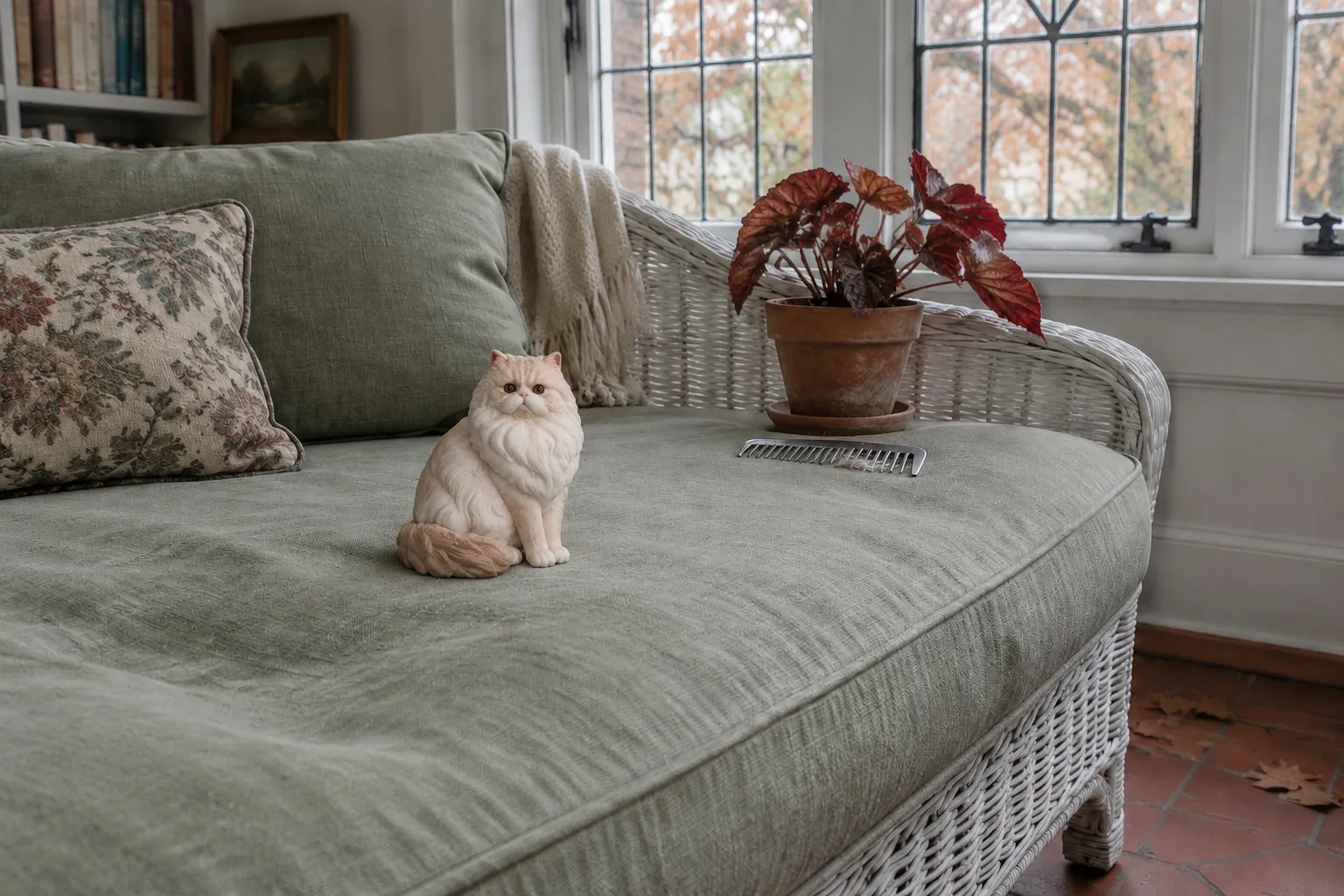
You're in the hallway, phone in hand, watching your cream Persian blink up at you from the bottom stair, her flat face tilted into the afternoon light, and you're asking yourself: will a figurine look like my Persian cat, or like some generic fluffy cat?
It can look like your cat, but as a sculpted portrait, not a photo-exact copy. Likeness depends on clear reference photos and on you checking the artist preview before anything prints, with five revisions included. The transparent protective coat finishes the surface for indoor display. It isn't a promise against fading or sunlight.
Quick Takeaways
- A custom figurine is an artistic interpretation of your cat. Expect a portrait that captures her, not a replica that matches every hair.
- Likeness starts with your photos. Clear, well-lit shots of the face, the coat, and the full body from several angles give the artist more to work with.
- The artist preview is your checkpoint. You confirm it before printing, and five revisions are included.
- The transparent protective coat is a finish for indoor shelf display. Light and heat still matter, so place the figurine somewhere cool and out of direct sun.
- Know the money boundary before you order. There's a 40% deposit, refundable in full only until the order enters IN_DESIGN.
What "Looks Like My Cat" Actually Means for a Sculpted Portrait
When people ask whether a figurine will look like their cat, they rarely mean "will it match a photograph pixel for pixel." They mean "will I see her in it." Those are different questions, and the second one is the one worth answering.
Think about how you recognize your cat from across a dim room. It's not individual whiskers. It's the shape of her head in silhouette, the way light rolls across her coat, the round set of her eyes, the particular way she folds herself into a loaf on the stair. Those big, readable shapes carry a likeness. When you judge any portrait of your cat, judge those first.
With a Persian, a lot of what you see is coat. The face sits inside a soft halo of fur, and in warm hallway light a cream coat can glow almost gold at the edges while the shadows under the chin turn a cool gray. A flat face can look completely different straight on versus in profile. Any artist working from photos has to make choices about how to show all of that in a solid object a few inches tall. That's what makes it a portrait rather than a copy.
PawSculpt's own positioning says it directly: a sculpted portrait, not a photocopy. That framing matters because it sets the right expectation. You're commissioning an interpretation, and your job is to give the artist enough information to interpret well, then to steer the result at the preview stage.
The workflow, step by step
Here's the full process, in order, so you know where your input counts:
- Your reference photographs are reviewed.
- An artist digitally sculpts the portrait.
- You confirm the artist preview before printing.
- The approved model is printed in full color on a Mimaki 3DUJ-553.
- The supports, the temporary structures that hold a model in place while it prints, are removed.
- The surface is inspected.
- A transparent protective coat is applied.
Two of those steps belong to you: the photos at the start and the preview approval in the middle. Everything after your approval follows from the model you signed off on, so those two moments are where the likeness gets decided.
A note on color
The color comes from the printer itself, not from a separate paint step. Mimaki states that the 3DUJ-553 supports more than 10 million colors. Treat that as a description of what the machine can do, not a promise about any single order. Nobody should tell you a figurine will reproduce the theoretical maximum. What you can reasonably expect is a full-color print. What you should still do is check how your cat's coloring reads in the preview.
How to Photograph a Persian So the Artist Can Read Her Face
Good references are the single most practical thing you control. The first artist preview typically arrives within 7 days after complete references are available and the order enters IN_DESIGN. Incomplete photos don't just risk a weaker likeness. They can also hold up the start of the clock.
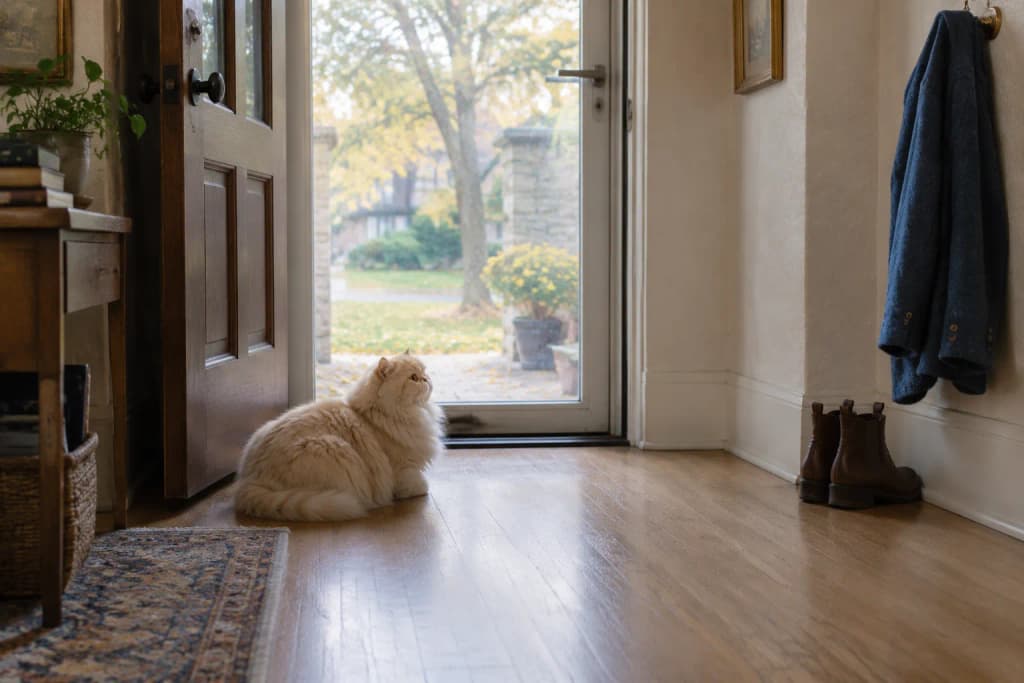
Here's a straightforward shooting plan. You can do most of it in one afternoon.
First, pick your light
Find a window with soft, indirect daylight. You want light that shows shape: a gentle highlight across the top of the head, a soft shadow under the jaw, a small bright catchlight in each eye. On a pale cream coat, that shading is what reveals the shape of the face underneath all the fur.
Try to avoid flash. On a light coat it can flatten the shading you want the artist to see and turn the face into a bright, featureless oval. Deep shade has the opposite problem, muddying the coat's color into a dull beige. Aim for the middle: bright, soft, from the side.
Then, work through the angles
Shoot at your cat's eye level, not down from standing height. Get on the floor if you need to. Then collect:
- Front face, straight on. This is the one you'll use most when judging the preview. Get the eyes sharp.
- Three-quarter view of the face. This shows how the flat face sits in relation to the cheeks and the ruff.
- True profile. For a flat-faced cat, the profile is where likeness can quietly go wrong. Get a clean side view of the nose, brow, and chin.
- Full body from the side and the front. With a long coat, the body shape underneath can be hard to read, so a couple of full-length shots help.
- Top-down view. Useful for how the coat falls across the back and how the tail curls.
- Close-ups of anything distinctive. A darker patch, a tear stain, an unusual ear, a coat that shifts from cream to a warmer apricot along the spine.
- The pose you want. If you picture her as a loaf on the stair, send photos of her actually doing that.
Finally, decide which version of her you're remembering
Persians can look like two different cats depending on grooming. Freshly combed, the coat stands out in a full, round cloud. A day later it might lie flatter and show more of her shape. Neither is wrong. Pick the version you picture when you close your eyes, and send photos that match it. Say so in your notes, too, so the artist isn't guessing between a show-groomed cloud and a sleepy, slightly rumpled cat.
If you're not sure what counts as a complete set of references, check the PawSculpt FAQ on photos and the ordering process before you order, not after.
Reviewing the Artist Preview Like an Editor
The preview is the single most useful safeguard you have. You confirm the artist preview before printing, and five revisions on that preview are included. That's real room to steer the result, but only if you use it with purpose.
Set up a fair comparison
Put the preview on one side of your screen and your best front-facing photo on the other. Don't compare against a photo taken in a different light or pose. Compare like with like.
Then look at the preview small. The finished figurine is between 2.5 and 6 inches tall, so it will sit on a shelf far smaller than it appears on a laptop screen. Zoom out until the preview is roughly the size the figurine will be. Some details that look off at full screen stop mattering at shelf size. Others, like the overall head shape, matter even more.
Check the big things first
Work through this list in order:
- Silhouette. Squint at the preview. Does the outline read as your cat? The round head, the ruff, the loaf shape?
- Face profile. For a Persian, this is the one to slow down on. Is the face as flat as hers, or flatter, or not flat enough?
- Eye placement and size. Eyes that sit slightly too close or too far apart can change the whole expression.
- Nose and mouth. Small, but they carry a lot of personality.
- Coat volume and direction. Does the fur look like it falls the way hers does?
- Color pattern. Are the warmer and cooler areas of the coat where they should be?
- Pose and props. If you added a toy, does it sit naturally?
Write revision notes that are easy to act on
Vague notes ("she looks a bit off") burn through revisions. Specific notes save them. A good revision note names the feature, says what to change, and points to a photo:
- "The nose sits a little high. See photo 3, front view, where it's closer to the eye line."
- "Her ruff is fuller around the chin. Photo 6 shows it best."
Batch your notes. Go through the full checklist, write everything down, and send one consolidated set rather than one change at a time. Five revisions go further that way.
Know where you stand financially at this point
By the time you're looking at a preview, the artist has already started modeling. The deposit is 40%. A full refund is available before the order enters the server-recorded IN_DESIGN status, and the deposit becomes non-refundable once the artist starts modeling. So the preview is your chance to steer the design, but it isn't a free exit. If you have doubts about the whole idea, settle them before the order reaches IN_DESIGN.
What the Transparent Protective Coat Does, and What It Doesn't
After printing, the supports come off, the surface is inspected, and a transparent protective coat is applied. That's the finish. It's meant for a figurine displayed indoors on a shelf.
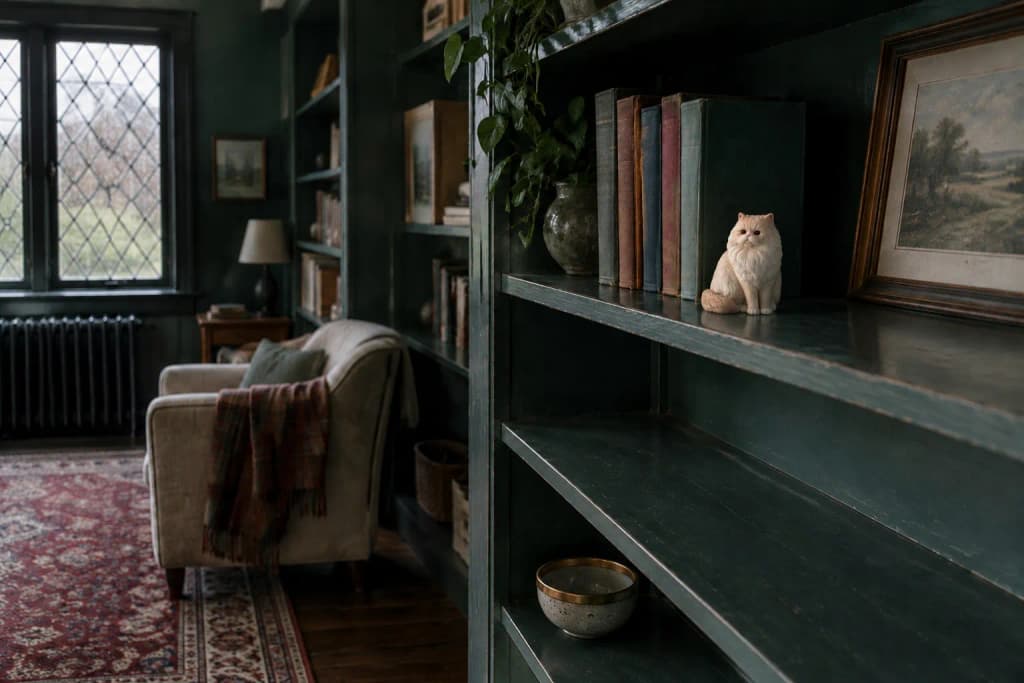
What it is not: a promise that the figurine is waterproof, fade-proof, or will last a particular number of years. Be skeptical of anyone who makes those promises about a resin piece, and plan your display with the general science in mind.
What light and heat do to plastics and resin
The Canadian Conservation Institute explains that light and UV exposure cause yellowing, chalking, and embrittlement in plastics. It also notes that yellowing from light is most visible in uncoloured or white plastics. A full-color cream figurine isn't the same as uncoloured plastic, but if your cat is pale, that's a sensible nudge to be extra careful about sunlight.
Heat matters too. CCI says the rate of plastic deterioration roughly doubles for each 5°C rise in temperature and halves for a corresponding drop. Keeping plastic objects cool, dark, and out of direct sunlight improves long-term durability.
Resin-specific sources point the same way. Raise3D says resin print durability depends mostly on UV exposure, heat, and moisture, and that colors and finishes fade faster in direct sunlight than in indoor display. JLC3DP notes that prolonged exposure to sunlight or strong indoor light can cause resin to yellow. 3DSPRO adds that heat, moisture, and oxygen accelerate resin aging, and that storing resin parts in a dark place limits sunlight-driven discoloration.
Those sources also discuss clear coatings with UV inhibitors as a way to slow yellowing. That's a general statement about coatings, not a specification of any particular figurine's finish. Don't assume a transparent coat makes the piece immune to the window.
Where to put it, practically
Picture that same hallway at four in the afternoon. A bright stripe of sun slides across the floorboards, climbs the wall, and for an hour lights up whatever sits on the console table. That stripe is exactly where you don't want the figurine.
A simple placement plan:
- Choose a spot that never sits in a sunbeam. Watch the room over a full day before you decide. Morning and evening light reach different places.
- Skip the windowsill. It's the most tempting spot and the worst one.
- Keep it away from heat sources. Not on a radiator shelf, not above a heater vent, not next to a lamp that runs hot.
- Think about strong indoor light, too. A display cabinet with bright built-in lighting aimed right at the piece isn't ideal for the long haul.
- Dust it dry. CCI recommends dry brushing or vacuuming over solvents or water-based cleaners for plastics. A soft, clean makeup brush or a small paintbrush works well for fur texture.
None of this is fussy. It's the same care you'd give a framed photo you didn't want to fade.
Counter-Point: Reasons to Slow Down Before You Order
Most of this article assumes a figurine is a good fit. Sometimes it isn't, and it's worth saying so plainly.
A portrait will never be a literal record. If what you want is a precise record of every whisker and every shade in her coat, a well-lit photograph is closer to that than any sculpt. The preview and revisions narrow the gap between "an interpretation" and "her." They don't close it entirely. If even a small difference would bother you every time you walked past the shelf, take that seriously.
Fur is soft and resin is solid. A Persian's coat moves, catches light, and changes with every grooming session. A figurine fixes one moment of it in a hard material. For some people, that's the point. For others, the stillness feels wrong next to the memory of a cat who was always a slightly different shape.
You're judging the preview on a screen. A screen and a shelf are different places to look at something. Use the preview to judge proportions, expression, and pose. Don't treat any on-screen color as a guarantee of exactly how the finished piece will look under your hallway light.
The deposit has a commitment point. Once the artist starts modeling, the 40% deposit is non-refundable. If you're ordering on impulse, or you're not sure you have good photos yet, wait. Getting your references together first costs you nothing.
It's a discretionary purchase. The American Pet Products Association reports about $158 billion in annual U.S. pet industry spending, and notes that pet owners are prioritizing essentials like food and veterinary care while being more selective on discretionary purchases. A custom figurine sits firmly in the discretionary column. If the budget is tight, a printed photo book, a framed favorite shot, or a few pages written about her daily habits can hold just as much meaning.
Other keepsakes do different jobs. A photograph captures a moment. Writing captures personality and habits. A drawing or painting captures an artist's view in two dimensions. A figurine gives you something with weight and shape that you can turn in the light. None is the "right" choice. Pick the one that matches what you want to keep.
If you read this section and still want the figurine, good. You're going in with clear eyes.
Sizes, Costs, and Timing to Check Before You Commit
The Federal Trade Commission advises comparing the total cost of an online purchase, including shipping, handling, taxes, and fees, not just the list price. It also recommends checking the refund policy before you buy and keeping receipts and order emails so you can hold a seller to its promises. That's good practice for any custom order.
List prices by size
These are PawSculpt's list prices in USD:
| Size | Single figurine | Set of 12 |
|---|---|---|
| 2.5-inch | $429 | $4499 |
| 3-inch | $489 | $4999 |
| 4-inch | $589 | $5999 |
| 5-inch | $789 | $7999 |
| 6-inch | $999 | $9999 |
A black acrylic base is included.
Add-ons
- Second pet: $179
- Extra pet (4-inch and larger only): $199
- Extra toy: $30
- Nameplate: $9
- Rush: $29
- Diamond glass base: $29
- Black crystal base: $39
If you're unsure which pet add-on applies to your order, or how size might affect the level of detail in a flat Persian face, it's worth asking the studio directly before you choose.
Shipping and total cost
No separate shipping fee is added at checkout for worldwide delivery. International customers remain responsible for local customs duties, taxes, or import fees. If you're outside the US, look up your country's import rules so the total cost doesn't surprise you.
Timeline
- First artist preview: typically within 7 days after complete references are available and the order enters IN_DESIGN.
- Delivery, US: 27–40 days after final payment.
- Delivery, international: 33–47 days after final payment.
The delivery clock starts at final payment, not at the order date. The faster you review the preview, send clear revision notes, and pay the balance, the sooner production can move.
Christmas 2026
- US last order-by date: November 10, 2026.
- International last order-by date: November 3, 2026.
These are the last order-by dates. Confirm the preview and pay the balance promptly to stay on schedule. Orders placed after the cutoff are delivered in January. If you miss the cutoff, the artist preview arrives within about 7 days of IN_DESIGN and can be shared as the gift on the day, with the figurine following in the new year.
Frequently Asked Questions
Will the figurine be an exact copy of my Persian cat?
No. It's a sculpted portrait, an artist's interpretation built from your reference photos. You confirm the artist preview before printing, with five revisions included, so you can steer the likeness.
How long until I see the artist preview?
The first artist preview is typically delivered within 7 days after complete references are available and the order enters IN_DESIGN.
Can I get a refund if I change my mind?
A full refund is available before the order enters the IN_DESIGN status. The 40% deposit becomes non-refundable once the artist starts modeling.
Does the protective coat stop the figurine from fading?
It's a transparent protective coat for indoor shelf display, not a fade-proof guarantee. Keeping any resin piece cool, out of direct sunlight, and dusting it dry is sensible care.
Is shipping charged separately?
No separate shipping fee is added at checkout for worldwide delivery. International customers remain responsible for local customs duties, taxes, or import fees.
When do I need to order for Christmas 2026?
The last order-by date is November 10, 2026 for the US and November 3, 2026 for international orders. Confirm the preview and pay the balance promptly.
Ready to See Your Persian Take Shape?
If you've read this far, you already know the honest version: a figurine of your Persian won't be a photocopy, and it shouldn't be. What makes it look like her is a good set of photos, a careful look at the preview, and clear notes when something isn't quite right.
Start with the photos. Find that soft window light, get down to her eye level, and capture the front, the three-quarter view, the profile, and the pose you picture when you think of her. Once you have a set you're happy with, you can explore PawSculpt's custom pet sculptures and see which size fits the spot you have in mind. Choose a spot that's cool, and away from the afternoon sun.