How First-Time Owners Can Prep a Geriatric Guinea Pig for the Vet, Backed by Science
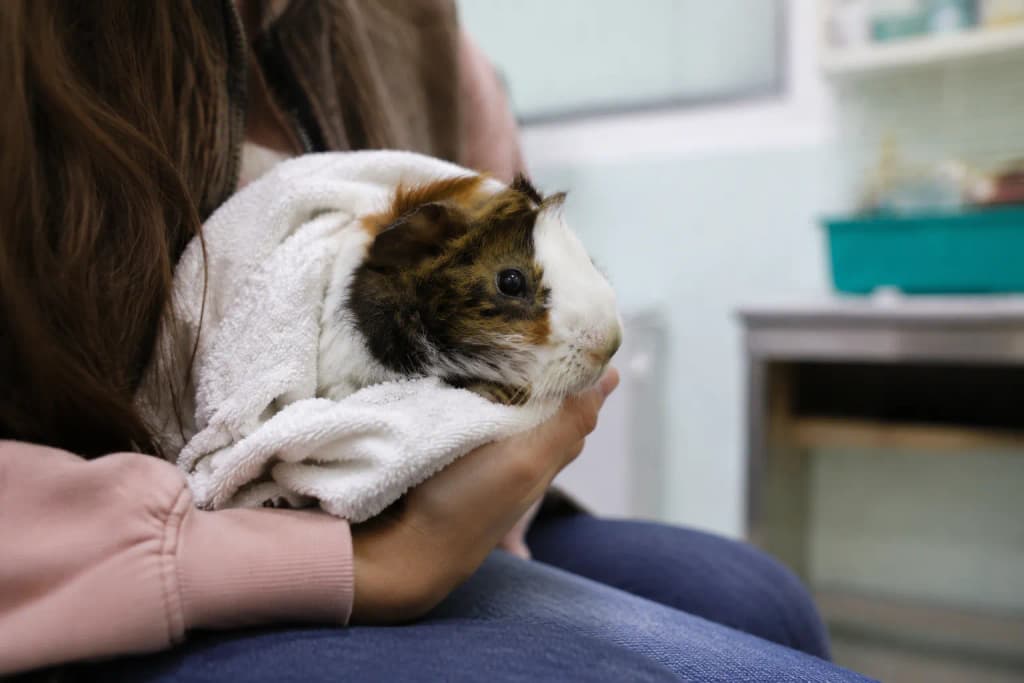
Six years ago, the carrier on the exam table held a squealing, wheeking blur. Today it holds a quiet, gray-muzzled old-timer who barely lifts her head, and geriatric guinea pig care has become a different kind of appointment entirely.
To prepare a geriatric guinea pig for the vet, start three to five days early: log daily weight in grams, photograph any physical changes, collect a fresh stool sample, and record appetite and droppings. Guinea pigs are prey animals that instinctively hide illness, so this baseline data helps your exotic vet catch problems a short exam would miss.
Quick Takeaways
- Weigh daily in grams, not ounces — a 30-to-50g weekly drop is often the first warning sign
- The visit stresses the illness worse — reduce transport panic to get accurate diagnostics
- You are the instrument — the vet sees ten minutes; your week of notes sees the truth
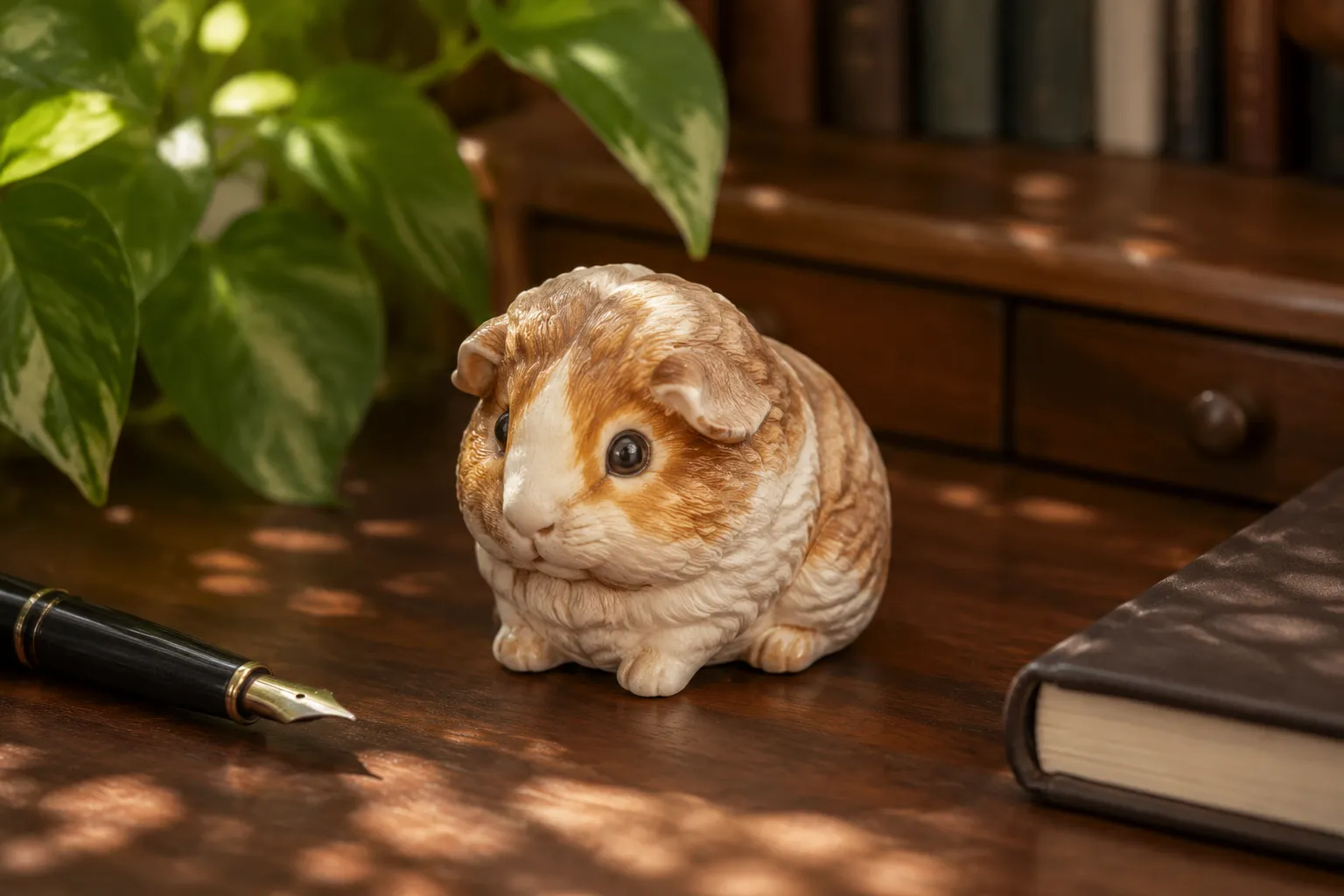
- Celebrate the years you've had — some families preserve a senior pig's character in a custom sculpted keepsake while the good days are still here
Why the Guinea Pig Vet Visit Is Riskier Than the Illness Itself
Here's the thing most first-time owners never get told: for a geriatric guinea pig, the appointment itself can be more dangerous than the reason you booked it.
Guinea pigs evolved as prey. In the wild, a cavy that limps, wheezes, or hunches signals to a hawk that it is the easy meal. So they mask. Right up until they can't. By the time a guinea pig looks sick, the illness is usually well advanced.
Now add the car, the carrier, the smell of a dog in the waiting room, the cold steel of an exam table under a paw. Stress in these animals spikes cortisol and can trigger gut stasis (a dangerous slowdown of the digestive system that can turn fatal within hours). A pig that arrives fragile can crash from the visit alone.
That reframes the whole job. Your goal for a guinea pig vet visit is not just to show up. It is to arrive with the illness un-masked on paper, and the animal as un-panicked as possible in body.
"The vet gets ten minutes with a terrified animal that has spent its whole life hiding pain. Your notebook has spent all week telling the truth."
One of our customers, we'll call her Renata, learned this the practical way. She adopted an already-adult rescue named Clover and assumed a yearly checkup was plenty. It was her vet, not a website, who explained that senior cavies need eyes on them every six months, because six months in guinea pig time is a long window for something to grow quietly.
The counterintuitive part
Most guides tell you to "keep your guinea pig calm at the vet." True, but incomplete. The calm has to be built before you leave the house, because a prey animal's stress response is already firing the moment the routine changes. You cannot soothe it away in the parking lot.
The Week Before: Turning Yourself Into a Data Collector
This is the section that separates good geriatric guinea pig care from a wasted appointment. Start five days out. Treat it like fieldwork.
1. Weigh daily, same time, in grams. A kitchen scale that reads to the gram costs almost nothing and is the single most useful tool you own. Morning, before the first big feed, same spot. Write it down every day. Trends matter more than any single number.
2. Photograph everything, in daylight. Take clear shots near a window: the eyes, the nose, any lumps, the feet (guinea pigs are prone to bumblefoot, sore inflamed footpads), and the rear end. Natural light shows discharge, redness, and crust that a phone flash washes out. Renata kept a folder on her phone and it turned a vague "she seems off" into a dated visual timeline the vet could actually use.
3. Save a fresh stool sample. Scoop a few droppings from the last couple of hours into a clean, sealed container. Shape, size, and moisture tell a vet a lot, and fresh beats guessing.
4. Log intake and output. How much hay disappeared. Whether the water bottle level dropped. How many droppings, and whether they shrank. In seniors, a quiet reduction in either end is often the earliest flag.
Here is a simple prep schedule that keeps this from feeling overwhelming:
| When | What to do | Why it matters |
|---|---|---|
| 5 days before | Start daily gram weigh-ins | Establishes a weight trend, not a lone data point |
| 3 days before | Begin daytime photos of eyes, feet, lumps | Documents change the vet can't see in one visit |
| Day before | Confirm exotic/small-mammal vet, prep carrier | Not every clinic treats cavies well |
| Morning of | Collect fresh stool, note appetite | Gives fresh diagnostic material |
| Departure | Pack hay, familiar fleece, a hidey item | Reduces transport stress and gut-stasis risk |
Notice the "exotic/small-mammal vet" line. This is non-negotiable and easy to get wrong. A general practice that mostly sees dogs and cats may not be current on cavy medicine. The AVMA's guidance on finding the right veterinarian is a good starting point, and it's worth calling ahead to ask flatly: how many guinea pigs do you see in a month?
What "Geriatric" Actually Changes
A guinea pig is generally considered senior around age four and geriatric by five, with most living five to seven years. The body shifts in specific, predictable ways, and knowing them turns you from a worried bystander into a useful reporter.
The old pig's world also gets dimmer and quieter. Lenses cloud. Hearing dulls. Movement slows, and the glossy coat of youth goes coarse and thin over the spine. None of that is an emergency by itself. But it changes what "normal" looks like, and normal is the baseline you're defending.
This table covers the changes most worth watching, and what to note before you go:
| System | What changes with age | What to record for the vet |
|---|---|---|
| Weight | Gradual muscle loss, or sudden drops | Daily grams; flag any 30-50g weekly loss |
| Teeth | Molars overgrow, causing drooling ("slobbers") | Wet chin, dropped food, weight loss |
| Feet | Bumblefoot from pressure and time | Photos of soles; limping; redness |
| Reproductive (females) | Ovarian cysts, hair loss on flanks | Symmetrical bald patches, crusty nipples |
| Respiratory | Higher infection risk | Clicking, wheezing, nose or eye discharge |
Do not try to diagnose from this. We're a sculpting studio, not a veterinary clinic, and a table is not a diagnosis. What this list does is sharpen your eye so the ten minutes with your vet get spent on the right things. For the medical read on aging cavies, VCA Hospitals' small mammal resources are reliable and jargon-light.
The mistake almost everyone makes
First-time owners tend to fixate on dramatic symptoms: blood, a visible lump, a pig that won't move. But in geriatric guinea pigs, the real tell is almost always subtraction. A little less hay. A slightly smaller dropping. Fifteen fewer grams. The disease announces itself by what quietly goes missing, not by what dramatically appears.
Transport and the Exam Room: Managing a Prey Animal's Panic
You've got the data. Now you have to move a small, fragile animal through the single most stressful hour of its month without tipping it into a crisis.
Pack the carrier with home. Line it with the fleece your pig already sleeps on, unwashed, because that smell is a signal of safety. Add a fistful of familiar hay and a small hidey (a fabric tunnel or a paper bag with the top rolled down). A pig that can bury its face feels less exposed, and less exposed means less cortisol.
Bring a bonded companion if you have one. Guinea pigs are herd animals. A calm cage mate in the carrier can steady a frightened senior in a way no human hand can. If your pig is solo, the familiar-scent fleece does more work.
Keep the car quiet and steady. No loud radio. Gentle stops. Carrier belted flat on the seat or floor, out of direct sun and out of the AC blast. The visual you're after is boring: dim, warm, still.
In the waiting room, keep the carrier at chest height and covered with a light towel. Down at floor level, your pig is looking up at looming dogs and strangers, which reads as predators. Up high and shaded, the panic stays lower.
"Line the carrier with the fleece she already sleeps on. That familiar smell does more to calm her than anything you can say in the parking lot."
Renata's first trip with Clover went badly. Bright carrier, loud car, a long wait beside a barking terrier. Clover shut down. The second trip, she packed the slept-on fleece, covered the carrier, and asked the front desk for the first appointment of the day before the lobby filled. Same pig, completely different animal on the table. The vet got a real exam instead of a frozen one.
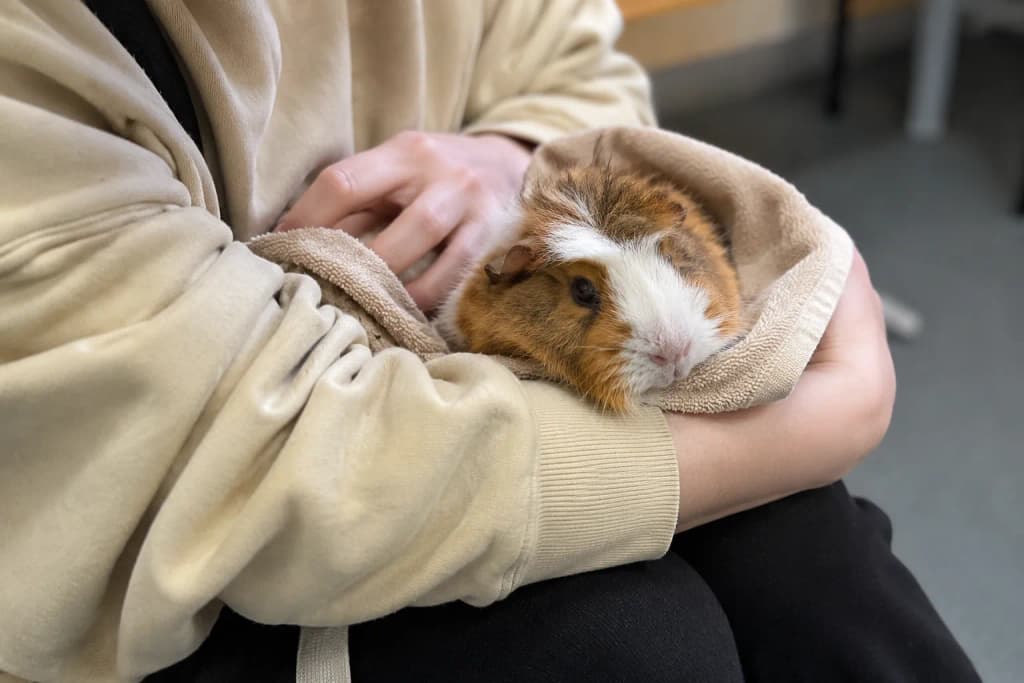
After the Guinea Pig Vet Visit: The Part First-Time Owners Skip
The appointment is not the finish line. What you do in the next 72 hours often decides whether the visit helped or set your pig back.
- Rehydrate and re-feed fast. Offer water and a favorite green the moment you're home. Getting the gut moving again after a stressful morning is your top priority against stasis.
- Weigh again that evening and the next morning. Post-visit weight tells you how hard the trip hit.
- Watch the droppings for 48 hours. Fewer, smaller, or absent droppings after a stressful outing is the warning to call back, not wait.
- Write down what the vet said, in plain words. Doses, follow-up dates, what to watch for. Memory is unreliable at exactly the moment you're anxious.
For a first-time small pet owner, this after-care habit is what turns a scary one-off into a manageable routine. You start to see your pig as a set of trends you can read, and reading them is what buys good senior years.
"An aging animal shows you who it always was. The stiff little walk, the favorite corner, the way it still wheeks for a pepper. That's the character worth keeping."
— The PawSculpt Team
Holding onto the good years
Somewhere in the middle of all this practical work, something softer tends to surface. Caring closely for an old guinea pig makes you notice how much you love the small, specific things about her. The particular tilt of her head. The gray coming in around her nose.
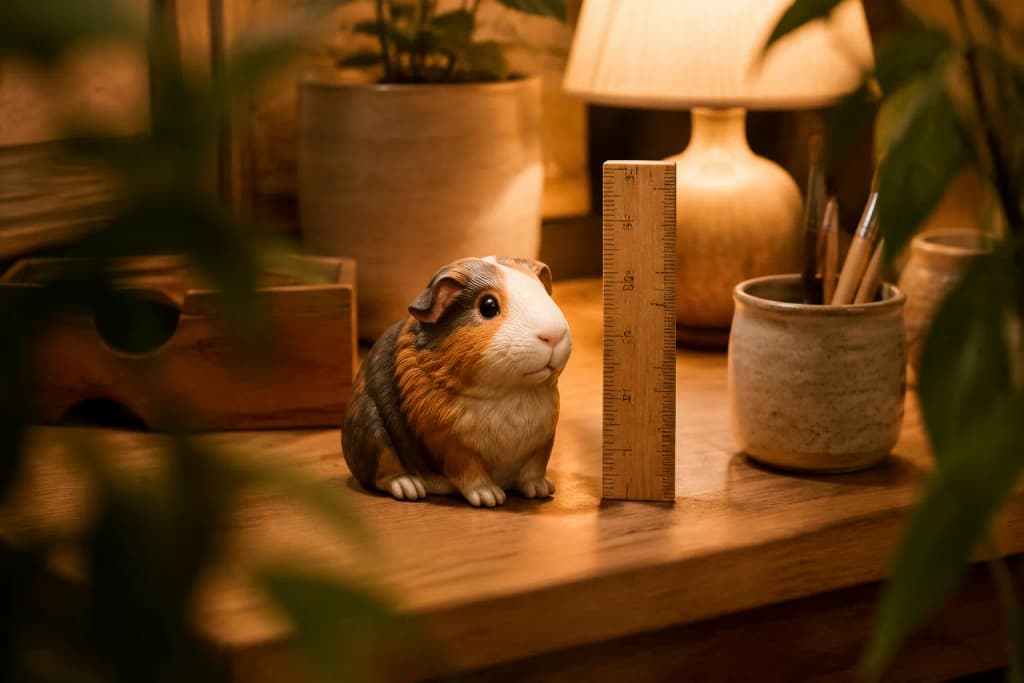
Some families mark that season with photos. Some keep the fleece she loved. And increasingly, pet parents choose a tangible keepsake, like a custom sculpted portrait that captures a pet's real posture and expression rather than a generic pose. At PawSculpt, that piece is digitally sculpted by our 3D artists, then precision 3D printed in full-color resin so a pig's actual markings and stance come through. It's a portrait, not a photocopy, meant to hold the character you're working so hard right now to protect.
The free instant AI preview on the website lets you see a rough version before you commit anything, which most people find lowers the pressure of the decision. Whether it's for a memorial later or a celebration of a still-thriving old-timer now, the point is the same: keeping what made her her.
Frequently Asked Questions
At what age is a guinea pig considered geriatric?
Most guinea pigs are considered senior around four years old and geriatric by five, with a typical lifespan of five to seven years. Once your pig hits the senior stage, vets generally recommend wellness checks every six months rather than annually.
How often should I weigh my senior guinea pig?
Weigh daily in the days leading up to a vet visit, and at minimum once a week the rest of the time. Use a gram scale, same time of day. A drop of 30 to 50 grams over a week is often the first measurable sign of a problem.
Do I need a special vet for a geriatric guinea pig?
Yes, and this matters more than most first-time owners realize. Guinea pigs need an exotic or small-mammal veterinarian who stays current on cavy medicine. Before booking, call and ask directly how many guinea pigs the practice treats each month.
How do I keep my guinea pig calm during the trip?
Pack familiarity. Line the carrier with fleece your pig already sleeps on, add a handful of its usual hay and a hidey to burrow into, and drape a light towel over the top. Keep the car quiet, drive smoothly, and avoid direct sun or AC blasts.
Why does my guinea pig act fine even when something's wrong?
Because hiding weakness is survival instinct for a prey animal. A visibly sick cavy in the wild is a target, so guinea pigs mask symptoms until illness is advanced. That instinct is exactly why your at-home weight log and photos do the diagnostic heavy lifting.
Ready to Celebrate Your Pet?
Every pet has a story worth preserving. Whether you're honoring a beloved companion who's crossed the rainbow bridge or celebrating the quiet dignity of a senior guinea pig still wheeking for her evening pepper, a custom PawSculpt figurine, a sculpted portrait, not a photocopy, captures the character that makes your pet one-of-a-kind. Good geriatric guinea pig care is about protecting who she is, and a keepsake helps you hold onto it.
Start with a free instant AI preview, review your artist's 3D preview before final payment, and every order ships insured, tracked, and carefully packed.