
This National Dog Day, the One Vet-Prep Change That Calms an Anxious Senior Dachshund
"Until one has loved an animal, a part of one's soul remains unawakened." — Anatole France
You hear it before you see it. The nails-on-tile rhythm in the kitchen goes still. Your senior dachshund vet visit hasn't even started, and already she's frozen under the table, ears back, watching your hands.
The single most effective change for calming an anxious senior dachshund before a vet visit is to regulate your own energy the night before, not the dog's. Dogs read your anticipatory stress through scent and body language, so a calm, predictable routine plus a familiar-smelling object in the carrier lowers their arousal faster than any treat.
Quick Takeaways
- Your dog reads you first — calm your own nerves the evening before, not five minutes before you leave.
- Decouple the cues — jingling keys, the "vet voice," and the carrier appearing together teach dread; separate them.
- Pack a scent anchor — a worn shirt or her own bed in the carrier lowers stress hormones on the drive.
- Turn the checkup into a ritual worth honoring, and consider marking your senior dog's milestones with custom pet sculptures that hold their presence long after the appointment.
Your Dachshund Already Knows (Long Before the Leash Comes Out)
Here's what most vet-anxiety guides get wrong. They start at the clinic door. The waiting room. The stainless steel table.
But your dog's fear started hours earlier, in your kitchen, while you were still drinking coffee.
Dogs are astonishing readers of energy. Not in a mystical, made-up way. In a measurable one. Their sense of smell picks up shifts in your cortisol. Their eyes track the micro-tension in your shoulders when you glance at the calendar. A senior dachshund, who has now done this dance a dozen or more times across her life, has built a complete map of your pre-vet behavior.
The sound of a specific drawer. The tone you use when you say "okay, buddy." The way you set your keys down twice instead of once.
She's not afraid of the vet yet. She's afraid because you got quiet in a particular way, and she felt the floor of your calm drop out.
One of our customers, Dawn, told us about her twelve-year-old dachshund, Biscuit. Every vet morning, Biscuit would wedge himself behind the couch before Dawn had even found the leash. She thought he could hear the appointment on the phone somehow. He couldn't. He could hear her.
"He wasn't hiding from the vet. He was hiding from the version of me that only shows up on vet days."
That was Dawn's turning point. And it's the counterintuitive heart of this whole thing: the most powerful calming tool you own isn't a treat or a thundershirt. It's your own nervous system.
The One Change: Prepare Yourself, Not the Dog
So here's the shift. Most people spend the morning managing the dog. Coaxing, luring, apologizing. The dog, meanwhile, is managing you right back, and getting more wound up by the second.
Flip it. Prepare your own calm the night before, and let your dog borrow it.
This isn't fluffy. Anxiety is contagious across species, and the human-animal bond runs on shared regulation. When you're settled, your dog has a stable presence to lean into. When you're bracing, she has nothing solid to stand on.
Decouple the cues she's memorized
Your dachshund has stitched together a highlight reel of "something bad is coming." Break the pattern.
- Pick up your keys at random times all week. Then set them down and do nothing. The jingle stops predicting doom.
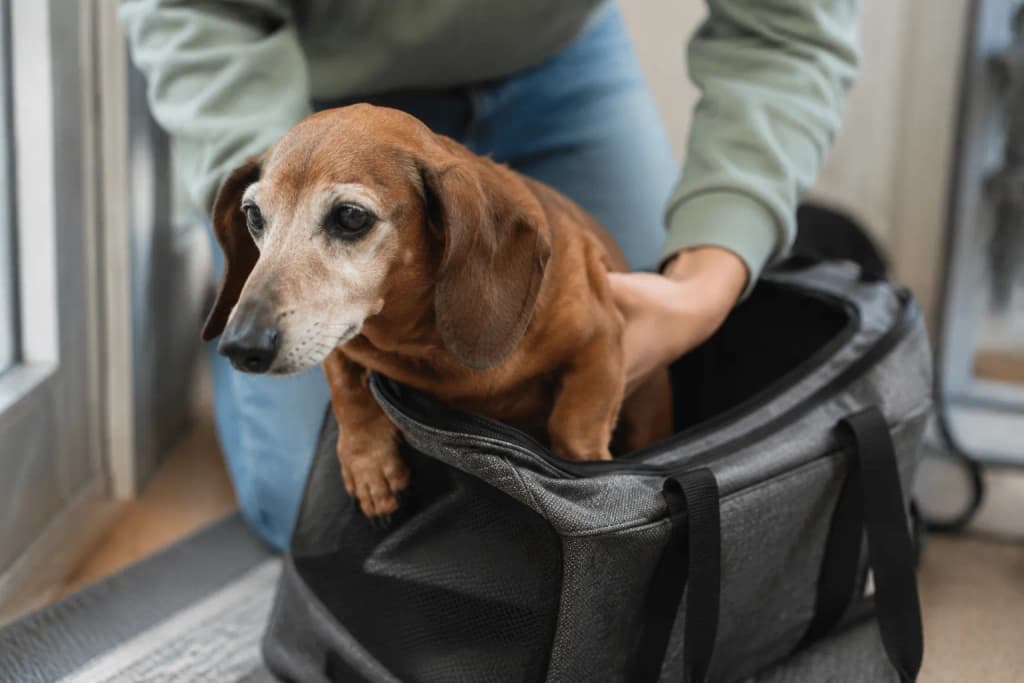
- Get the carrier out days early and leave it open in her favorite room with a blanket inside. Feed a meal near it. Let it become furniture, not a trap.
- Drop the "vet voice." That syrupy, over-soft tone you use to reassure her? She's learned it means the scary thing. Talk to her on appointment morning exactly like you do on a Tuesday.
Why this matters: predictability is safety for a dog. When the cues that used to scream "danger" turn boring, the whole event loses its power before you've left the driveway.
Build a scent bridge
Scent is a dachshund's first language. A familiar-smelling object in the carrier is one of the fastest, cheapest anxiety reducers available, and almost nobody uses it well.
Don't wash her bed the day before the visit. Counterintuitive, we know. But that "just cleaned" smell strips away the one thing that says home. Instead, tuck a t-shirt you slept in into the carrier. Your scent, concentrated and warm, is a portable version of your presence.
The American Kennel Club's guidance on canine fear is clear that reducing novelty lowers stress. A scent anchor turns a strange, cold car ride into something that still smells like the couch at 9 p.m.
Regulate before you drive
Two minutes before you load her up, do your own reset. Slow exhale, longer than the inhale. Drop your shoulders. Unclench your jaw.
Your dog will feel the change in your breathing radius almost immediately. This is the sacred, quiet contract of the bond: you go first, she follows.
Dawn started doing exactly this with Biscuit. She stopped narrating the morning in her anxious sing-song. She sat on the floor, breathed, and let him come to her. Within three appointments, Biscuit was walking to the carrier on his own.
What the Visit Feels Like From Down There
Now let's get specific to the breed, because a senior dachshund carries fears a Labrador never will.
She's long, low, and by her senior years often dealing with a tender back, stiff joints, or IVDD (intervertebral disc disease) risk. Being lifted wrong doesn't just startle her. It can genuinely hurt. So her vet-day fear isn't only emotional. It's a learned expectation of physical discomfort.
This changes your prep.
Practice handling at home so the vet's touch isn't the first touch of the week. Gently support her chest and hindquarters together, keeping her spine level, and give a treat. Ten seconds. Do it while the TV's on and nothing's at stake. You're teaching her that being handled predicts good things, not needles.
Ask your clinic about low-stress or Fear Free handling, and whether you can wait in the car until the room is ready. For a small senior dog, a loud lobby full of barking is its own trauma. The fewer sounds she has to brace against, the more calm she brings into the exam.
And schedule smart. Senior dogs generally need checkups every six months rather than annually, because a lot can shift in a year at their age. More frequent, lower-drama visits beat one big anxious ordeal.
"An anxious dog isn't being difficult. She's being honest about a body that already remembers being hurt. Our job is to change what she expects."
— The PawSculpt Team
We're not veterinarians, so anything involving calming medications, supplements, or her spine belongs in a conversation with your vet. PetMD's overview of dog anxiety signs and management is a solid starting point before that appointment.
Here's a pre-visit ritual you can run the day before and the morning of. Notice how little of it is about the dog.
| When | What you do | Why it works |
|---|---|---|
| Night before | Sleep in a t-shirt, tuck it in the carrier | Concentrated scent anchor calms the drive |
| Night before | Prep everything, keep your energy normal | No last-minute scramble your dog can feel |
| Morning, 1 hr out | Feed lightly, take a slow sniff-walk | Physical movement discharges nervous energy |
| Morning, 2 min out | Slow breathing, drop your shoulders | She mirrors your regulated state |
| In the car | Quiet, no reassurance sing-song | Silence reads as "nothing's wrong" |
| At clinic | Wait in car until room's ready | Fewer barking sounds to brace against |
Turning Dog Day Into Something Sacred
National Dog Day lands on August 26, and for a lot of families it arrives with a bittersweet edge when the dog in question is gray around the muzzle and slow on the stairs.
Here's a reframe worth sitting with. The point of all this vet prep, all this careful lowering of fear, isn't just fewer bad mornings. It's more good ones. It's protecting the ordinary soundtrack of your life together.
Because that's what you'll miss. Not the grand moments. The sounds.
The tags clinking against the water bowl at 6 a.m. The heavy sigh she lets out when she finally settles by your feet. The specific creak of the floorboard where she always lies down. A senior dog's daily noise is a kind of music you don't notice until the room goes quiet.
"You never think you'll miss the sound of nails on the kitchen floor until the house forgets how to make it."
So this Dog Day, do two things.
First, book the checkup you've been putting off, and run the calm-first routine above. A less anxious vet visit is a gift you give her, not a chore you survive.
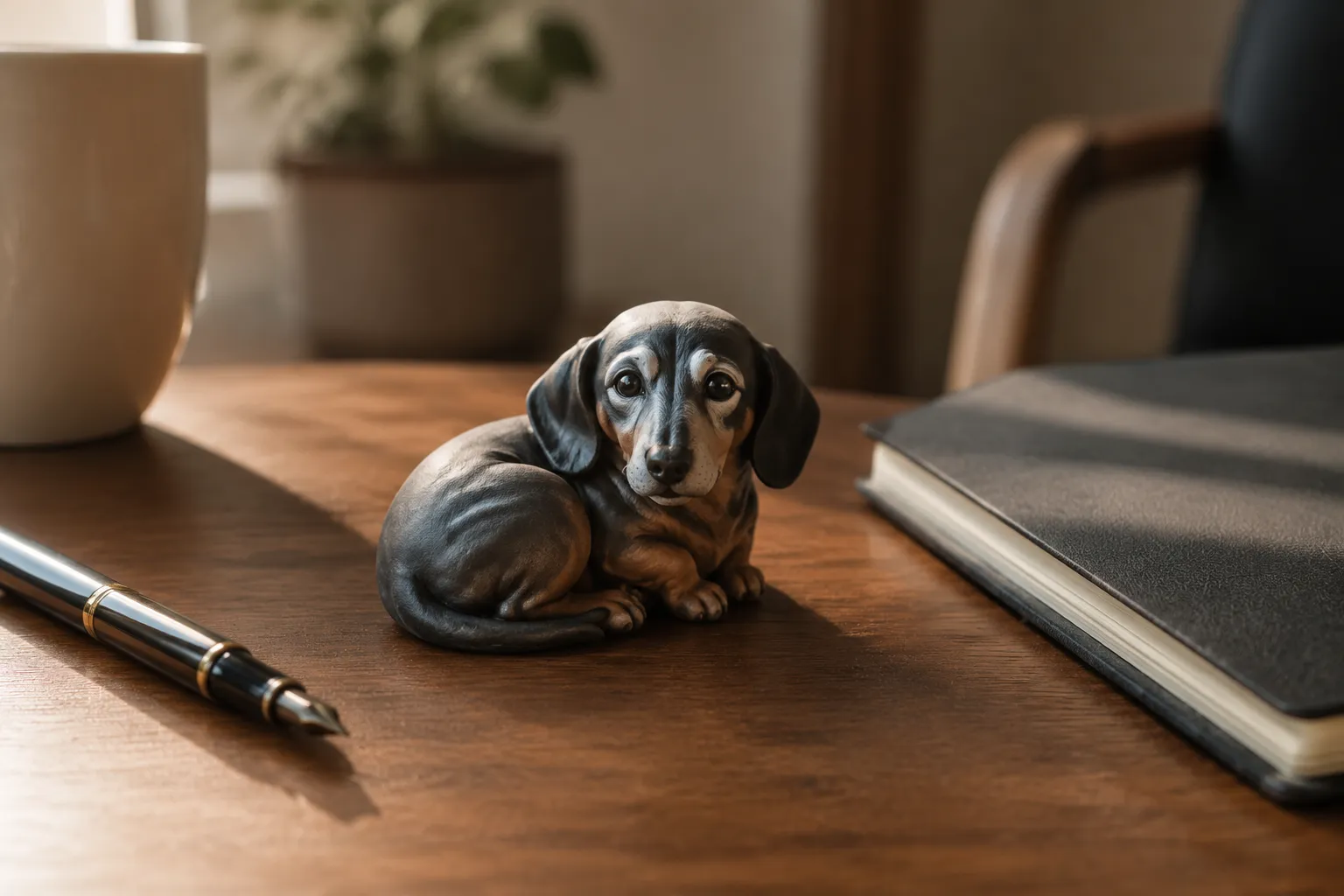
Second, mark the moment. Many families keep a "senior year" ritual: a photo shoot in good light, a paw print, a favorite blanket saved. Some go further and commission a keepsake while their dog is still padding around the kitchen. That's part of why pet parents choose custom dog figurines of their seniors now, not later. There's something grounding about a sculpted portrait of her current self. The gray muzzle. The particular tilt of her head. The long dachshund silhouette you'd know in the dark.
At PawSculpt, those pieces are digitally sculpted by our 3D artists and then precision 3D printed in full-color resin, so the markings and posture that make her unmistakably her are captured in something you can hold. A portrait, not a photocopy. Not a frozen photo, but an artist's read on her character.
Here are a few ways families honor a senior dog, with an honest look at what each asks of you.
| Way to celebrate | Effort | What it captures | Best for |
|---|---|---|---|
| Photo session in natural light | Low | A moment in time | Everyone, start here |
| Paw print (clay or ink) | Low | Physical trace of her | Tactile keepsake lovers |
| Memory journal / voice notes | Medium | The sounds and habits | Story keepers |
| Sculpted 3D portrait | Medium (photos + wait) | Posture, expression, markings | Something to keep on the shelf |
| Memorial garden (later) | High | Living tribute | Outdoor families |
If a sculpted keepsake speaks to you, PawSculpt offers a free instant AI preview on the website so you can see the concept before committing, and an artist's 3D preview within seven days of a deposit. Finished pieces typically ship in about 27 to 40 days in the US after final payment. No rush, no pressure. Just an option among many good ones.
Dawn commissioned one of Biscuit mid-stretch, front legs long, back end still tucked, that funny half-yoga pose he did every morning by the kitchen door. She said it sits where his bed used to be. The house is quieter now. But that particular shape of him is still there.
When Calm Doesn't Come Easy
Some dogs won't relax no matter how steady you are. That's real, and it's not a failure on your part.
Severe anxiety, especially in a senior dog with pain or cognitive changes, sometimes needs medical support. There's no shame in that. A pre-visit anti-anxiety medication prescribed by your vet can be the difference between a dog who suffers and a dog who copes. It's a tool, not a defeat.
Watch for the signs that you're past the point of home management alone: trembling that doesn't ease, refusing food she loves, panic that lingers for hours after you're home, or any yelping when handled that suggests pain rather than fear. Those go straight to your vet.
For everyone else, the honest truth is that progress is slow and uneven. You'll have a great morning, then a bad one for no reason you can name. Keep going. You're rewriting years of learned dread, and that takes more than one good Tuesday.
Frequently Asked Questions
How can I reduce my senior dachshund's anxiety before a vet visit?
Start the night before by settling your own nerves, since your dog absorbs your stress through scent and body language. Break the cue patterns she's memorized (keys, the carrier, your "vet voice"), and tuck a shirt that smells like you into the carrier. Calm yourself two minutes before you drive, and let her borrow that steadiness.
Why does my dachshund get anxious before we even leave the house?
Because she's an expert at reading you. Dogs detect shifts in your cortisol and notice the micro-changes in your behavior on vet mornings. Over years, she's built a map of what precedes a stressful visit, so her fear kicks in long before the clinic. Change your pattern and you change her prediction.
How often should a senior dachshund see the vet?
For most senior dogs, every six months is the general recommendation, because a year is a long time at their age and problems can develop fast. Frequent, low-stress visits are easier on an anxious dog than one dreaded annual marathon. Your vet may adjust based on her specific health.
Is it normal for my old dachshund to shake at the vet?
Some trembling from nerves is common. But dachshunds are prone to back and disc issues, so if the shaking comes with yelping, flinching when lifted, or reluctance to move, that could be pain rather than fear. Flag it for your vet rather than assuming it's just anxiety.
What can I do if calming techniques aren't enough?
Talk to your veterinarian about pre-visit anti-anxiety medication. For a senior dog with pain or cognitive changes, that support can be genuinely kind, not a last resort. Home methods work for many dogs, but not all, and there's no shame in getting medical help.
Ready to Celebrate Your Pet?
Every pet has a story worth preserving. Whether you're honoring a beloved companion who's crossed the rainbow bridge or celebrating your furry friend's unique personality, a custom PawSculpt figurine — a sculpted portrait, not a photocopy — captures the character that makes your pet one-of-a-kind. This National Dog Day, after you've made that senior dachshund vet visit a little calmer, mark the milestone with something you can keep.
Start with a free instant AI preview, review your artist's 3D preview before anything ships, and know that every finished piece is insured, tracked, and carefully packed for the journey to your door.