
Grooming a Senior Persian: 9 Gentle Steps to Master and 2 Habits to Quietly Drop
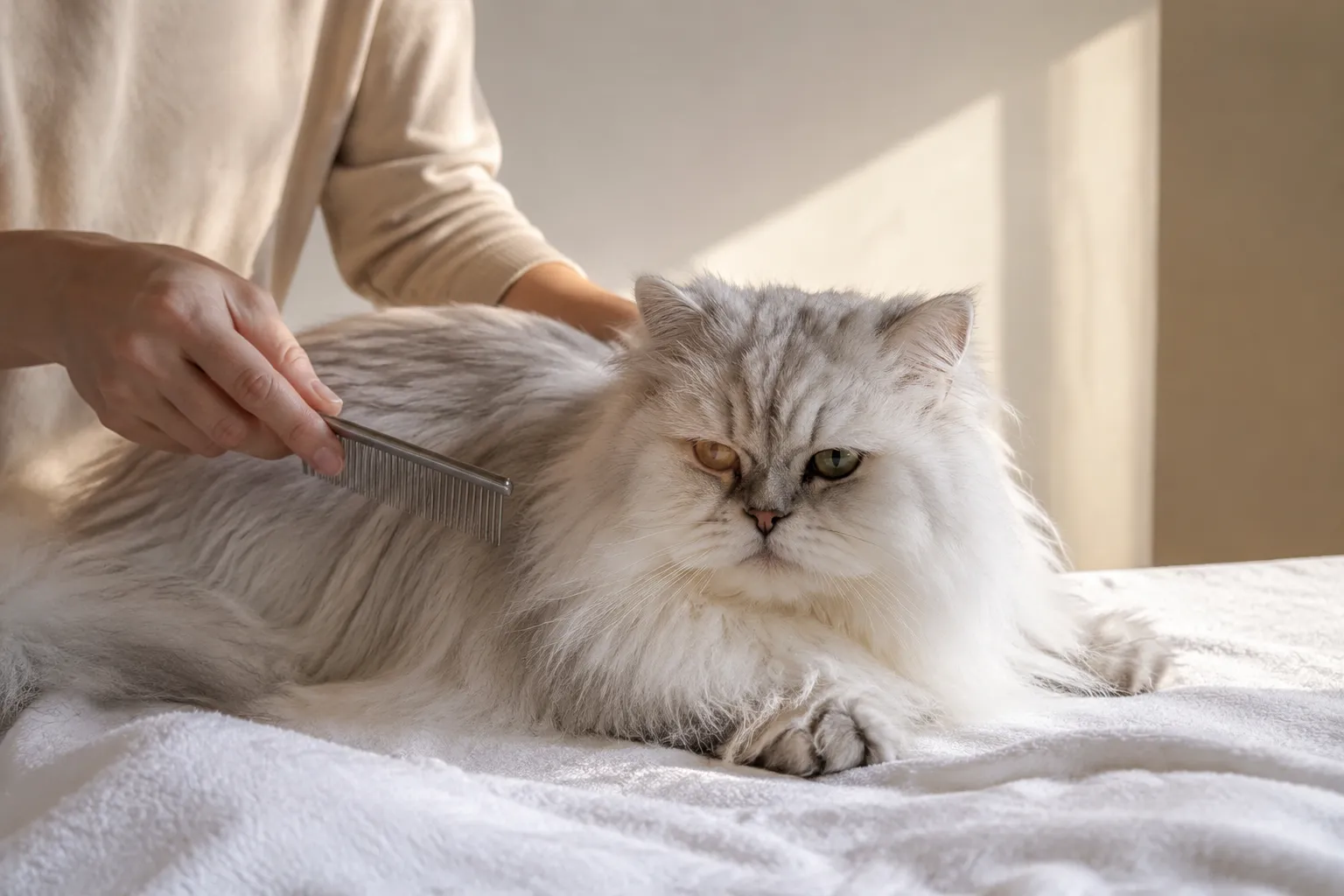
The Persian carries the longest, densest coat of any domestic cat, and a senior Persian can no longer reach most of it. Senior Persian grooming starts the morning you hear it—the slow drag of a comb that should glide, snagging on a mat tucked near the spine like a knot in old rope.
Quick Takeaways
- Groom in 5-minute micro-sessions, not marathons — a senior cat's patience and joints fade fast.
- Use your hands before any tool — fingers find mats, sore spots, and lumps a comb misses.
- Protect the danger zones daily — armpits, belly, and sanitary area mat first and hurt most.
- Watch the coat for clues — a sudden change in texture or grooming habits can signal a health issue worth a vet's eyes.
- Capture them while the coat is full — many families preserve that signature fluff with custom pet figurines before age thins it out.
Why an Old Persian's Coat Becomes a Different Animal
Here's the thing nobody tells first-time owners. The coat you brushed for years is not the coat you're brushing now.
A young Persian over-grooms. A senior one under-grooms. Arthritis stiffens the spine, so they can't twist to reach the hindquarters. Dental pain makes the licking that distributes natural oils feel awful. So the oils sit. The fur clumps. And the mats arrive faster than you'd believe—sometimes overnight near the rear and the armpits.
This is the part that surprises people most: a senior Persian's grooming problem is rarely a fur problem. It's a mobility problem wearing a fur costume.
So when you fix the grooming, you're not really fighting tangles. You're standing in for a body that's quietly giving up tasks it used to do alone. There's something tender in that, if you let yourself feel it. You become the tongue that can't reach anymore.
The American Kennel Club's grooming guidance for long-haired breeds leans on a simple truth that applies double here—consistency beats intensity. Small and often. Always.
"An old cat's coat is a diary. Every mat marks a place the body stopped reaching."
We'll be real with you about one thing before we go further. We're a team that makes keepsakes, not a veterinary clinic. So anything in here that touches pain, lumps, or sudden coat changes—that's a vet conversation. We'll flag those moments as we go.
Step 1: Read the Room Before You Touch the Comb
Walk in quiet. Listen first.
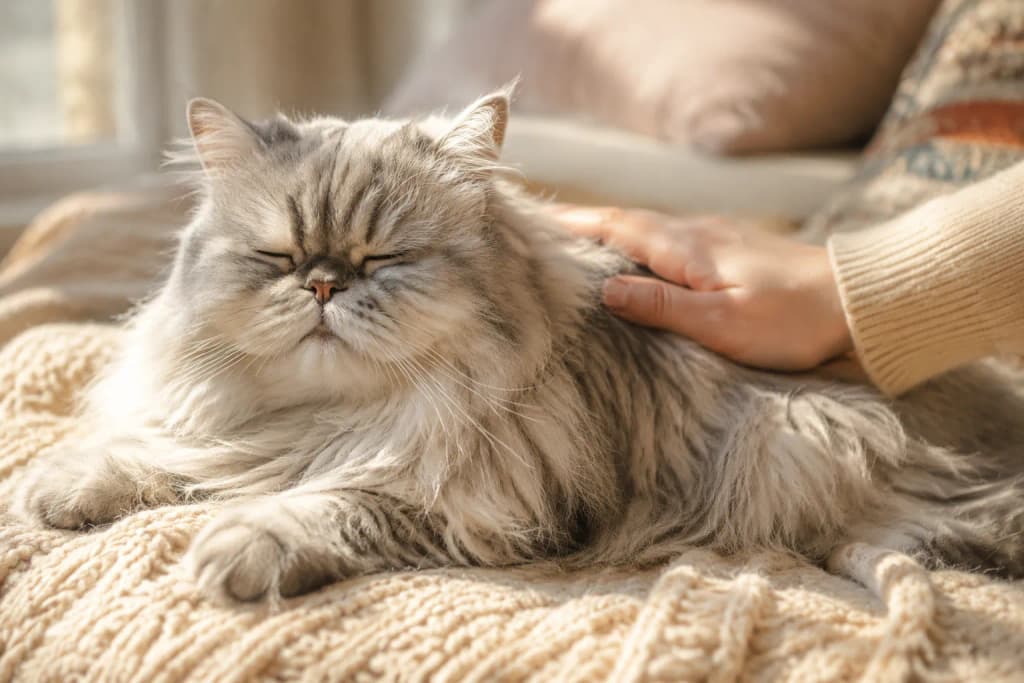
A content senior Persian makes a specific soundtrack—a low, even purr, the soft thud of settling onto a hip. A cat in pain goes silent in a different way, or lets out a short, clipped breath when you press the wrong spot. Learn that difference. It's your whole early-warning system.
Spend the first thirty seconds doing nothing but watching. Is she favoring a side? Is he flinching before you've even made contact? Grooming a senior cat starts as observation, not action.
Micro-story: One family we worked with thought their 16-year-old was "getting grumpy" about brushing. Turned out he'd flinch only when touched on the left hip. The grumpiness was arthritis. A vet visit and the right pain management changed everything—including the grooming.
The "so what" here is blunt. If you skip the read, you'll mistake pain for stubbornness, and you'll teach your cat that the comb means discomfort. Once that association sets in, every session gets harder.
Step 2: Build One Fixed Grooming Station
Pick a spot. Use it every time. We're partial to a low, stable surface with a towel—a kitchen counter near a window works because the light is good and the height saves your back.
Why fixed? Routine lowers a senior cat's anxiety more than any tool or technique. Cats read environments. A consistent station tells the body what's coming, which drops the cortisol before you've lifted a single hair.
Keep your kit in one place so you're not rummaging mid-session:
- A wide-tooth steel comb (your primary tool)
- A smaller fine-tooth comb for the face
- Blunt-nosed grooming scissors (for emergencies only)
- A soft towel for grip and warmth
- Pet-safe wipes for eyes and rear
- Treats your cat actually loves
Set it up the night before if mornings are chaos. The less friction for you, the more likely you'll actually do the daily passes that keep mats from forming.
Step 3: Start With Your Hands, Not the Tool
This is the step most checklists skip, and it's the one that matters most.
Before any comb touches fur, run your flat palms slowly over the whole body. You're doing two jobs at once. You're warming the cat up to touch—and you're scouting. Fingers find what eyes and combs miss: the early mat forming at the base of a tangle, a warm swollen spot, a lump that wasn't there last month.
Treat your hands as a diagnostic tool, not just a comfort. Press gently. Note any spot that makes your cat tense, vocalize, or pull away.
If you find a lump, a sore patch, or sudden hair loss, that's not a grooming task. That's a call to your vet. PetMD's senior cat resources are a decent place to understand what's worth flagging, but a hands-on exam beats any article.
The intimacy of this step sneaks up on people. You learn a body by hand the way you learn a face by heart. And with an old cat, you start memorizing it almost without meaning to—the exact give of the belly, the bony architecture of the hips—because some part of you knows you're collecting it for later.
"You don't groom an old cat. You take inventory of a life, one stroke at a time."
Step 4: Detangle in Micro-Sessions
Forget the idea of "grooming the cat" as one event. Kill that idea entirely.
Instead, think in five-minute passes, two or three times a day. A senior Persian's tolerance—and joints—won't survive a twenty-minute production. Push past their limit and you don't just lose today's session. You poison the next one.
Here's the practical rhythm that works:
- Morning pass (5 min): Back, sides, and the easy reachable zones while the cat is warm and relaxed.
- Midday spot-check (2 min): Just the danger zones—armpits, belly, rear.
- Evening pass (5 min): Whatever you didn't finish, plus a calming wind-down.
The counterintuitive part: shorter sessions actually keep the coat in better shape than long ones. Because the enemy isn't time spent grooming—it's mats forming between sessions. Three small touches a day beat one heroic Sunday-afternoon battle every single time.
The soundtrack tells you when to stop. The moment the purr cuts out, or the tail starts that low metronome thump against the towel, you're done. End it before the cat ends it for you.
Step 5: Match the Tool to the Skin Underneath
Senior skin is thinner. Less elastic. More easily torn. The slicker brush you used on a plush three-year-old can scrape and bruise an elderly one.
Here's our honest tool hierarchy for an old Persian:
| Tool | Best For | Senior Cat Caution |
|---|---|---|
| Wide-tooth steel comb | Daily detangling, body | Your safest everyday choice |
| Fine-tooth comb | Face, behind ears | Go slow near eyes |
| Slicker brush | Lifting loose undercoat | Light pressure only; skip over bony areas |
| Grooming scissors | Emergency mat removal | Slide a comb under the mat first—never cut blind |
| Mat splitter/rake | Stubborn tangles | Better left to a professional groomer |
The mistake most people make is using too much tool and too little patience. A wide-tooth comb and gentle, short strokes will handle ninety percent of a senior's needs. Reserve everything aggressive for the pros.
Always comb in the direction of hair growth, in short strokes, holding the fur at the base so you're not pulling on tender skin. If the comb stops, don't yank. Stop, reposition, work the edge of the tangle loose with your fingers.
Step 6: Defend the Danger Zones
Four areas mat first, mat worst, and hurt most. If you only have two minutes, spend them here.
- Armpits and the chest hollow — friction zones that knot within a day
- Belly — where a senior can no longer twist to reach
- Behind the ears — fine fur that felts into hard pellets
- Sanitary area and rear — the spot a stiff old cat physically can't clean
That last one is its own conversation. When an arthritic Persian can't reach the rear, you get matting plus hygiene problems—stuck waste, skin irritation, sometimes infection. Many owners keep this area in a permanent short trim, a "sanitary clip," and honestly it's one of the kindest things you can do.
Micro-story: We heard from a customer whose vet recommended a simple sanitary trim for her 17-year-old, and she said the cat's whole mood lifted within a week. The cat had been uncomfortable for months. Nobody clocked it because Persians suffer so quietly.
The "so what": ignoring these zones doesn't just create grooming work. It creates pain and health risk. A matted rear on an old cat isn't a cosmetic issue—it's a welfare one.
"Comfort is the only grooming goal that matters once a cat grows old."
Step 7: Tend the Flat Face With Care
Persians come with that signature flat face—the brachycephalic structure—and it brings its own daily chore. Tear ducts that drain poorly. Folds that trap moisture. Eyes that weep.
Every day, take a damp soft cloth or pet-safe wipe and gently clean the corners of the eyes and the fold beneath them. Wipe outward, away from the eye, with a fresh section of cloth for each side so you're not moving bacteria around.
Skip this and you get tear staining at best, and skin infection in the folds at worst. Seniors are more prone to both because their immune resilience drops.
Keep the fine-tooth comb moving slowly here. The fur around the face is delicate, and an old cat trusts you least when you work near the eyes. Talk low. Keep the sounds in the room soft—no clattering, no sudden movements. The voice is part of the tool kit.
Step 8: Don't Forget the Paws and Nails
A young cat keeps its own nails worn down by scratching and climbing. An old, stiff Persian doesn't move enough to do that. So the nails overgrow—sometimes curling right into the paw pad.
Check the paws during your hands-on pass. Look for nails that have grown into a full curl, fur matting between the toes, and overgrown tufts on the underside of the paw that make floors slippery.
Trim a little, often. Just the sharp tips, avoiding the pink quick. If you can't see the quick on dark nails, trim conservatively or let a groomer or vet handle it. The clip-clip sound of the trimmer can spook a cat, so let them sniff the tool first and pair it with treats.
Matted toe fur deserves a mention too. It traps litter, throws off their footing, and on a senior with already-shaky balance, that matters more than it sounds.
Step 9: End Every Session as a Good Memory
How you finish writes the story your cat remembers.
Always close on a positive note—a few strokes in a spot they love, a favorite treat, that low murmured praise. You're not just grooming the coat. You're banking trust for tomorrow's session.
End before the cat is "done," not after. If you wait for the warning thump of the tail or the silence where the purr used to be, you've already taught them that grooming ends in stress. End it while they're still relaxed, and the comb stays a friend.
This is also, if we're honest, the part that costs you something. Because you start noticing how much thinner the coat sits in your hands each season. How the purr takes a beat longer to start. You're maintaining a body and saying a slow goodbye in the same gesture, and most pet owners feel that quiet ache without ever naming it.
"We've handled photos of cats in their last season, and the coat is always what families miss touching most. Texture is memory."
— The PawSculpt Team
That's the unexpected reason a lot of families reach out to us mid-life rather than at the end. They want the full, magnificent Persian coat captured while it's still full. We're a team that digitally sculpts each pet and brings it to life through full-color 3D printing in resin—so the markings, the fluff, the exact set of the face come through in three dimensions. Not as a replacement for the cat in your lap. As a way to keep the shape of them once the lap is empty. If that's a someday-thought for you, the process lives over at pawsculpt.com.
The 2 Habits to Quietly Drop
Now the part most grooming guides won't tell you. Two things you might be doing—with the best intentions—that you should let go of.
Habit 1: Drop the Marathon Grooming Session
You mean well. You sit down determined to "get the whole cat done" because you skipped a few days. And you turn a calm animal into a stressed one over the course of twenty minutes.
Long sessions are the single most common way owners accidentally make a senior cat hate grooming. The joints ache from holding position. The patience runs out. And the last five minutes of a long session—when both of you are frustrated—undoes the trust the first five built.
Replace it with the micro-session rhythm from Step 4. If you've fallen behind and there's serious matting, don't try to power through it solo. That's a groomer's job. Which brings us to the second habit.
Habit 2: Drop the Wrestling Match With Mats
When you hit a tight mat, the instinct is to dig in with the comb and force it apart. Or worse, grab scissors and cut blind into a knot pressed flat against the skin.
Stop. Both moves hurt your cat, and the scissors land thousands of cats in the ER every year with accidental skin lacerations—Persian skin tents up into a mat, so what looks like fur is often skin.
Here's the better play:
- For a small mat: Work the edges loose with your fingers, then a wide-tooth comb. Hold the base. Patience over force.
- For a tight or large mat: Leave it. Book a professional groomer or vet, who can safely shave it with clippers.
- For a fully matted senior: A full-body sanitary or "lion" clip from a groomer resets everything. It's not a failure. It's a fresh start.
Letting a pro shave a bad mat is not giving up. It's choosing your cat's comfort over your ego. We've watched too many owners treat the groomer as an admission of defeat. It isn't. For a frail senior, sometimes a short professional coat is the most loving option on the table.
The AVMA's guidance on senior pet care underscores the bigger frame here—senior animals need more frequent, gentler maintenance and a lower threshold for getting professionals involved. Grooming an old cat is a team sport.
Personal Aside: Honestly? Our team has a soft spot for the freshly-shaved senior Persian. There's this slightly ridiculous, deeply dignified energy to an old cat in a lion cut, like a tiny retired emperor. We've turned a few of those into figurines and they're some of our favorites—because they capture the cat exactly as the family loved them in their last chapter, lion cut and all. Nobody wants the "ideal" Persian. They want THEIR cat.
Your Senior Persian Grooming Schedule at a Glance
Pin this somewhere visible. A long-haired cat grooming checklist only works if it's in front of your eyes, not buried in a drawer.
| Task | Frequency | Time | Notes |
|---|---|---|---|
| Body comb-through | Daily | 5 min | Split into 2 short passes if needed |
| Danger-zone check | Daily | 2 min | Armpits, belly, behind ears, rear |
| Eye and face cleaning | Daily | 2 min | Wipe outward, fresh cloth each side |
| Nail check | Weekly | 5 min | Trim tips only, avoid the quick |
| Sanitary trim | As needed | Pro/vet | Keep rear short for stiff seniors |
| Full mat assessment | Weekly | 5 min | Hands-on; flag lumps to your vet |
| Professional groom | Every 4-8 weeks | Pro | More often if matting is frequent |
The frequency matters more than the perfection. A first-time cat owner doing the grooming basics imperfectly every day will keep a better coat than an expert who does it brilliantly once a month.
What Changes in the Coat Are Worth a Vet Call
We're not vets. But after working with thousands of pet families, we've learned which coat changes tend to send people to the clinic—and we'd rather you call too early than too late.
A coat is one of the loudest health signals a quiet cat has. When the inside goes wrong, the outside often shows it first.
- Sudden greasy or clumpy coat — often means the cat has stopped grooming, which points to pain or illness
- Dramatic increase in matting — same story, and worth investigating fast
- Bald patches or over-grooming one spot — can signal pain, allergy, or stress
- Dull, brittle texture change — sometimes tied to thyroid or kidney issues common in seniors
- Dandruff or flaking — dry skin, diet, or an underlying condition
Elderly cat coat care isn't only about what you do with the comb. It's about what the comb tells you. You are often the first one to know something's wrong, and the coat is how you'll know it. Trust that instinct and book the appointment.
What to Expect If You Want to Preserve the Coat
Plenty of families reach a point—often after a tough vet visit—where they want something physical to hold onto. We get a lot of those messages. So here's the honest, practical version of how that works, without the sales gloss.
You don't need a professional photographer. What helps most is a handful of clear, well-lit photos:
- One straight-on shot of the face
- One full side profile showing the body and coat
- A couple of casual angles that capture their typical pose or expression
- Natural daylight, no harsh flash
From there, our master 3D artists digitally model your cat and we bring it to life through full-color 3D printing in resin—the color is printed into the material itself, so a Persian's cream-and-silver coat or the deep copper of a red tabby comes through in full dimension, finished with a protective clear coat. It's vibrant and real-looking, with the natural fine texture of a quality 3D print rather than a glossy plastic toy.
For specifics on turnaround, revisions, and the guarantee—those change, so we'd rather you see the current details straight from the source at pawsculpt.com than trust a number in a blog post. You can also browse more pet care and keepsake stories on our blog.
We'll say this plainly though. A figurine is not for everyone, and it's not a grief cure. Some families want a memorial garden. Some want a photo book. A 3D printed keepsake is just one option among several, and the right one only if it speaks to you.
"You can't keep the cat. But you can keep the shape of the love you gave it."
The Quiet Reward Nobody Mentions
Circle back to that kitchen, that morning sound—the comb catching where it used to glide.
Once you've worked through these steps for a few weeks, the soundtrack changes. The comb glides again. The purr starts faster. The flinch fades because the pain got found and managed. And the daily five minutes you dreaded becomes the part of the day you both look forward to.
That's the thing about grooming a senior Persian that surprises people. You think you're maintaining a coat. What you're actually doing is buying back comfort, and time, and a kind of closeness you can't get any other way.
So tonight, start with one micro-session. Hands first, then the comb, five minutes, end on a treat. Don't aim to fix the whole cat. Aim to make tomorrow's session a little easier than today's.
The old cat on the towel doesn't know about checklists or schedules. He just knows that the hands that once played with him now keep him comfortable—and that, at the very end of the long story you've shared, somebody still bothers to reach the places he no longer can.
Frequently Asked Questions
How often should I groom a senior Persian cat?
Daily is ideal, but the key is keeping sessions short—around five minutes, split into two or three passes if needed. Add a quick two-minute check of the danger zones (armpits, belly, behind the ears, and rear) every day. For an elderly cat with stiff joints and delicate skin, brief and frequent always beats long and occasional.
Why is my old Persian suddenly getting matted when it never used to?
This is incredibly common and usually points to mobility or pain. Senior cats often stop self-grooming because arthritis makes twisting painful or dental issues make licking uncomfortable. When they stop, the natural oils build up and the fur clumps fast. A sudden jump in matting is worth a vet visit to rule out an underlying issue.
Is it cruel to shave a matted senior Persian?
Not at all—it's often the most compassionate choice. Tight, widespread mats pull on the skin and cause real pain. A professional groomer can safely shave them with clippers, which resets the coat without the risk of cutting the skin. For a frail older cat, a short clip can dramatically improve comfort and mood.
What's the best grooming tool for a first-time long-haired cat owner?
Start with one good wide-tooth steel comb. It handles the vast majority of daily detangling without the skin risk that aggressive slicker brushes pose on thin senior skin. Add a fine-tooth comb for the face and pet-safe wipes for the eyes, and you've covered the basics of any long-haired cat grooming checklist.
Can I cut mats out with scissors at home?
We'd strongly advise against it. A cat's skin tents up into the base of a mat, so what looks like fur is often skin—and blind cutting causes serious lacerations that send many cats to the ER. Work small mats loose with your fingers and a comb, and leave large ones to a groomer or vet.
How do I clean my Persian's weepy eyes?
Use a soft damp cloth or pet-safe wipe daily, gently wiping outward from the corner of the eye, and use a fresh section of cloth for each eye. Persians' flat faces drain tears poorly, so daily cleaning prevents staining and skin infections in the folds beneath the eyes.
Ready to Celebrate Your Pet?
Every pet has a story worth preserving. The years you've spent on senior Persian grooming—the daily comb passes, the eye wipes, the quiet trust built five minutes at a time—are an act of love, and a custom PawSculpt figurine captures the full, magnificent coat and one-of-a-kind face that make your companion unmistakably theirs.
Visit pawsculpt.com to learn more about our full-color 3D printing process, flexible revisions, and quality guarantee