
Guilt Isn't Proof of Love: Journaling Your Maine Coon's Goodbye in the First Month
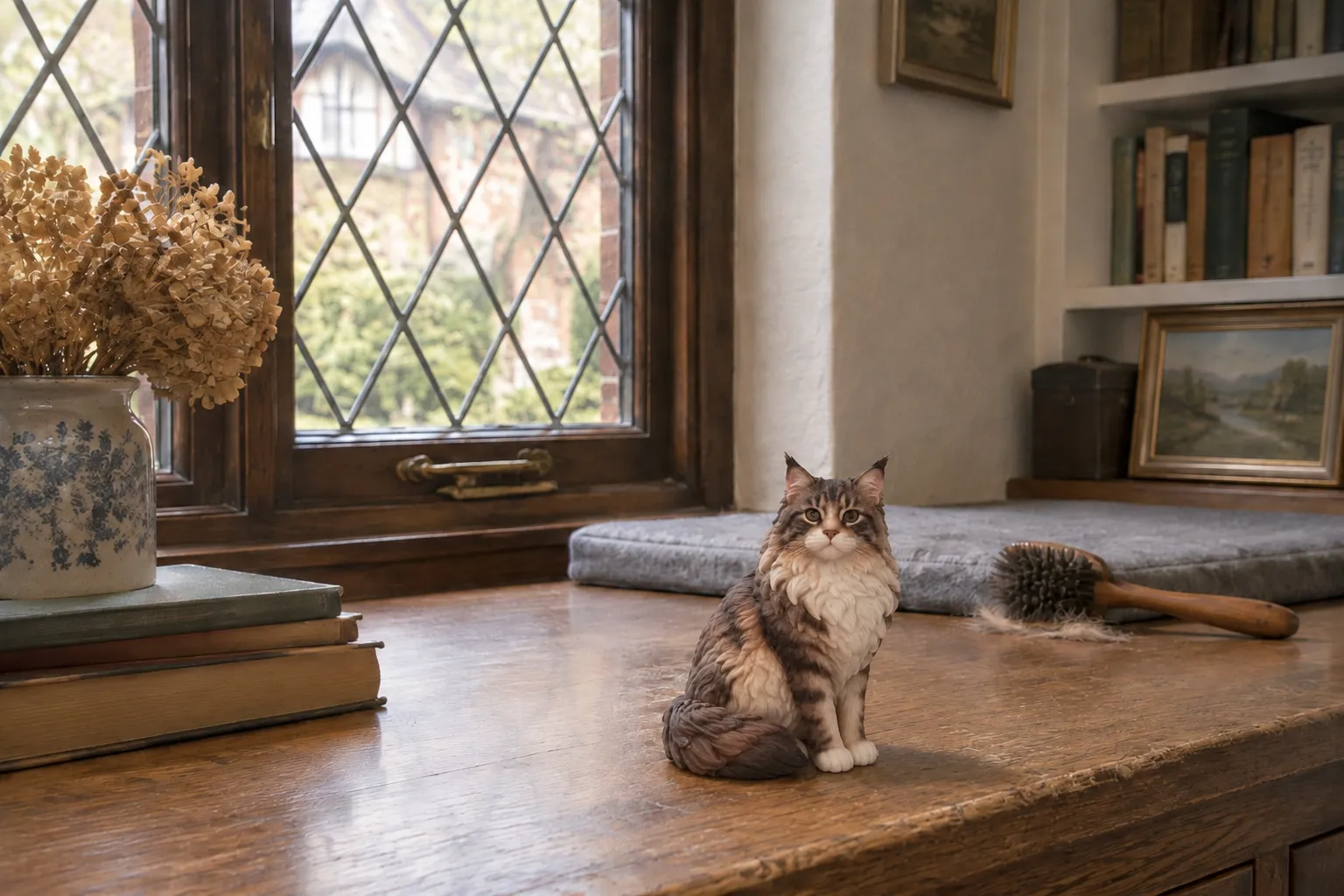
The work laptop is open on the home-office desk, but you're holding the towel from the vet's carrier to your face, because it still smells like her: warm fur, dry kibble, a little of the clinic's disinfectant. The email can wait.
Maine Coon euthanasia guilt is a normal grief response, but it proves neither that you failed your cat nor that suffering is how you honor her. A plain journal kept through the first month can hold the decision's facts, your unanswered questions, and the smells you want to remember, at whatever pace grief allows.
Quick Takeaways
- Guilt, sadness, anxiety, tiredness, and even relief are all normal after losing a cat, according to the Cornell Feline Health Center.
- Your veterinarian was the best person to advise on timing, and medical tests often show more than an owner can see at home. Write that down when "I should have known" shows up.
- Treat the first month as a container for writing, not a deadline for feeling better. Grief has no prescribed timeline.
- Record smells and small habits early, before laundry and routine change the house.
- If grief is disturbing your sleep or daily life, a helpline, a support group, or a grief counselor is a reasonable next step.
Why guilt arrives after a decision you made carefully
You made the call. Maybe you held her paw. Maybe you couldn't stay in the room and now you wish you had.
Then the questions might start, maybe at night. Was it too soon? Too late? Should I have noticed the weight loss in the spring? Did she know?
Start with what the veterinary sources actually say. The ASPCA describes coping with a pet's impending loss as one of the most difficult experiences a pet parent will face. It also says your veterinarian is the best person to advise on when the time is right, and that medical test information is often more accurate than what an owner can observe about a pet's health.
That second point matters for guilt. The version of you who "should have known sooner" was looking at a cat on a couch. Your vet was looking at results. Your vet had information you could not see at home, and you relied on the person best placed to advise you.
Guilt can feel a lot like love. Both can be about responsibility. Love might say, I am responsible for her comfort. Guilt might say, Then anything that went wrong is mine. Because the two can feel alike, you might start treating guilt as evidence of devotion, as if the hurt were a fee you owe for having been the one who chose.
You don't owe that fee. The love was in the vet visits, the brushing, the food she liked, and the decision itself, which you made so she wouldn't have to suffer longer. Guilt can be present without being the proof.
The Cornell Feline Health Center says there is no "correct" way to grieve a cat, and that sadness, anxiety, tiredness, guilt, and relief are all normal. Relief is on that list. If part of you exhaled when the waiting ended, that doesn't cancel your love. It may mean you had been carrying something heavy.
Set up a journal that can hold the hard parts
Writing won't fix grief, and nobody can promise that it will help you specifically. Cornell's pet loss resources note that remembrance, writing, and art are among the ways some people find support. That's a modest claim, and it's the right size. A journal is something to try, not a treatment.

If you want to try it, here's a structure that does some of the organizing for you.
First, pick the notebook and the place
- Use a notebook you won't use for anything else. Grocery lists on the back of grief pages can feel wrong later.
- Keep it where you already sit every day. If that's the home-office desk where she used to sprawl across the keyboard, put it there.
- Keep one pen with it, so the only decision left is whether to open it.
Then, set four standing headings
You don't fill all four every day. They're shelves to put things on.
1. The decision. Write the facts once, plainly: the date, what your vet told you, what the tests showed, who was in the room, and what you were told her condition meant for her comfort. Keep adjectives out of it.
Guilt can speak in absolutes, like always, never, and should have. A page of plain facts gives you something to argue back with. When the 2 a.m. thought says "you rushed it," you can flip to the page and read what was actually known.
2. The questions. Write every "what if" exactly as it comes to you. Next to each one, note who could answer it. Some questions only your vet can answer. You're allowed to call the clinic and ask. Others nobody can answer, and seeing that in writing might loosen their grip a little.
3. The senses. What she smelled like, sounded like, and felt like. More on this below, because smell can be easy to overlook when you write about her.
4. The ordinary. Her routines. Where she waited at 6 a.m. The cupboard she opened with one paw. The chirp she made at birds. These are the details that make her her, and they may not show up in photos.
Date entries, but don't count them
Write the date at the top of each entry. Don't number the days as if you were tracking progress.
The Humane World for Animals guidance on coping with a pet's death says plainly that grief is not linear. Day 19 can be harder than day 4. A numbered list can make a bad day look like a step backward. A date only marks when you wrote.
If you started grieving before the appointment
Many people begin grieving while the pet is still alive. The ASPCA notes that this anticipatory grief is common. If you have notes, texts, or photos from the weeks before, tape them in or copy them out. Your goodbye may have started earlier than the appointment, and the journal can reflect that.
Keep it short when you need to
One line counts. "Couldn't write today. Her brush is still in the drawer." That's an entry.
A month may seem an odd length when grief has no timeline, but a month is a practical size for a project. It's long enough to write down a lot of details, and short enough that you can decide afterward whether to keep going, close the notebook, or start a new one. Your grief doesn't have to finish in a month. The notebook just needs a first chapter.
Write down the smells before the house changes
Smell can be easy to overlook when you write about her, and you might find it catches you off guard later.

Try this. Before you wash anything, sit with one object of hers and write a single paragraph about how it smells. Nothing literary, just accurate.
Imagine it's the fleece blanket from the window seat. Maybe it smells like sun-warmed dust and the faint sweetness of her fur. Maybe there's a trace of the lavender detergent you used years ago, or the cedar litter she tracked everywhere. Write all of it.
Then do the same with other places that hold her:
- The desk chair where she claimed your seat the moment you stood up. Maybe it smells like warm upholstery and something faintly like toast.
- The porch where you used to sit together when it rained. The next rainy evening, the wet boards and petrichor may bring her back sharply. Write about that evening when it comes, even if it's weeks away.
- Her brush, with fur still caught in the bristles. You might find that smell almost unbearable at first, or precious, or both at different times. You don't have to decide yet which it is for you.
A practical step: if there's one item you want to keep exactly as it is, set it aside before laundry day. Put it in a box or a closed bag somewhere it won't get washed by accident. You can decide later whether to keep it, wash it, or let it go.
A photograph shows what she looked like. A paragraph about smell can describe what being near her was like. Years from now, the second one may be what you most want to read.
If other cats share the house
Grief in a multi-cat household has its own logistics, and the sources here don't say what your other cats understand about the loss. So I won't tell you what they feel.
What you can do is notice and write. Add a short section to the journal:
- Changes you see in the other cats' eating, sleeping, or where they spend time.
- Practical changes you make: an extra food bowl put away, a different feeding schedule, a litter box you no longer need.
- Anything that worries you. If something about another cat's health or behavior concerns you, bring your notes to your veterinarian. Dated notes are easier for both of you to work with than memory.
You may find the other cats sleeping on her blanket. That can sting and comfort at the same time. Write that down too.
People in the same house will also grieve differently. Cornell notes that grief responses vary between people. One person might want to talk about her every night, and another might want to clear away the bowls on day two. Neither is wrong. If you share a home, a shared page in the journal, where anyone can add a memory, lets people grieve together without matching each other's pace.
If there are children in the house, some providers, including Lap of Love, offer pet-loss support specifically for children.
The guilt of moving on, and when to ask for help
Some week, maybe in week three, maybe much later, you might notice your entries are getting shorter. You laughed at something on a call. You walked past her spot by the window without looking. Then guilt might arrive again, aimed at a different target: How can I already be okay?
This second guilt can rest on the same idea as the first: that your pain is what keeps her real, so if the pain fades, she fades with it, and that would be a betrayal.
The journal can show otherwise. She is on those pages whether you cried while writing them or not. A lighter day doesn't erase a single word.
Humane World for Animals says it's OK, and even important, to mourn the relationship you had with your pet. Mourning a relationship is different from staying in maximum pain to prove the relationship mattered. You can keep mourning her and still have a decent Tuesday.
Cornell describes grief as a gradual journey that rarely follows a straight path. The hard days might come back. A good week, then her birthday, then a stranger's Maine Coon in a video, and you could be back at the start for an afternoon. That's not failure.
A journal prompt for this phase: Write about one thing you enjoyed this week that she would have been in the middle of. If you opened a box, she'd have climbed in. If you sat on the porch, she'd have been on the chair beside you, sniffing the rain. This can let the good moments include her instead of feeling like a betrayal of her.
You may have seen the term "post-traumatic growth" in articles about pet loss. Nothing in the sources I'm working from promises that loss leads to growth, so I won't promise it either. If something in you changes for the better over time, that's yours to notice. It isn't a goal you're failing to reach.
When a journal isn't enough
Writing is one tool. For some people it isn't the right one, or it isn't enough on its own.
Both Cornell and Humane World note that loss and grief can disturb sleep and daily routine. The Cornell Feline Health Center says professional grief counseling is an option when loss affects daily functioning or sleep. If you're weeks in and can't sleep, can't work, or can't eat normally, that's a good reason to talk to someone. It doesn't mean you're grieving wrong.
Some places to start:
- The Tufts Pet Loss Support Hotline. Tufts Cummings School of Veterinary Medicine runs a free helpline staffed by veterinary students from 6 pm to 9 pm Eastern, Monday through Thursday, with 24-hour voicemail. Callers can expect a caring, supportive, non-judgmental person on the other end.
- Virtual support groups. Lap of Love Veterinary Hospice offers virtual pet loss sessions led by certified pet loss coaches, in small groups and one-on-one. Some are free and some are fee-based.
- Veterinary social work. Some veterinary centers have social work programs for owners going through a pet's illness and loss. The Ohio State University's Honoring the Bond program is one example. Social workers there can help with bereavement referrals, and some veterinary centers hold annual remembrance ceremonies for pets that have died.
Bring the journal if you go. You don't have to explain everything from scratch when it's already written down.
Keepsakes: paw prints, photos, words, and figurines
At some point, maybe in the first month, you might start thinking about something to keep. There's no right choice, and there's no rush. Here are the common options and what each one holds.
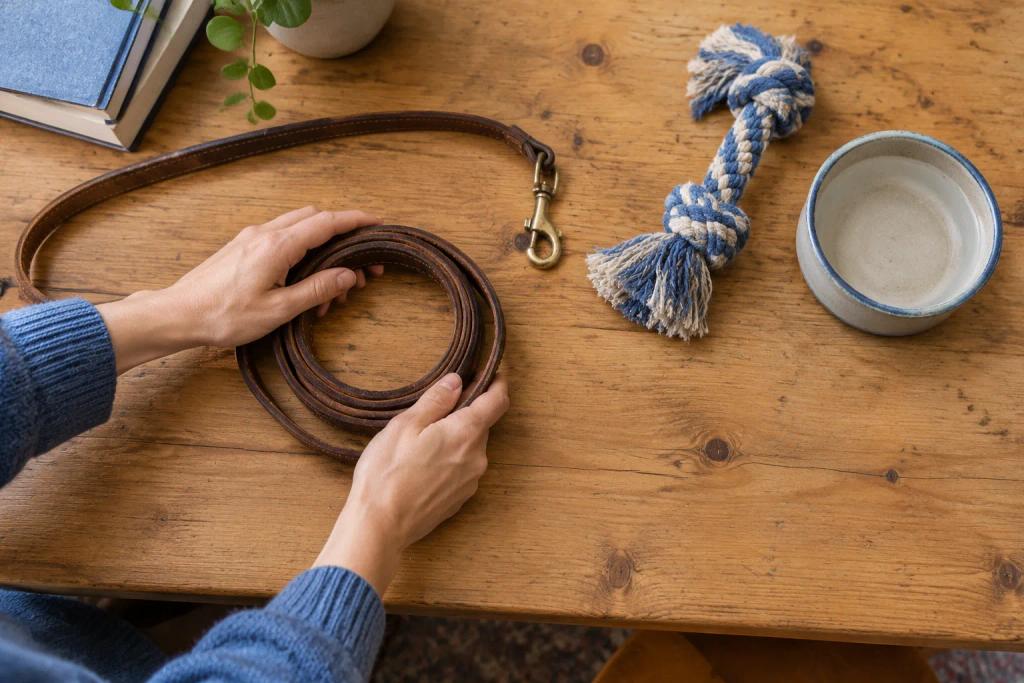
A paw print impression. If you have a clay paw print, from the clinic or made at home, it records the literal shape of her. A Maine Coon's wide, tufted paw in clay is a very particular object. Keep it somewhere you'll see it but won't knock it over, and consider writing a journal entry about the day it was made.
Photographs. Go through them with the journal open. You may find details you'd forgotten, like the notch in one ear or the way her ruff fanned out in winter. Write those down. A printed photo book with your journal excerpts beside the pictures can turn two keepsakes into one.
The journal itself. By the end of a month, it may be the most complete record of her you have. You might keep it closed for a long time and open it on her birthday.
Art. Drawings, paintings, and commissioned portraits are all forms of the remembrance Cornell describes. Something made by your own hand, however rough, can carry a lot.
A sculpted figurine. You might want her shape back on the desk, something three-dimensional you can see from the corner of an eye. PawSculpt makes full-color 3D printed resin figurines between 2.5 and 6 inches tall. The process works from your photos: the reference photographs are reviewed, an artist digitally sculpts the portrait, and you confirm the artist's preview before anything is printed. Five revisions on the preview are included. The result is a sculpted interpretation of your cat, not a photographic copy, and it's meant for indoor shelf display under a transparent protective coat.
Single figurines are listed at $429 (2.5-inch), $489 (3-inch), $589 (4-inch), $789 (5-inch), and $999 (6-inch). If you share your home with other cats and want two of them together, a second pet is $179. A nameplate is $9.
A note on timing: the hardest part of a figurine in the first month may not be cost or timing. It may be the preview. You'll be asked to look closely at her face, judge whether the ears and eyes are right, and say what's wrong. You might find that comforting, as one more chance to pay close attention to her. Or it might feel too raw in week two. If you're unsure, you can gather photos now and order later. The order won't get worse for waiting, and choosing photos can be its own journal entry.
The deposit and refund rules are worth knowing before you decide. A 40% deposit starts the order. You can get a full refund until the order enters the IN_DESIGN stage, when the artist begins modeling. From that point the deposit is non-refundable. The first preview typically arrives within 7 days after complete references are available and the order enters IN_DESIGN. Delivery in the US is 27 to 40 days after final payment, and 33 to 47 days internationally.
None of these options is more loving than another. A clay paw print on a windowsill honors her as much as anything on a pedestal.
Frequently Asked Questions
Is it normal to feel guilty after euthanizing my Maine Coon?
Yes. The Cornell Feline Health Center says sadness, anxiety, tiredness, guilt, and relief are all normal after losing a cat, and that there is no correct way to grieve.
How long does grief last after a cat's euthanasia?
There is no prescribed or normal timeline. Cornell and Humane World for Animals both note that grief varies between people and is not linear, so hard days can return after good ones.
Do I need to write in a grief journal every day?
No. A one-line entry counts, and skipping days is fine. Date your entries so you know when you wrote them, but don't number days as if you were tracking progress.
Where can I talk to someone about losing my cat?
The free Tufts Pet Loss Support Hotline is staffed 6 to 9 pm Eastern, Monday through Thursday, with 24-hour voicemail. Lap of Love offers free and fee-based virtual support groups.
Can I cancel a memorial figurine order if I change my mind?
A full refund is available before the order enters IN_DESIGN, when the artist starts modeling. After that, the 40% deposit is non-refundable.
When You're Ready for Something to Keep
There's no deadline on this. The journal, the paw print, and the blanket set aside before laundry day can all wait as long as you need.
If at some point you want her shape on the desk again, PawSculpt's memorial figurines for cats and other pets start from your photos and an artist's digital sculpt. You review and confirm the preview before anything is printed, and five revisions are included. Each figurine is printed in full color on a Mimaki 3DUJ-553, then cleaned of supports, inspected, and finished with a transparent protective coat. A black acrylic base is included, and no separate shipping fee is added at checkout. International customers are responsible for local customs duties, taxes, or import fees.
If you'd like to see how sizes, poses, and details like a favorite toy work before deciding, browse the custom pet sculpture options. Gathering photos can come first, and the order can wait until you're ready.