
Saving Your Senior Rabbit's Fur Before Goodbye Isn't Strange: Anticipatory Grief and Gentle Keepsakes
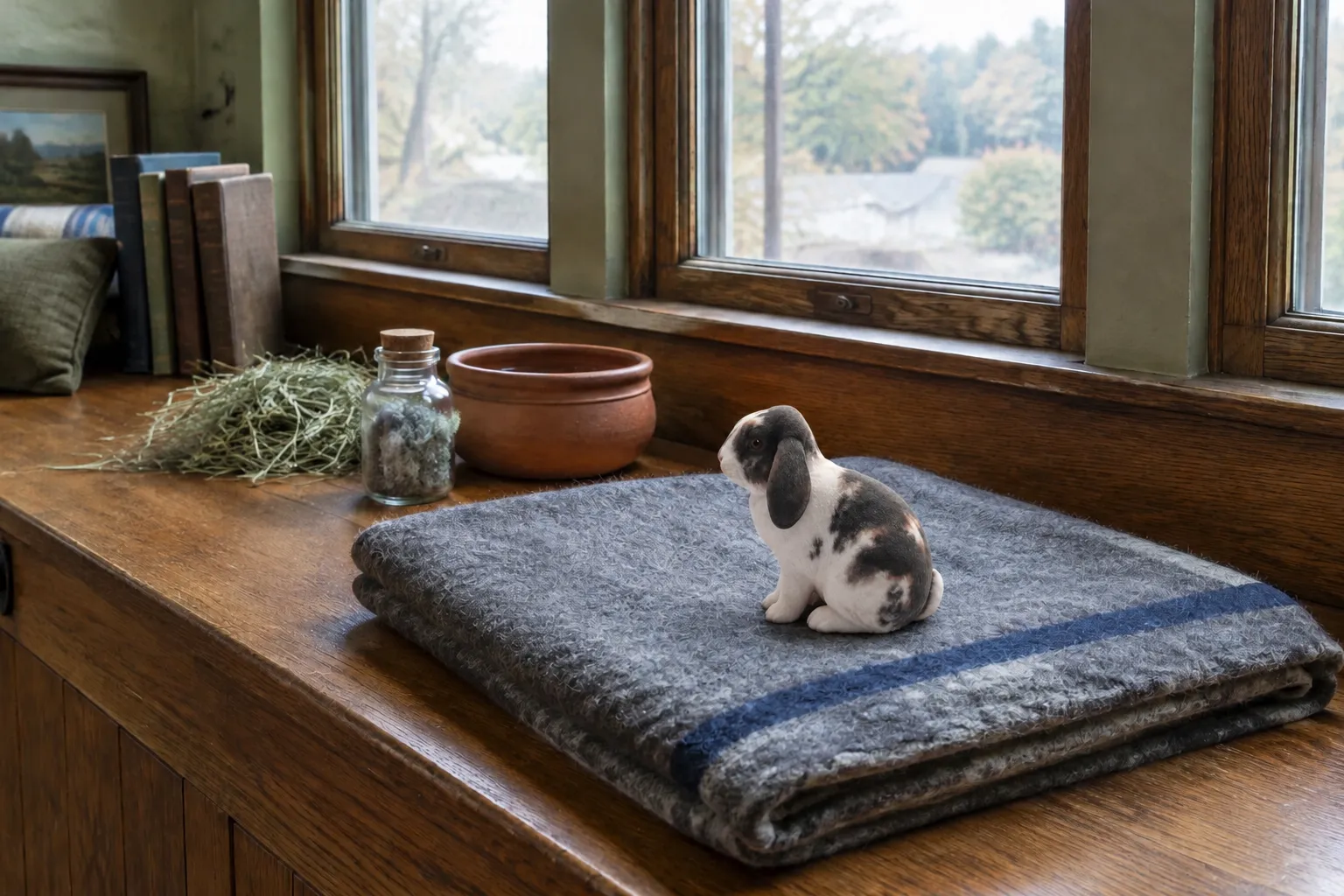
"You're saving her fur while she's still here?" Picture that question asked in a home office, where late afternoon light slants across the desk and turns a small glass jar of gray and oatmeal fluff the color of weak tea.
No, it isn't strange. Grieving before a pet dies, called anticipatory grief, is common, and remembrance helps some people carry loss. Keeping a little of her fur in a jar, along with photographs or written notes, while she is still with you is one quiet way to honor the bond now, on your own timeline.
Quick Takeaways
- Anticipatory grief, the sorrow that comes before a death, is a common response to a pet's decline. It does not mean you have given up.
- Grief has no prescribed timeline and rarely follows a straight path, so feeling it early, late, or in waves is all within the range of normal.
- Saving fur works best when you gather what comes away on its own. Ask your veterinarian before you handle, brush, or trim a frail rabbit.
- Photographs, video, written notes, art, and sculpted portraits can all hold different parts of a rabbit's presence. You don't have to choose only one.
- If people around you call it morbid, free and fee-based pet loss support exists, including helplines, virtual groups, and, from some providers, anticipatory grief support.
Why Grief Arrives Before the Goodbye
There is a particular light that belongs to the hours you spend watching an old animal. It lands on the shelf where she naps and makes the dust motes look like slow snow. It shows you the new hollows above her hips and the soft drape of her ears, like folded linen. You see these things clearly because you are looking harder than you used to. Some part of you has started taking notes for a future you would rather not reach.
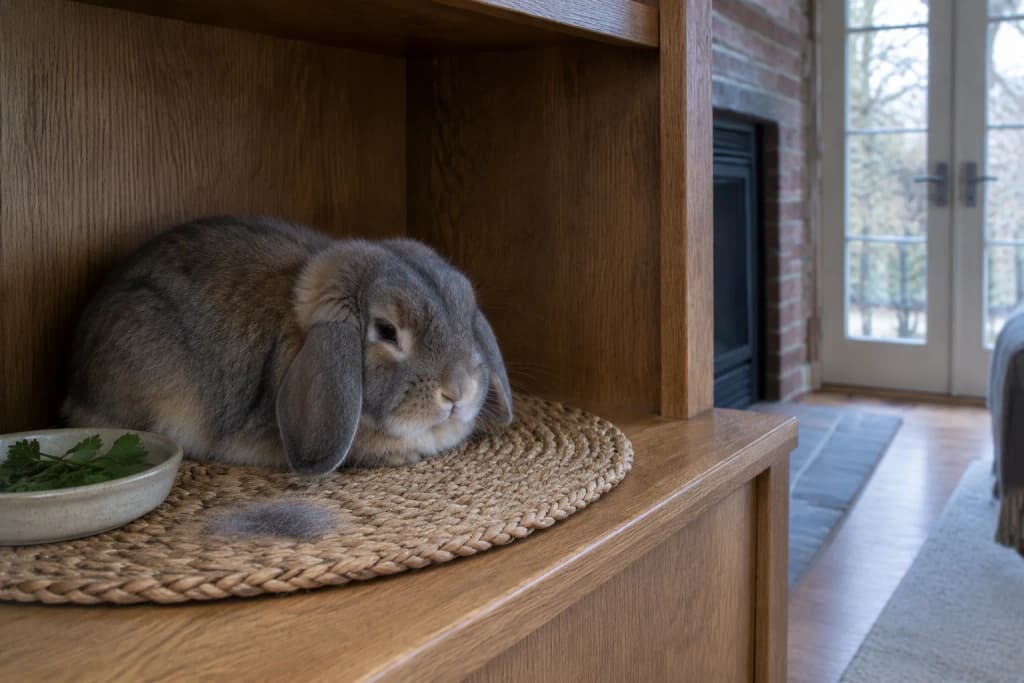
That act of looking ahead has a name. The ASPCA describes coping with the impending loss of a pet as one of the most difficult experiences a pet parent will face, and it treats grief that begins before a pet dies as common. The phrase used for this is anticipatory grief: mourning that starts while the one you love is still breathing beside you.
Why would the mind do this to itself? The question deserves more than a shrug. One way to think about it is that love has always included knowledge of its own ending. When you brought home a young rabbit, the ending was abstract, a fact you could set on a high shelf. Age takes that fact down and puts it in your hands. Anticipatory grief may be what it looks like when the mind stops pretending it doesn't know.
This kind of grief is rarely tidy. Humane World for Animals states plainly that the grief process is not linear. You might feel calm on a bright morning and undone by a loose tuft of fur on the carpet that same evening. Cornell University's College of Veterinary Medicine describes pet grief as a gradual journey that rarely follows a straight path, and notes that loss can disturb sleep and daily routine.
The emotional mix can also surprise you. Writing about cats, the Cornell Feline Health Center lists sadness, anxiety, tiredness, guilt, and relief among the feelings that can follow a loss, and calls all of them normal. The list is worth reading even if your companion is a rabbit. You might find relief the hardest of these to admit. It can show up when you imagine her no longer struggling, and then guilt may follow close behind it. Both can sit in the same chest without either one being a verdict on how much you loved her.
Myth vs. Reality
Myth: Grieving before your rabbit dies means you have given up on her.
Reality: The ASPCA treats anticipatory grief before a pet dies as common. Mourning what is coming can sit alongside careful, attentive care in the present.
Myth: There is a correct amount of time to grieve, and starting early uses it up.
Reality: Cornell and Humane World for Animals both describe pet grief as having no prescribed timeline and not following a straight line.
Myth: If you watch closely enough, you'll know exactly when it's time.
Reality: The ASPCA notes that medical test information is often more accurate than what an owner can observe, and that your veterinarian is the best person to advise on end-of-life timing.
What a Jar of Fur Is Holding
Consider the jar again, set somewhere the light can reach it. Up close, rabbit fur is never one color. A coat that reads as gray across the room turns out to be layered: pale at the root, smoky through the middle, sometimes tipped with a warm brown that only appears when the sun is low. In a glass jar the strands catch light at different depths, and the whole bundle seems to glow faintly from the inside, like a cloud lit at dusk.

If you keep such a jar, you may be asked why, and you may struggle to answer. One possible answer is that a jar of fur is less about the fur than about proof. It says that this particular animal existed, with this particular coat, in this particular house. Memory can carry the shape of a life, but you might worry it will lose the texture. Fur is texture you can hold.
There is also something worth noticing about gathering it now rather than later. After a death, collecting a keepsake can feel urgent and raw, done in a few shaky minutes. Before a death, the same act can be slow. You can gather a little at a time, on ordinary days, while she watches you from her loaf on the rug. The keepsake then holds a stretch of time, many small mornings, where a jar filled afterward might hold a single hard afternoon.
Remembrance is something veterinary institutions take seriously. Cornell describes remembrance, writing, and art among the things that can support people through pet loss, and notes that support resources and memorialization can help some people. The Ohio State University Veterinary Medical Center's Honoring the Bond program exists to recognize and honor the human-animal bond, and some veterinary centers hold annual remembrance ceremonies for pets that have died. These are institutions that treat animals medically, and they also treat the bond as worth marking.
None of this obligates you to keep anything. Some people find that objects comfort them, and others find that objects sting. The word "some" in Cornell's guidance matters. Memorialization can help some people, which leaves room for you to discover which kind of person you are, and to change your mind.
When Someone Calls It Morbid
The question in the opening scene is one you might dread. It may be asked without malice, sometimes by a partner, sometimes by a friend glancing at a desk. Still, it can land like a judgment, and it can make you wonder whether you are grieving wrong.
A few facts are worth keeping close when that happens. Humane World for Animals says that grief after losing a pet is normal and that it's OK, and even important, to mourn the relationship you had. The Cornell Feline Health Center puts it even more simply: there is no "correct" way to grieve. Grief responses vary between people, so a friend who would never save fur is describing their own way of grieving. Their way doesn't measure yours.
It helps to understand why your behavior might look odd from outside. Someone who isn't watching your rabbit's decline is living in a different time than you are. To them, she is a rabbit on a bookshelf, alive and fine. To you, she is a rabbit whose naps are longer, whose light has changed. You are reacting to something they cannot see yet. A small explanation sometimes closes that gap: "She's getting old, and I want to keep a little of her while she's still herself."
Sometimes no explanation closes it, and that is when outside support earns its place. The Tufts University Cummings School of Veterinary Medicine runs a free pet loss support helpline staffed by veterinary students. It is staffed from 6 pm to 9 pm Eastern, Monday through Thursday, with 24-hour voicemail, and callers can expect a caring, supportive, non-judgmental person on the line. Tufts notes that talking with someone like that can help with grief.
For people who prefer a group, Lap of Love Veterinary Hospice offers virtual pet loss support led by certified pet loss coaches, in small-group and one-on-one sessions, some free and some fee-based. Some providers offer anticipatory grief support specifically, along with pet-loss support for children. That second point matters in a household where a child is watching the rabbit age too. Veterinary social work programs like the one at Ohio State can also help with quality-of-life decisions and bereavement referrals.
If the weight of it starts to change how you function day to day, the Cornell Feline Health Center names professional grief counseling as an option when loss affects daily functioning or sleep. Reaching for that doesn't mean the grief is wrong. It means you are taking it seriously.
Gathering Fur and Other Traces, Gently
A keepsake made now should cost your rabbit nothing. The simplest rule is to collect what she gives up on her own and to leave everything else alone.
Gather fur that has already come loose. Loose tufts left on a blanket, caught in the weave of her favorite mat, or lifted during any grooming she already receives. You do not need to cut fur for a keepsake. If you are unsure whether brushing, handling, or trimming is comfortable for a frail senior rabbit, ask your veterinarian before you try.
Choose a container you'll want to see. A small glass jar shows the fur's layered color, which is part of what makes it beautiful. A paper envelope or a cloth pouch keeps it private, which some people prefer. A clean, dry container with a secure lid is enough. Label it with her name and the month, so that years from now the jar still tells you whose it is and when.
Photograph her in the light you know. If your rabbit naps in a window, wait for the hour when the sun reaches her. Get low, at her eye level, so the photo shows the world the way she saw it. Take wide shots that include the shelf, the rug, the cardboard box she claimed. Then take close ones: the curve of a draped lop ear, the pale ring around her eye, the whiskers lit white against a dark background. Photos taken from several angles in good, even light are also useful later if you decide on an art portrait or sculpture, because an artist working from them can see her shape from more than one side.
Record a little motion. A few seconds of video catches things a still image cannot, like the twitch of her nose, the shuffle as she resettles, the way her ears swing when she turns her head.
Write down the specific things. Cornell lists writing among the forms of remembrance that can support people through loss. Write the specifics down while they are in front of you. Note the food she begs for, the sound she makes, where she likes to be scratched, the habit that annoys you and that you will miss most. A page like this can sit beside the jar and give the fur a story.
Keep these sessions short and let her set the pace. If she wants to be left alone, the keepsake can wait for another bright morning.
Choosing a Keepsake That Fits the Rabbit You Know
Different keepsakes hold different things. A jar of fur holds texture. A photograph holds a moment of light. A written page holds personality. A drawing or painting by a friend holds one person's way of seeing her. A three-dimensional portrait holds shape, the specific geometry of a rabbit in a loaf, the weight of ears hanging past the chin.
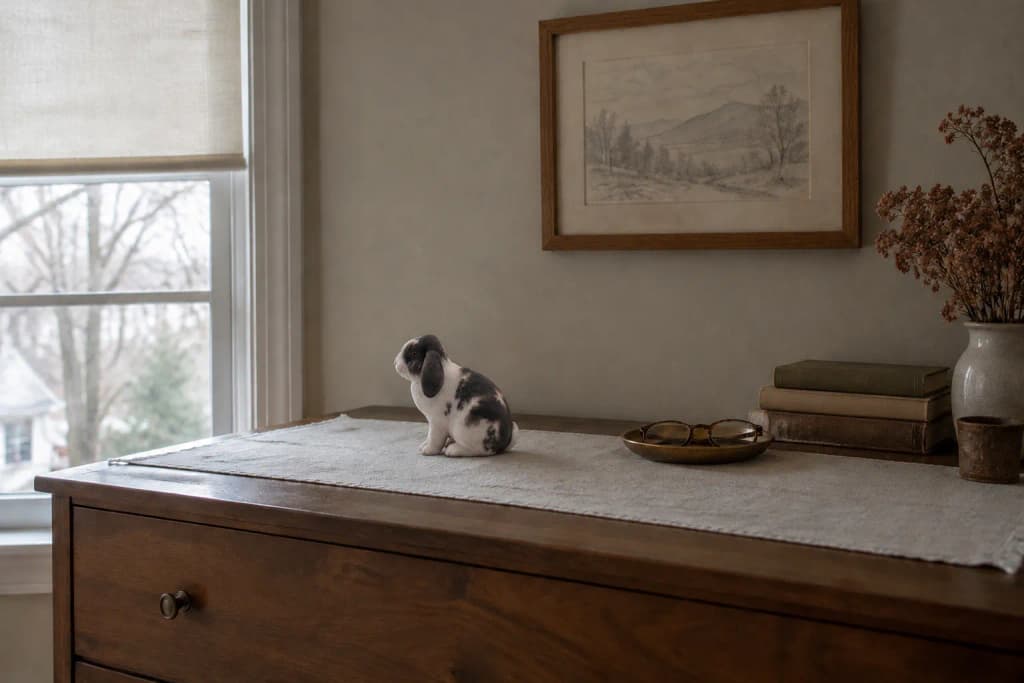
You might end up with more than one. The fur might live in a drawer while a framed photo sits on the desk. There is no ranking here, only a question of what you want to be able to see, touch, or read later.
If shape is what you'd most like to keep, a sculpted figurine is one option to consider. PawSculpt makes custom full-color pet sculptures as 3D printed resin figurines between 2.5 and 6 inches tall. The studio's guiding idea is "a sculpted portrait, not a photocopy," and that describes the result honestly: a figurine is an artistic interpretation of your rabbit, not an identical replica of a photograph.
The process starts with the reference photographs, which is one reason taking good photos now matters. The photos are reviewed, and an artist digitally sculpts the portrait. You see an artist preview and confirm it before anything is printed. Five revisions on the preview are included. The approved model is then printed in full color on a Mimaki 3DUJ-553, equipment that supports more than 10 million colors. That is the printer's capability, and it doesn't mean every figurine uses or reproduces that full range. After printing, supports are removed, the surface is inspected, and a transparent protective coat is applied. The finished piece is meant for indoor shelf display.
Compared with a single-color figure or a sculpture painted after it is made, a full-color print carries the coloring through the digital model itself, so the preview you approve already shows the coat colors the artist has worked out. Whether that matters depends on your rabbit. A solid white rabbit may lose little in a single-color piece. A rabbit with a smoky, layered coat or distinct markings is where full color makes a visible difference.
Prices are listed by size for a single figurine:
| Size | Price (USD) |
|---|---|
| 2.5-inch | $429 |
| 3-inch | $489 |
| 4-inch | $589 |
| 5-inch | $789 |
| 6-inch | $999 |
A black acrylic base is included. Optional add-ons include a nameplate ($9), a second pet ($179), an extra toy ($30), a diamond glass base ($29), a black crystal base ($39), and rush ($29). If your senior rabbit shares her life with a companion, the second pet option lets them stand together. A sprig of timothy hay or a favorite toy could be the extra toy.
Timing is worth understanding before you decide, especially when your rabbit is old. A 40% deposit starts the order. A full refund is available before the order enters the IN_DESIGN status, and the deposit becomes non-refundable once the artist starts modeling. The first artist preview typically arrives within 7 days after complete references are available and the order enters IN_DESIGN. Delivery takes 27 to 40 days after final payment in the US and 33 to 47 days after final payment internationally. There is no separate shipping fee at checkout for worldwide delivery, though international customers remain responsible for local customs duties, taxes, or import fees.
Some people prefer to start while their rabbit is still with them, so the preview can be checked against the animal napping a few feet away. Others wait until after the goodbye, when they know what they want to remember. Either choice is reasonable. You can browse memorial figurine options without committing to anything, and the photographs you take now will be ready whenever you are.
Frequently Asked Questions
Is it weird to save my rabbit's fur before she dies?
No. Grieving before a pet dies is common, and remembrance helps some people. Gathering fur that comes loose on its own is a gentle way to keep part of her while she is still with you.
How should I store saved rabbit fur?
Use a clean, dry container with a secure lid, such as a small glass jar, an envelope, or a cloth pouch. Label it with her name and the month so it stays meaningful for years.
What is anticipatory grief?
Anticipatory grief is mourning that begins before a loss, while your pet is still alive. The ASPCA treats it as common, and it can sit alongside attentive care for your rabbit.
How will I know when it's time to say goodbye?
Your veterinarian is the best person to advise on end-of-life timing. The ASPCA notes that medical test information is often more accurate than what an owner can observe at home.
Can I order a figurine while my rabbit is still alive?
Yes. The artist works from reference photographs, and you confirm the preview before printing. A full refund is available before the order enters IN_DESIGN status. The deposit becomes non-refundable once the artist starts modeling.
Where can I find support if people around me don't understand?
Tufts runs a free pet loss helpline staffed Monday through Thursday evenings Eastern with 24-hour voicemail. Lap of Love offers virtual support sessions, and some providers offer anticipatory grief support.
Keeping Her Shape on the Shelf
Imagine the shelf a year from now: the small jar catching the afternoon light, a photo propped beside it, and perhaps a lop-eared rabbit in a loaf, ears draped, nose forward, with a nameplate reading "Clover." Whether that last piece belongs there is your decision, made at your pace.
If you'd like to see what a sculpted portrait could look like, explore PawSculpt's pet memorial figurines. An artist sculpts each portrait from your photographs, and you approve the preview before it is printed. Start with the photos you take this week, in the light where she likes to rest.