
Stop Saying 'If Only': A First-Week Guide to the Empty Couch Your Cavalier Left Behind
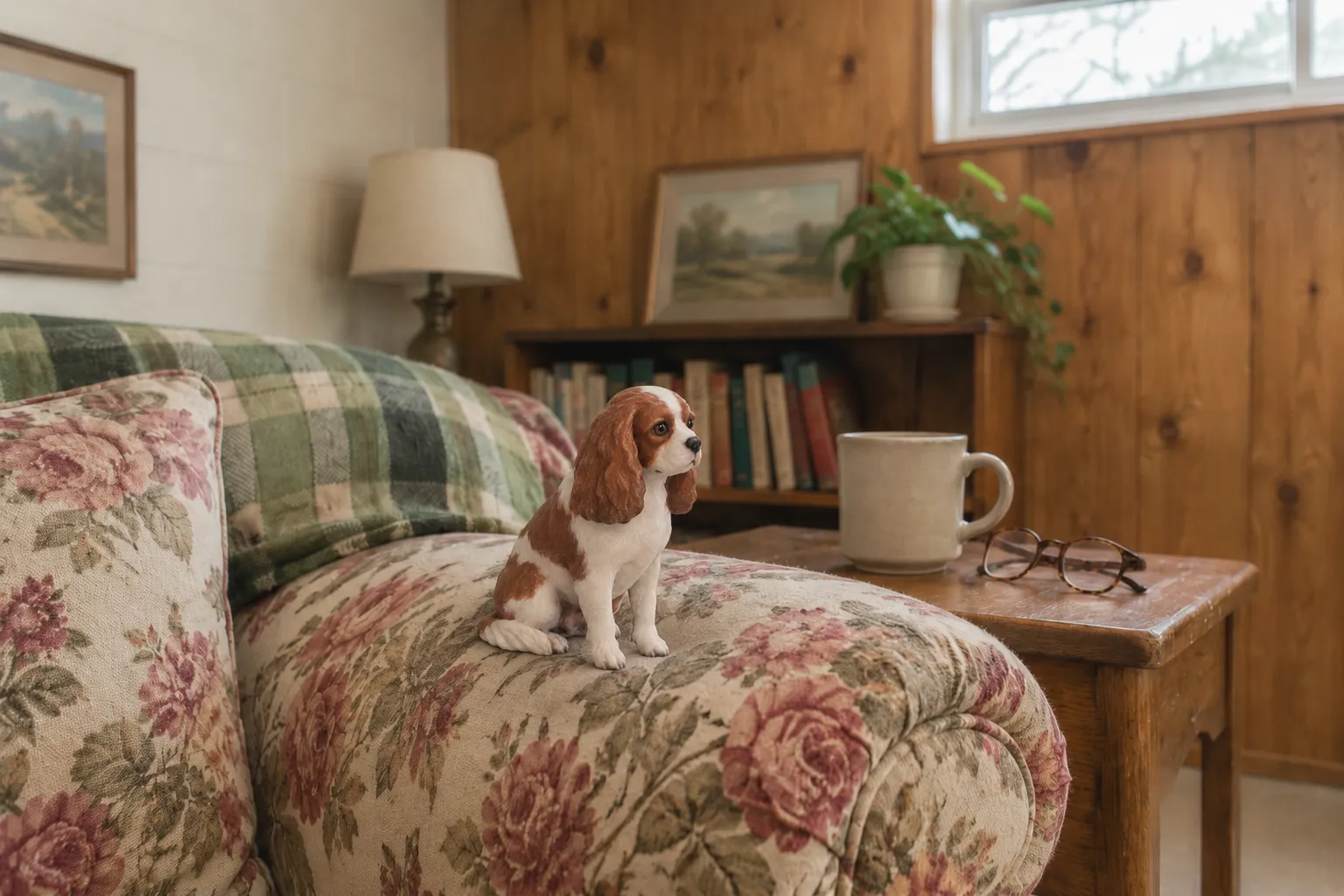
What do you do with your hands in the first week after losing a Cavalier King Charles Spaniel, when the old couch in the basement den still holds the dent where she curled up every evening?
You don't have to win an argument with "if only" this week. Guilt is a normal part of grief, and grief keeps no set schedule. Keep a small daily routine, choose one thing your dog touched to keep close, write down the questions that keep circling, and let one other person know how you're doing.
Quick Takeaways
- Guilt, sadness, tiredness, and even relief are all normal parts of grief after a pet dies. Grief doesn't follow a straight line or a set timeline.
- Your veterinarian could see things you couldn't. Medical test information is often more accurate than what an owner can observe at home.
- If your dog shaped your whole day, the empty hours may feel especially hard. Loss can disturb sleep and routine.
- Free and fee-based support exists, including a university pet loss helpline and virtual groups led by certified pet loss coaches.
- Keepsakes can wait. Photos, writing, art, or a sculpted figurine will all still be options next month.
Why "If Only" Gets So Loud in the First Week
Picture the basement at two in the morning. The furnace ticks. You're sitting on the worn floral couch with a knitted throw across your knees, and your fingers keep finding the nubbly spot where her chin used to rest. Your mind is running the last week like a film it can rewind forever.
If only I'd called the vet a day earlier.
If only I'd let her up on the bed that last night.
If only I'd stayed in the room.
The sentences keep coming, each one slightly different, each one ending in the same place. You might notice this loop after the busy part is over, once the phone calls have been made and the house has gone still.
These thoughts can feel like a math problem. You might find some part of you trying to solve the loss, as if finding the right missing step could reverse it.
You may have seen these thoughts described as the bargaining stage of grief after dog loss. That label can feel tidy, like a box on a checklist. The veterinary and animal welfare sources this guide relies on describe something messier and kinder. Humane World for Animals says plainly that the grief process is not linear, and that it's normal, and even important, to mourn the relationship you had with your pet. Cornell's College of Veterinary Medicine notes that pet grief has no prescribed timeline and varies from person to person.
So if you're on day three and feel worse than on day one, nothing has gone wrong. If you feel calm on Tuesday and fall apart on Wednesday over a dropped dog treat under the radiator, that fits too.
Guilt is on the list of normal
The Cornell Feline Health Center writes about cats, but its words reach anyone who has lost an animal: there is no "correct" way to grieve, and grief may include sadness, anxiety, tiredness, guilt, or relief. All of these are normal.
Relief may be the hardest one to say out loud. If your dog was ill for a long stretch, you may feel a loosening in your chest now that the medication schedule is over and the nights of listening for her breathing have ended. That loosening might then turn into guilt. Both belong on the list.
The ASPCA also notes that anticipatory grief before a pet dies is common. If you started grieving weeks ago, while she was still asleep on the cushion beside you, that was grief too.
What you couldn't have seen
Many "if only" thoughts are about noticing. If only I'd seen it sooner. If only I'd read the signs.
The ASPCA makes a point that matters here: medical test information is often more accurate than what an owner can observe about a pet's health. Your hands knew her coat, the warm weight of her against your hip, the way her ears felt like worn velvet. Your hands couldn't read bloodwork. Nobody's can.
The ASPCA also says a veterinarian is the best person to advise on when the time is right for euthanasia. If you made that decision with your vet, you made it with someone who could see what you couldn't. That won't silence every question. It may let some of them rest.
Common mistake → better move
Mistake: Replaying the final day alone at night, searching for the moment you failed.
Better move: Write each question on paper in plain words, then set the paper aside. When you're ready, take the list to your veterinarian or a veterinary social worker. Some people find that getting it onto paper means they don't carry every question in their head all night.
The Empty Couch and Everything She Touched
In the first week, you may feel grief in your fingertips as much as in your head.
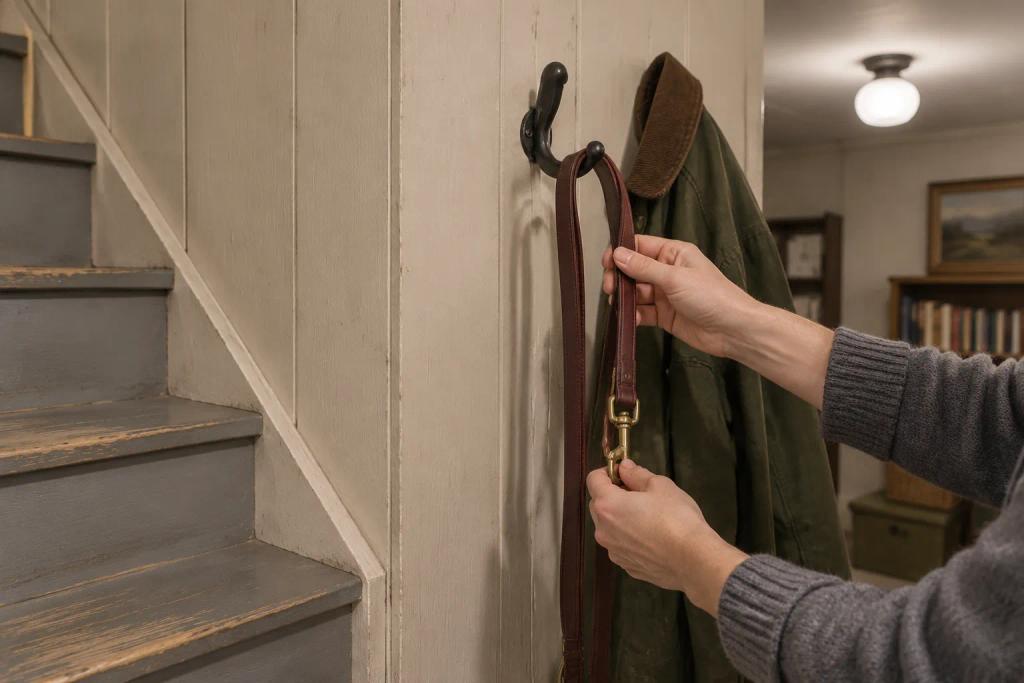
You pick up the leash from the hook by the basement stairs, and the metal clasp is cold in a way it never was when you clipped it on in a hurry, a wriggling dog at your shins. Her water bowl sits on the concrete floor, smooth and still, a ring of dust forming at the waterline. The couch cushion keeps its soft hollow. If you press your palm into it, you might half expect warmth.
And then there's the fur. Fine strands woven into the knitted throw, caught in the seams of the cushion, clinging to your dark sweater. You might find this unbearable and reach for the lint roller on day two. Or you might not be able to bring yourself to wash a single blanket for months. There is no correct way to grieve, and neither response is the wrong one.
The question this week is gentler than "what do I do with all her things?" You only have to work out what you can live with today.
Here are a few options. None of them is a rule.
- Leave the couch as it is for now. The dent will still be there next week. You don't owe anyone a tidy room.
- Fold one soft thing and keep it within reach. The knitted throw she slept on, the bandana she wore to the groomer, her collar with the tags that used to jingle on the stairs. Something you can hold.
- Move the hard-to-look-at things, not the precious ones. You might find the food bowl and the medication bottles hardest to see. They can go into a box in the laundry room. A box can be opened again later.
- Take photos before you change anything. The couch, the dent, her spot by the water heater where she liked the warmth. If you later wish you'd kept the room exactly as it was, you'll have it.
Common mistake → better move
Mistake: Clearing every trace of your dog in one exhausting afternoon because the reminders hurt.
Better move: Put away only what you can't bear to see right now, and keep one soft, familiar item close. You can decide about the rest when the week is behind you.
When Your Dog Was the Whole Schedule
Imagine a retired woman named, for the sake of this picture, Margaret. Her Cavalier, Rosie, slept on the arm of the basement couch every afternoon while Margaret did the crossword with her reading glasses pushed down her nose. Rosie got up when Margaret got up. Rosie decided when it was time for the mailbox walk, time for supper, time for bed.
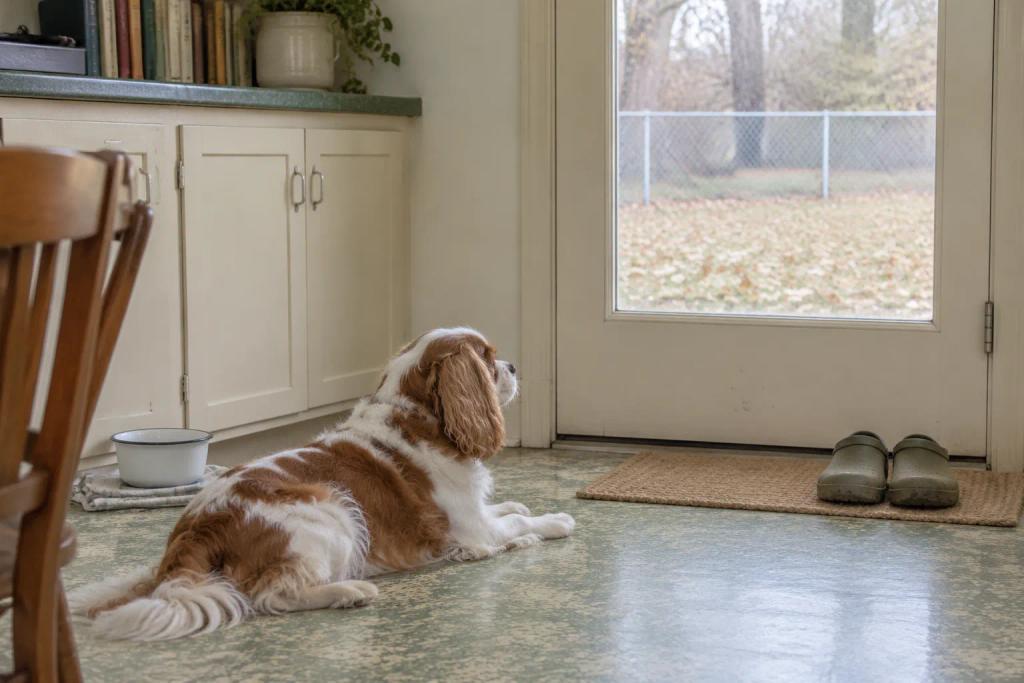
Now the reading glasses sit folded on the side table. The crossword is half done. And Margaret has noticed that she doesn't know when it's four o'clock anymore, because four o'clock was a cold wet nose against her wrist.
For some owners, a dog may be a companion and also a clock. A small dog who stays close all day can give structure to a quiet house: a reason to get dressed, to step outside, to say a few words out loud. When that dog is gone, the house might feel bigger and the hours longer. If you live alone, you might find the first week lonelier than you expected.
Cornell notes that loss and bereavement may disturb sleep and routine, and that support is available. If you're lying awake at odd hours or skipping meals because nobody is waiting by the bowl, you're running into one of the parts of grief that institutions do recognize.
Small anchors for the empty hours
Some people find it steadies them to keep one piece of the old routine, even without the dog. Others need to change everything so the house doesn't ache. Try something small and see how it sits.
- Keep the walk, or keep the hour. You might walk the old route to the mailbox at the same time, feeling the cold rail of the porch steps under your palm. Or you might use that hour for something new, like calling a friend.
- Name the hardest hour. If it's four in the afternoon or ten at night, put something in that slot ahead of time, even just a cup of tea and a radio program.
- Say her name out loud. In a quiet house, hearing a voice, even your own, might help.
You might also notice an older reflex: the urge to hold it together, the sense that people your age have buried parents and spouses and shouldn't fall apart over a dog. The veterinary world takes a different view. The Ohio State University Veterinary Medical Center runs a program whose mission is to recognize and honor the human-animal bond. Veterinary institutions recognize that bond as worth honoring.
Common mistake → better move
Mistake: Telling no one because "it was only a dog" or because you don't want to burden your family.
Better move: Tell one person today, even in a single sentence: "Rosie died on Monday, and I'm having a hard week." If there's no one you want to tell, a pet loss helpline offers a caring, non-judgmental person to talk to.
People Who Will Listen Without Rushing You
You are not alone in this, and that's more than a kind phrase. Universities, veterinary hospitals, and hospice services have built programs specifically for people grieving an animal. Here are a few that the sources behind this guide describe.
A phone line for the evening hours
Tufts University's Cummings School of Veterinary Medicine runs a free pet loss support helpline staffed by veterinary students. The line is staffed Monday through Thursday evenings, Eastern time, and has 24-hour voicemail for the hours in between. Tufts tells callers they can expect a caring, supportive, respectful, non-judgmental person on the other end.
For someone sitting alone in a basement den with a cold cup of coffee and a hollow in the couch cushion, that last part counts. You can say "if only" out loud to someone who won't judge you for it.
Groups and one-on-one sessions
Lap of Love Veterinary Hospice offers virtual pet loss support, some free and some fee-based. Professionally certified pet loss coaches lead small-group and one-on-one sessions. Lap of Love also offers anticipatory grief support and support for children. That may help if grandchildren loved your Cavalier too and are struggling to understand where she went.
Virtual sessions can suit someone who doesn't drive at night or who isn't ready to sit in a room full of strangers. You can join from your own couch, with the knitted throw across your lap.
Social workers at veterinary centers
Veterinary social work programs exist to support owners through a pet's illness, loss, and grief. The Ohio State program notes that social workers can help with quality-of-life decisions and bereavement referrals. If your "if only" list includes questions about the decisions near the end, a veterinary social worker is one person you could take that list to.
Some veterinary centers also hold annual remembrance ceremonies for pets that have died. If you'd find comfort in gathering with others who have lost an animal, ask your veterinary clinic whether anything like that happens near you.
When grief therapy after losing a dog makes sense
There's no line you have to cross to deserve help. Still, it's useful to know when professional support is worth considering. The Cornell Feline Health Center describes professional grief counseling as an option when loss affects daily functioning or sleep. If weeks pass and you still can't sleep, eat, or get through ordinary tasks, a counselor who works with pet loss is a reasonable next step. The OSU program's bereavement referrals are one way to find one.
Cornell's general pet loss page also points to compassionate people, remembrance, writing, art, and professional resources as sources of support. You may find that one of these suits you. You may need several, at different points along the way.
Keepsakes, Whenever You're Ready
At some point, maybe not this week, maybe not this season, you may want something to hold onto. Cornell notes that memorialization and remembrance can help some people. The word some matters. There's no keepsake you're obligated to make and no deadline for making one.

If you are drawn toward remembrance, here are a few forms it can take.
- A photo album you can hold. Phone photos are easy to scroll past. Printed pictures in a cloth-covered album have weight, and you can turn the pages slowly at the kitchen table.
- A letter to her. Writing appears on Cornell's list of support for a reason. Some people write down the "if only" thoughts and then write what they'd want their dog to know. The paper doesn't have to be shared with anyone.
- Art. A sketch, a watercolor, a framed paw print, a pillow sewn from her favorite blanket. Art also appears on Cornell's list.
- A sculpted figurine. A small three-dimensional portrait you can hold in your palm or set on a shelf.
What a sculpted figurine involves
If a figurine appeals to you, it helps to know how the process works before you decide. That way it doesn't add pressure to a hard week.
PawSculpt makes custom full-color 3D printed resin pet sculptures between 2.5 and 6 inches tall. The process starts with your reference photographs, which are reviewed first. An artist then digitally sculpts the portrait. You see an artist preview and confirm it before anything is printed, and five revisions on that preview are included. The first preview typically arrives within 7 days after complete references are available and the order enters the design stage, which the studio records as IN_DESIGN.
Once you approve the preview, the model is printed in full color on a Mimaki 3DUJ-553 printer. Mimaki states that this equipment supports more than 10 million colors. That figure is a capability of the machine. After printing, supports are removed, the surface is inspected, and a transparent protective coat is applied. The figurine is meant for indoor shelf display.
The result is an artistic interpretation of your dog. It won't be a photo-exact copy. An artist decides how the curl of an ear or the tilt of a chin should look in three dimensions, and you guide those choices through the preview.
Here are the list prices for a single figurine by size, in USD:
| Height | Price (single figurine) |
|---|---|
| 2.5 inches | $429 |
| 3 inches | $489 |
| 4 inches | $589 |
| 5 inches | $789 |
| 6 inches | $999 |
A black acrylic base is included. Optional add-ons include a nameplate for $9, a second pet for $179, an extra toy for $30, a diamond glass base for $29, and a black crystal base for $39. There's no separate shipping fee at checkout for worldwide delivery. International customers remain responsible for local customs duties, taxes, or import fees.
The money and timing, plainly
Two details matter most if you're grieving and unsure.
First, the deposit is 40%. You can get a full refund before the order enters IN_DESIGN. Once the artist starts modeling, the deposit becomes non-refundable.
Second, delivery takes 27 to 40 days in the US, or 33 to 47 days internationally, after final payment. The preview comes much sooner, so you'll see the portrait take shape well before it arrives.
You don't need to settle any of this in the first week. Gathering photos, though, can be a quiet task for a sleepless night: her face in good light, the patterns of her coat, the way she sat on the couch arm. Those photos are worth keeping whether or not you ever use them for a figurine.
## Frequently Asked Questions
Is it normal to feel guilty after my Cavalier dies?
Yes. Cornell Feline Health Center lists guilt, along with sadness, anxiety, tiredness, and relief, as normal parts of grief after pet loss.
How long does grief after losing a dog last?
There is no prescribed timeline. Cornell and Humane World for Animals both note that grief varies from person to person and is not linear, so good days and hard days can trade places.
When should I consider grief therapy after losing a dog?
Cornell Feline Health Center describes professional grief counseling as an option when loss affects daily functioning or sleep. Veterinary social workers can also offer bereavement referrals.
Is there someone I can call about my dog's death?
Tufts University runs a free pet loss support helpline staffed by veterinary students on Monday through Thursday evenings, Eastern time, with 24-hour voicemail for other hours.
Should I order a memorial figurine in the first week?
There is no need to decide right away. PawSculpt gives a full refund before an order enters IN_DESIGN, and the 40% deposit becomes non-refundable once the artist starts modeling.
How long does a custom memorial figurine take?
The first artist preview typically arrives within 7 days after complete references are in and the order enters IN_DESIGN. Delivery takes 27 to 40 days in the US or 33 to 47 days internationally after final payment.
When You Want Her Back on the Couch Arm
The first week is for getting through the days. Questions can go on paper, a soft blanket can stay folded within reach, and you can tell one person how it's going. Everything else can wait.
When you're ready, maybe in a month or maybe next spring, you might want to see your dog curled up again, chin on her paws, small enough to hold in your hand. PawSculpt's pet memorial figurines start with your photos and an artist's preview that you approve before anything is printed. You can take your time, ask questions, and send references only when you feel steady enough to look through them.
Until then, the dent in the cushion can stay.