From Heirloom to Habit: Why Families Are Passing Down Custom Labrador Figurines Like Jewelry
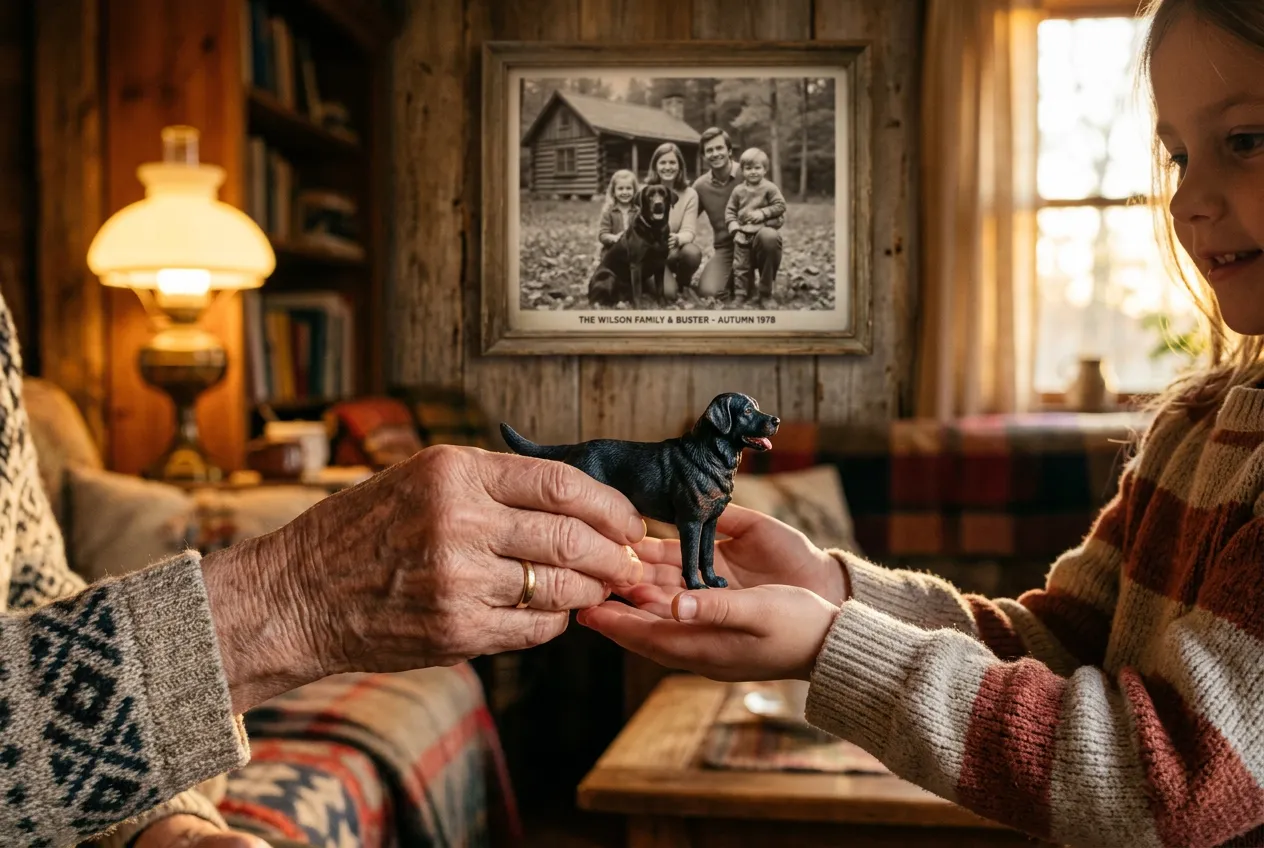
Five years ago, Claire sat in a vet's waiting room listening to fluorescent lights buzz while a tech gently explained there was nothing more they could do for Biscuit. Last month, her granddaughter—who never met that chocolate Lab—unwrapped a custom pet figurine heirloom and whispered, "So that's Biscuit."
Quick Takeaways
- Pet figurines are becoming multi-generational heirlooms — families now pass them down like rings or watches
- Full-color 3D printing locks in details permanently — color is embedded in the resin, not layered on top
- Labrador memorial keepsakes outlast most alternatives — UV-resistant resin and clear coat protect against decades of handling
- The right reference photos make everything — explore PawSculpt's custom figurine process to see what's needed
- Stories attached to figurines compound their emotional value — the object becomes richer with every generation that holds it
The Heirloom Nobody Expected: Why Pet Figurines Are Showing Up in Jewelry Boxes
Here's the thing nobody in the memorial keepsake space really talks about: pet figurines aren't staying on the original owner's shelf. They're moving. Changing hands. Showing up in estate boxes alongside grandmother's pearls and grandfather's pocket watch. And Labradors—specifically Labs—are leading this quiet little revolution.
Why Labs? Honestly, it's partly math. The American Kennel Club has ranked Labrador Retrievers as the most popular breed in America for over thirty consecutive years before the recent French Bulldog takeover. That's three decades of families building their entire emotional architecture around one breed. The Lab isn't just a pet in these households. It's the soundtrack—the clicking nails on hardwood at 6 AM, the thump of a tail against the couch cushion during movie night, the specific pitch of that bark when the UPS truck rounds the corner.
When those sounds go quiet, families reach for something tangible.
And increasingly, that "something" is a full-color resin figurine that captures the exact markings, the coat color gradient, the tilt of the head that made their Lab different from every other Lab on the planet.
But here's what's counterintuitive—and what you won't find in any of the top Google results about pet memorials: the figurine's primary value isn't for the person who ordered it. Its deepest purpose emerges a generation later. Maybe two. When a child who only knows their family's first Lab through photos suddenly holds a three-dimensional, full-color object and feels the weight of that animal's presence for the first time.
That's the shift we're watching happen. The pet figurine isn't a memorial anymore. It's becoming an heirloom.
"An heirloom isn't valuable because of what it's made from. It's valuable because of who held it before you."
Let's come back to Claire for a second. She's real—or rather, she's a composite of dozens of customers our team has worked with over the years, so many that the story has become almost archetypal. Claire ordered Biscuit's figurine about three months after losing him. She sent over eleven reference photos. Eleven. Front, back, both sides, that one where he's mid-yawn and you can see the pink roof of his mouth. Her daughter thought it was sweet but maybe a little much.
Fast forward five years. Claire's daughter now has a yellow Lab named Mango. And she's already thinking about ordering a figurine of her own.
That's the habit forming.
How a Labrador Memorial Keepsake Family Tradition Actually Starts
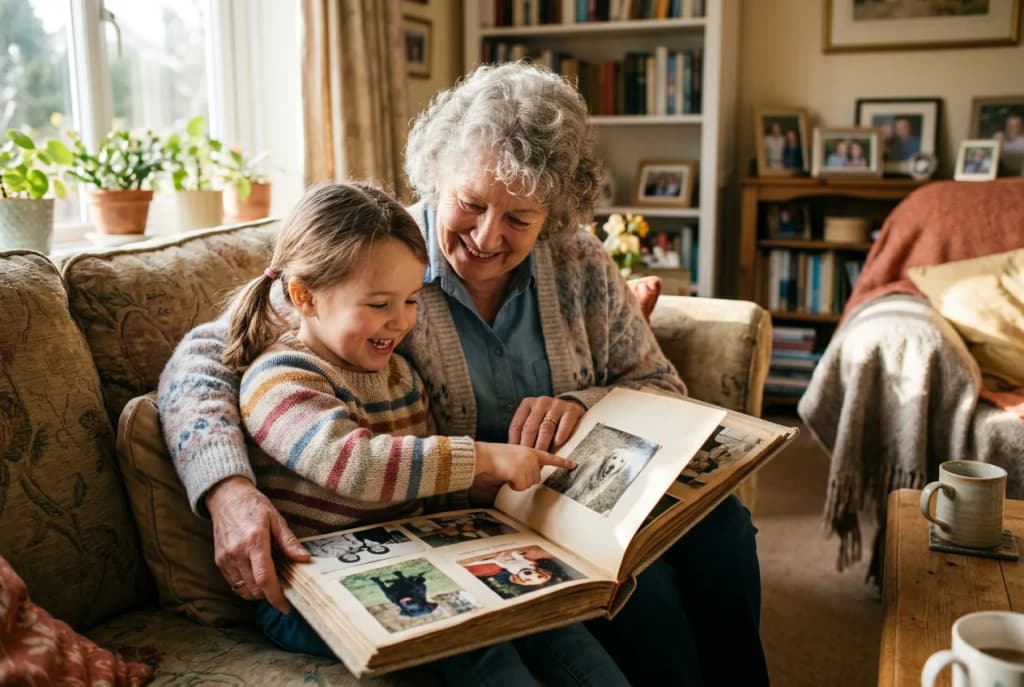
Nobody wakes up and says, "You know what? I'm going to start a multi-generational pet figurine collection." That's not how it works. It starts with grief, or love, or usually both tangled together so tightly you can't tell where one ends and the other begins.
The First Order: Almost Always Memorial
We'll be real with you—most first-time figurine orders come from loss. Someone's Lab has crossed the rainbow bridge, and the photos on the phone feel too flat, too trapped behind glass. A figurine occupies physical space. It has weight. You can pick it up, turn it around, notice the way the ears fall just like they did in real life.
The difference between a photo and a figurine is the difference between hearing someone describe a song and hearing the song itself.
The Second Order: Celebration
Here's where it gets interesting. After that first figurine sits on the mantle for six months, a year, something shifts in the family's relationship with the object. They stop seeing it as a grief artifact. They start seeing it as a portrait. A good portrait. And when the new puppy arrives—because there's almost always a new puppy—they think: why wait?
The second figurine is almost never about loss. It's about capturing the living, breathing, couch-destroying, sock-stealing creature currently asleep on their feet.
The Third Order: Someone Else Entirely
This is the heirloom moment. The third order often comes from a different family member. A sibling. An adult child. Someone who saw the figurines on the shelf and felt something click. "Could I get one of my dog?" And just like that, a family tradition has roots.
| Generation | Typical Trigger | Emotional Context | Figurine's Role |
|---|---|---|---|
| First order | Pet loss | Grief, preservation | Memorial anchor |
| Second order | New pet arrives | Joy, celebration | Living portrait |
| Third order | Family member inspired | Connection, tradition | Heirloom seed |
| Fourth+ orders | Life milestones | Tradition, identity | Family collection |
The pattern repeats. Not because anyone planned it, but because the object earns its place.
Inside the Craft: What Actually Goes Into a Full-Color Pet Figurine
Okay, let's get into the nerdy stuff—because if you're going to pass something down to your grandkids, you probably want to know what it's actually made of and how it's made. And honestly, most people have a completely wrong mental picture of how custom pet figurines come to life.
You might be imagining someone in an apron at a workbench, right? Chisels, clay, tiny tools? That's not how this works. Not even close.
Stage 1: Digital Sculpting (The Artistic Foundation)
Everything starts with reference photos. And I mean everything. A skilled 3D artist—working in professional software like ZBrush or Blender—uses those photos to digitally model your pet from scratch. They're not scanning a generic Lab template and calling it done. They're building your specific animal: the proportional relationships between skull width and muzzle length, the way your Lab's ears sit slightly differently from breed standard, the exact pattern where the chocolate fades to tan on the chest.
This is where coat flow matters enormously. A Lab's fur has direction. It swirls around the shoulders, lays flat along the barrel chest, feathers slightly at the tail. A good digital sculptor reads those reference photos like a topographical map—every ridge and valley tells them where the fur flows and how light will catch it on the final printed piece.
Pro tip from our team: The best reference photos aren't the cutest ones. They're the clearest ones. Direct, even lighting. Multiple angles. That unflattering straight-on shot you'd never post to Instagram? That's gold for a 3D artist doing proportional checks.
Stage 2: Full-Color 3D Printing (Where the Magic Happens)
Here's the part that surprises most people. The figurine is 3D printed in full color. Not printed white and then colored afterward. The color is embedded directly into the resin material during the printing process—voxel by voxel (a voxel is basically a 3D pixel, a tiny cube of material).
Think of it like a full-color inkjet printer, but instead of laying down ink on flat paper, it's building up layers of UV-cured photopolymer resin with pigments already mixed in. The printing resolution typically falls in the 25–50 micron range per layer—that's thinner than a human hair. Each layer adds both structure and color simultaneously.
This matters for heirloom quality because the color isn't a coating that can chip or peel. It's part of the material itself. You could theoretically sand the surface and the color would still be there underneath, the same way a stick of rock candy has the letters running all the way through.
"The color in a full-color resin print isn't sitting on the surface—it lives inside the material. That's what makes these pieces last."
— The PawSculpt Team
Stage 3: Post-Processing (The Finishing Touches)
After printing, the figurine goes through several critical steps:
- Washing — removing uncured resin and any residual support material
- Final UV curing — ensuring the resin is fully hardened and structurally stable
- Support removal and cleanup — carefully removing the scaffolding structures that held the piece during printing (this is where skill matters—bad support removal leaves pitting or scars)
- Clear coat application — the one manual finishing step, where a protective clear coat is applied to seal the surface, add a slight sheen, and protect against UV degradation and fingerprint oils
That clear coat is more important than most people realize. UV-resistant clear coat is what keeps the colors from fading over years of display. For an heirloom piece—something you genuinely want to hand to your grandchildren—that protective layer is the difference between vibrant color at year twenty and a washed-out ghost of the original.
Stage 4: Quality Control (The Part Nobody Talks About)
Here's an insider detail you won't find on most figurine company websites. Quality control for a custom piece isn't just "does it look right?" There's a real process:
- Dimensional checks against the digital model—is the printed piece true to the sculpt?
- Symmetry verification—ears level, eyes aligned, stance balanced
- Surface inspection under raking light—this is where you hold the piece at an angle to a light source and look for surface defects, bloom (a hazy white residue from humidity exposure during curing), or under-cured spots that might yellow over time
A piece destined to become a family heirloom can't have a subtle warp in the base or a support scar across the nose. The details matter because they're going to be examined by curious hands for decades.
| Quality Check | What They're Looking For | Why It Matters for Longevity |
|---|---|---|
| Dimensional accuracy | Measurements match digital model | Ensures likeness holds up to memory |
| Surface integrity | No pitting, bloom, or micro-cracks | Prevents degradation starting points |
| Color fidelity | Print colors match reference photos | Accurate representation across generations |
| Cure completeness | Full UV cure throughout | Prevents yellowing and brittleness over time |
| Clear coat coverage | Even, bubble-free protective layer | Shields against UV, oils, and humidity |
If you're curious about what the full process looks like from your side—submitting photos, approving a digital preview, all of that—PawSculpt's FAQ page walks through it without the engineering jargon.
Why Labrador Figurines Specifically Are Becoming Family Heirlooms
I know I touched on the popularity factor earlier, but there's something deeper going on with Labs and the heirloom impulse. Something almost structural about the breed's role in American family life.
Labs Are Multi-Generational Dogs
Think about it. A golden retriever family might be a golden retriever family for a generation. A husky family might switch to a less demanding breed after one go-round. But Lab families tend to stay Lab families. Grandma had a Lab. Mom had a Lab. The kids will almost certainly have a Lab. The breed's temperament—steady, joyful, adaptable—makes it the default "family dog" in a way that self-perpetuates.
So when a figurine of Grandma's black Lab sits on the mantle next to Mom's yellow Lab, you're not just looking at two dogs. You're looking at a lineage narrative. A visual family tree of the animals who shaped holidays, road trips, first days of school, and quiet Wednesday evenings.
The "Same But Different" Factor
Here's something our team has noticed that genuinely fascinated us: families with multiple Lab figurines often display them together specifically because of the similarities and differences. Every Lab has roughly the same silhouette—that broad head, the otter tail, the solid stance. But the details diverge. This one's darker around the eyes. That one has a wider chest. This one's ears sit higher.
It's like a family photo where you can trace the family resemblance but each face is distinct. The figurines become a conversation piece, and conversations are what turn objects into heirlooms.
Nobody passes down something they never talk about.
"The objects we inherit aren't treasures because they're rare. They're treasures because someone bothered to tell us the story behind them."
What Makes Them Different from Other Memorial Options
Let's be honest—there are a lot of ways to memorialize a pet. And some of them are genuinely wonderful. Planting a tree. Commissioning a watercolor portrait. Getting a paw print in clay. Having ashes placed in jewelry.
But most of these share a limitation when it comes to heirloom potential: they're either too fragile, too personal, or too abstract to carry meaning across generations.
A watercolor can fade. A paw print, honestly, doesn't mean much to someone who never felt that paw. Ash jewelry is deeply personal—but intimate in a way that can feel strange to inherit.
A figurine sits in a different category. It's dimensional. It's recognizable. A kid picks it up and says, "That's a dog." And then someone says, "That's our dog. That's Biscuit. Let me tell you about him."
That's the heirloom mechanism. Recognition plus story.
The Counterintuitive Economics of a Custom Pet Figurine Heirloom
Here's the part that might make you rethink the whole concept of "worth it."
We're trained to evaluate heirlooms by material value. Gold appreciates. Diamonds hold resale. Sterling silver has melt value. A resin figurine, by traditional heirloom economics, shouldn't qualify. The raw materials aren't precious. You can't pawn it.
But here's what's counterintuitive: the most cherished family heirlooms are almost never the most expensive ones. It's the handwritten recipe card, not the silver tea service. The dog-eared paperback, not the first edition behind glass. The thing that got used, got touched, got talked about.
A pet figurine as heirloom works precisely because it's not precious in the gemological sense. Nobody's afraid to pick it up. Kids hold it. Guests examine it. It lives on the bookshelf between the cookbooks and the family photos, not locked in a safe deposit box. And every time someone picks it up, the story gets told again.
That's the compound interest of emotional value. And honestly? After twenty years of someone telling the story of Biscuit every time a visitor notices the figurine on the shelf, that little piece of full-color resin holds more family meaning than most jewelry ever will.
The Cost-Per-Year Perspective
Without getting into specific pricing (you can check current details at pawsculpt.com), consider this framework: divide the cost of any memorial keepsake by the number of years you expect it to be meaningful.
A bouquet of flowers lasts a week. A framed photo lasts until the frame breaks or the style feels dated. But a well-made figurine with UV-resistant clear coat, stored at normal household conditions? We're talking decades of display life. Potentially longer if handled with basic care.
When you run that math, the cost-per-year of a quality figurine drops to almost nothing. And if it gets passed down? The emotional return on investment multiplies with every generation.
Caring for a Figurine You Want to Last Fifty Years
Alright, let's talk practical. If you're genuinely thinking about a labrador memorial keepsake as a family heirloom, you need to know how to care for it. Full-color resin is durable—more durable than most people expect—but it's not indestructible. Here's what actually matters.
The Enemies of Longevity
Direct sunlight is enemy number one. Yes, the clear coat provides UV resistance, but "resistant" doesn't mean "immune." Think of it like sunscreen—it dramatically slows the process, but leaving something in a south-facing window for ten years straight is asking for trouble. Display in indirect light and you're golden.
Temperature swings are enemy number two. Resin doesn't love going from a 95°F attic to a 60°F living room repeatedly. Thermal cycling can create micro-stresses that eventually lead to tiny cracks. Keep it in normal living conditions—if you're comfortable, the figurine's comfortable.
Moisture and oils are the sneaky third threat. Fingerprint oils, cooking grease vapor, bathroom humidity—over years, these can dull the clear coat. A quick wipe with a soft, dry microfiber cloth every few months keeps the surface clean without risking damage.
Simple Care Routine
- Monthly: Light dusting with a soft brush or microfiber cloth
- Quarterly: Gentle wipe with a slightly damp (not wet) cloth, then dry immediately
- Yearly: Inspect under good lighting for any signs of surface dulling, chips, or base instability
- When passing down: Wrap in acid-free tissue paper, place in a rigid box—never wrap directly in newspaper (the ink transfers)
What NOT to Do
And look, we've seen some well-meaning mistakes over the years:
- Don't use household cleaners. No Windex, no 409, no "gentle" dish soap. These can cloud or soften the clear coat.
- Don't store in the attic or garage. Temperature extremes, humidity swings, potential for being crushed under holiday decorations—just don't.
- Don't try to "touch up" colors yourself. The color is embedded in the resin. If you layer acrylic or nail polish on top, you're creating a mismatched surface that'll peel later. If something chips, reach out to the team and ask about options.
Building the Collection: A Family's Labrador Figurine Timeline
Let's come back to Claire one more time. Because her story didn't stop with Biscuit.
About eighteen months after receiving Biscuit's figurine, Claire's family adopted a fox-red Lab named Penny. Loud. Chaotic. The kind of dog who announces her presence by skidding across the kitchen tile and crashing into the water bowl. A completely different sound profile than Biscuit, who'd been a quiet shuffler, a sigher, a dog who communicated primarily through eyebrow movements.
Claire ordered Penny's figurine while Penny was alive—at two years old and peak ridiculousness. She wanted to capture that energy, that specific moment when Penny was all muscle and mischief and uncontainable joy.
Now both figurines sit on the living room bookshelf. Biscuit on the left, dignified and calm. Penny on the right, caught mid-stride. Claire's granddaughter knows both dogs—she met Penny, she didn't meet Biscuit—but she talks to both figurines when she visits.
That's three generations. One shelf. Two Labs. And a tradition that will almost certainly continue when Claire's daughter orders Mango's figurine next year.
The Photo Wall Comparison
A lot of families do the photo wall thing, and that's genuinely great. But here's what a figurine collection does that a photo wall can't: it occupies three dimensions of shared space. Photos hang flat on a wall. You look at them, you look away. A figurine exists in the room with you. You walk past it. Your eye catches it peripherally while you're doing dishes. It becomes part of the ambient experience of being in that house.
And for kids especially, the tactile element is everything. A child doesn't connect emotionally to a photograph the way they connect to something they can hold, turn over, feel the weight of. Touch is the language of attachment for young children. A figurine speaks that language fluently.
What to Expect When You Order Your First Custom Pet Figurine
If this whole heirloom idea is landing with you—if you're looking at your Lab right now and thinking about future grandkids who should know this face—here's a general roadmap of what the process looks like. (For specific details on timelines, pricing, and revision policies, head to pawsculpt.com—those details shift, and we'd rather you get the current info than something outdated.)
The Photo Submission
You'll submit reference photos. More is better, but quality beats quantity. Here's what matters most:
| Photo Type | Why It's Needed | Tips |
|---|---|---|
| Front-facing | Facial proportions, eye spacing | Natural light, dog at eye level |
| Both side profiles | Body proportions, coat pattern | No harsh shadows |
| Rear view | Tail set, hindquarter shape | Unglamorous but essential |
| Close-up of face | Eye color, muzzle details, ear texture | Sharpest photo you have |
| Full body in natural pose | Overall stance, energy, personality | The "that's SO them" shot |
That last one—the "that's SO them" shot—is the most important and hardest to describe. It's not about technical quality. It's about capturing the posture, the attitude, the essence of your dog. You know the one. It's the photo where visitors say, "Oh yeah, that's totally Biscuit."
The Digital Sculpt and Preview
A 3D artist will digitally model your pet based on those references. You'll receive a preview—a digital render of the sculpt from multiple angles—before anything gets printed. This is your chance to catch things. "His ears sat a little lower." "She had a wider blaze on her chest." The artist adjusts.
This step is where the heirloom quality gets locked in. Because accuracy matters more for an heirloom than for a novelty item. A figurine that sort of looks like your Lab is a decoration. A figurine that nails your Lab—that captures the exact head tilt that made your family laugh every single time—is a legacy.
The Print and Finish
Once approved, the digital model goes to the full-color 3D printer. Colors get embedded in the resin layer by layer. The piece gets cleaned, cured, inspected, and finished with a protective clear coat.
What arrives is something with weight and presence. Not the cheap, hollow feel of a mass-produced tchotchke. Not the fragility of porcelain. Something substantial. Something that feels like it's meant to stay.
The Sound That Remains
You know what's funny about heirlooms? Nobody ever talks about the sounds attached to them. Wind up grandmother's music box and suddenly you're six years old in a living room that doesn't exist anymore. Open grandfather's pocket watch and the mechanical tick transports you.
A pet figurine doesn't make sound. But it triggers sounds in memory with astonishing precision. Claire told our team once that picking up Biscuit's figurine—just holding it for a minute—brought back the sound of his collar tags jingling against his water bowl at midnight. A specific, irreplaceable sound she thought she'd forgotten.
Her granddaughter doesn't have that memory. Not yet. But someday, when she has her own Lab, and that Lab jingles its collar against its own water bowl at midnight, she'll pick up Biscuit's figurine and think: Oh. So that's what Grandma meant.
That's what an heirloom does. It bridges time. It creates continuity. It gives future family members permission to feel connected to animals they never touched, walks they never took, afternoons they never spent throwing a tennis ball in a backyard they never visited.
The pet figurine as heirloom isn't really about the figurine at all. It's about the family deciding that their dog's story matters enough to preserve in three dimensions. That the particular yellow of this Lab, the specific tilt of that head, the exact markings on this chest—these details are worth keeping. Worth passing down. Worth telling stories about on a random Tuesday when someone picks up a small resin figure and asks, "Who was this?"
And someone answers.
"Every family has heirlooms made of gold. The ones they actually reach for are made of memory."
That figurine on Claire's shelf weighs a few ounces. What it carries is immeasurable.
Frequently Asked Questions
Can a 3D printed pet figurine really last long enough to be an heirloom?
Absolutely. Full-color resin with a UV-resistant clear coat is built for the long haul. Kept in normal indoor conditions—away from direct sunlight, extreme heat, and high humidity—these pieces can maintain their color and structural integrity for decades. The key is that the color is embedded within the resin itself, not applied on top, so there's no paint layer to chip, crack, or peel over time.
What photos work best for a custom Labrador figurine?
Clear, well-lit shots from multiple angles are essential—front, both side profiles, rear, and at least one close-up of the face. Natural light at your dog's eye level tends to produce the most usable reference material. And don't underestimate the value of that candid shot that captures your dog's personality. Technical perfection matters less than authentic representation.
Are custom pet figurines from PawSculpt hand-painted?
No, and this is one of the most common misconceptions. PawSculpt uses full-color 3D printing technology where color pigments are embedded directly into the resin during the printing process. Every color you see is printed voxel by voxel into the material itself. The only manual finishing step is the application of a protective clear coat for durability and sheen.
How should I care for a pet figurine if I want it to last generations?
Keep it simple: display in indirect light, dust monthly with a soft microfiber cloth, and avoid household cleaners entirely. If you need to pack it for moving or storage, wrap it in acid-free tissue paper inside a rigid box. Never store figurines in attics, garages, or anywhere with significant temperature swings. Treat it like you'd treat a piece of fine ceramics and it'll outlast most of your furniture.
Why are Labrador figurines especially popular as family heirlooms?
Lab families tend to be repeat Lab families—grandparents, parents, and kids often all choose the breed. This creates a natural collection opportunity where figurines of successive family Labs tell a visual story across generations. The breed's iconic silhouette makes each figurine immediately recognizable, while the individual differences in coloring and markings make each one unique.
What's the difference between a custom pet figurine and a mass-produced dog statue?
A mass-produced Lab statue represents the breed standard—a generic, idealized Labrador. A custom figurine is digitally sculpted from your specific pet's photos, capturing the markings, proportions, expression, and personality that made your dog yours. It's the difference between a stock photo and a portrait.
Ready to Start Your Family's Collection?
Every Lab has a story. The one who stole the Thanksgiving turkey. The one who was afraid of butterflies. The one who slept exclusively on the coldest tile in the house. Those stories deserve more than a phone album—they deserve something your grandchildren can hold. A custom pet figurine heirloom from PawSculpt captures the details that make your Labrador irreplaceable, printed in full-color resin built to last for generations.
Visit pawsculpt.com to explore the full process, see examples, and learn about current service details