
Your Husky's Howl Still Echoes in the Hallway: Building a Memory Box That Holds More Than Things
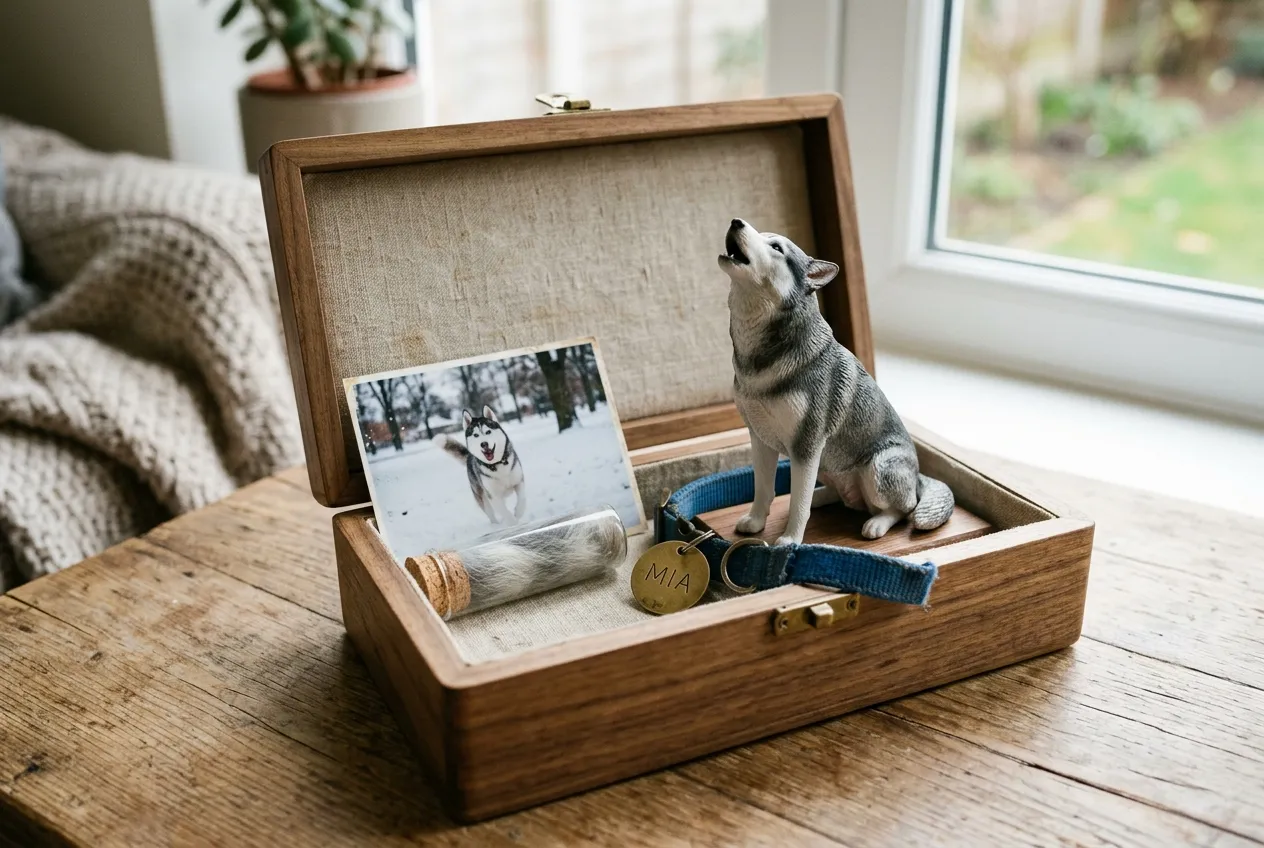
Have you ever stood barefoot in your garage, stepped on a stray dog toy wedged under the tire, and felt the whole world tilt sideways—because that squeaky rubber bone belonged to a husky who isn't waiting at the door anymore? That toy, gritty with dust and still carrying tiny tooth marks, is the beginning of a husky memorial memory box—even if you don't know it yet.
Quick Takeaways
- A memory box isn't a container—it's a ritual — the act of building one helps you process grief on your own timeline
- Texture matters more than aesthetics — include items you can touch, not just look at, for deeper emotional grounding
- Don't curate too soon — gathering everything first and editing later prevents regret about discarded items
- A centerpiece transforms the box — a custom 3D-printed figurine gives your collection a physical anchor that captures your husky's exact markings
- Involve reluctant grievers gently — memory boxes give partners, kids, or roommates a low-pressure way to participate in remembering
Why Most Pet Memory Box Guides Get It Wrong
Here's the thing most articles won't tell you: the typical "pet memory box ideas" post reads like a craft project checklist. Paw print kit, collar, favorite photo, done. Neat. Tidy. Completely insufficient.
Those guides treat a memory box like a scrapbook. But a husky loss keepsake box isn't about organization or Pinterest aesthetics. It's about building a physical space where your grief has permission to exist—messy, contradictory, ugly, beautiful, all of it. The difference matters more than you think.
We've worked with thousands of pet families through PawSculpt, and the ones who tell us their memory boxes actually helped them aren't the ones with the prettiest boxes. They're the ones who threw in a clump of fur sealed in a sandwich bag, a half-chewed antler, and a crumpled vet receipt with a coffee ring on it. Real artifacts from a real life.
"The items that look least 'memorial-worthy' are usually the ones people reach for first."
So let's build something that actually holds the weight of what you're carrying. Not a craft project. A grief tool that happens to look like a box.
The Counterintuitive First Step: Don't Start With the Box
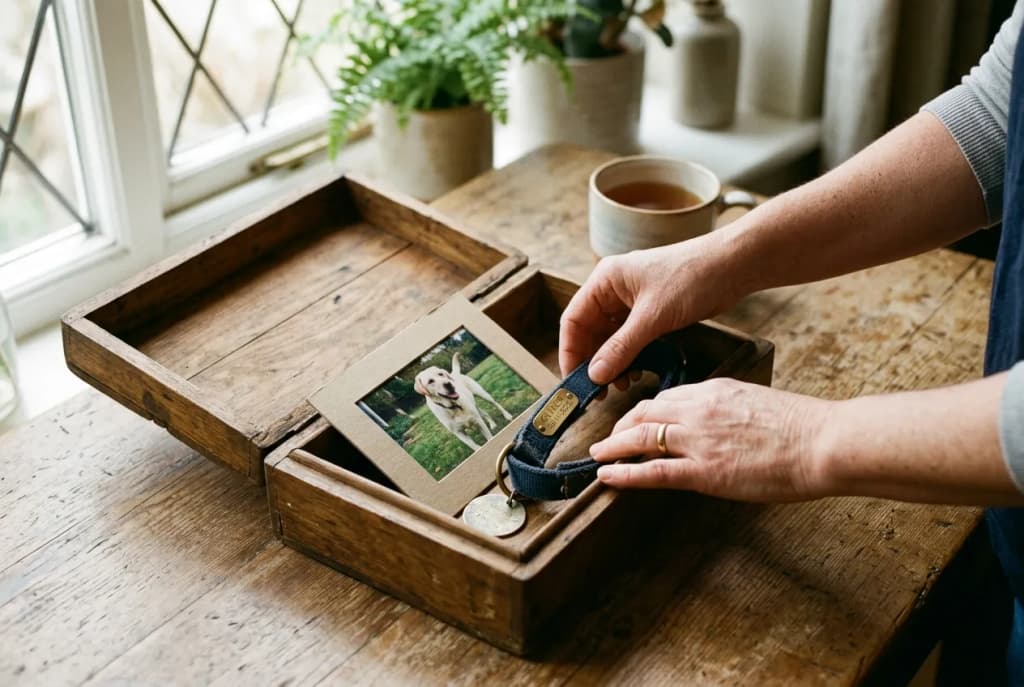
Most guides open with "choose a beautiful wooden box." We're going the opposite direction. Don't pick the container first. Pick the container last.
Why? Because the box shapes what you keep—and right now, in early grief, you don't know what matters yet. That ratty bandana you're tempted to toss? In four months, it might be the only thing that still smells like your husky's neck. That clump of undercoat you pulled from the brush and almost threw away? Irreplaceable.
The Gathering Phase (First 2-4 Weeks)
Grab a cardboard box, a paper grocery bag, a plastic bin—something ugly and temporary. Start tossing things in with zero curation:
- Collar and tags (leave them dirty—the grime is part of the story)
- Shed fur sealed in a zip-lock bag (double-bag it; you'll thank yourself later)
- The last bag of their specific kibble brand (just a handful in a sealed container)
- Vet paperwork—not the clinical stuff, but the sticky notes where the tech wrote "What a good girl!" or "Tried to eat the stethoscope"
- Your phone case if it has tooth marks or scratches from a persistent nose
- A square of fabric from their bed, blanket, or your old sweatshirt they claimed
- Frozen paw prints in playdough if you had the forethought, but don't beat yourself up if you didn't
Notice what's not on that list: nothing that requires purchasing anything. The gathering phase is about rescue, not retail.
A Note About Scent
Scent is the fastest pathway to memory, and it fades. Within 2-3 weeks, your husky's smell will begin dissipating from fabric items. If preserving scent matters to you—and honestly, for many husky owners it's the single most important sensory memory—seal soft items in airtight bags now. Not tomorrow. Now.
One family we worked with told us they'd kept their husky's collar in an open dish on the mantle for a month "so they could still smell him." By the time they sealed it, the scent was gone. They described the loss of that smell as a second grief.
| Scent Preservation Method | Effectiveness | Duration | Best For |
|---|---|---|---|
| Airtight zip-lock bag | High | 6-12 months | Collars, bandanas, fabric |
| Vacuum-sealed bag | Very High | 1-3 years | Blankets, bed covers |
| Glass jar with tight lid | High | 6-18 months | Small items, fur clumps |
| Open display | Very Low | 1-3 weeks | Not recommended for scent |
| Freezer storage (sealed) | Highest | Years | Fur, fabric, toys |
The Emotions You're Not Supposed to Talk About (But We Will)
Let's pause the craft talk for a minute. Because you can't build a meaningful memory box if you're white-knuckling your way through feelings you think you're not allowed to have.
The Guilt No One Mentions
Many husky owners carry a specific brand of guilt that's almost unique to the breed. Huskies are escape artists, runners, dramatic, stubborn—and if you're honest, there were moments when their energy exhausted you. Moments when you thought, I love you, but you are too much right now.
And now that they're gone, those moments feel like betrayals.
They're not. Feeling frustrated with a living being doesn't diminish your love—it confirms it. You don't get exhausted by something you're indifferent to. That tension between adoration and exasperation? That's what an honest relationship looks like.
If you're wrestling with regret about decisions—whether it's the euthanasia timing, that one time they got out of the yard, or a surgery you chose (or didn't choose)—know that this is one of the most commonly reported experiences in pet grief. The ASPCA's resources on pet loss acknowledge that decision-related guilt is a normal, even expected, part of the process.
The Relief You're Ashamed Of
Here's the hard one. If your husky was older, or sick, or struggling—you might have felt a wave of relief when it was finally over. And then, probably within seconds, a wave of shame so hot it made your chest tight.
That relief doesn't mean you wanted them gone. It means you'd been holding your breath for weeks or months, watching someone you love suffer, carrying the weight of impossible choices—and your nervous system finally exhaled. The guilt that follows that relief is one of grief's cruelest tricks. It takes the most compassionate thing you felt and twists it into evidence of something ugly.
It's not ugly. It's human.
"Relief and love aren't opposites. Sometimes relief is love's final act."
The Fear of Forgetting
This one creeps in later—maybe a few weeks out, maybe months. You go to picture their face and the details blur. Was the mask pattern on the left side or the right? Were their eyes ice-blue or more gray? How exactly did they hold their tail when they were excited versus nervous?
This fear of forgetting is real, it's common, and it's one of the strongest motivators behind building a memory box in the first place. You're not being sentimental. You're being strategic about preserving the details that your brain will naturally soften over time.
This is also, honestly, one of the reasons families tell us they ordered a custom figurine from PawSculpt. When you're staring at a full-color resin replica that captured the exact bi-eye pattern or the specific way their coat faded from charcoal to silver—you stop worrying about forgetting. The details are right there, solid and tangible, rendered through advanced 3D printing that reproduces your husky's unique markings directly in the material itself.
But we'll talk more about centerpieces later. Right now, let's get back to building.
Choosing What Stays: The Edit That Actually Matters
You've been gathering for a few weeks. Your temporary bin is full of random, emotionally charged stuff. Now comes the part that most guides rush through: deciding what earns a place in the permanent box.
The "Hands Test"
Here's a method we've never seen in another guide, and it works remarkably well. We call it the Hands Test.
Pick up each item. Hold it. Close your eyes. Ask yourself one question: Does this make me feel closer to them, or just sadder?
Items that make you feel closer—even through tears—stay. Items that only make you feel sad, with no warmth underneath, can go into a secondary container or be released.
The distinction matters. A grief tool should bring your pet nearer, not just remind you they're gone. There's a difference between a collar that makes you feel the phantom weight of their head against your knee and a vet bill that just makes you relive the worst afternoon of your life.
Some items will be both. That's fine. Those go in a "revisit later" pile. Grief changes what things mean to us. Something that's too raw at six weeks might become a treasure at six months.
The Texture Principle
Here's our counterintuitive insight, and honestly, it's the hill we'll die on: the most healing memory boxes prioritize texture over visuals.
Photos matter—don't get us wrong. But you can look at photos on your phone anytime. What a physical memory box offers that nothing digital can is touch. The rough weave of their leash. The cool metal of their ID tag. The slightly greasy feel of a well-loved squeaky toy. The impossible softness of undercoat fur between your fingers.
When you're arranging items, put the things you'll want to touch on top or in an easily accessible spot. The look-but-don't-touch museum approach defeats the purpose.
| Item Type | Visual Value | Tactile Value | Scent Value | Priority |
|---|---|---|---|---|
| Collar with tags | Medium | High (worn leather/nylon) | High (fades fast) | Essential |
| Fur/undercoat | Low | Very High | Medium | Essential |
| Favorite toy | Medium | High | Medium | High |
| Printed photos | High | Low | None | Medium |
| Vet records | Low | Low | None | Optional |
| Paw print cast | High | Very High | None | High |
| Fabric from bed | Low | Very High | High (fades fast) | Essential |
| Food/treat sample | Low | Low | High | Optional/novelty |
Building the Box Itself: A Husky Pet Memory Box That Lasts
Now—and only now—you pick the container. You know what's going in it, so you know how big it needs to be. And husky owners? You're going to need something bigger than average. Because huskies aren't small dogs, and neither is the debris field they leave behind.
Container Options That Actually Work
Wooden keepsake boxes (12"x10"x6" minimum): The classic choice. Look for unfinished wood if you want to personalize it. Cedar adds a faint, pleasant scent that won't compete with your husky's lingering smell on fabric items. We'd steer you away from boxes with intricate carvings or engravings that can snag on delicate items like fur.
Large hat boxes or boot boxes: Underrated option. Round hat boxes especially have a gentle, soft feel to them—and the tall sides accommodate items like a standing figurine or a rolled-up blanket section. Plus, they stack on closet shelves without looking clinical.
Metal tins with tight lids: Great for scent preservation. A vintage cookie tin or ammunition box (clean, obviously) adds character and seals better than most wooden boxes. The cool metal under your hands has its own kind of weight.
Shadow boxes (wall-mounted): Perfect if you want to display rather than store. But here's the catch—you can't touch anything behind glass. Consider a hybrid approach: shadow box for visual items (photos, collar display, paw print), and a separate tactile box for the things you need to hold.
Personalization That Isn't Cheesy
You can engrave, paint, decoupage, or wood-burn your husky's name onto the box. But can we make a gentle suggestion? Leave the outside simple. Put the personalization inside the lid.
Why? Two reasons. First, an ornate exterior turns it into a display piece, and display pieces become invisible over time—your eye slides right past them. A plain box that you have to actively choose to open maintains its power as a ritual object. Second, the surprise of seeing your husky's name, a quote, or a photo inside the lid every time you open it creates a private moment. It's just for you.
Some ideas for the inside lid:
- A printed photo adhered with archival photo corners (not glue—you may want to swap it someday)
- Your husky's name and dates in your own handwriting, photocopied onto nice paper
- A line from a poem or song that meant something to both of you
- The last voicemail or text message you sent someone about your dog, screenshot-printed
"We've noticed that the most meaningful memorial items aren't purchased—they're rescued from ordinary life."
— The PawSculpt Team
The Centerpiece: Giving Your Memory Box an Anchor
Every collection needs a focal point. In a pet memory box, that centerpiece serves a specific psychological function: it gives your eyes and hands a place to land. Without one, the box feels like a junk drawer of sadness. With one, it feels like a shrine.
Options for Your Centerpiece
A paw print casting: Clay impressions, ink prints, or professional castings all work. If you didn't get one before your husky passed, some veterinary offices and pet cremation services keep them on file. It doesn't hurt to ask—even weeks later.
A custom figurine: This is where a lot of families land, especially when the fear-of-forgetting anxiety is strong. A detailed, three-dimensional representation of your specific husky—not a generic breed figurine from a gift shop, but one that captures your dog's exact mask pattern, ear set, eye color, and the particular way their fur grew.
PawSculpt's process involves digital sculpting by experienced 3D artists who study your photos, followed by full-color 3D printing in resin where the color is embedded directly into the material—not applied on top. The result has a natural texture and vibrancy that holds up over time, protected by a clear coat finish. You can visit pawsculpt.com to see how the process works and what to expect.
The reason a figurine works so well as a centerpiece is weight—both physical and emotional. When you pick it up, it has heft. Presence. It fills your hand the way a photo on a screen never can.
An urn or portion of ashes in a small decorative vessel: If you chose cremation, a small keepsake urn placed inside the memory box creates a quiet, powerful center.
A significant everyday object: One customer told us their husky's centerpiece was a battered Kong toy. Nothing fancy. But it was the toy their dog carried everywhere, and holding it felt like holding a handshake.
Myth vs. Reality: Pet Memory Boxes
Myth: You need to build it right after your pet passes.
Reality: There's no deadline on grief, and rushing the process often leads to a box that reflects your shock rather than your love. Many families find that waiting 4-8 weeks gives them enough distance to be thoughtful without losing the raw details. Gather immediately, but assemble when you're ready.
Myth: A memory box should be beautiful and Instagram-worthy.
Reality: The most comforting boxes we've heard about are messy, personal, and would never get a single like on social media. Aesthetic pressure turns grief into a performance. Your box is a tool, not a set piece. If it's ugly and it helps, it's perfect.
Myth: Opening the memory box will make you feel worse.
Reality: Research on grief and tangible memorialization—including studies referenced by the Association for Pet Loss and Bereavement—suggests that having a physical ritual around remembrance actually reduces anxiety over time. The avoidance of grief triggers tends to prolong distress more than gentle, controlled exposure does. The box doesn't reopen the wound. It gives the wound a place to breathe.
What to Do When Someone in the House Grieves Differently
This section doesn't show up in other DIY pet memorial box guides. But it should, because it's one of the most common sources of household tension after losing a pet.
Maybe you want to build a memory box and your partner thinks it's morbid. Maybe your teenager seems totally unaffected and it's making you angry. Maybe your remaining pets are acting strangely and you're projecting your own grief onto their behavior.
The "Invisible Griever" Problem
Many pet owners experience shame about grief intensity—the sense that they're grieving "too much" for "just a dog." This feeling is often amplified by a partner, family member, or coworker who doesn't share the same bond. The isolation that follows can be crushing.
If someone in your home is dismissing the loss, know this: their response says nothing about your grief and everything about their own discomfort with emotion. You're not overreacting. You lost a family member. Full stop.
Using the Memory Box as a Bridge
Here's a practical strategy that's worked for families we've talked to: invite reluctant grievers to contribute one item. Just one. No speeches. No forced emotion. Just, "Hey, if there's something of [dog's name]'s you want to keep, put it in this box."
You'd be surprised how often that single invitation cracks something open. The partner who seemed fine suddenly places the dog's favorite tennis ball in the box without a word. The teenager slips in a printout of their last Instagram post featuring the dog. The contribution is the communication. The box holds the conversation nobody knows how to have out loud.
When Kids Are Involved
For children under ten, a memory box can be especially powerful—but it needs slight modifications:
- Let them decorate the outside (stickers, drawings, paint—this is their one job)
- Include something they made: a drawing of the dog, a letter to the dog, a "What I Loved About You" list
- Keep it accessible: don't put it on a high shelf. Part of its power for kids is that they can open it on their own terms
- Add a "happy items" section: kids sometimes need permission to include funny memories, not just sad ones. A photo of the dog wearing a Halloween costume. A note about the time the dog stole a whole pizza off the counter.
The Long Game: How Your Memory Box Changes Over Time
Here's something nobody talks about: a memory box isn't a one-time project. It's a living artifact that shifts as your grief shifts.
The First Month
You'll probably open it often—maybe daily. That's fine. The tactile engagement is doing real neurological work, grounding you in sensory reality when your emotions feel untethered. Don't judge the frequency. If you need to hold that collar at 2 AM, hold it.
Months Two Through Six
The openings space out. This isn't forgetting—it's integration. Your grief is weaving itself into the fabric of your life rather than sitting on top of it. You might add new items during this phase: a sympathy card from the vet's office, a donation receipt from a husky rescue you gave to in their name, a screenshot of a particularly good photo you rediscovered on your phone.
Six Months and Beyond
The box becomes less of a grief tool and more of a memory portal. Opening it starts to bring more warmth than pain. This is the phase where many families decide to formalize the box—transferring from the temporary container to something permanent, adding a centerpiece if they haven't already, maybe ordering a custom memorial figurine now that they've had time to choose the perfect reference photo.
| Timeline | How You'll Likely Use the Box | What You Might Add | Emotional Tone |
|---|---|---|---|
| Week 1-2 | Daily, sometimes multiple times | Raw items—fur, collar, toys | Acute grief, shock |
| Week 3-4 | Daily or every other day | Photos, vet notes, fabric | Heavy sadness, guilt |
| Month 2-3 | A few times a week | Sympathy cards, donations | Aching but functional |
| Month 3-6 | Weekly or as needed | Rediscovered photos, printed texts | Bittersweet warmth |
| Month 6+ | Occasionally, with intention | Figurine, upgraded box, written memories | Gentle remembrance |
Items You Won't Find on Any Other List
We promised you a unique angle, so here are pet memory box ideas that we've gathered from real husky families—items that no standard guide mentions:
A recording of their howl. If you have even a three-second video of your husky howling, vocalizing, or doing that weird talking thing they all do—download the audio and save it on a small USB drive tucked into the box. Better yet, load it onto a small recordable button (the kind used for communication boards; you can find them for a few dollars). Press it, hear the howl. No phone required, no scrolling through a camera roll full of emotional landmines.
A map of their favorite walk route. Print a Google Maps screenshot of the path you walked most often. Mark it up: "always peed here," "squirrel incident, 2022," "refused to walk past this particular mailbox for reasons unknown." This is memoir-level documentation, and it captures your shared daily life in a way photos can't.
The weather report from their last good day. Sounds strange, right? But one family we talked to printed the weather forecast from the last day their husky was truly themselves—running, playing, eating well. "Partly cloudy, 58°F, winds NW at 12 mph." It anchored the memory to something concrete. Now every time the weather is similar, they think of that day with a smile instead of just sadness.
A "things you destroyed" list. Huskies are notorious destroyers. Write down every couch cushion, shoe, drywall corner, and garden hose they demolished. This list will make you laugh when laughing feels impossible. And laughter, in grief, is not a betrayal. It's medicine.
Soil from a meaningful place. A small sealed jar of dirt from the yard they loved, the trailhead you hiked together, or the dog park where they made their best friend. Dirt sounds unromantic until you hold a jar of it and realize it's literally the ground they walked on.
The Howl That Echoes: Closing the Box, Not the Chapter
Go back to that garage for a second. The toy under the tire. The dust and the tooth marks.
You've built something now—not just a box, but a practice. A way to sit with grief without drowning in it. A collection of textures and scents and objects that say: this dog was here. This dog was real. This dog mattered.
And here's the truth that takes a while to arrive but always does: the memory box doesn't replace your husky. It replaces the panic of forgetting them. It takes the fear—will I lose the details? will the howl in my head go quiet?—and gives it a physical answer. Open the lid. Run your thumb over the collar's worn edge. Pick up the figurine and feel the weight of something that looks exactly like them. Press the button and hear that ridiculous, glorious howl fill the room.
Your husky's howl still echoes in the hallway. A husky memorial memory box doesn't silence it. It gives it a home.
The box will change. You'll change. But the love that made you build it in the first place? That stays exactly where it is—woven into the fur between your fingers, the weight in your hands, the sound that still makes your chest ache and expand at the same time.
Start gathering. The box can wait. The memories can't.
Frequently Asked Questions
How long after losing my pet should I make a memory box?
Start the gathering phase immediately—within the first few days—because scent fades fast and you'll regret not sealing that collar or blanket in an airtight bag. But the actual assembly? Give yourself 4-8 weeks. Rushing the curation process when you're in acute grief often means either including everything (overwhelming) or being too selective and discarding items you'll want later.
What should I put in a pet memory box?
Prioritize items with tactile and scent value over purely visual ones: collar with tags, sealed fur or undercoat, a piece of fabric from their bed, their favorite toy, and a meaningful centerpiece. Photos matter too, but since you can access those digitally anytime, the physical box should emphasize what your phone can't replicate—texture, weight, and smell. See our full list above for unexpected items like walk route maps and weather reports.
Is it normal to feel guilty after putting my dog to sleep?
Completely normal—and far more common than most people admit. Whether you're second-guessing the timing, wondering if you waited too long or not long enough, or feeling that confusing wave of relief followed by shame, these are documented, expected responses to pet loss. The ASPCA's end-of-life resources acknowledge decision-related guilt as a standard part of the grief process.
How do I preserve my pet's scent after they pass?
Scent begins fading from fabric within 2-3 weeks in open air. Your best options are airtight zip-lock bags (effective for 6-12 months), vacuum-sealed bags (1-3 years), or freezer storage in sealed bags (several years). Don't display scented items openly if preservation is your goal—seal them first, then take them out only when you want that sensory experience.
How can a custom pet figurine help with grief?
A figurine addresses one of grief's most persistent anxieties: the fear of forgetting details. A high-quality, full-color replica captures your pet's exact markings, eye color, and body language in a three-dimensional form you can hold. The physical weight in your hand provides grounding that flat photos can't match. Many families add one to their memory box as a centerpiece months after the loss, once they've chosen the perfect reference photo.
What if my family members don't want to participate in making a memory box?
Don't force it. Instead, invite them to contribute just one item—no explanation required. A memory box can serve as a low-pressure bridge for people who grieve quietly or feel uncomfortable expressing emotion. Often, the act of placing a single object in the box opens a door that words alone couldn't.
Ready to Honor Your Husky's Memory?
Some memories deserve more than a photograph. If you're building a husky memorial memory box and looking for a centerpiece that captures every detail—the mask pattern, the mismatched eyes, the exact tilt of those ridiculous ears—a custom PawSculpt figurine holds those details in full-color resin you can pick up and hold whenever you need to.
Visit pawsculpt.com to explore the process, see examples, and learn about previews and guarantees