
The Collar Stays Full of Meaning: How Impermanence Philosophy Helped Our Family After Losing a Chihuahua Abroad
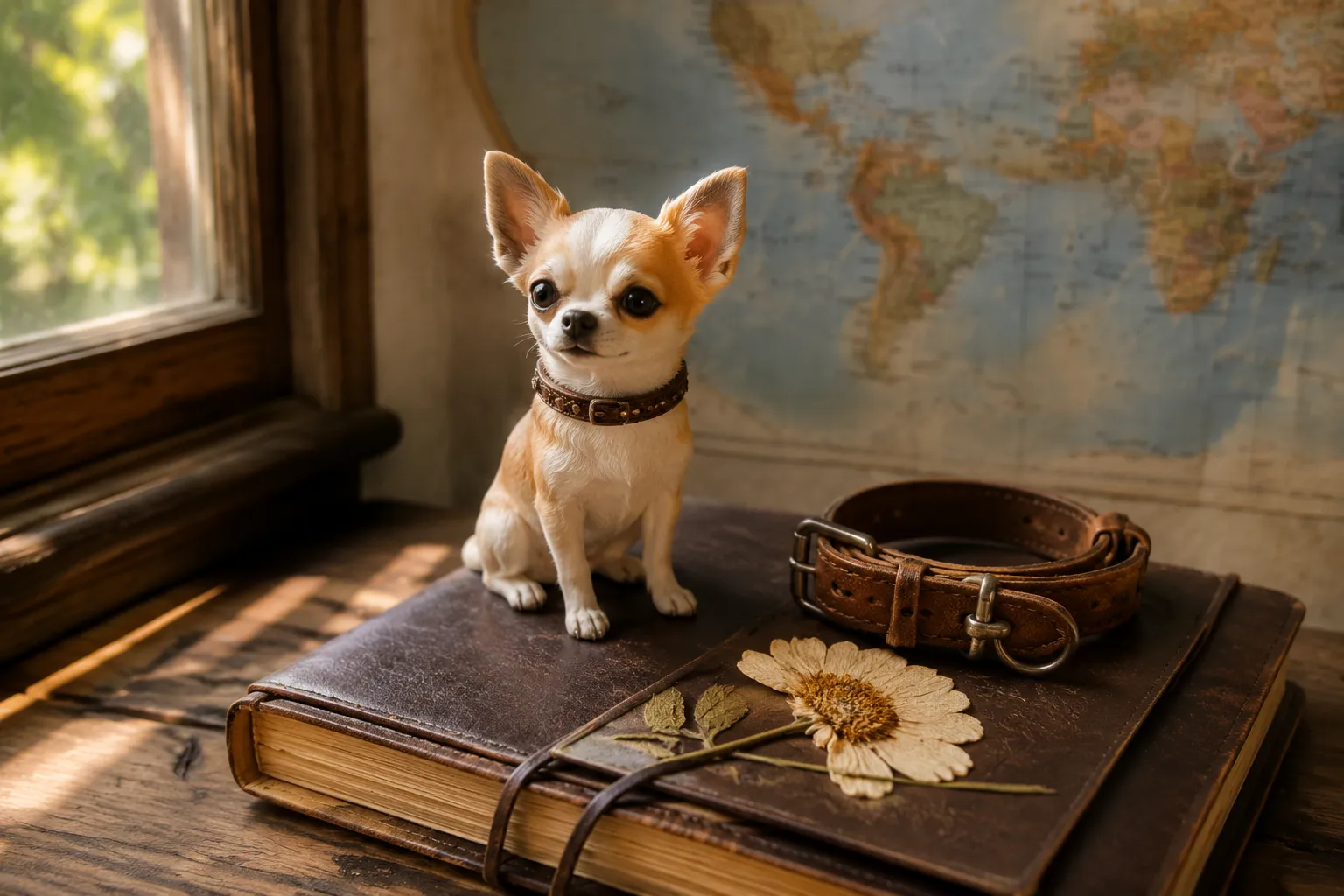
Where do you put a collar when the dog who wore it died two thousand miles from home? Ours sat in an attic box for months after our pet loss during travel turned a vacation into the hardest week of the year. The buckle still held the shape of her neck.
Quick Takeaways
- Pet loss far from home adds logistics to grief — handle the practical steps first, then let yourself feel.
- Impermanence philosophy reframes the collar — not an empty object, but proof the bond was real.
- The first anniversary hits harder than month one — plan for it instead of being ambushed.
- Tangible keepsakes anchor memory — many families turn to custom pet figurines when photos start to feel flat.
- Guilt about timing or location is normal — it is grief doing math that love never agreed to.
When the Worst Happens Where You Don't Speak the Language
Here's something the pet bereavement world rarely talks about: grieving at home is one thing. Grieving in a rental apartment where you can't read the labels on the cleaning supplies is another animal entirely.
We've heard this story enough times from our customers to know it's not rare. A family takes their senior Chihuahua along on a long trip because leaving her felt worse than the hassle. Then the unthinkable happens in a place with unfamiliar vets, a different language, and no backyard to bury anyone in.
The grief is the same grief. But it arrives wearing extra weight.
You're not just sad. You're problem-solving while sad. And that combination does something strange to the brain—it delays the actual mourning until you're back in a time zone where you can afford to fall apart.
"Grief postponed by logistics doesn't disappear. It just waits in the suitcase until you unzip it at home."
Let's be real about what pet loss during travel actually demands of you, because nobody hands you a checklist at the worst moment.
The practical reality nobody warns you about
When a pet dies abroad, you face decisions most people never imagine making in a hotel room:
- Aftercare options vary wildly by country. Cremation may be available within a day in some places, nearly impossible in others. Ask the local vet directly—they've handled this before.
- Bringing remains home has rules. Many countries require documentation for transporting cremated remains. A small certificate from the crematorium usually does it, but check your airline's policy before you pack.
- Burial abroad is rarely legal or practical. As tempting as it is to lay them to rest where they passed, most regions prohibit it.
- The collar, the harness, the favorite blanket—these come home with you. Don't leave them. We've talked to people who left a leash behind in a panic and regretted it for years.
The "So what?" here is simple. Handling the logistics cleanly in the first 48 hours protects your future self. The version of you sitting in your living room next month will be grateful you brought everything home, even the chewed-up squeaky toy.
Personal Aside: Our team once worked with a couple who lost their dog in a coastal town overseas. They told us the hardest part wasn't the loss itself—it was standing in a pharmacy trying to mime "where is the nearest vet" while holding her. They said that memory haunted them more than the goodbye. We think about that a lot. Sometimes grief's sharpest edge isn't the love. It's the helplessness.

Why the Empty Collar Isn't Empty At All
Most grief advice tells you to "find closure." We're not huge fans of that word. Closure implies a door that shuts. The collar in your attic box proves the door doesn't shut—it just changes shape.
This is where a centuries-old idea actually earns its keep.
Impermanence, minus the incense
The philosophy of impermanence pet grief draws on is older than any of us. Buddhist thinkers called it anicca—the simple, brutal fact that everything that begins also ends. Nothing material lasts. Not the dog. Not the collar. Not us.
Sounds bleak. It isn't. Here's the turn most people miss.
Impermanence doesn't say the bond was pointless because it ended. It says the bond mattered precisely because it was temporary. A thing that could never be lost would never be precious. Your Chihuahua's preciousness and her mortality were the same fact wearing two faces.
"The collar feels empty because it once held something irreplaceable. Emptiness is just the shape love leaves behind."
So when you hold that collar and feel the buckle's worn spot, you're not holding an absence. You're holding evidence. The leather stretched because a real neck filled it for years. The wear pattern is a fingerprint of a life.
That reframe changes how the object sits in your hands. It stops being a wound and starts being a witness.
The counterintuitive part
Here's what surprised even us after years in this work: the people who heal best aren't the ones who pack everything away fastest. They're also not the ones who build shrines and freeze time.
They're the ones who let the object move. The collar goes from the attic box, to a drawer, to a shelf, to maybe a frame—and each move marks a stage of acceptance. The physical journey of the object mirrors the emotional journey of the person.
If your pet's things are still exactly where they were the day you got home, that's information. Not a failure. Just a sign the grief is asking for a next step.
The Guilt Math That Travel Grief Forces On You
We need to talk about the feeling almost nobody says out loud.
After a pet dies during a trip, a specific guilt sets in: If we hadn't gone, would she still be here? You replay the decision to travel. You wonder if the flight stressed her heart, if the heat got to her, if the unfamiliar food upset her system.
This is grief doing math that love never agreed to.
Listen. You made the choice to bring her because leaving her felt like the bigger betrayal. You wanted her with you. That impulse came from love, not negligence. The fact that the outcome was terrible doesn't retroactively make the decision wrong.
Senior dogs, especially small breeds like Chihuahuas, can decline suddenly regardless of location. The American Kennel Club's guidance on senior dog care notes that small breeds often mask illness until it's advanced—it could have happened at home on an ordinary Tuesday. You can read more about aging-dog health markers through the American Kennel Club's resources.
The guilt will still visit. We're not promising you logic defeats it. But when it shows up, you can name it: This is the travel-guilt. It's normal. It doesn't mean I did wrong.
"Guilt is love with nowhere to go. It shows up because you cared, not because you failed."
A quick gut-check for the second-guessing
If your brain keeps running the "what if we'd stayed home" loop, try this. Ask yourself one question: Was the decision made with her wellbeing in mind at the time, with what I knew then? If yes—and it almost always is—then the verdict is closed. You can't be guilty of an outcome you couldn't predict.
That doesn't erase the ache. But it stops the ache from turning into self-punishment, which is a different and more corrosive thing.
A Practical Map of Travel-Grief vs. Home-Grief
People assume grief is grief. In our experience helping families, the location of loss genuinely shapes the timeline. Here's how the two tend to differ.
| Aspect | Loss at Home | Loss During Travel |
|---|---|---|
| Initial mourning | Begins immediately | Often delayed until return |
| Logistical burden | Familiar systems, support nearby | Foreign systems, language barriers |
| Guilt pattern | "Did I do enough?" | "Did the trip cause this?" |
| Trigger objects | Whole house holds memories | Concentrated in what you brought home |
| Delayed wave | Less common | Very common, hits 1-3 weeks post-return |
The big takeaway from this table: if you got home from your trip and felt strangely numb, that's not coldness. That's the delay. The wave is still coming, and it tends to crest one to three weeks after you walk back through your own front door.
Knowing it's coming helps you not panic when it lands.
The Spatial Reality of Loss: The Corners Where She Isn't
Grief lives in space more than time. People expect the calendar to hurt. They don't expect the geometry of their own home to ambush them.
The corner by the radiator where her bed sat. The six inches of couch cushion that stayed warm. The specific patch of floor by the kitchen where she'd plant herself at dinner, close enough to trip over, which was the point.
A Chihuahua takes up almost no physical room. That's the cruel part. She was four pounds of presence, and now there are these small, dog-shaped absences scattered through the house like potholes you keep stepping in.
"A small dog leaves a surprisingly large hole. Grief isn't measured in pounds."
Rearranging space on purpose
Here's a concrete action that actually helps, and most articles skip it: deliberately change the spatial layout of the rooms with the strongest associations.
Not to erase her. To stop the ambush.
- Move the furniture that held her bed. Even a foot. The eye stops expecting her there.
- Reclaim the "her spot" with intention. Put something meaningful in it—a plant, the framed collar, a photo. Fill the pothole instead of avoiding it.
- Keep one place unchanged on purpose. Pick a single spot that stays "hers." This gives grief a designated home so it doesn't haunt every room.
The "So what?": uncontrolled triggers retraumatize. Designed ones let you visit the grief when you choose, instead of getting jumped by it while reaching for the coffee.
This is the no-nonsense version of "honoring their memory." Memory honored through floor plans. It works because grief is spatial, and space is something you can actually move.
Turning the Collar Into Something You Can Hold
The collar in the attic box is doing nothing for you up there. We say that with love.
Objects of grief need a job. Stored away, the collar becomes a thing you're afraid to find. Given a purpose, it becomes a thing you choose to keep close. The difference between those two states is enormous.
Options for the collar itself
Families handle the memorial collar a dozen ways. Here are the ones we've seen bring the most peace:
- Shadow box frame. The collar, a photo, maybe her tag, behind glass on the wall. The most common path for a reason—it turns the object into art without altering it.
- A dedicated small dish or tray. The collar lives coiled in a beautiful bowl on a shelf. Touchable. Not locked away.
- Wearable transformation. Some people thread the ID tag onto their own keychain or a necklace. The metal that rode on her collar now rides with you.
- The Chihuahua memorial collar as a centerpiece. Build a small memory corner around it—and this is where many families add a dimensional keepsake that brings her back into three dimensions.
That last point deserves honesty. A flat photo, over time, can start to feel like it's flattening her—shrinking a whole living personality into one frozen angle. Customers tell us this constantly. The photos stopped feeling like enough.
Where a figurine fits into this
This is the part where we mention what we do, and we'll keep it straight with you because you deserve that.
When the collar's emptiness becomes too much, some families find comfort in having a physical likeness to sit beside it. At PawSculpt, we create museum-quality pet figurines that are digitally sculpted by 3D artists and then precision 3D printed in full color. The color is part of the resin itself, printed voxel by voxel, so your Chihuahua's exact markings—the tan eyebrows, the white chest patch—come through in the material rather than sitting on top of it.
We don't paint them. The technology reproduces the colors and fur patterns directly in the resin, and the only thing our team adds by hand is a protective clear coat for sheen and durability. What you get has an authentic, fine 3D-print texture—not a glossy, plastic-perfect fake.
We're telling you the how because grieving people get oversold constantly, and you should know exactly what you're getting.
"We've learned that grief needs an anchor. A photo lives on a screen. Something you can hold lives in the room with you."
— The PawSculpt Team
The figurine isn't a replacement. Nothing replaces her. But placed beside the collar, it does something a flat image can't—it returns her to physical space, to the three dimensions she actually occupied. The collar gets its shape back.
A quick comparison of memorial keepsakes
If you're weighing how to honor a small dog specifically, here's how the common options stack up.
| Memorial Option | Emotional Pull | Effort | Best For |
|---|---|---|---|
| Framed photo collage | Moderate | Low | Quick comfort, wall space |
| Shadow box with collar | Strong | Medium | Keeping the actual object |
| Memorial garden/plant | Gentle, ongoing | Medium | Homeowners with outdoor space |
| Custom 3D figurine | Strong, tactile | Low (you send photos) | Those who miss the physical presence |
| Paw-print keepsake | Sentimental | Low | Captured before or at passing |
Notice there's no single winner. The right choice depends on whether you grieve more with your eyes, your hands, or your routines. Most families we work with end up combining two or three.
What Photos Actually Capture a Chihuahua's Soul
Since people always ask, and since this matters whether you commission a figurine or just want better keepsake images: photographing a tiny dog for memory is its own skill.
If you still have time with a senior pet, or if you're working from existing photos, here's what genuinely works.
The photos that work best
- Shoot at their eye level, not from above. Looming down shrinks them and distorts the face. Get on the floor. Chihuahuas especially get cartoonish from above.
- Natural light beats flash every time. A window on an overcast day is ideal—soft, no harsh shadows, true colors. Flash flattens the fur texture that makes them them.
- Capture the markings clearly. For any likeness, the distinctive patches matter most. One clean shot of the face, one of the full body from the side.
- Get the ears in their natural position. A Chihuahua's ears are half their personality. Catch them up and alert if you can.
- Multiple angles win. Front, side, three-quarter. The more reference, the more accurate any keepsake will be.
Here's the insider truth most companies won't tell you: the first version of any custom likeness almost never nails the ears or the exact head tilt on the first try. That's normal. Good preview-and-revision processes exist precisely because tiny breeds have so much personality packed into small features. Don't expect perfection from a single blurry phone pic—give the artists something to work with.
For the full breakdown of what our process needs and how revisions work, the specifics live on our figurine studio's site, since those details get updated as our technology improves.
Photo quality cheat sheet
| Element | What Works | What to Avoid |
|---|---|---|
| Angle | Eye level, side profile | Shooting from above |
| Lighting | Soft natural window light | Direct flash, backlight |
| Focus | Sharp on face and markings | Motion blur, low resolution |
| Expression | Ears up, natural posture | Sleepy or obscured face |
| Quantity | 3-5 varied angles | Single image only |
Bracing for the First Anniversary
The first month is survival. The acceptance pet loss first anniversary brings is a different beast, and almost nobody prepares for it.
Here's the pattern we've watched play out across hundreds of families. The early weeks are loud—acute, obvious pain. Then life resumes its noise. You go months thinking you've turned a corner.
Then the date approaches. And about two weeks out, before you've even consciously clocked it, the heaviness returns. Your body remembers the anniversary before your mind does.
This is not regression. This is not "still not over it." This is grief's natural architecture.
A plan for the day itself
The mistake most people make is treating the anniversary like any other day and hoping to white-knuckle through. What actually helps is the opposite—give the day a job before it gives you one.
- Mark it on purpose. Visit the spot, light something, look through photos. Decide the ritual in advance.
- Tell one person. "Tomorrow's the anniversary." Just naming it out loud to a single human disarms half its power.
- Do one thing in her honor. Donate to a shelter, walk the route you used to walk, make the meal you'd share scraps of.
- Don't schedule anything heavy. Keep the day soft. No big meetings, no high-stakes plans.
The "So what?": anticipated grief is manageable grief. Ambush grief is the kind that flattens you. You're choosing which one you get.
"The anniversary doesn't ask permission. So you get there first and give it meaning."
Grief timeline for pet loss during travel
Because travel-loss runs on a slightly different clock, here's the rough shape of what to expect. Every person varies—this is a map, not a law.
| Timeframe | What's Common | What Helps |
|---|---|---|
| Days 1-7 (still abroad) | Numbness, logistics-mode | Handle aftercare, bring everything home |
| Weeks 1-3 (back home) | Delayed wave crests | Let it come, don't fight the numbness breaking |
| Months 1-3 | Spatial triggers, daily aches | Rearrange space, give objects a job |
| Months 4-9 | Quieter, occasional ambushes | Move the collar to its next "stage" |
| First anniversary | Resurgence two weeks prior | Plan a ritual, tell someone, mark it |
The Feeling You're Not Supposed to Admit: Relief
We promised straight talk, so here it is.
If your Chihuahua was old, or sick, or the trip home was an ordeal—you may have felt, somewhere underneath the grief, a thread of relief. Relief that the hard week ended. Relief that you're no longer watching her suffer. Relief that the impossible logistics resolved.
And then you probably felt monstrous for feeling it.
You're not a monster. Relief that suffering ended is not the same as being glad she's gone. Those are completely different things, and grief blurs them on purpose to torment you.
The relief means you loved her enough to want her pain over—even at the cost of her presence. That's the highest form of love there is. It put her comfort above your own desire to keep her near.
The guilt that chases the relief is, in our experience, the single most common unspoken weight people carry after a pet dies. Especially after a difficult final stretch far from home. Name it. It loosens its grip the moment you do.
If the weight feels like more than you can hold alone, the Association for Pet Loss and Bereavement offers grief support specifically for this—real people who won't blink when you admit the complicated feelings.
Living With Impermanence Instead of Fighting It
Let's bring the philosophy back down to the floor, where the dog used to sleep.
Impermanence isn't a thing you accept once and finish. It's a practice. You'll forget it the next time you reach for the leash out of habit and feel the floor drop. Then you'll remember it again.
The collar is your teacher here. It's impermanent too. The leather will crack eventually. The metal tag will tarnish. And that's not tragic—it's the same truth that made her precious, just continuing.
What you're really learning is how to hold something tightly and lightly at once. To love fully knowing it ends. That's not a lesson dogs teach by accident. Short lives, lived at full volume, pressed up against ours—they're practically built to teach us this.
The fear of forgetting deserves a word too. Many people panic that the memory will fade, that they'll lose the exact sound of the bark or the weight of her in their lap. You won't lose all of it. And the parts that soften are supposed to soften. That's not betrayal. A keepsake on the shelf—a frame, a figurine, the collar in its dish—exists precisely to carry the details your memory can't hold forever. That's its real job.
Bringing It Home
That attic box. Let's go back to it.
The collar doesn't belong up there in the dark, holding the shape of a neck that's gone, waiting to ambush you next time you're looking for the holiday decorations. It belongs somewhere you can see it. Somewhere it can do its job—not as a wound, but as a witness to the fact that a four-pound creature filled your life past the brim and then, like everything precious, moved on.
Take it down this week. That's the action. Find it a place in the light.
Maybe you frame it. Maybe you set it beside a figurine that gives her back her three dimensions. Maybe you just coil it in a bowl on the shelf where you'll see it with your coffee. The form matters less than the choice: you're keeping her close on purpose, not by accident.
The pet loss during travel that broke your heart this year doesn't get smaller. But the love it proves keeps its full weight—same as that worn buckle, still holding its shape, still meaning everything. The collar was never empty. It was full the whole time.
Frequently Asked Questions
Is it normal to feel guilty after losing a pet while traveling?
Completely normal, and more common than people admit. You brought your pet along because leaving felt worse—that's love, not negligence. Senior dogs and small breeds can decline suddenly anywhere, and an outcome you couldn't predict isn't something you can be guilty of. Name the guilt when it visits: "This is travel-guilt, and it doesn't mean I did wrong."
How do I bring my pet's remains home from another country?
Start by asking the local vet directly—they've handled this before and know the regional options. Cremation timelines vary a lot by country. For transporting cremated remains, most places require a certificate from the crematorium, and your airline will have its own policy, so confirm both before you fly. Burial abroad is rarely legal or practical, so cremation is usually the realistic path.
Why does the first anniversary of pet loss hit so hard?
Because your body keeps time even when your mind isn't watching the calendar. Many people feel the heaviness return about two weeks before the actual date, often before they've consciously realized the anniversary is near. This isn't regression or "still not being over it"—it's grief's natural shape. The fix is to plan a small ritual in advance so the day has meaning you chose.
What should I do with my Chihuahua's memorial collar?
Get it out of storage and give it a job. Hidden in a box, it becomes a thing you dread finding. Out in the light, it becomes something you keep close on purpose. Common paths: a shadow box frame, a dish on a visible shelf, threading the ID tag onto your own keychain, or building a small memory corner around it. Some families add a dimensional keepsake nearby so the collar gets its shape back.
Is it wrong to feel relieved after my pet died?
Not at all. If the final stretch was full of suffering or difficult logistics, relief that it ended is natural—and it's completely different from being glad they're gone. That thread of relief actually reflects deep love: you wanted their pain over even at the cost of their presence. The guilt that follows relief is one of the most common unspoken weights after pet loss.
How can a figurine help with pet grief?
A flat photo can start to feel like it's flattening your pet's whole personality into one frozen angle. A dimensional keepsake returns them to physical space—something you can hold rather than just look at. It doesn't replace your pet, but placed beside the collar, it anchors the memory in the room with you. Grief tends to need something tangible to hold onto.
Ready to Celebrate Your Pet?
Every pet has a story worth preserving. Whether you're navigating pet loss during travel or honoring a companion who filled your home with more presence than their size should allow, a custom PawSculpt figurine captures the markings, the ear tilt, and the personality that made your pet impossible to replace—returning them to the three dimensions a photo can't hold.
Visit pawsculpt.com to learn more about our full-color 3D printing process, preview turnaround, flexible revisions, and quality guarantee.