
Lighting 101: How to Spotlight Your Goldfish Sculpture Without Melting It
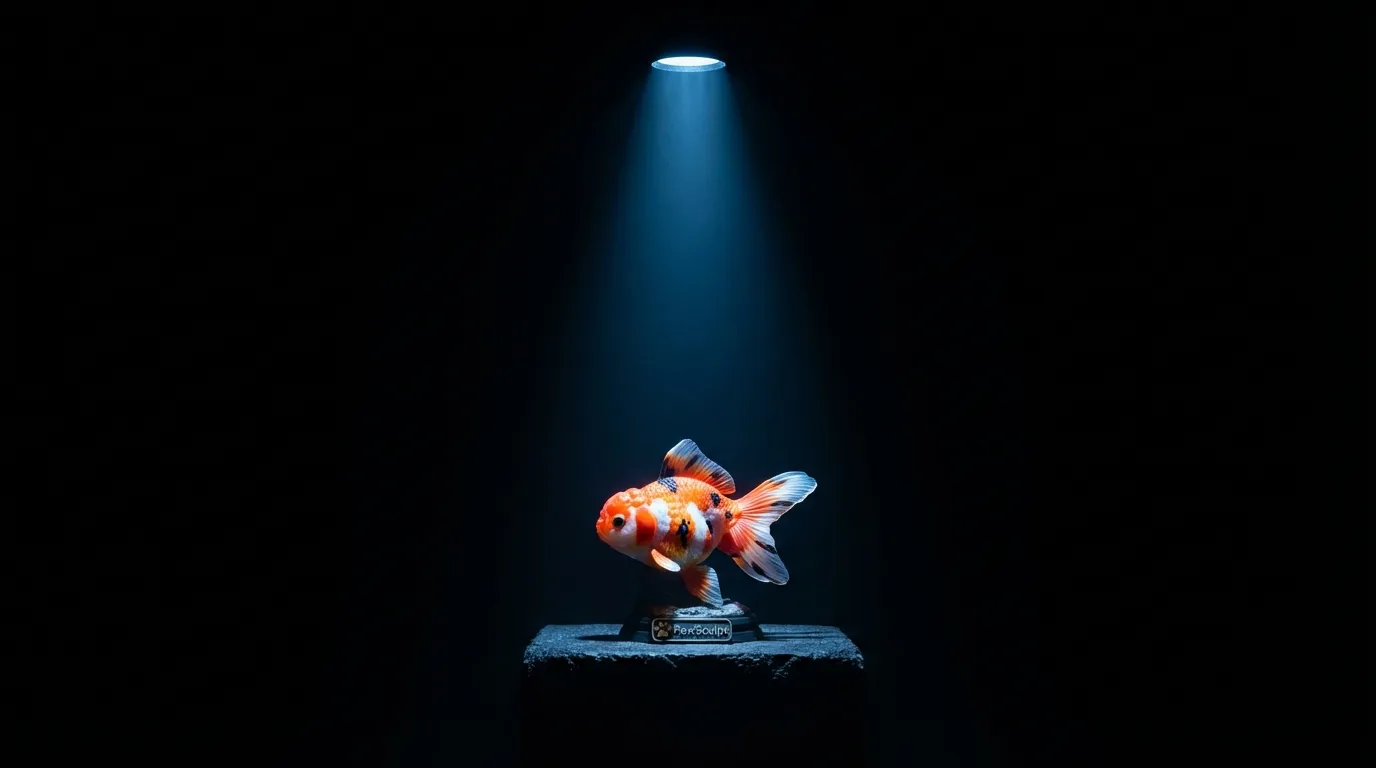
I plugged the display case in, flipped the switch, and watched my prized Fantail goldfish figurine turn into a shapeless, bubbling blob of resin within three hours because I didn't respect the heat output of a halogen bulb.
Quick Takeaways
- Heat is the enemy — Resin softens at temperatures lower than you think (often around 120°F/50°C).
- LEDs are mandatory — They emit a fraction of the heat and UV radiation compared to incandescent or halogen bulbs.
- Angle matters — Lighting from directly above flattens details; 45-degree angles highlight the 3D texture.
- UV protection is key — Even with our clear coat, direct sunlight will eventually fade the vibrant colors of your custom pet figurine.
Why Your Goldfish Sculpture Needs Specific Lighting
Most people treat resin collectibles like they’re made of stone or ceramic. They aren't. They are photopolymers—plastics cured by light. This means light is both their creator and their potential destroyer.
When we produce a model at PawSculpt, we are using a process called full-color PolyJet-style printing. We aren't hand-painting a white model. The color is printed voxel-by-voxel (think 3D pixels) directly into the resin material. While we apply a robust UV-resistant clear coat during post-processing, the physics of resin remain constant: it reacts to heat and UV radiation.
If you blast a resin print with a high-heat source, you risk warping the thin fins of a goldfish sculpture or causing the material to "sweat" (a phenomenon where uncured monomer migrates to the surface, though rare in fully cured parts). If you blast it with unfiltered UV light for years, those vibrant orange and pearlescent white scales will eventually drift toward yellow.
"Lighting isn't just about seeing the object; it's about preserving the chemistry that holds it together."
The Heat Equation: Choosing the Right Bulb
The biggest mistake collectors make is using the built-in lights in old curio cabinets. Those cabinets were often designed for porcelain or glass, using hot halogen puck lights.
Resin has a "Heat Deflection Temperature" (HDT). For many full-color resins, this can be surprisingly low, sometimes in the range of 45°C to 50°C (113°F - 122°F) for the onset of softening. A halogen bulb in an enclosed glass cabinet can easily raise the ambient temperature of a shelf to that level.
The Safe Zone Checklist
Here is the practical hierarchy of lighting sources for resin art:| Light Source | Heat Output | UV Output | Risk Level | Verdict |
|---|---|---|---|---|
| Halogen | High | Moderate | Critical | Do not use. Will warp fins/tails. |
| Incandescent | High | Low | High | Avoid. Too much radiant heat. |
| Fluorescent | Moderate | High | Moderate | Risky due to UV output causing fading. |
| LED (Cold) | Low | Zero/Low | Safe | Excellent, but can look clinical. |
| LED (Warm) | Low | Zero/Low | Safe | Best Choice for natural color rendering. |
The Counterintuitive Insight: You might think a bright white light (5000K-6000K) is best to show off the colors, but for a goldfish, that clinical blue-white light often washes out the warmth of the orange and red tones. A slightly warmer temperature (3000K-4000K) usually makes the organic colors pop without cooking the resin.
Positioning: The Art of the "Raking Light"
In the manufacturing shop, when we inspect a print for quality control, we don't shine a light directly at it. We use "raking light"—light angled across the surface. This highlights the texture.
Since our figurines are 3D printed, they have a unique, micro-textured surface inherent to the additive manufacturing process. It's not perfectly smooth like injection-molded plastic, and that's a good thing—it mimics the organic irregularity of scales.
If you point a spotlight directly at the side of the fish (flat lighting), you lose that depth. The scales look like a 2D sticker.
The 45-Degree Rule
Position your light source 45 degrees above and 45 degrees to the front of the subject. This creates micro-shadows under the relief of the scales and gills, giving the piece volume.For Goldfish Specifically:
Because goldfish figurines often feature translucent or semi-translucent fins (depending on the specific resin mix used), backlighting can be incredibly effective. Placing a soft, diffuse LED strip behind the figurine can make the tail fins appear to glow, mimicking how sunlight passes through a fish in a pond. Just ensure the LED is low-intensity so it doesn't silhouette the body completely.
UV Protection: The Silent Killer
We apply a high-grade clear coat to every PawSculpt figurine. This seals the print and provides a layer of UV resistance. However, no clear coat is magic. UV radiation is relentless.
Think of your figurine like a museum watercolor painting. You wouldn't hang a watercolor in direct sunlight. The pigments suspended in the resin are stable, but high-energy UV photons will eventually break down the chemical bonds of the colorants.
The "Window Test"
Go to the spot where you plan to display the figurine. 1. Place a piece of paper there at 10:00 AM, 1:00 PM, and 4:00 PM. 2. If the sun hits that paper directly at any point, move the display spot. 3. Indirect ambient light is fine. Direct shafts of sunlight are not."A figurine in the shade lasts a lifetime. A figurine in the sun is on a countdown."
Display Cases vs. Open Air
Dust is annoying, but for complex 3D prints with delicate geometries—like the flowing, veil-like tails of a Ryukin or Fantail goldfish—dust is a nightmare to clean. You can't just scrub these with a rough cloth; you risk snapping a fin.
We strongly recommend an enclosed display case.
However, you need to manage the "Greenhouse Effect." If you put a resin model in a glass box and shine a light into it, the heat gets trapped.
The Fix:
- Use acrylic cases with ventilation gaps if possible.
Use external lighting (shine the light through the case, don't put the hot light inside* the case).
- If using internal lighting, ensure it is low-voltage LED strips that are cool to the touch.
Cleaning and Maintenance Under Lights
When you light a figurine properly, you will see every speck of dust. Here is the safe way to clean a full-color resin print without damaging the surface or the clear coat.
Do Not Use:
- Chemical cleaners (Windex, Acetone, Alcohol). These can eat through the clear coat and attack the resin.
- Paper towels. They are abrasive and will leave micro-scratches that eventually make the finish look cloudy.
Do Use:
- Compressed Air: Short bursts from 6 inches away. Don't freeze the resin.
- Makeup Brushes: A soft, fluffy brush is perfect for getting dust out of the crevices between scales without applying pressure.
- Microfiber: For the smooth areas, a dry optical-grade cloth is best.
"We design these pieces to capture a memory, not to test the limits of polymer chemistry. Keep them cool, keep them shaded, and they'll outlast us all."
— The PawSculpt Team
Frequently Asked Questions
Can I put my resin goldfish figurine in a real fish tank?
No. Absolutely not. While the resin is cured, it is not certified as aquarium-safe. Submerging it will eventually degrade the material, causing it to swell or crack, and it may leach chemicals into the water that are toxic to living fish. These are for dry display only.Why does my figurine look different under my house lights vs. sunlight?
This is a phenomenon called metamerism. The pigments embedded in the resin reflect light differently depending on the spectrum of the light source. Sunlight has a "Color Rendering Index" (CRI) of 100. Standard bulbs might be 80. For the most accurate color, look for LED bulbs with a CRI of 90 or higher.How do I fix a bent fin if it warped from heat?
If a thin part has warped, you can sometimes use "thermal shock" to fix it. Use a hair dryer on low heat to gently warm the area just until it becomes slightly pliable (do not overheat!). Hold it in the correct position, then immediately run it under cold water to "freeze" it in place. Do this at your own risk.Are battery-powered lights better than plug-in ones?
From a heat perspective, they are about the same provided they are both LEDs. However, battery lights tend to dim as the voltage drops, which changes the color appearance of your figurine. Plug-in LEDs with a dimmer switch give you the most control and consistency.Ready to Celebrate Your Pet?
Every pet has a story worth preserving. Whether you're honoring a beloved companion who's crossed the rainbow bridge or celebrating your furry (or scaly) friend's unique personality, a custom PawSculpt figurine captures those details that make your pet one-of-a-kind.
Free instant AI preview • 3D artist preview within 7 days • 5 free revisions