
Stop Putting Your British Shorthair in the Dark: The Lighting Guide for Resin Art
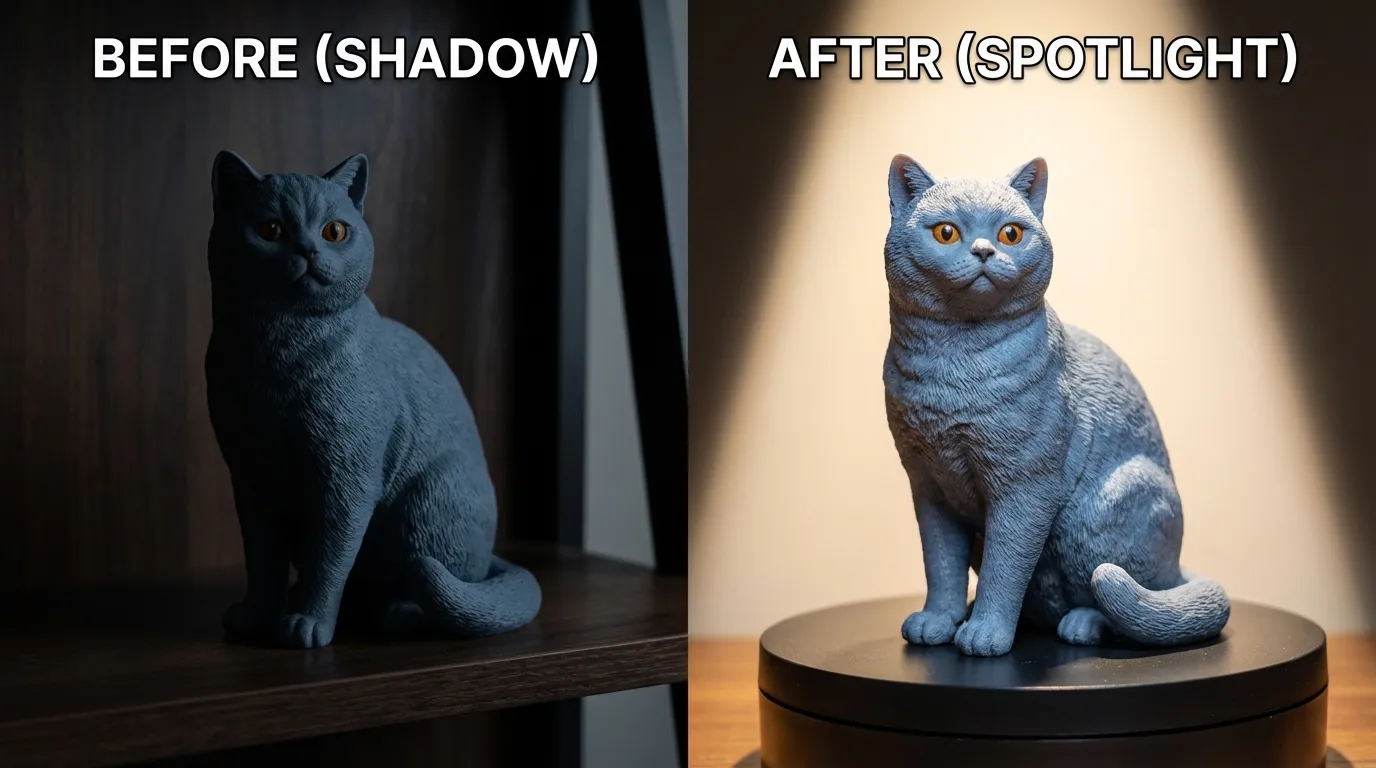
The late afternoon sun hits the dust motes dancing above the mantle, but the small figurine on the shelf remains in shadow, its details swallowed by the gloom. You spent weeks perfecting the digital sculpt of those round, copper eyes and that dense, plush coat, yet in this light, the spirit of the animal is dormant, waiting for the spark that only proper illumination can provide.
Quick Takeaways
- Lighting is part of the sculpture — Shadows define volume; without directional light, 3D printed fur textures look flat.
- Color temperature matters — Warm light (2700K) mimics candlelight/sunset; Cool light (4000K+) brings out clinical detail but loses warmth.
- Avoid direct sunlight — UV rays are the enemy of all resin art; they cause yellowing and brittleness over time.
- The "Rembrandt Triangle" — Positioning a light 45 degrees to the side creates a "living" presence in custom pet figurines.
The Alchemy of Photons and Resin
We often think of a figurine as a static object—a lump of cured resin sitting on a shelf. But from a metaphysical perspective, the object is only half the equation. The other half is light. When we digitally sculpt a British Shorthair at PawSculpt, we aren't just pushing virtual clay; we are creating a landscape of peaks and valleys designed to catch photons.
The British Shorthair, with its dense, "crisp" coat and rounded features, presents a unique challenge in additive manufacturing. The texture is subtle. If you blast it with flat, overhead room lighting, you wash out the topography. You lose the essence of the animal.
"A figurine in the dark is a memory forgotten; a figurine in the light is a presence invoked."
Lighting isn't just about visibility; it's about energy. It’s about creating a sacred space where the memory of your companion can dwell. When you light a piece correctly, you aren't just illuminating plastic—you are animating a memory.
The Engineering of Shadow: Why Resin Needs Direction
Let’s get technical for a moment, speaking as someone who has spent years staring at build plates and curing stations. Our full-color 3D printing process (PolyJet/MJF style) injects color directly into the voxel (3D pixel) of the resin. We don't paint on top. This means the color is deep, integral, and organic.
However, resin absorbs and scatters light differently than fur. Real fur is translucent; light passes through the guard hairs and bounces back. Resin is semi-opaque. To mimic the life of a real animal, we rely on specular highlights—the tiny white reflections on the wet nose or the curve of the eye.
The Flatness Trap
Most home lighting is "ambient"—it bounces off the ceiling to fill the room. This is the enemy of sculpture. Ambient light fills in shadows. Without shadows, your eye cannot perceive depth. A British Shorthair’s chubby cheeks and broad chest need shadow to look three-dimensional.The Fix: You need a "Key Light." This is a dedicated light source that hits the figurine from a specific angle.
| Lighting Angle | Effect on Figurine | Emotional Resonance |
|---|---|---|
| Direct Overhead | "Raccoon Eyes" (dark shadows in sockets) | Harsh, interrogation-like, unflattering. |
| Front/Flash | Flattens all texture; looks like a sticker | Artificial, lifeless, 2D. |
| 45° Side/Top | Reveals texture, creates volume | Natural, museum-quality, "living" presence. |
| Backlighting | Creates a silhouette/halo | Ethereal, spiritual, angelic (good for memorials). |
The Sacred Spectrum: Choosing Your Color Temperature
Light has a "temperature," measured in Kelvin (K). This isn't about heat; it's about the color of the light itself. Choosing the wrong temperature is the most common mistake we see collectors make. It clashes with the spiritual intent of the space.
2700K - 3000K (Warm White)
This is the color of sunset, candlelight, and incandescent bulbs.- Best for: Memorial spaces, living rooms, bedrooms.
- The Vibe: Cozy, nostalgic, forgiving. It emphasizes the emotional warmth of the bond. If your British Shorthair was a "Blue" (grey) color, warm light might make them look slightly muddy or brownish, so be careful.
4000K - 5000K (Neutral/Daylight)
This is the color of noon sunlight or a gallery.- Best for: Offices, display cabinets, modern decor.
- The Vibe: Truthful, energetic, crisp. This is the best spectrum for our full-color prints because it renders colors accurately. It makes the orange copper eyes of a British Shorthair pop without altering the grey coat.
6000K+ (Cool White)
- Best for: Hospitals and garages.
- The Vibe: Clinical, sterile. Avoid this. It makes the resin look plastic and cheap. It strips the soul out of the piece.
"Proper lighting is the difference between a toy and a totem."
— The PawSculpt Team
The UV Threat: Protecting the Legacy
Here is the shop-floor reality that every additive manufacturing engineer knows but rarely tells the customer: UV light destroys resin.
Our process uses UV light to cure the resin instantly during printing. But if you continue to expose that cured resin to high-energy UV rays (like direct sunlight), the chemical reaction keeps going—slowly. The polymer chains break down. The clear coat can yellow. The material becomes brittle.
The Rule of the Shrine:
Never place your figurine on a windowsill. It might look beautiful for a week, but you are slowly killing the artwork. Treat the figurine like a vampire; it thrives in indirect illumination.
Safe Lighting Sources
- LED Strips: These emit almost zero UV and very little heat. They are safe for close-range lighting in a display cabinet.
- Fiber Optics: The gold standard for museum lighting, though expensive.
- Incandescent (dimmed): Safe from UV, but they generate heat. Keep them at least 12 inches away from the resin to prevent warping or softening.
Setting the Stage: Practical Setup Ideas
You don't need a museum budget to create a reverent display. You just need intention. Here are three setups we recommend for honoring the spirit of your pet.
1. The "Rembrandt" Shelf
Named after the painter who mastered light and shadow.- The Setup: A single, small directional spotlight (like a puck light) mounted on the ceiling or the shelf above, aimed at a 45-degree angle toward the figurine's face.
- Why it works: It catches the "catchlight" in the eyes—that little spark of life. It creates a gentle shadow under the chin, giving the head weight and dignity.
2. The "Halo" Backlight
- The Setup: Place a diffuse LED strip behind the figurine, hidden by a book or a photo frame.
- Why it works: This outlines the silhouette of the pet in light. For a British Shorthair, it emphasizes that sturdy, cobby body shape that is so characteristic of the breed. It feels angelic and is perfect for a memorial altar.
3. The Shadow Box
- The Setup: A deep frame or box on the wall with built-in LED strips along the front inner rim, pointing inward.
- Why it works: It creates a self-contained world. The light is controlled, consistent, and intimate. It separates the memory from the chaos of the rest of the room.
Frequently Asked Questions
Will LED lights fade the color of my figurine?
Generally, no. Standard household LEDs emit negligible UV radiation, making them safe for full-color resin art. However, avoid "grow lights" or specialized UV bulbs, and always keep the figurine out of direct sunlight.Can I put my figurine in a window if it's not direct sun?
We advise against it. Even indirect daylight contains UV radiation (scattering from the sky) that can cause the clear coat to yellow or the resin to become brittle over the years. A shaded corner with controlled artificial lighting is much safer for longevity.How do I clean dust off the figurine without scratching it?
Dust is inevitable, but wiping can cause micro-scratches on the clear coat. We recommend using a soft, clean makeup brush (like a blush brush) to gently whisk away dust. For deeper crevices, a can of compressed air (held at a distance) works well. Never use chemical cleaners or water.My British Shorthair is black; how do I light it?
Black subjects are notoriously difficult to photograph and display because they absorb light. The metaphysical challenge is that they become "voids" on the shelf. You need Rim Lighting. Place a light slightly behind and to the side of the figurine. This catches the edges of the fur texture, outlining the shape in white light while keeping the body black.Ready to Celebrate Your Pet?
Every pet has a story worth preserving. Whether you're honoring a beloved companion who's crossed the rainbow bridge or celebrating your furry friend's unique personality, a custom PawSculpt figurine captures those details that make your pet one-of-a-kind.
Free instant AI preview • 3D artist preview within 7 days • 5 free revisions