
The Month You Learned to Walk Past the Bed: A Teen Family's Australian Shepherd
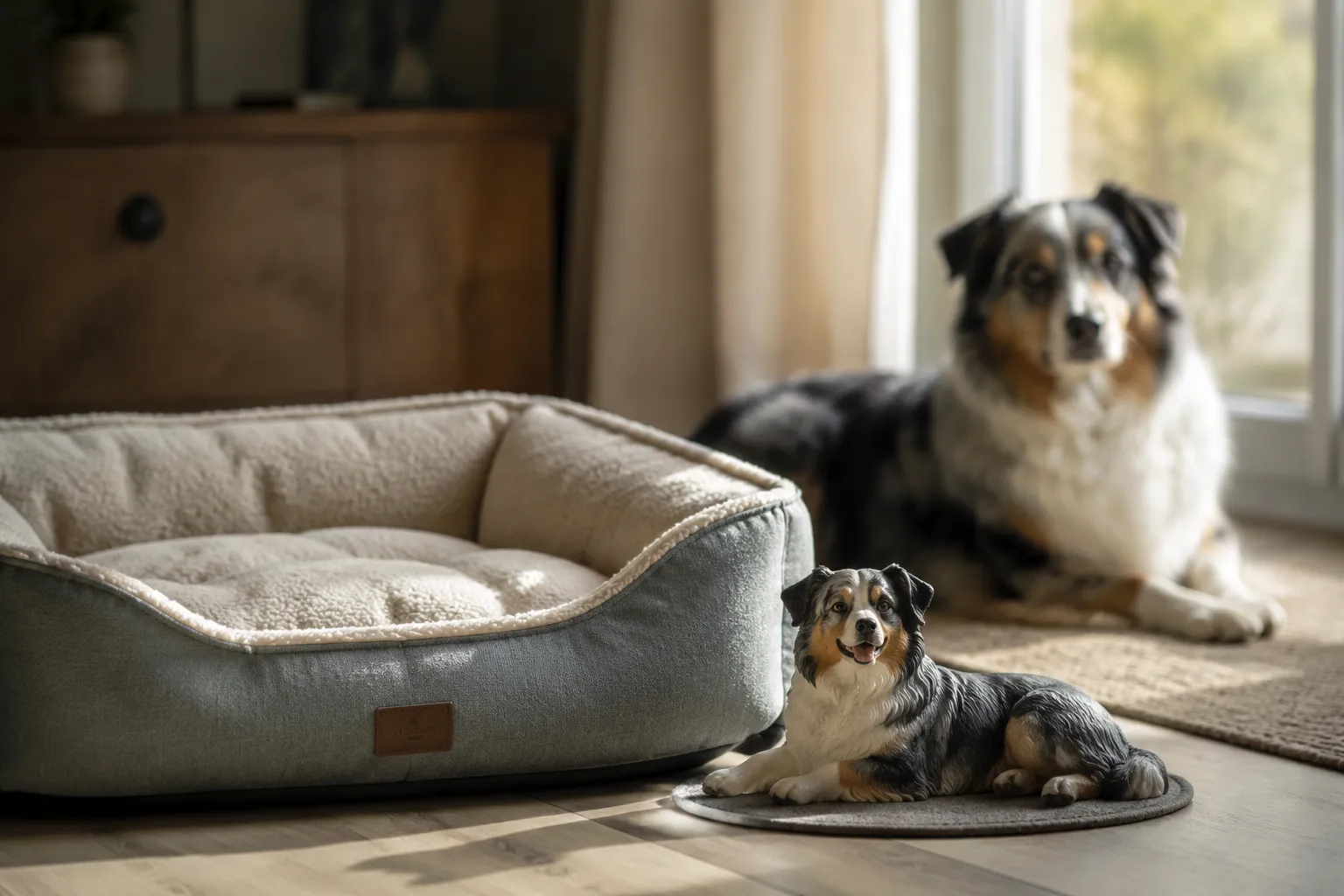
Six months ago, the kitchen tile clicked with the sound of nails at 6 a.m. sharp. Now the water bowl sits washed and dry on the counter, and a family living through australian shepherd loss is learning the hardest geography there is: how to walk past an empty bed without looking down.
Quick Takeaways
- Grief lives in your nervous system, not just your mind — the empty pet bed triggers a real neurological prediction error.
- Teens often grieve sideways — watch for irritability and withdrawal, not just tears.
- Guilt and relief can coexist — feeling both at once doesn't mean you loved them less.
- Tangible anchors help the brain process loss — some families find comfort in a custom pet figurine that holds the shape of memory.
- The first month is about new routines, not closure — closure is a myth; integration is the goal.
The Neuroscience of Grief: Why an Empty Pet Bed Hurts So Much
Here's something most grief articles skip. Your pain isn't sentimental. It's neurological.
For years, that bed in the corner held a living presence. Your brain built what neuroscientists call a predictive model of your home — a map that included a dog who would lift his head when the fridge opened. Every time you walked into the kitchen, your brain quietly expected him to be there.
When he's gone, the map is wrong. The technical term is prediction error, and it fires every single time reality fails to match expectation.
"Grief is the cost of a brain that learned to love. The ache is your wiring asking where they went."
So you glance at the empty bed and feel a small jolt of wrongness. Then you remember. Then it happens again twenty minutes later. This is why the first weeks feel like being ambushed on a loop — your nervous system hasn't updated the file yet.
This process has a name in attachment research: the absence-presence paradox. The space where your dog used to be becomes louder than any object in the room. An empty corner can dominate a whole house.
Australian Shepherds make this especially intense. They are working dogs wired for proximity. An Aussie doesn't lounge in a far room — he positions himself where he can see you, herds the family toward the dinner table, follows from kitchen to couch to bed. The map your brain built was dense with him.
That density is now the size of your grief.
Why the Bed Specifically?
Of all the objects, why does the bed undo people?
Because it held his scent, his weight, the indentation of a thousand naps. Smell routes directly to the limbic system — the brain's emotional core — bypassing the rational filters entirely. One whiff of that bed and you're not remembering. You're there again.
We've heard this from hundreds of families. The leash they can box up. The bed, somehow, stays on the floor for weeks. Nobody can quite explain why they keep stepping around it instead of moving it.
That's not weakness. That's your amygdala protecting a sacred space.
What Australian Shepherd Loss Does to a Household That Moved at Their Speed
An Aussie sets the tempo of a home. Ours rise early, demand movement, turn a quiet Sunday into a project. When that engine stops, the silence isn't peaceful. It's structural.
Think about it spatially. The dog was the connective tissue between rooms. He was the reason someone got off the couch, the reason the family gathered at the back door, the excuse for a walk that became the real conversation of the day.
Now the kitchen empties faster after dinner. The hallway feels longer. The backyard, once a stage for frisbee and herding circles, sits flat and still.
"An Australian Shepherd doesn't just live in your house. He choreographs it."
Here's the counterintuitive part most people miss. The hardest moments aren't the dramatic ones. It's not the vet's office or the burial. It's the ordinary Tuesday when you fill two coffee mugs and realize you no longer need to step over anyone to reach the sink.
The grief hides in the logistics of an ordinary life.
The Routine Vacuum
Aussies thrive on routine, and so did your nervous system without you knowing it. Cortisol — the stress hormone — naturally rises in the morning to wake you. For years, your dog's 6 a.m. nudge was woven into that rhythm.
When the cue disappears, your body still wakes at 6. The room is dark and still, and there's nothing to do with the readiness. This is one reason early grief often comes with insomnia and a strange, jittery alertness at dawn.
The fix isn't to fight it. It's to build a deliberate new morning cue within the first two weeks — coffee on the porch, a short walk, anything that gives the waking body a destination. You're not replacing him. You're giving your cortisol somewhere to go.
Family Grief With Teens: The Quiet Ones You're Worried About
This is the angle nobody writes about, and it's the one that keeps parents up at night.
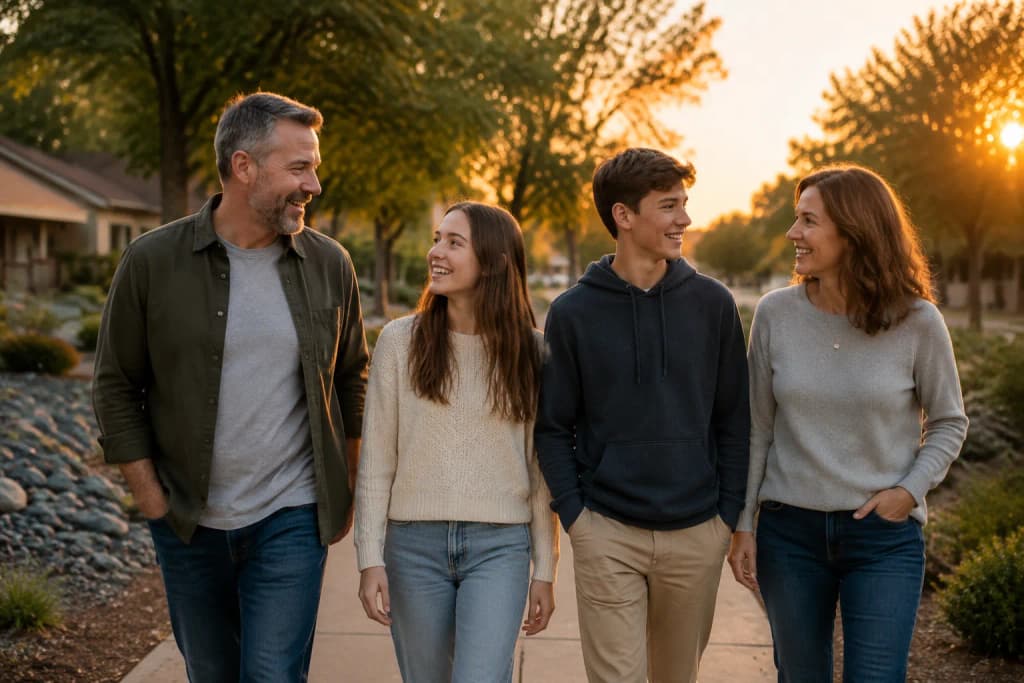
When you have teenagers, family grief with teens follows different rules than adult grief or young-child grief. A seven-year-old cries and asks direct questions. An adult processes out loud. A teenager? A teenager goes to their room and closes the door.
And you stand in the hallway, not knowing whether to knock.
Here's what we've learned from families who've shared their stories with us: teen grief tends to move sideways instead of straight down. It shows up as irritability, gaming until 3 a.m., a sudden coldness, picking fights over nothing. Parents read it as "they're handling it fine" or "they don't even care." Both readings are usually wrong.
Why Teens Hide It
The adolescent brain is mid-renovation. The prefrontal cortex — the part that regulates emotion and impulse — won't finish developing until the mid-twenties. Meanwhile the emotional centers are running at full volume.
So a teen feels grief at hurricane strength but lacks the fully built machinery to express it in words. Withdrawal isn't indifference. It's overwhelm with the door shut.
There's another layer. For many teens, the family dog was the one relationship without judgment. No grades, no social hierarchy, no performance. The Aussie greeted them the same whether they aced the test or bombed it. Losing that is losing a refuge they may not even have the language to name.
"Teenagers don't grieve less. They grieve in a room you're not allowed into yet."
What Actually Helps Teens (Not What You'd Expect)
The instinct is to sit them down for The Talk. Don't lead with that. Side-by-side beats face-to-face every time with this age group.
- Grieve while doing something else — a drive, washing the car, cooking together. Eye contact raises the stakes; a shared task lowers them.
- Give them a job in the goodbye — choosing the photo, writing a few words, deciding where the memorial sits. Agency processes grief better than passive comfort.
- Don't correct their timeline — if they seem fine for two weeks then fall apart, that's normal, not regression.
- Let them keep something physical — a tag, a collar, an object that belongs to them specifically.
That last one matters more than it sounds. Adolescents are concrete thinkers under stress. A tangible object gives a slippery feeling something to hold.
We worked with one family whose sixteen-year-old wouldn't talk for nearly a month after their Aussie passed. What finally cracked it open wasn't a conversation. It was sorting through phone photos together to choose one for a keepsake — the talking happened naturally, sideways, while they scrolled.
Here's a quick map of how grief often shows up differently across a household, so you can spot what you might otherwise miss:
| Family Member | Common Grief Signal | What They Need |
|---|---|---|
| Young child (4-9) | Direct questions, regression, repeated "why" | Honest, simple answers and reassurance |
| Teen (13-18) | Withdrawal, irritability, screen escape | Side-by-side presence, a concrete role |
| Adult/parent | Logistical busyness, delayed crash | Permission to stop and feel it |
| The remaining pet | Searching, appetite change, clinginess | Maintained routine, extra calm contact |
The Feelings Nobody Admits After Losing Your Australian Shepherd
Let's talk about the emotions that live in the basement — the ones people feel intensely and confess to almost no one.
The Relief You're Ashamed Of
If your Aussie was sick at the end, there may have been a moment — right after — when you felt something dangerously close to relief. The 2 a.m. monitoring is over. The agonizing decisions are done. The watching-them-suffer is finished.
And then the guilt arrives like a slammed door.
That relief doesn't mean you wanted them gone. It means you carried a weight you couldn't admit was heavy. Caregiver exhaustion is real, and for a high-needs breed like an Aussie at the end of life, it's immense. Feeling lighter when the suffering stops is your nervous system finally exhaling. It is not betrayal.
"Relief and love aren't opposites. Sometimes relief is just love that's finally allowed to rest."
The Second-Guessing of Timing
This one haunts families more than any other: Did we wait too long? Did we let them go too soon?
You'll replay the last week on a loop, hunting for the perfect day that you somehow missed. Here's the truth from countless families we've spoken with — there is no perfect day, and the search for it is grief disguised as math.
You made the kindest decision you could with the information and love you had in that moment. The fact that you're agonizing over it now is proof of how much you cared, not evidence of a mistake. Self-blame is often easier for the brain than helplessness. It at least gives us a story where we had control.
We're not vets or grief counselors, and if this loop becomes consuming, the APLB pet loss support resources offer real help from people who specialize in exactly this. There's no shame in reaching for it.
The Anger That Surprises You
Some mornings you might feel furious. At the vet. At yourself. At the universe. At the dog, even, for leaving. Anger is grief with nowhere to stand. It's a normal stage, not a character flaw, and it usually softens as the prediction error in your brain slowly updates.
The Fear of Forgetting
Weeks in, a quieter panic sets in: I can't remember exactly how his bark sounded. The specific weight of his head on my knee is fading.
This terrifies people because it feels like a second loss. But memory consolidation naturally trades sharp sensory detail for emotional meaning over time — it's how the brain files things for the long term. You're not forgetting him. Your brain is moving him from the front desk to the permanent archive.
This is precisely where many families reach for something tangible. A photo captures a flat moment. But a three-dimensional keepsake — something with the actual shape and posture of your dog — gives the fading sensory memory an anchor in the physical world.
| Common Hidden Feeling | What It Actually Means | One Thing That Helps |
|---|---|---|
| Relief after suffering ends | You carried a real, heavy burden | Name it out loud to one trusted person |
| Second-guessing the timing | You loved them enough to agonize | Write down the kind reasons behind the choice |
| Anger at no clear target | Grief energy with no outlet | Physical movement — walk, run, dig in the garden |
| Fear of forgetting details | Memory shifting to long-term storage | Record a voice note or keep a tangible keepsake |
A Counter-Point: When Honoring the Memory Becomes Avoidance
We need to be honest here, because most memorial content won't say this.
Building a memorial helps. But there's a line, and it's worth naming. Sometimes the rituals of remembering quietly become rituals of avoiding.
Keeping the bed exactly where it was for six months can be healthy grieving — or it can be a way of refusing to let the prediction error update, keeping the wound deliberately open because closing it feels like another betrayal.
There's no clean rule for which is which. But a useful question is this: Does this ritual help me carry him forward, or does it keep me frozen in the moment he left?
The empty bed, the untouched bowl, the spot on the couch nobody sits in — these can be tender shrines or they can be tripwires. Only you know which. And it can change week to week.
"Honoring a loss should help you live around it, not build a house inside it."
The goal isn't to "get over" your Aussie. That phrase is garbage, honestly. The goal is integration — carrying the love forward in a form that lets the rest of your life back in. A figurine on the shelf does something the empty bed on the floor cannot: it transforms the absence into a presence you chose, in a spot that doesn't trip you on the way to the sink.
That's the difference between a wound and a scar. Both are real. Only one has healed.
Building New Geography: A Practical First Month
The first month after australian shepherd loss isn't about closure. It's about gently redrawing the map of your home so the empty spaces stop ambushing you.
Here's what tends to actually work, in rough order:
- Days 1-3: Don't make permanent decisions. Don't toss everything, don't keep everything frozen. Just survive and let the household breathe.
- Week 1: Build one new morning cue. Give your dawn-waking body a destination so the readiness has somewhere to go.
- Week 2: Reclaim one space intentionally. Move the bed with a ritual, not in secret. Let the family decide together.
- Week 3: Create the anchor. Choose a photo, plan a memorial spot, commission a keepsake — give the fading memory a physical home.
- Week 4 and beyond: Allow the ambushes to space out. They won't stop. They'll just come further apart.
"We've seen families heal the moment they hold something real. Grief needs a place to land, and the heart can't hold air."
— The PawSculpt Team
On Choosing a Tangible Keepsake
When families ask us about memorializing an Aussie specifically, here's our honest input. The markings matter enormously. A red merle's marbling, a black tri's copper points, the white blaze and that asymmetrical face — these are what your brain encoded as him. A generic dog figure won't land. The specifics are everything.
This is part of why we built PawSculpt around full-color 3D printing technology. Your dog's piece is digitally sculpted by master 3D artists, then precision printed in full-color resin where the color is part of the material itself — so the merle pattern and copper points are reproduced directly, protected by a clear protective coat for sheen and durability.
It captures the natural texture and the exact posture you remember, the head-tilt or the play-bow, rather than a flat photographic moment. We're not going to quote you specifics on turnaround or revisions here, because those details shift — you can find the current process and guarantees over at the PawSculpt site.
Plenty of families find their anchor elsewhere — a paw-print casting, a memorial tree, a donation in their dog's name to a shelter. There's no single right vessel. What matters is that the love gets a form it can live in.
Here's a simple comparison of common memorial paths, since families often ask how they stack up:
| Memorial Option | Effort | Lasting Presence | Best For |
|---|---|---|---|
| Memorial tree/garden | Medium | High (grows over time) | Families with outdoor space |
| Photo book | Low-Medium | Medium | Storytelling, sharing memories |
| Paw-print casting | Low | Medium | Quick tactile keepsake |
| Custom full-color figurine | Low (you send photos) | High | Capturing exact markings & posture |
| Shelter donation in their name | Low | Symbolic | Turning grief into action |
What About the Remaining Pets?
If you have another dog, especially one bonded to your Aussie, watch them closely in the first few weeks. Dogs absolutely grieve — they search the house, change eating patterns, and grow clingy. According to the American Kennel Club, surviving pets often show measurable behavioral shifts after a companion's death.
The best thing you can do is hold the routine steady. Same walk times, same feeding schedule. Your stability becomes their stability. Don't rush to "replace" the lost dog as a fix for the survivor — that often backfires.
Walking Past the Bed, Eventually
Remember that kitchen at dawn? The bowl on the counter, the nails that don't click anymore?
There will come a morning — you won't notice it as it happens — when you walk to the sink and don't brace for the empty spot. You won't have forgotten him. The prediction error will have finally, gently updated. He'll have moved from the floor of your kitchen to the permanent shelf of who you are.
That's not betrayal. That's the dog still doing his last job: teaching a family how to move through a house that's quieter now, but still full of him.
Move the bed when you're ready. Not before. Then put something in its place that you chose — a tree, a photo, a figurine that holds his exact tilt of the head. Turn the absence into a presence.
The love doesn't end when the routine does. It just learns a new shape. And so, eventually, do you.
Frequently Asked Questions
How long does grief last after losing an Australian Shepherd?
Acute grief typically eases over three to six months, though waves can resurface for a year or longer, often triggered by ordinary moments. There's no correct timeline. The goal isn't to reach closure but to integrate the loss so life can flow around it again.
Is it normal to feel relief after my pet died?
Completely normal, especially after a long illness. Relief reflects the heavy caregiving burden you carried, not a lack of love. The guilt that follows that relief is one of grief's cruelest tricks — but feeling lighter when suffering ends doesn't make you a bad person. It makes you human.
How do I help my teenager grieve the family dog?
Lead with presence, not conversation. Teens often grieve sideways — through irritability, withdrawal, or escaping into screens — because their emotional regulation isn't fully developed yet. Side-by-side activities like a drive or cooking together open them up more than a direct sit-down talk. Giving them a concrete role in the goodbye helps too.
When is the right time to move my dog's empty bed?
There's no universal answer. A useful gauge: ask whether keeping it brings comfort or quietly keeps the wound open. When you're ready, move it with a small ritual rather than in secret, and consider placing a chosen memorial in that spot so the space holds presence instead of absence.
Do my other pets grieve when one passes away?
Yes. Surviving pets commonly search the home, shift their appetite, and become unusually clingy. The most helpful thing you can do is keep routines steady — consistent walks, feeding times, and calm contact give them an anchor. Avoid rushing to adopt a replacement as a quick fix.
What kind of keepsake best captures an Australian Shepherd?
The breed's distinctive markings are everything — the merle marbling, copper points, and asymmetrical face. A keepsake that reproduces those exact colors and posture lands far harder than a generic dog figure. Full-color resin figurines, paw-print castings, and photo books are all meaningful options depending on what feels right.
Ready to Celebrate Your Pet?
Every pet has a story worth preserving. Whether you're moving through australian shepherd loss and honoring a companion who's crossed the rainbow bridge, or celebrating your dog's one-of-a-kind personality today, a custom PawSculpt figurine captures the exact markings, posture, and spirit that made them unmistakably yours.
Visit pawsculpt.com to learn more about our full-color 3D printing process, flexible revisions, and quality guarantee.