The Anthropology of Holding On: Why Multi-Pet Families Create Rituals Around a Chinchilla's Favorite Toy
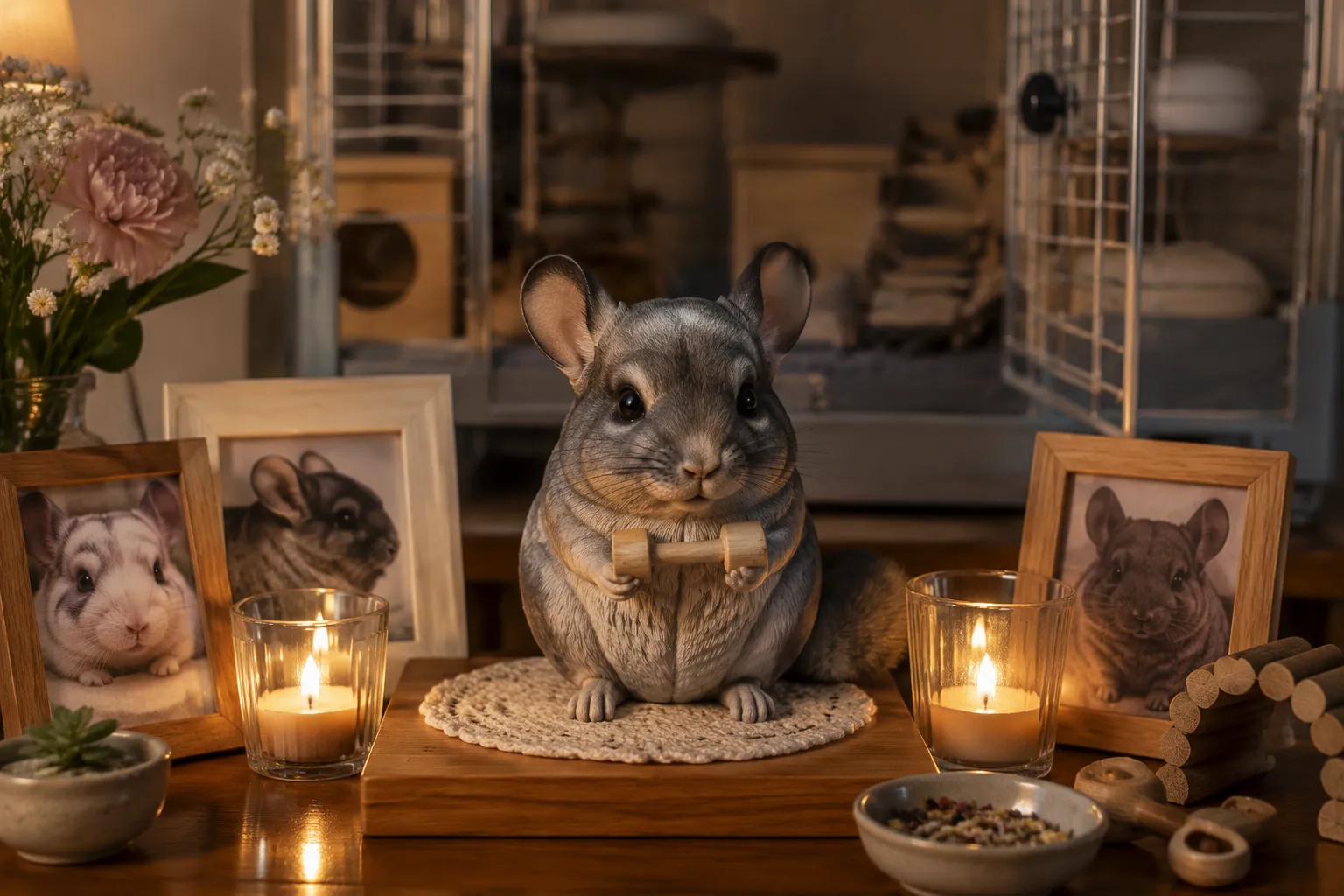
You're holding the chinchilla's favorite chew toy in your coat pocket, thumb running over the wood worn smooth by years of tiny teeth, while the vet's office hums around you. This is where the multi-pet household grief ritual quietly begins—not at a graveside later, but right here, in this fluorescent waiting room.
Quick Takeaways
- Surviving pets grieve through scent and routine — don't rush to wash away familiar smells.
- Small-pet loss is real loss — disenfranchised grief over a chinchilla deserves the same respect as any other.
- Keeping a favorite object out (not boxed away) helps both humans and animals — proximity comforts more than avoidance.
- Anchoring memory in something physical eases anticipatory grief pet loss — explore tangible keepsakes like custom pet figurines when you're ready.
- Rituals work because brains crave a "where" — give your grief a designated place and time.
We've watched a lot of families walk through our studio doors over the years, and here's something the grief pamphlets almost never tell you: the most powerful memorial object in a multi-pet home is rarely the expensive one. It's the chewed-up, drool-stained, half-destroyed toy that nobody else would look at twice.
Let us explain why that beat-up little thing carries more weight than you'd think—and why your other animals might be circling it right now.
Why a Chinchilla's Chew Toy Becomes Sacred
Anthropologists have a term for the objects humans bury with their dead, leave at roadside shrines, or keep tucked in a drawer for decades: grave goods. Across nearly every culture we know of, humans respond to loss by selecting a physical thing and loading it with meaning. It's not sentimentality. It's wiring.
Here's the thing about a chinchilla specifically. These are animals that live 15 to 20 years. That's not a goldfish. That's two decades of the same dust-bath ritual every evening, the same little hop when you opened the cage, the same toy gripped in the same tiny hands.
When that animal dies, the toy doesn't just remind you of them. In a real cognitive sense, it is a fragment of the relationship—a piece of shared history you can still hold.
"The smallest, most chewed-up toy often holds the biggest story. We've learned never to judge a keepsake by its size."
— The PawSculpt Team
The Object Becomes a Transitional Anchor
Psychologists who study attachment talk about transitional objects—think of a toddler's worn blanket. The blanket stands in for the comfort of a caregiver when the caregiver isn't there. It bridges presence and absence.
After a loss, adults reach for transitional objects too. We just feel embarrassed about it. That chew toy in your pocket at the vet's office is doing the exact same neurological work as a child's security blanket: it's letting your brain hold onto a bond that the world says is over.
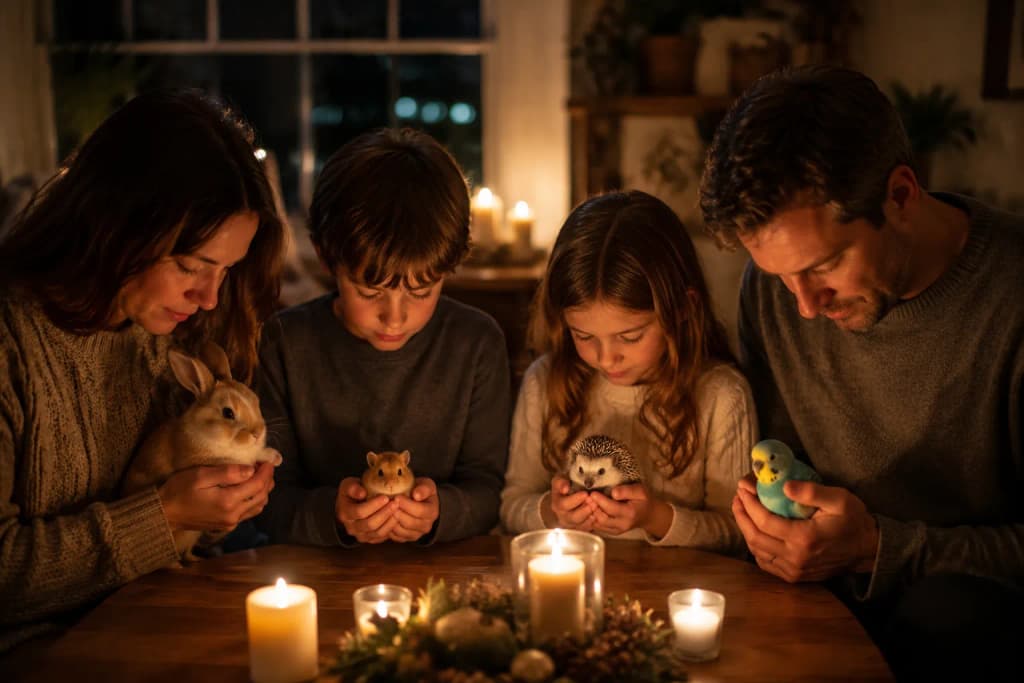
And in a multi-pet household, something even more interesting happens. The object becomes a shared anchor—for you, for your kids, and sometimes for the other animals who knew the chinchilla too.
The Part Nobody Warns You About: Your Other Pets Are Grieving
One of our customers told us about her two chinchillas—bonded brothers who'd shared a cage for eleven years. When one passed, the survivor stopped using their shared hammock. He'd sit in the corner where his brother used to sleep, pressing his face into the spot.
This isn't projection. This is grief.
Animals form attachments through a cocktail of shared routine, scent, and social bonding. When a companion disappears, the survivor experiences a real disruption—elevated cortisol (the stress hormone), changes in appetite, altered sleep, and what looks an awful lot like searching behavior. The American Veterinary Medical Association recognizes that pets can show measurable distress after losing a companion animal.
Here's what surprises most people: your surviving pets often grieve through smell more than sight.
Why Scent Is the Secret Language of Animal Grief
A chinchilla's world is built on scent in a way ours simply isn't. Their environment—the cage, the bedding, the toys—is a scent map of who lives there and who they love. When you scrub everything down the day after a loss (which feels like the responsible, healing thing to do), you may be erasing the one thing helping your surviving animal process what happened.
We're not saying don't clean. We're saying: don't rush to sterilize the grief away.
"Don't wash the blanket the day after. Sometimes the smell is the only goodbye your other pets get."
Let a familiar-smelling toy or a piece of bedding stay in the habitat for a little while. Let the survivor investigate it, ignore it, sleep next to it—whatever they need. You're giving them a scent-based version of the same ritual you're doing with that toy in your pocket.
Here's a quick reference for what grief can look like in the animals left behind.
| Sign in Surviving Pet | What It Might Mean | What Helps |
|---|---|---|
| Searching, pacing, returning to a spot | Looking for the lost companion | Keep one scented item in place temporarily |
| Reduced appetite (3-5 days) | Stress-related; usually short-term | Hand-offer favorite foods; monitor |
| Increased clinginess or vocalizing | Seeking reassurance | Extra floor-time, predictable routine |
| Lethargy or withdrawal | Low mood, disrupted bond | Gentle enrichment, don't force interaction |
| Appetite loss beyond 5-7 days | Possible medical concern | Call your vet—we're not vets |
That last row matters. We're a figurine studio, not a clinic. If a small animal stops eating for more than a few days, that's a vet visit, not a wait-and-see.
Disenfranchised Grief: When the World Says Your Loss "Doesn't Count"
Let's talk about something that stings, because we hear it constantly and almost nobody names it.
You lose your chinchilla. You're gutted. And someone says, "It was just a chinchilla, right? Can't you get another one?"
That feeling—the flush of shame, the urge to minimize your own heartbreak, the sense that you're not allowed to grieve this much over a small animal—has a name. Grief researchers call it disenfranchised grief: loss that isn't socially recognized, so you end up mourning in private and second-guessing whether your pain is legitimate.
Here's the truth from people who've seen hundreds of these stories: the size of the animal has nothing to do with the size of the bond.
You Are Not Overreacting
If you spent 15 years building a daily ritual with a small creature who recognized your voice and your smell, who had preferences and moods and a favorite toy—of course you're devastated. The grief is proportional to the relationship, not the body weight.
That coworker who raised an eyebrow has simply never had this kind of bond with a small pet. Their inability to understand it is about their experience, not the validity of yours.
"Grief doesn't check the species or the size. A bond is a bond, and yours was real."
So if part of what you're carrying is the quiet fear that you're being dramatic—let that go. The Association for Pet Loss and Bereavement exists precisely because this grief is real and widespread enough to need dedicated support. You're in very good company.
The Anatomy of a Family Ritual
When multiple people and animals share a home, grief gets complicated. Your partner copes one way. Your kid copes another. The surviving pet has its own process. Everyone's timeline is different, and that's a recipe for tension nobody warns you about.
This is exactly where a multi-pet household grief ritual earns its keep. A shared ritual gives a scattered, mismatched group of grievers one thing to do together. It synchronizes people who are otherwise drifting in separate directions of sadness.
Why Rituals Actually Work (The Brain Loves a "Where")
Researchers studying mourning have found that ritual—even small, made-up, personal ritual—measurably reduces feelings of helplessness after a loss. Part of the reason is control. Grief makes you feel like the floor dropped out. A ritual is something you can do, a small action in a situation that otherwise feels actionless.
The other reason is what we'd call the "where" problem. Grief is shapeless. It floats. It ambushes you in the cereal aisle. A ritual gives grief a designated location and time—a place to put it down so it stops following you around all day.
A Day-in-the-Life of a family ritual: Every evening at the chinchilla's old dust-bath hour, the kids set the worn chew toy on the kitchen windowsill where the cage used to catch the afternoon light. Nobody says much. The youngest tells a quick story sometimes. Then the toy goes back in its little dish, and dinner starts—grief contained to ten minutes on a windowsill instead of leaking through the whole night.
That's it. That's the whole ritual. It doesn't need to be elaborate to work.
Building Your Own Ritual: A Comparison
Different families need different things. Here's an honest look at common memorial rituals, including the effort and emotional payoff we've observed.
| Ritual | Effort | Best For | Emotional Payoff |
|---|---|---|---|
| Daily "windowsill moment" with the toy | Very low | Families with kids; routine-lovers | High—builds steady closure |
| Scent-preservation (sealed bag of bedding) | Low | Those afraid of forgetting the smell | Quiet, private comfort |
| Memorial shelf with toy + photo + keepsake | Medium | Visually-oriented grievers | High—creates a "home" for memory |
| Custom figurine of the pet | Medium | Long-term, fade-proof remembrance | Lasting; survives the toy's decay |
| Letting surviving pet keep a shared item | Very low | Multi-pet homes | Helps animals process loss |
Notice there's no "right" answer in that table. A family in a small apartment with a grieving second chinchilla has totally different needs than a single person who just wants to remember the smell of the fur behind the ears.
Anticipatory Grief: Mourning Before the Goodbye
Here's a kind of grief that catches people completely off guard, especially with long-lived small pets whose decline you can see coming.
Anticipatory grief pet loss is the mourning that starts before your pet actually dies—during the slow decline, the increasing vet visits, the mornings you check the cage with your heart in your throat before you even look. You grieve in advance. And then you feel guilty for grieving someone who's still alive.
That guilt is the cruel part. You catch yourself imagining the empty cage and immediately hate yourself for it. As if thinking about it might cause it. As if you're betraying them by preparing.
You're Not Betraying Them by Preparing
Let's be direct, because you deserve straight talk: anticipatory grief is not a failure of loyalty. It's your mind doing exactly what minds do—trying to brace for a blow it can see coming. Neurologically, your brain is rehearsing the loss to soften it. That's not morbid. That's protective.
Some of the most meaningful keepsakes we've ever created started during this window. Families reach out while their pet is still here, wanting to capture them now, while there's still time to get the photos right and while the animal can still feel the love behind it.
There's something quietly healing about that. Instead of scrambling to remember details after the fact—Was their right ear the bent one? What exactly was that patch of color near the tail?—you're recording them while the memory is sharp and the animal is warm.
"Capturing them while they're still here isn't giving up. It's loving them out loud before you have to whisper it."
If you're in this window right now, we'd gently say: don't wait until the photos are all you have left. Take more than you think you need. The blurry, candid, mid-yawn ones often matter more than the posed shots.
The Fear of Forgetting—and What Actually Fades First
Of everything people confess to us, this one comes up the most: "I'm terrified I'll forget what they were really like."
Not the big stuff. You won't forget that you loved them. What people fear—rightly—is losing the small, specific, irreplaceable details. The exact weight of them in your palm. The particular smell. The sound they made when they were content.
Here's the hard science, simply put: scent memory fades fastest, and it fades first. Smell is processed in a part of the brain closely tied to memory and emotion, which is why a whiff of something can yank you back twenty years instantly. But the catch is that you can't summon a smell from memory the way you can replay a sound or picture a face. You can only recognize it when it's in front of you. Once the source is gone, the smell is the first thing that becomes truly unreachable.
This is the real reason that chew toy matters so much. As long as it holds even a trace of them, it's a key to a door that's otherwise locking forever.
What Outlasts the Toy
But here's the uncomfortable truth nobody likes to say out loud: the toy won't last either. Scent fades. Plush degrades. The wood splits. The very thing you're clinging to has an expiration date, and on some level you know it, which adds a low hum of panic to the whole thing.
This is the gap a lasting keepsake fills. Some families press flowers. Some keep a tuft of fur in a tiny locket. And increasingly, pet parents choose a permanent likeness—a 3D pet sculpture that won't fray, fade, or split when the original toy finally gives out.
We'll be real with you about what we do and don't do, because the memorial industry is full of fuzzy claims.
How a Lasting Likeness Actually Gets Made
A lot of companies in this space lean hard on the word "artisan" and let you imagine someone with a paintbrush hunched over a tiny figure for days. We're going to tell you how it actually works, because you deserve the real story.
At PawSculpt, your pet is digitally sculpted by master 3D artists, then brought to life through full-color 3D printing. Here's the part that matters: the color isn't painted on afterward. It's printed directly into the resin, voxel by voxel, so the markings and colors are part of the material itself—not a coating that can chip off a chinchilla's delicate gray gradient.
The only thing done by hand is a protective clear coat at the end, which gives the piece its subtle sheen and shields it for the long haul. The result has a real, authentic texture—fine layer detail under the gloss—rather than a slick, fake plastic-perfect look. It looks like them, not like a toy.
What Photos Work Best
Because the color and form come straight from your images, the photos do a lot of the heavy lifting. From everything we've seen, here's what helps:
- Eye-level shots. Get down to your pet's height, not shooting down from above.
- Natural light. A window beats a flash every time—flash flattens fur texture and washes out subtle coloring.
- Multiple angles. Front, both sides, and a three-quarter view help the artists understand the full shape.
- A clear shot of distinctive markings. That one patch, the bent whisker, the unique ear set.
- A relaxed pose. A natural, characteristic posture reads as "them" more than a stiff, staged one.
Pro tip from the trenches: candid photos where your pet is just being themselves—mid dust-bath, tucked into their favorite corner—almost always capture personality better than the perfectly still portrait you spent twenty minutes trying to coax.
What to Expect From the Process
Every studio runs differently, and the specifics of turnaround, revisions, and guarantees can shift over time—so rather than quote you numbers that might be outdated by the time you read this, we'd point you to pawsculpt.com for the current details.
In general terms, though, the arc looks like this:
- You share your photos and any notes about color, personality, or pose.
- The 3D artists build a digital model, sculpting the form and mapping the markings.
- You review a preview and request adjustments—this is where you catch the ear shape, the exact color blend.
- The approved model is printed in full color resin and finished with a protective clear coat.
- It arrives, and you finally have something that won't fade when the toy does.
The reason we build in a preview step is simple: getting a chinchilla's soft, blended grays and the precise set of those big rounded ears right on the first try is genuinely hard. The preview is where "close" becomes "that's him."
Helping Children Grieve a Small Pet
In multi-pet households, there's often a kid who's losing the first pet that was truly theirs. Small animals are frequently a child's first solo responsibility, which makes a chinchilla's death a child's first real encounter with mortality.
A common mistake—made with love—is rushing to replace the pet or hide the body to "protect" the child. Child development specialists generally agree this backfires. Kids who are gently included in the goodbye tend to cope better than those who are shielded from it entirely.
Let the child help with the ritual. Let them place the toy on the windowsill. Let them keep something small. Concrete, physical actions give a child's developing brain a way to process an abstract, overwhelming concept. The toy becomes their transitional object too.
And if your child asks the same questions over and over—Where is he now? Is he cold? Will I forget him?—that repetition isn't them being difficult. It's how young minds metabolize big truths. Answer patiently, the same way each time. The consistency is its own comfort.
When the Surviving Pet Needs a New Companion (and When It Doesn't)
This question splits families: do we get the lonely survivor a new friend, or not?
Here's our honest, non-vet take based on what we've heard from a lot of small-pet owners. There's no universal answer, and anyone who tells you there is, is selling something.
- A grieving social animal may genuinely benefit from companionship, since species like chinchillas are wired for it.
- But rushing a new animal in too soon can stress an already-stressed survivor, and bonding small animals requires careful, slow introductions.
- And you, the human, may not be ready—which is valid. The anxiety about getting another pet, the fear that it means "replacing" the one you lost, is real and worth honoring.
For the medical and behavioral side of introductions, talk to a vet or an exotics specialist. For the emotional side: there's no betrayal in either choice. Keeping the cage empty for a while isn't disloyalty. Filling it again isn't forgetting.
Where the Toy Goes From Here
Back to that vet's office, that chew toy in your pocket, your thumb on the worn wood.
Months from now, that toy will smell a little less like them. It'll get more fragile. And the windowsill ritual will probably get shorter—not because you love them less, but because the sharpest edge of grief softens into something you can carry. That's not forgetting. That's healing doing its quiet work.
The toy did its job. It bridged the gap between here and gone, gave your surviving pets a scent to say goodbye to, gave your family ten minutes a night to put the grief down. Anthropologically, you did exactly what humans have always done: you chose an object, filled it with love, and let it hold what your hands couldn't.
When the toy finally wears out, you get to decide what carries the memory next. Maybe it's a photo. Maybe it's a story you tell every year on the anniversary. Maybe it's a likeness on a shelf that catches the afternoon light right where the cage used to sit.
Whatever you choose—take the photos now, keep the smell a little longer, and let yourself grieve a small animal as big as you actually feel it. That's not too much. That's just love, refusing to be small.
Frequently Asked Questions
Is it normal to grieve deeply over a chinchilla or other small pet?
Completely normal. Grief is proportional to the relationship, not the animal's body weight. If you spent years building daily rituals with a small companion who knew your voice and smell, profound grief makes total sense. Anyone who minimizes it simply hasn't shared that kind of bond.
Do my other pets grieve when one of them dies?
Often, yes. Surviving animals may pace, search familiar spots, lose their appetite for a few days, or withdraw. They process loss heavily through scent and routine disruption, so keeping one familiar-smelling item in their space for a little while can help them say goodbye in their own way.
Should I clean and disinfect everything right after my pet passes?
Not all at once. We know the urge to scrub away the reminders, but the familiar scent is part of how surviving pets understand what happened. Clean gradually instead of sterilizing the space immediately, and let one comforting item stay for a bit.
What exactly is anticipatory grief, and is it normal?
Anticipatory grief is the mourning that starts before a pet dies—during their decline, when you can see the loss coming. It's extremely common with long-lived small pets, and it's a protective response, not disloyalty. Your brain is bracing for a blow it can see approaching.
What's the best way to preserve my pet's memory while they're still here?
Take more photos than you think you need, in natural window light, at eye level, from several angles, capturing their distinctive markings and a relaxed pose. Candid shots often beat posed ones. Some families also commission a lasting likeness so memory doesn't depend on a fading toy or photo.
How do I help my child through the loss of their first pet?
Gently include them rather than shielding them. Let them help with a small ritual, like placing a favorite toy somewhere meaningful, and let them keep a keepsake. Answer their repeated questions patiently and consistently—that repetition is how young minds work through something this big.
Ready to Celebrate Your Pet?
Every pet has a story worth preserving. Whether you're navigating anticipatory grief pet loss or building a multi-pet household grief ritual that helps your whole family heal, a custom PawSculpt figurine captures the markings, the ears, the personality—those tiny details that make your companion utterly one-of-a-kind, in fade-proof full-color resin.
Visit pawsculpt.com to explore our full-color 3D printing process, preview steps, and quality guarantee.