
5 Things Vets Wish You Knew About Disaster-Proofing a Senior Mini Pig at Home
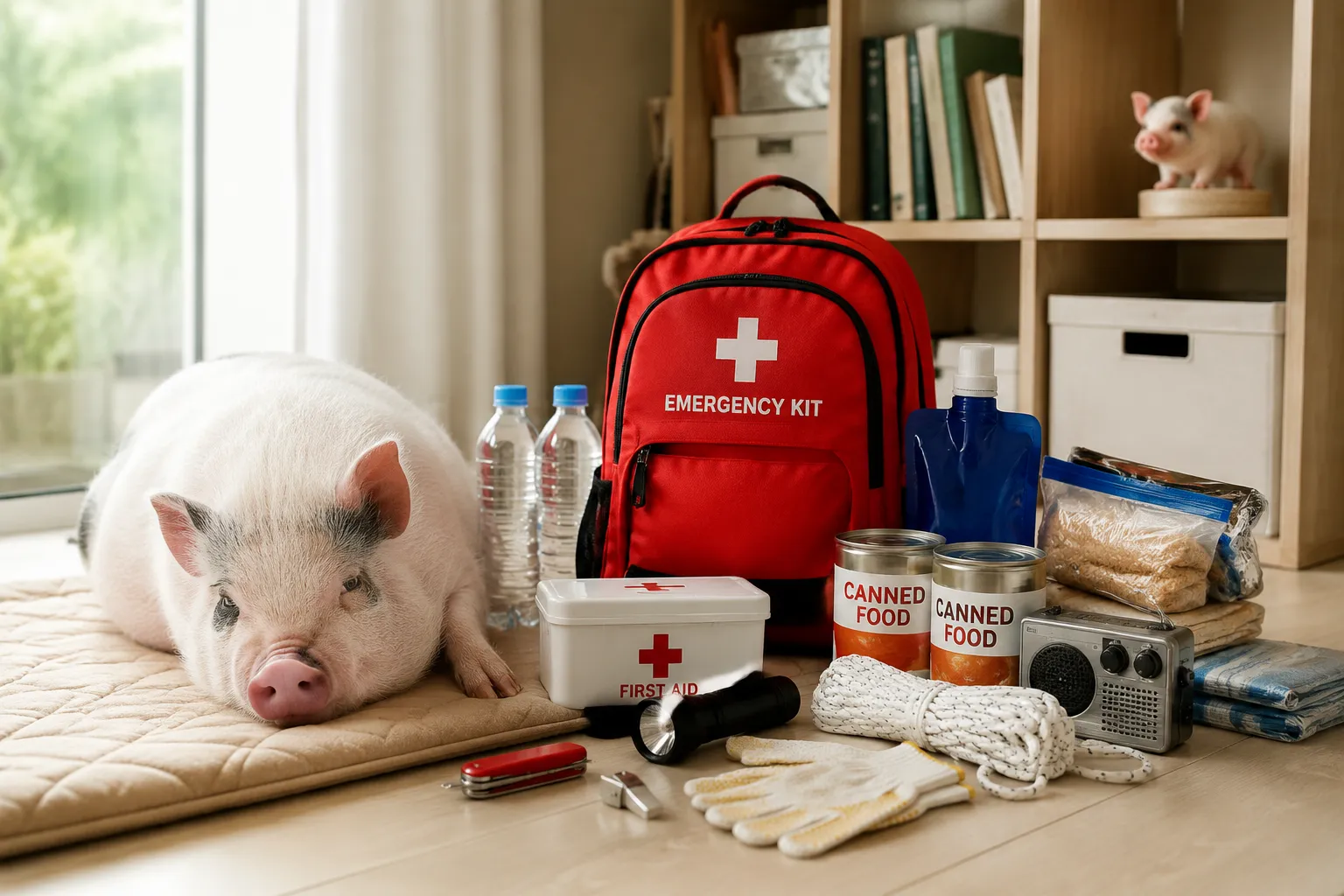
What sound does your kitchen make at 3 a.m. when the power dies and your fifteen-year-old mini pig can't find her footing on the tile? For anyone serious about senior mini pig disaster prep, that specific silence—broken only by nervous hoofbeats—is the moment everything you didn't plan for arrives at once.
Quick Takeaways
- Senior pigs panic at sound changes, not just physical danger — muffle alarms and prep a familiar audio cue.
- Mobility, not evacuation, is the real emergency — a pig who can't walk can't be saved fast.
- Medication timing collapses first in a crisis — pre-sort a 7-day thermal-stable kit before anything else.
- Multi-pet household safety hinges on separation plans, not group heroics during the chaos.
- Preserve who they are now, not just their safety — many families capture their pig through custom pet figurines while the personality is still vivid.
The Disaster Nobody Prepares For Is the Quiet One
Here's the thing most emergency guides get backward. They picture the flood, the fire, the tornado siren. Big, loud, cinematic. But the disasters that actually undo a household with a senior mini pig are smaller, slower, and far more common—a summer blackout during a heat advisory, a burst pipe at 2 a.m., a wildfire evacuation order that gives you nineteen minutes to load a 90-pound animal who has decided, firmly, that she is not going anywhere.
We've talked with hundreds of pet families over the years, and a pattern keeps surfacing. People prepare for the dramatic and get ambushed by the ordinary.
A pig doesn't understand urgency. She understands routine, smell, texture underfoot, and the particular pitch of the house she's lived in for a decade. When that soundscape breaks—the hum of the refrigerator gone, the HVAC silent, an unfamiliar smoke detector chirping its low-battery warning at the worst possible hour—an aging pig's whole nervous system flags it as wrong before you've even registered the problem.
"The animals who struggle most in a crisis aren't the frailest ones. They're the ones whose world suddenly sounds unfamiliar."
That's the counterintuitive truth vets keep circling back to. Physical readiness matters. But sensory continuity—keeping some thread of the familiar intact—is what actually keeps a senior pig functional long enough for you to get both of you out.
And there's a deeper layer here worth sitting with. When you disaster-proof for an old pig, you're really doing something more honest than logistics. You're admitting the clock is running. You're building a plan around an animal you know won't be here in five years, and doing it anyway, carefully, because the love doesn't do math. That quiet acknowledgment is the whole reason this work feels so heavy. It should. It means you're paying attention.
Let's get into what the professionals wish more owners understood—before the night the power dies.
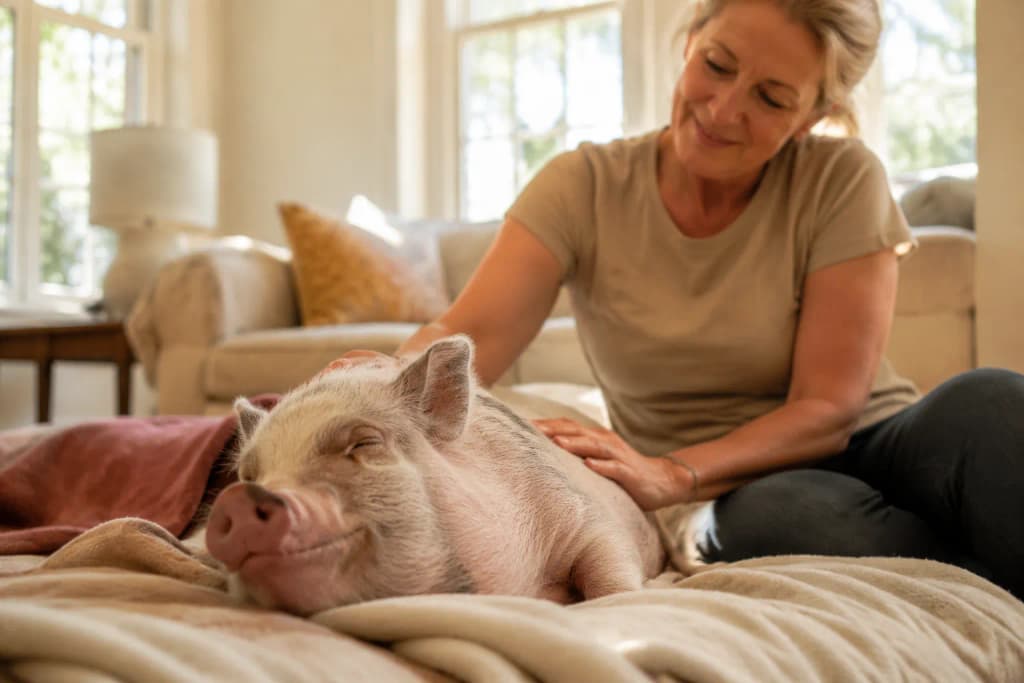
1. Sound Is the First System to Fail (and the Last One You Think About)
Picture this. The storm knocks out power around midnight. You wake to a house that sounds emptied—no fridge cycling, no fan, no digital clock hum. And underneath that new silence, a frantic clatter. Your pig, up, disoriented, skidding on flooring she's crossed ten thousand times without a thought.
Vets will tell you: for senior pigs, auditory disruption triggers stress responses faster than visual or physical threats do. Pigs are prey animals with exceptional hearing, and older pigs often develop the same thing older humans do—a reliance on predictable ambient sound to feel oriented in space. Take the hum away and you take away a piece of their map.
What Actually Helps More Than a Flashlight
Most checklists tell you to stock batteries and light. Fine. Do that. But here's what almost nobody mentions.
- Keep a battery-powered sound source with a familiar recording. A cheap speaker loaded with the exact background noise your pig hears daily—the specific white-noise machine, the talk radio station, even a recording of your own kitchen at dinnertime. Play it the instant systems go quiet. It's not sentimental. It's stabilizing.
- Muffle the panic-triggers before they fire. Low-battery smoke detector chirps, backup alarm beeps, the shriek of a UPS unit—these high, irregular sounds are far more distressing to a pig than the disaster itself. Know where every beeping device in your home lives and how to silence or pre-empt it.
- Lower your own voice register. Frightened owners get high and fast when they talk. Pigs read that instantly. Deliberately drop your pitch and slow your cadence—it does more than any treat.
The "So what?" is simple. A calm pig can be moved. A panicked 90-pound pig braced in a corner cannot, not by one person, not quickly. You are not just managing noise. You're preserving the narrow window in which cooperation is still possible.
We remember one family who told us their old pig, Marbles, refused to leave a smoke-filling garage until the husband started humming the tune he always hummed while feeding her. She followed the sound. Not the leash. Not the food. The sound.
2. The Real Emergency Is Mobility, Not Evacuation
Here's a hard reframe. When people imagine the worst, they picture getting out. The door, the car, the road. But for a senior mini pig, the crisis usually arrives one step earlier, at a problem so basic it gets skipped entirely: can this animal actually stand and walk right now?
Older pigs commonly deal with arthritis, hoof overgrowth, muscle loss in the hindquarters, and vision decline. On a normal Tuesday, they compensate. In an emergency—cold floor, adrenaline, slick surfaces, no time—those compensations vanish. A pig who "gets around fine" in daily life can become effectively immobile the moment conditions shift.
Build the Mobility Plan First
Before you buy a single flashlight, answer this: if your pig could not walk in the next ten minutes, what would you do? Most owners have no answer. That's the gap vets wish they could close.
- Measure and pre-stage a moving surface. A large, rigid furniture-moving pad, a plywood sheet with a rope handle, or a heavy tarp doubled over. You are not lifting a senior pig in a panic—you're sliding her. Know exactly where this lives and practice the slide once, calmly, so it isn't the first time when it counts.
- Map your traction routes. Walk the actual path from her sleeping spot to your exit. Where's the tile? The threshold lip? The three concrete steps? Lay down cheap rubber-backed runners on the slick sections now and store spares.
- Know her lift limit—and yours. Pigs hate being lifted and will thrash. A struggling senior pig can injure herself and you. Slide over lift, always, unless a professional has shown you a safe carry.
"You don't rise to the occasion in an emergency. You fall to the level of the ramp you already built."
The commonly overlooked aspect here is that mobility isn't a fixed trait. It's a spectrum that collapses under stress. Planning for your pig's worst mobility day, not her average one, is the single highest-leverage thing you can do.
For a deeper look at senior mobility changes and pain signs to watch, the ASPCA's general pet care resources are a solid, non-commercial starting point—though for anything specific to your pig, your exotic vet is the only real authority.
3. Medication and Feeding Routines Break Before Everything Else
The infrastructure fails, and within hours a subtler crisis begins. Your senior pig is likely on something—joint support, a prescribed anti-inflammatory, a special diet timed to protect a sensitive gut. In the swirl of a disaster, that schedule is the first thing to slip through the cracks. And for an old pig, a missed regimen can escalate fast.
This is the heart of real mini pig emergency care, and it's almost never about heroic rescue. It's about boring, unglamorous continuity.
The 7-Day Kit Vets Wish Everyone Kept
Here's a comparison of what most owners stock versus what actually holds up in a multi-day outage or evacuation.
| Item | Common Setup | What Vets Recommend |
|---|---|---|
| Medication | A few loose pills in the bottle | 7-day pre-sorted supply in a thermal-stable case |
| Food | Whatever's in the bin | Sealed, dated portions matching exact daily routine |
| Water | "There's a bowl" | 1 gallon per pig per day, rotated monthly |
| Records | Somewhere in a drawer | Waterproof pouch: vet contact, meds, dosages, conditions |
| Cooling/warming | None | Cool mats or heat packs sized for the season |
The detail people miss: temperature-sensitive medications degrade in a hot car or a powerless summer home. A thermal case isn't overkill—it's the difference between medication that works and medication that doesn't when you finally reach safety.
And feeding? Don't improvise. A stressed senior pig with a disrupted diet can spiral into digestive trouble that turns a manageable situation into a medical one. Pre-portion meals that mirror the normal routine exactly, down to the timing if you can manage it. Familiar food at a familiar hour is one more thread of continuity holding your pig's stress in check.
We'll be honest about a limitation here: we're a team of pet lovers and 3D artists, not veterinarians. Everything in this kit should be reviewed with your exotic vet, because dosages and dietary needs are deeply individual. Think of this as the framework. Your vet fills in the specifics.
4. Multi-Pet Household Safety Means Planning for Chaos, Not Cooperation
Now let's add the variable that quietly wrecks the best-laid plans: the other animals.
If you've got dogs, cats, or a second pig, you already know the daily balance can be delicate. Under normal conditions, everyone's got their lanes. But multi-pet household safety in a real emergency hinges on a truth most owners resist—your animals will not cooperate under stress. They'll do the opposite.
Fear rewrites behavior. The mellow dog bolts. The gentle pig, cornered and panicking, becomes a hazard to herself and everyone near her. A herd or pack that coexists peacefully on a calm afternoon can turn into a tangle of conflicting panic responses the moment the sirens start.
Separate, Sequence, Simplify
The mistake most people make is planning to move everyone at once, together, in some imagined orderly exodus. It never happens that way.
- Assign a person to each animal if you possibly can. One human, one animal. If you're solo, you need a strict sequence, decided in advance—who goes first, who waits secured, and where.
- Pre-stage separation. Keep crates, gates, and leashes positioned so you can isolate animals from each other instantly. A frightened senior pig doesn't need a bouncing, barking dog adding to the noise storm (remember section one).
- Secure the calm ones first is wrong. Counterintuitively, secure the hardest one first—usually the senior pig with the mobility issues—while you still have time and composure. Trying to wrangle her last, when everyone's already frantic, is how plans fall apart.
"In a crisis, your pets won't act like a family. Plan for individuals, and you'll actually save the family."
Here's the micro-story that stuck with our team. A customer with two pigs and a shepherd mix told us her whole plan assumed the dog would "help herd" the pigs toward the door. In their one real evacuation, the dog panicked, the pigs scattered in opposite directions, and she lost the critical first five minutes trying to manage three animals with two hands. She got everyone out. But she rebuilt her entire plan afterward around separation, not teamwork. That's the lesson, learned the expensive way.
What We Wish We Knew Sooner
A candid sidebar from our team, gathered from the pet families we've worked with over the years. These are the retrospective insights people share after the emergency, the ones they wish someone had said out loud beforehand.
- "We practiced the plan exactly zero times." Everyone builds the kit. Almost no one rehearses. A single calm walk-through reveals the flaws a checklist hides.
- "We assumed we'd be home." Half of real emergencies begin while you're at work. A neighbor who knows your pig, your kit, and your slide-pad routine is worth more than any gadget.
- "We forgot the pig needs a destination." Most evacuation shelters don't take pigs. Know your pig-friendly options—a specific relative, a farm, an exotic-friendly boarding facility—before you need one.
- "We waited to take photos and video until it was too late." More on this in a moment. It's the regret we hear most, and it has nothing to do with safety.
5. Preserve Who They Are Now, Because Prep Is Really About Time
This is the one vets don't say out loud but every long-term owner eventually understands. All this disaster-proofing—the kits, the ramps, the sound recordings—is a quiet negotiation with time. You're protecting an animal precisely because you know she's near the end of her long life. That awareness deserves more than logistics.
There's a Japanese concept, mono no aware, the gentle ache of knowing beautiful things don't last. Every senior pet owner lives inside that feeling whether they name it or not. You clip the overgrown hooves, you slide the ramp into place, you record the hum of the kitchen—and some part of you knows you're memorizing her.
So here's the fifth thing, and it surprised even us how often people bring it up after a scare: capture your pig as she is right now, while her particular self is still fully present.
Not the idealized piglet version. The real one. The specific tilt of her ears, the map of markings across her back, the exact way she flops sideways when she's finally content. Senior animals change fast, and a health crisis can accelerate everything. Owners who've been through a close call almost universally say the same thing—they wish they'd documented more while their pig was still her.
Practically, that means:
- Take real video with sound. Not just photos. The grunts, the little contented sighs, the clatter of hooves at feeding time. That soundtrack is the thing you'll ache for most.
- Photograph her markings in good, even daylight, from multiple angles, close enough to see texture.
- Do it on an ordinary day, not a special one. It's the mundane footage—her in the kitchen, in the light, being nobody but herself—that turns out to matter.
Some families build photo books. Some plant a garden when the time comes. And increasingly, pet parents choose a tangible keepsake—a custom pet figurine that captures their pig's exact markings and personality in a form that outlasts memory. At PawSculpt, our pieces are digitally sculpted by master 3D artists and then precision 3D printed in full-color resin, so the color is part of the material itself, protected by a clear coat that gives it a natural, authentic sheen rather than a glossy plastic look. Those good daylight photos you took? They're exactly what makes a piece like that feel truly like her.
"An old pig's markings are a map of a life. Our job is to make sure that map doesn't fade when memory does."
— The PawSculpt Team
We're not suggesting a figurine belongs on your emergency checklist next to the water jugs. It doesn't. But the impulse behind both—protect her, hold onto her, don't let this time slip away unmarked—comes from the same place. Prep keeps her safe. Preservation keeps her present. You can visit pawsculpt.com whenever you're ready to explore that side of it.
Putting It All Together: A Simple Priority Framework
You don't have to build all of this in a weekend. Here's how to sequence it, from highest impact to nice-to-have, so you're never paralyzed by the size of the task.
| Priority | Action | Why It Comes First |
|---|---|---|
| 1 | Mobility slide-pad + traction runners | A pig who can't move can't be saved |
| 2 | 7-day thermal med & food kit | Continuity failures escalate fastest |
| 3 | Familiar-sound speaker + alarm mapping | Keeps her calm enough to cooperate |
| 4 | Per-animal separation plan | Multi-pet chaos undoes everything else |
| 5 | Video, photos, and keepsake documentation | Preserves who she is while she's here |
Notice the order. Safety infrastructure first, then continuity, then the emotional preservation that matters most in the long run. Do them in sequence and each one makes the next easier.
For broader disaster-planning frameworks that apply across species, the ASPCA's disaster preparedness guidance is worth bookmarking. Adapt it to your pig's specific senior needs, and you'll be ahead of the vast majority of households.
The 3 a.m. Kitchen, Revisited
Come back to that dark kitchen with me. The power's out. The fridge has gone silent. But this time, something's different.
You reach for the little speaker on the counter and the familiar hum fills the room again. You drop your voice low and steady. The slide-pad is already by the door, the runners already down over the tile. Your pig's hooves settle. She finds her footing. She follows the sound of you, the way she always has, toward the exit you've walked together a dozen times in practice.
That's what preparation actually buys you—not the absence of fear, but the presence of a plan when fear arrives. You built the ramp before you needed it. You memorized her before time could blur her.
Start with the one thing you can do today: walk your evacuation route and lay down traction on every slick surface between her bed and your door. Fifteen minutes. That's the first ramp. Everything else follows.
And on some ordinary evening soon, when the light is good and she's flopped sideways in the kitchen being nobody but herself—take the video. Keep the sound. Because the disaster you prepare for is the one you survive. And the pig you preserve is the one you get to keep.
Frequently Asked Questions
What should be in a senior mini pig emergency kit?
Focus on continuity, not just survival gear. Keep a 7-day supply of pre-sorted medications in a thermal-stable case, pre-portioned food that matches your pig's exact daily routine, one gallon of water per pig per day, and a waterproof pouch with vet contacts, dosages, and health conditions. Add seasonal cooling mats or heat packs, since senior pigs regulate temperature poorly. Review the medical specifics with your exotic vet.
How do I evacuate a mini pig that can't walk well?
Slide, don't lift. A struggling senior pig can injure both of you, and lifting a panicked 90-pound animal is rarely safe or fast. Pre-stage a rigid moving pad, a plywood sheet with a rope handle, or a doubled-over heavy tarp near your exit. Practice the slide once, calmly, so the motion is familiar. Lay rubber-backed runners over slick floors along your route ahead of time.
Why does my senior pig panic during storms or power outages?
Because the sound of the house changes. Pigs are prey animals with sharp hearing, and older pigs lean heavily on predictable ambient noise to feel oriented in their space. When the refrigerator hum and HVAC cut out—and low-battery alarms start chirping—the unfamiliar soundscape reads as danger. A battery-powered speaker playing familiar background sound can genuinely help stabilize her.
How do I keep multiple pets safe together in an emergency?
Don't count on teamwork. Frightened animals act as individuals, so multi-pet household safety depends on separation, not group herding. Assign one person per animal if you can, or set a strict evacuation sequence in advance. Pre-position crates, gates, and leashes so you can isolate animals instantly, and secure your hardest-to-move pet—usually the senior pig—first.
Is it normal to feel emotional while disaster-proofing an old pet?
Completely. Building a plan around an aging animal is a quiet acknowledgment that your time together is finite, and that's a heavy thing to hold. Many owners channel that feeling into preservation—recording video with sound, photographing markings in good daylight, or creating a lasting keepsake. It's a healthy way to honor a pet who's still very much here.
Ready to Celebrate Your Pet?
Every pet has a story worth preserving. As you work through your senior mini pig disaster prep and think about protecting the companion who's been part of your family for years, take a moment to capture who they are right now—the exact markings, the personality, the presence you'll want to hold onto. A custom PawSculpt figurine, digitally sculpted by master 3D artists and precision 3D printed in full-color resin, turns those good daylight photos into something that lasts far beyond memory.
Visit pawsculpt.com to learn more about our process, preview turnaround, revisions, and quality guarantee