
Keep the Bowl: A New Year Practice for Couples Missing an Australian Shepherd

Last spring on the creek trail, Blue's coat smelled of cedar mulch and wet fur as he circled back for you both. Now it's January, the trail is just mud, and you're typing "couples grieving dog differently" into your phone while your partner sleeps.
Keep the bowl, but give it a job. In the first weeks of the new year, choose one shared, low-pressure ritual around it, such as filling it with notes, trail stones, or nothing at all, and let each partner grieve at their own pace. There's no prescribed timeline, and no single right way to miss your dog.
Quick Takeaways
- Two people can love the same dog and grieve on different clocks. Grief responses vary between people, and there's no prescribed timeline.
- You don't have to decide the bowl's fate forever. Decide it for the next few weeks, then check in.
- Anger at your partner, the vet, yourself, or a frayed frisbee under the couch is worth naming out loud before it leaks out sideways.
- A small, repeatable ritual can give you both a place to put the missing, without forcing the same feelings on the same day.
- If grief is disrupting sleep or daily life for either of you, free and fee-based pet loss support exists, including a university-run helpline and virtual groups.
Why One of You Wants the Bowl Gone and the Other Can't Look at It
Start with the bowl itself. Stainless steel. A faint ring of kibble dust along the bottom. Lean in close and it still smells like breakfast: salty, beefy, a little metallic, the smell of 6:15 a.m. and a merle tail thumping the cabinet.
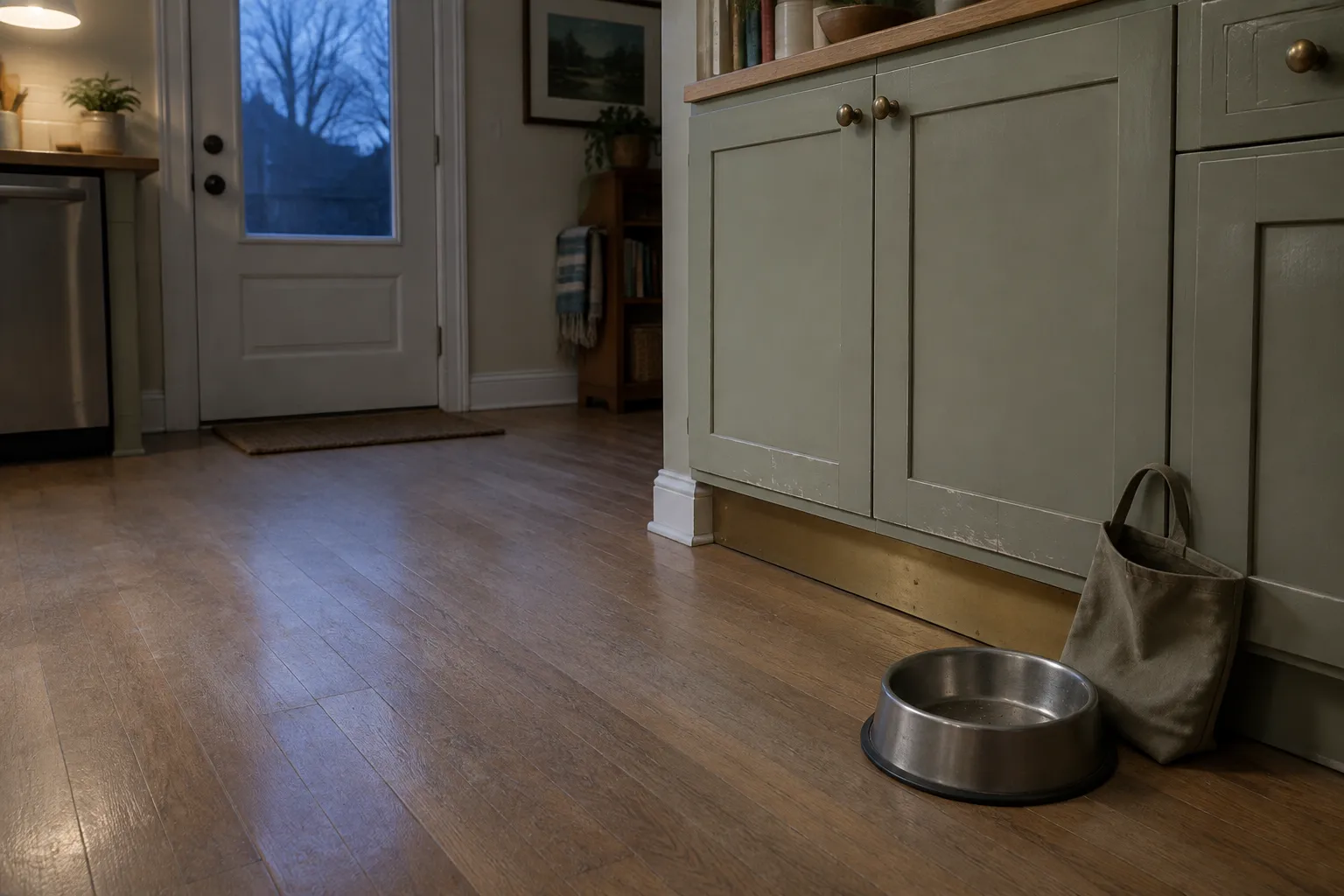
One of you walks past it and feels steadier.
The other walks past it and has to leave the room.
Neither of you is doing this wrong. Cornell University's College of Veterinary Medicine says plainly that pet grief has no prescribed timeline and that responses vary between people. The Cornell Feline Health Center is even more direct: there is no "correct" way to grieve, and no "normal" timeline. That page was written about cats. The point travels.
So why does it feel like a fight?
Because you share a kitchen. Grief that would be private for one person becomes logistics for two. Who moves the bowl. Who folds the blanket that still smells like rain-soaked dog. Who keeps reaching for the leash hook by the back door at five o'clock.
And underneath the logistics, a quieter question: if you're not hurting the same way, did you love him the same amount?
You did. You just carry it differently.
Humane World for Animals puts it this way: the grief process is not linear, your grief is normal, and it's OK, even important, to mourn the relationship you had with your pet. The relationship. Not just the dog. The walks, the arguments about who'd take him out in the sleet, the way he sat between you on the couch like a furry border wall.
First, name the mismatch
Before you negotiate anything about the bowl, say the difference out loud. Plainly. No diagnosis, no scorekeeping. Some starter lines:
- "I need it out a little longer. That doesn't mean you're wrong for wanting it gone."
- "Seeing it on the floor hurts me every morning. Can we find a spot that isn't right there?"
- "I'm not okay. I just look okay. Can you not read my face as the whole story?"
That last one matters. The partner who seems fine might be the one who gets accused of not caring. Looking fine and being fine aren't the same thing.
When the Anger Shows Up in January
The holidays are a strange buffer. Relatives, travel, wrapping paper, the smell of cinnamon and pine needles crowding out everything else. Then January arrives. The tree goes to the curb. The routine snaps back into place.
Except the routine had a dog in it.
If your grief seems to have shown up late, or come back hard after a few decent weeks, that fits how Cornell describes it: a gradual journey that rarely follows a straight path. A rough patch weeks or months later doesn't have to mean you're going backward. It may just be how the path bends.
And for some people, it doesn't come back as sadness.
It might come back as anger.
At your partner, for moving the dog bed while you were at work. At yourself, for the limp you thought was nothing. At the vet. At the neighbor who said "at least he had a good life." At the frisbee, chewed to fringe, that still smells like rubber and slobber when you pull it out from under the couch.
The Cornell Feline Health Center lists sadness, anxiety, tiredness, guilt, and even relief as normal parts of grief. Anger isn't named on that particular list. But the larger message holds: responses vary between people, and yours doesn't need a permission slip.
Three angers that can land hard between partners
The decision anger. Maybe one of you pushed for euthanasia and the other wanted more time. Or the reverse. The ASPCA calls coping with the impending loss of a pet one of the most difficult experiences a pet parent will face, and it names your veterinarian as the best person to advise on when the time is right. Read that twice if you need to. If your vet was part of that conversation, the timing was likely not one partner's call alone.
The I-should-have-noticed anger. This one can point inward, then get thrown at whoever's closest. The same ASPCA page notes that medical test information is often more accurate than what an owner can observe about a pet's health. You weren't failing at being an X-ray machine. You were living with your dog.
The different-clocks anger. The ASPCA also notes that grieving before a pet dies, often called anticipatory grief, is common. If one of you did a lot of crying during the decline, the vet visits, the sleepless nights on the kitchen floor, that partner may look calmer now. It may be that some of their grieving happened earlier, on a schedule you couldn't see.
What to actually do with the anger
- Say who it's aimed at. "I'm angry, and it's not at you" is a complete sentence. So is "I'm angry, and some of it is at you, and I want to talk about it tomorrow."
- Pick a pause word. Something neutral. "Porch." Either of you can say it mid-argument, and you both stop for ten minutes. No questions.
- Move your body somewhere he went. Walk the trail. Yes, it'll smell like wet leaves and creek mud and you'll look for a flash of blue merle in the brush. Go anyway, or don't. But go alone if you need to be angry out loud.
- No bowl decisions while you're furious. Nothing gets tossed, donated, or scrubbed during a fight. Write it down and come back to it.
The Keep the Bowl Practice: A Step-by-Step for the New Year
Here's the core idea. You don't throw the bowl out. You don't leave it frozen on the floor by the back door forever, either. You give it a new job for the first stretch of the year, and you both get a say in what that job is.

This isn't therapy. It won't fix anything. It's a container: one small, physical place where the missing can go, instead of spilling into every room.
Step 1: Pick a start date together
New Year's Day works. So does the first Saturday of January, when the house is back to normal and normal suddenly feels wrong. Skip the date he died unless you both actually want that.
Write the date on the calendar. Both names.
Step 2: Decide about washing it
This sounds small. It isn't.
Unwashed, the bowl holds him. The kibble smell, a trace of dog breath, maybe a whiff of the back-door mat where he'd drip after rain. Washed, it smells like dish soap and cold steel.
One of you may need the first. The other may need the second.
One compromise to try: wash the bowl, and keep the smell somewhere else. His collar sealed in a bag. The crate blanket, unwashed, folded in a drawer you can open when you choose.
Step 3: Move it, don't hide it
On the kitchen floor, the bowl looks like it's waiting for him. That might be what hurts.
Lift it. A shelf, a windowsill, the counter by the back door where his leash used to hang. Somewhere you'll both see it, on purpose, at eye level. Not on the floor, not in the trash, not in a box in the garage.
If you can't agree on a spot, try a neutral room. The one he liked least might be easiest.
Step 4: Give it something to hold
Each of you adds something whenever you want. No quotas. Some ideas:
- A folded note with one specific memory. Skip "I miss you." Go for the details: "The way he'd drop the frisbee one inch out of reach and stare at you like it was your fault."
- Something from the trail. A smooth creek stone. A pinecone that still smells like resin.
- His tags, if you've taken them off the collar.
- A strip of the frayed frisbee, if one of you can stand to cut it.
- Nothing. An empty bowl on a shelf is allowed. Some days that's the most honest thing in it.
You don't have to read each other's notes. Fold them closed. Privacy inside a shared ritual is part of the point.
Step 5: Set one check-in
Put a second date on the calendar, a few weeks out. When it comes, sit down at the kitchen table, maybe with the back door cracked so you can smell the rain on the porch, and ask two questions:
- Is the bowl still helping either of us?
- Does either of us need something different now?
That's it. Five minutes. If you both say "keep going," keep going.
Step 6: Let it end or change shape
At some point the bowl may feel finished. Maybe you read the notes out loud. Maybe you each read your own and keep them. Maybe the notes go into a box with his collar, and the bowl goes back into a cabinet.
Some veterinary centers hold annual remembrance ceremonies for pets that have died. Ask your vet's office whether theirs does. If so, that could become the bowl's next chapter: a once-a-year day you both show up for.
Make it about your Aussie, not "a dog"
Generic memorials can feel strangely hollow. What was specific about him?
The blue merle coat that looked silver in the porch light. The one ear that folded over and never stood up. The exact spot on the kitchen floor, right by the back door, where he lay with his head up, watching for the leash. The frisbee, frayed to threads.
Write those down. All of them. Even if you never make anything else, that list is a memorial. If you do want a photo book, a drawing, or something sculpted later, you'll have the details ready, and they'll come from both of you.
What to Do With the Dog Bowl After Death If a Ritual Isn't Your Thing
Maybe the step-by-step feels like too much. Maybe one of you rolls their eyes at the word "ritual." Fair. The bowl still needs an answer, so here are some no-ceremony options:
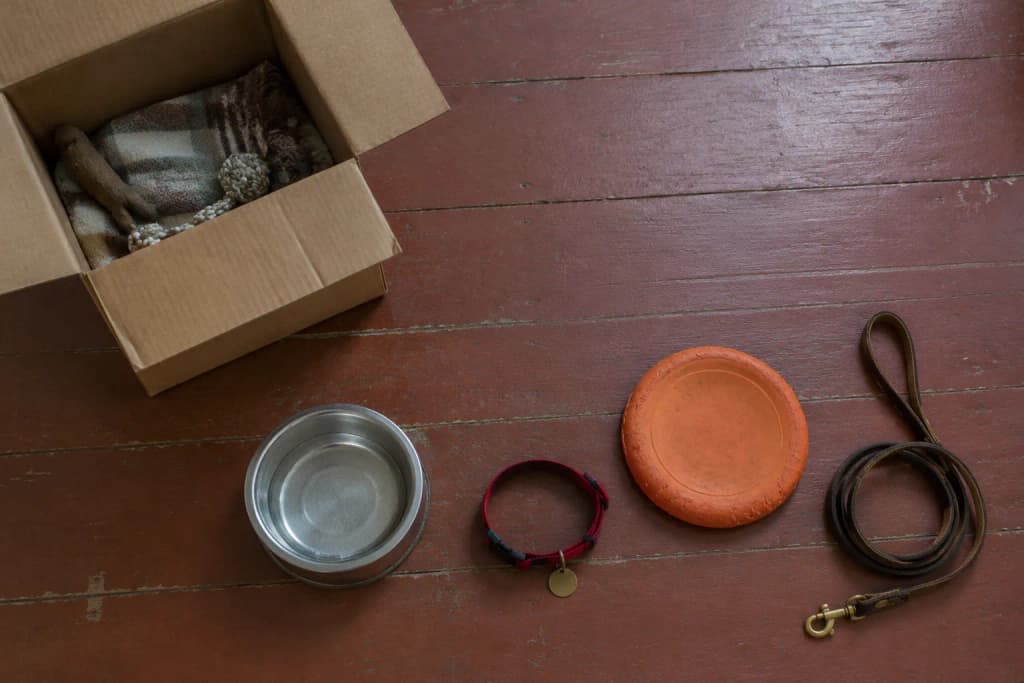
- The one-box rule. Bowl, leash, frisbee, collar, one photo. One box, labeled with his name. Out of the kitchen, not out of the house.
- The porch planter. Put it outside with a small plant. Watch it collect rain. Some mornings the porch will smell like wet soil and cedar, and that's a fine thing to stand next to.
- The working bowl. Keys. Dog treats for the neighbor's pup. Spare change. Something that keeps it in use without keeping it on the floor.
- The photograph, then release. Take one picture of the bowl in its old spot by the back door. Print it. Then let the bowl go, to a rescue, a friend, the recycling. The photo stays.
- The trade. One partner keeps the bowl, the other keeps the frisbee. Each of you holds one thing, and neither has to negotiate over the other's.
None of these is more loving than the others.
Pairing the bowl with another keepsake
Cornell notes that remembrance, writing, art, and support from compassionate people can help some people through pet loss. Some people. Not everyone. Here's what that can look like:
- Photographs. Pull ten favorites off your phones. Print them. Yours and your partner's, mixed together.
- Writing. A letter to him. A letter to each other about him. A list of every nickname he had.
- Art. A sketch, a painting, a framed paw print if you have one.
- Something three-dimensional. For a shelf next to the bowl, a custom pet sculpture is one option. A PawSculpt figurine is a sculpted portrait, not a photocopy: an artist's interpretation of your dog, built from your photos and your memories, rather than a replica.
If you're two people with two grieving styles, keepsakes might help with the mismatch. One of you might want the photo album. The other might want the frisbee on a shelf. You don't have to want the same object.
When It's More Than a Hard Week: Support for One or Both of You
Sometimes the bowl practice isn't enough. That's not a failure. It's information.
Cornell notes that loss and bereavement may disturb sleep and routine, and that support is available. The Cornell Feline Health Center describes professional grief counseling as an option when loss is affecting daily functioning or sleep.
So, practically: if one of you is lying awake at 3 a.m. smelling the crate blanket, or skipping work, or snapping at everyone, it's reasonable to reach out. You don't have to go together. One partner using support while the other doesn't is completely fine.
Here are a few starting points, all from veterinary institutions or veterinary hospice providers:
| Resource | What it offers | Good to know |
|---|---|---|
| Tufts Pet Loss Support Helpline | Free phone helpline staffed by veterinary students | Staffed 6–9 pm Eastern, Monday through Thursday, with 24-hour voicemail |
| Lap of Love Pet Loss Support | Virtual small-group and one-on-one sessions led by certified pet loss coaches | Some sessions are free, some are fee-based; anticipatory grief and children's support are also offered |
| Ohio State Honoring the Bond | Veterinary social work support through pet illness, loss, and grief | An example of a program that helps with quality-of-life decisions and bereavement referrals |
Tufts describes its callers as being assured the help of a caring, supportive, respectful, non-judgmental person. Sometimes that might be what's missing at home. Not because your partner doesn't care, but because they're grieving too, and two people running on empty can't always refill each other.
And if anyone has made you feel silly for grieving this hard over a dog: Ohio State's veterinary center runs a program whose stated mission is to recognize and honor the human-animal bond. Veterinary institutions take this bond seriously. You can, too.
Frequently Asked Questions
Is it normal for couples to grieve the same dog differently?
Yes. Cornell's veterinary college notes that grief responses vary between people and there's no prescribed timeline. A different pace or style doesn't mean one of you loved the dog less.
What should we do with our dog's bowl after he dies?
There's no single right answer. You can move it to a shelf, use it for a small ritual, store it with his leash and collar, turn it into a planter, or let it go. Decide together, and decide for now, not forever.
Why is my grief hitting harder months later, in January?
Cornell describes grief as a gradual journey that rarely follows a straight path. A hard stretch weeks or months later, especially when holiday distractions end and routines return, fits that picture.
My partner made the euthanasia decision and I'm angry. Is that fair?
Your anger is real, but the ASPCA names the veterinarian as the best person to advise on timing, so if your vet was involved, the decision was likely not one partner's call alone. Try saying the anger out loud, calmly, when you're both ready.
Is a memorial figurine a good keepsake for an Australian Shepherd?
It can be one option among photos, writing, and art. A sculpted figurine is an artist's interpretation of your dog, not an exact replica, and you review the artist preview before anything is printed.
Where can we find pet loss support?
Tufts runs a free helpline staffed Monday through Thursday evenings Eastern, with 24-hour voicemail. Lap of Love offers free and fee-based virtual sessions. Veterinary social work programs, like Ohio State's, also exist.
If You'd Like Something to Sit Beside the Bowl
Maybe the bowl practice has you both thinking about what stays on that shelf long term. If a small sculpted portrait of your Aussie feels right, here's how it works, with no pressure to decide today.
PawSculpt makes custom full-color 3D printed resin pet figurines, 2.5 to 6 inches tall. The approach is simple to say: a sculpted portrait, not a photocopy.
How it comes together
- You send reference photos, and they're reviewed.
- An artist digitally sculpts the portrait. The first artist preview typically arrives within 7 days after complete references are in and the order enters IN_DESIGN.
- You confirm the preview before anything is printed. Five revisions are included, which gives you and your partner room to get the folded ear and the merle pattern feeling right to both of you.
- The approved model is printed in full color on a Mimaki 3DUJ-553. The equipment supports more than 10 million colors, which matters for a coat as layered as blue merle, though that's a capability of the printer, not a promise about any single figurine.
- Supports are removed, the surface is inspected, and a transparent protective coat is applied. The figurine is meant for indoor shelf display.
Prices (USD, single figurine)
- 2.5-inch: $429
- 3-inch: $489
- 4-inch: $589
- 5-inch: $789
- 6-inch: $999
A black acrylic base is included. Optional add-ons include a nameplate ($9, for a name like "Blue"), an extra toy ($30, for that frayed frisbee), a diamond glass base ($29), a black crystal base ($39), a second pet ($179), an extra pet on 4-inch and larger sizes ($199), and rush ($29).
Deposit, refunds, and timing
- A 40% deposit starts the order. A full refund is available before the order enters the server-recorded IN_DESIGN status. Once the artist starts modeling, the deposit becomes non-refundable.
- Delivery is 27–40 days after final payment in the US, and 33–47 days after final payment internationally.
- No separate shipping fee is added at checkout for worldwide delivery. International customers remain responsible for local customs duties, taxes, or import fees.
If you're planning ahead for the holidays
If you're thinking ahead to Christmas 2026, the last order-by date is November 10, 2026 in the US and November 3, 2026 internationally. Those are the final dates, so confirm the preview and pay the balance promptly. Orders placed after the cutoff are delivered in January, and the artist preview, which arrives within about 7 days of IN_DESIGN, can be shared as the gift.
Take your time. Talk it over at the kitchen table. When you're both ready, you can explore pet memorial figurines and see whether one belongs next to the bowl.