Material Matters: Why Your Persian Cat's Figurine Needs Satin Resin, Not Glossy Plastic
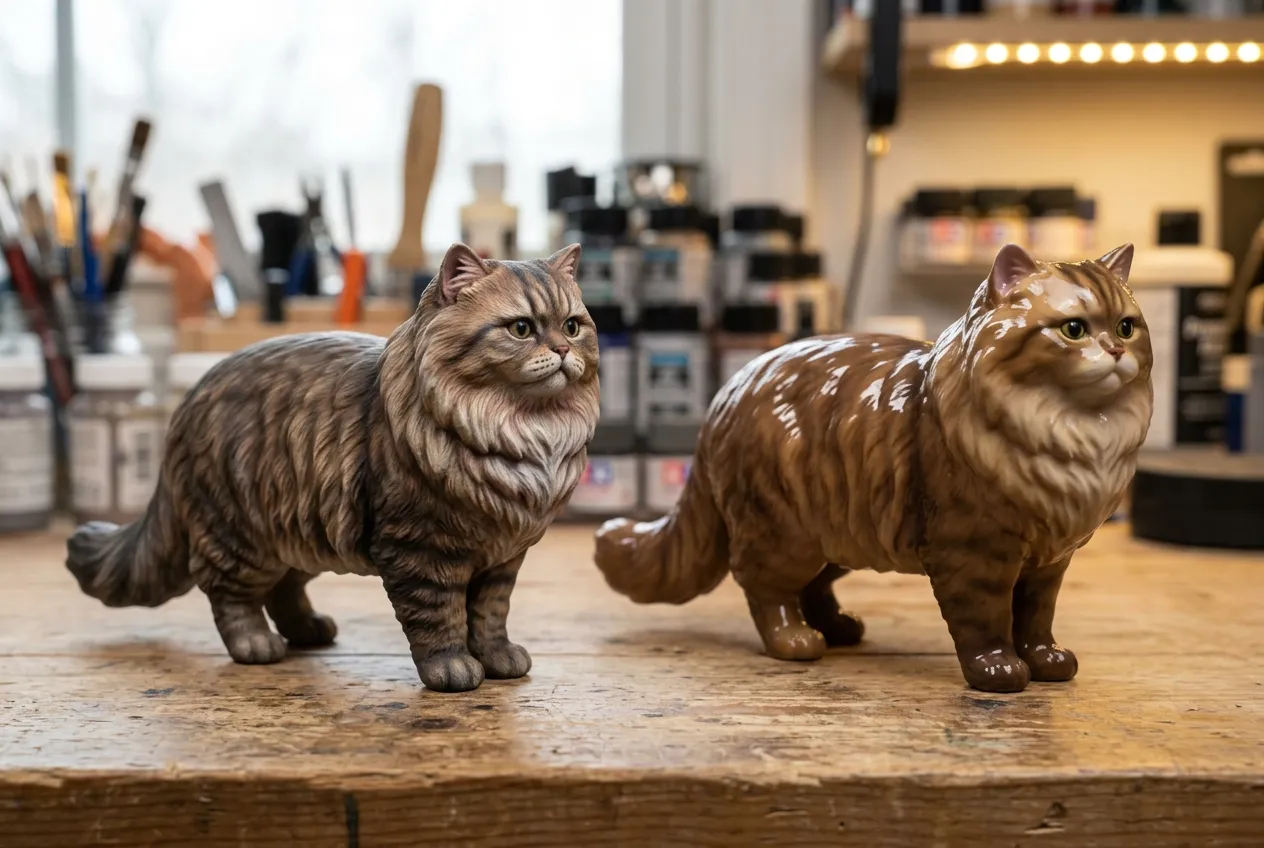
You hear kibble rattle in a paper bag at the pet store, and for a second you picture your cat at home—the flat little snuffle, the soft chirp, the way a persian cat figurine would only feel right if its coat looked velvety, not slick.
Quick Takeaways
- Choose satin over high gloss — Persian coats read soft when light diffuses gently.
- Ask how color is made — the best full-color resin embeds color into material.
- Prioritize reference photos with side, front, and top views — coat volume depends on proportion.
- Review finish options through custom pet figurines at PawSculpt — material and sheen change realism more than people expect.
Why finish changes a Persian cat figurine more than most pet owners realize
The mistake most people make is simple: they think color carries the likeness. It doesn’t. Color matters, of course. So do markings, eye shape, nose leather, and that very particular Persian expression that can look regal or mildly offended depending on the angle. But with long-haired cats, the deeper truth is that surface behavior—how light lands, scatters, and returns to your eye—does as much emotional work as color.
That sounds technical, but you already know it from real life.
You know it when your cat crosses the hallway in late afternoon and the coat doesn’t flash like a toy. It absorbs light, then gives a little of it back. Not mirror shine. More of a hush. A soft return. Persian fur has volume, yes, but it also has muted reflectivity. That’s why a glossy plastic-looking finish can make an otherwise accurate figurine feel strangely wrong, even if the printed color map is good.
We see this all the time with pet families. Someone sends wonderful photos—clear face, clear body, lovely markings—and says, “I want it to look real.” Often what they mean, without having the manufacturing words for it, is: I want the memory of touch to survive the translation into an object. That’s a different goal than “make it shiny.”
And this is where material choice becomes emotional, not merely technical.
A Persian cat is one of the hardest subjects to get right in small-scale collectible form because the coat is doing two jobs at once. It shapes the silhouette, and it softens the entire visual read. If the material is too glossy, the fur clumps visually. If the finish is too dead-flat, the printed color can look chalky. If the geometry is over-sharpened, the cat starts to resemble a fantasy creature instead of the companion whose breathing you hear at 3 a.m. from the foot of the bed.
That’s the unique angle most articles miss: for Persian figurines, finish is not the last decorative choice. It is part of the likeness itself.
The overlooked problem with “plastic-perfect”
One order that stuck with our team came from a family who had tried an inexpensive pet statue elsewhere before finding us. Their complaint wasn’t that the markings were off. It was that the cat looked “wet.” That word told us everything. The previous piece had high specular reflection—meaning light bounced off in bright, hard highlights—so the fur mass read like molded plastic instead of layered coat.
That’s not a small issue. It changes how the eye interprets form.
A satin finish sits in the middle ground between matte and gloss. In plain English, it gives a gentle sheen without mirror-like hotspots. For a Persian cat, that usually works better because it preserves visible color depth while avoiding the “toy aisle” look. It also helps the subtle grain and texture of full-color resin 3D printing feel intentional rather than accidental.
"The right finish doesn’t just protect a figurine—it tells your eye how to read the fur."
There’s another counterintuitive point here: more shine often makes detail look cheaper, not more premium. People assume gloss equals luxury because we associate shine with polished surfaces. But on furry subjects, gloss can flatten depth by creating glare across delicate transitions. The nose bridge, cheek ruff, chest bloom, and pantaloons around the hind legs all need controlled light, not loud light.
Why Persians are a special case in 3D printing materials
Short-haired pets can tolerate a wider range of finishes because their coat isn’t expected to scatter light in the same way. A French Bulldog, for example, can sometimes support a slightly glossier sealed surface because the real coat is tighter and more reflective. A Persian cannot—at least not if you want honesty.
That doesn’t mean every Persian figurine should look powdery or ultra-matte. Real Persian coats are groomed. They have health and density and a certain polished cleanliness. But their visual signature is softness with structure. Satin is often the sweet spot because it lets the eye believe the fluff without erasing the sculpt.
And yes, material matters too. Not all 3D printing materials behave the same way under clear coat, under sunlight, or over time. We’ll get into that next.
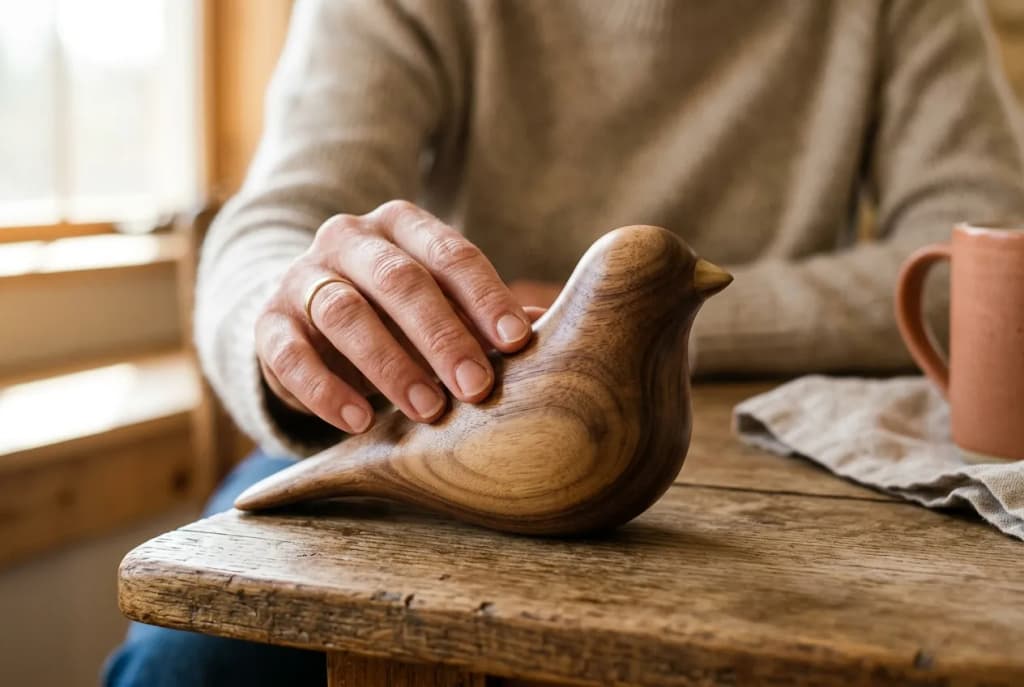
Resin material vs glossy plastic: what actually affects figurine quality
Let’s separate a few terms, because this part gets messy online.
When people say “plastic,” they often mean any manufactured figure material. But in production, that word hides important differences. A mass-produced injection-molded plastic toy and a full-color resin material used in additive manufacturing are not the same thing. They don’t capture color the same way, they don’t hold fine geometry the same way, and they don’t age the same way.
At PawSculpt, the process is digitally sculpted first, then precision 3D printed in full color. The colors are printed directly into the resin material during manufacturing. They are not brushed on afterward. That matters because it changes both the look and the failure modes.
A practical breakdown of common figurine materials
Here’s the simple version before we go deeper:
| Material Type | Typical Look | Strengths | Tradeoffs | Best For |
|---|---|---|---|---|
| Injection-molded plastic | Smooth, uniform, often glossier | Cheap to mass produce, tough | Limited customization, less lifelike color variation | Toys, bulk collectibles |
| Monochrome resin | Sharp detail, usually one color | Excellent sculpt fidelity | Needs separate coloring method, can look sterile alone | Prototypes, display masters |
| Full-color resin | Natural color variation printed into material | Custom likeness, nuanced markings, fine detail | More complex post-processing, finish must be chosen carefully | Custom pet figurines |
| Filament print materials | Visible layers, rougher surface | Durable, cost-effective | Lower fine-detail realism for small fur cues | Functional models, not premium keepsakes |
For a Persian cat figurine, full-color resin is usually the right family of material because the breed depends on subtle transitions—cream into white, smoke tipping, tear-stain shading, nose tone, ear furnishings, and the way darker fur pools around the face. That nuance is hard to fake with simpler methods.
But material is never the whole story. The print process has to support it.
How full-color resin 3D printing actually works
In broad terms, think of additive manufacturing as building an object layer by layer instead of cutting it from a block. In resin-based systems, those layers are often measured in microns—a micron is one-thousandth of a millimeter. Typical high-detail figurine workflows often live in the 25–50 micron layer-height range, though the exact setup depends on machine type, geometry, and intended finish.
The family of technologies people hear about includes SLA, MSLA, and DLP. In plain English, these are different ways of curing liquid photopolymer resin with light. PolyJet-style systems also jet and cure material in very fine droplets, allowing highly detailed, full-color output in some workflows. The specifics vary by machine, but the important point for you is this: high-end pet figurines can be printed in color directly, rather than printed blank and then manually colored later.
That direct-color approach has advantages:
- Markings are integrated into the material appearance
- There’s no brush-applied color layer to chip in the same way
- Gradients and tiny pattern changes can be reproduced more consistently
- The final look depends heavily on clear-coat selection
And it has tradeoffs too:
- Resin can be more brittle than some tougher plastics
- Very thin features may need support strategy changes
- Surface defects from supports or curing show more readily on pale coats
- Over-curing can shift the feel of the surface and make it look harsher
We’ll be real—every process has compromises. The best shops don’t pretend otherwise.
The finish you see is also the process you don’t see
One of the least glamorous truths in production is that beautiful figurines are often won or lost in the invisible decisions. Orientation, for example, sounds abstract. But it simply means how the figurine is angled while being printed. That angle affects support placement, detail preservation, print success, and surface cleanliness.
For a Persian, orientation is especially tricky because the fur creates lots of undercuts and volume transitions. If you orient the head poorly, you may protect one facial plane while creating more support contact in another. If you chase perfect topcoat smoothness on one side, you may risk support pitting underneath the chest ruff or tail.
This is why cheap glossy finishes can be misleading. Gloss hides nothing. It amplifies tiny support marks, micro-pitting, and slight waviness. Satin is more forgiving in a good way—it lets the sculpt breathe.
A better way to think about figurine quality
People often ask us some version of, “What makes one figurine high quality and another one look off?” Here’s our honest answer. Figurine quality comes from four things working together:
- Accurate digital sculpting
- Appropriate material selection
- Smart print preparation
- Controlled post-processing and finish
Miss any one of those and the result suffers.
A glossy plastic look usually fails on points two through four. Not because gloss is always bad, but because it’s the wrong visual language for a long-haired cat whose identity lives in softness.
The photo-to-sculpt workflow: why coat flow matters more than fur-by-fur detail
This is where many pet owners get surprised. They assume the hardest part is “printing the fur.” It isn’t. The hardest part is understanding how the coat changes the cat’s architecture.
A Persian face is not merely a cat face with more hair attached. The coat reframes the skull, masks some structure, exaggerates other structure, and changes the silhouette from every angle. So the first job is not to chase thousands of individual hairs. It’s to read the body honestly.
What reference photos work best
A family once sent us gorgeous pictures—close-up portraits, dramatic lighting, a sleepy loaf pose on velvet. Beautiful images. Not ideal sculpt references.
Why? Because likeness in 3D comes from proportion across angles, not just one flattering face shot.
For the strongest custom result, reference photos usually help most when they include:
- Front view at eye level
- Both side profiles
- Three-quarter view
- Top view if possible
- Full body standing or sitting posture
- Good lighting with true coat color
- At least one image showing the tail shape and chest volume
Here’s a practical table you can actually use.
| Photo Type | Why It Matters | What to Avoid | Helpful Tip |
|---|---|---|---|
| Front face | Captures eye spacing, muzzle, expression | Wide-angle phone distortion | Step back and zoom in slightly |
| Side profile | Shows nose break, forehead, ear set | Fur hiding neck and jaw completely | Comb lightly if safe and comfortable |
| Three-quarter view | Best for overall likeness | Harsh shadows across one side | Window light works well |
| Full body | Establishes leg length, coat volume, tail carriage | Cat curled into a ball | Catch them during a routine pause |
| Top/back view | Reveals body width and fur distribution | Cropped images | Include shoulders and tail base |
The “why” matters here. A good sculptor is checking proportional relationships constantly: eye width versus muzzle width, shoulder mass versus coat bulk, tail thickness versus body, cheek flare versus forehead dome. On Persians, those checks matter because the coat can trick the camera.
Digital sculpting is interpretation, not tracing
This is another overlooked point. A high-quality persian cat figurine is not made by simply converting a photo into a 3D object. Photos flatten. Lenses distort. Fur changes with grooming, humidity, season, and mood. So digital sculpting requires judgment.
Artists typically build the figurine in software such as ZBrush or Blender, starting from anatomical landmarks and then layering breed-specific coat flow. We say digitally sculpted because a human artist is shaping form intentionally inside the computer. The physical object comes later, through full-color printing.
What are they looking for?
- Head-to-body proportion
- Eye placement and eyelid shape
- Nose length and stop
- Cheek ruff distribution
- Chest fluff and belly drop
- Tail plume
- Coat direction and visual weight
And here’s the counterintuitive insight: trying to sculpt every hair often makes the figurine worse.
Really. At collectible scale, too much micro-fur can create noisy surfaces that print poorly, trap supports in awkward areas, and become visually busy after clear coat. The better approach is to sculpt fur masses and flow channels—the major sweeps that your eye reads first. That’s what preserves likeness.
"A good pet sculpture captures coat rhythm before coat detail."
Sound, routine, and memory—why owners care about surface more than they expect
You hear your cat before you see them. The tiny bell on the collar. The dry swipe of paws on hardwood. The soft complaint at breakfast. The odd little motor of breathing when they sleep too close to your face.
That soundtrack changes how you remember them.
We’ve learned that many owners are not looking for a scientifically exact model. They’re looking for the object that best preserves the felt truth of the animal. That’s why finish keeps coming back into the conversation. A satin surface can echo the softness you associate with those sounds. It doesn’t just depict the cat—it helps your memory land somewhere believable.
Personal Aside: We’re not huge fans of ultra-gloss on fluffy breeds. It can look impressive in a product photo for five seconds, then strangely lifeless in a real room. Under normal lamp light, satin usually feels more honest.
Inside the print shop: how 3D printing materials and setup affect the final finish
This is the part most brands skip because it’s messy, technical, and impossible to explain in one neat sentence. But it matters. If you want to understand why one figurine feels refined and another feels mass-produced, you need to know what happens between the digital file and the shelf.
Orientation logic: where the figurine “leans” during printing
Imagine holding a cat figurine and slowly tilting it. Every tilt changes which surfaces face upward, which need support, and where resin or support material might collect. That’s orientation.
For a Persian, we usually think about orientation in terms of three priorities:
- Protect the face
- Protect the major coat silhouette
- Hide unavoidable support contact in less visible zones
You can’t optimize all three perfectly every time. There’s always a tradeoff.
If you orient the figurine too upright, you may get cleaner top surfaces but risk suction issues in hollowed areas or less favorable support geometry around the underside. If you angle it aggressively, you can reduce some print stresses but increase support contact where fluffy fur is hardest to clean.
A real production team thinks in compromises, not fantasies.
Supports strategy: necessary, annoying, decisive
Supports are temporary structures that hold parts of the print while it forms. Think of them as scaffolding. Without them, ears, tails, chin overhangs, and chest fur can sag, distort, or fail.
But supports leave traces. Even with careful removal, they can create:
- Support pitting — tiny divots where support contact was
- Surface witness marks — faint signs of contact or cleanup
- Micro-roughness in delicate areas
This is one reason satin often beats gloss on a Persian figurine. A high-gloss clear coat can spotlight every support witness. Satin diffuses light enough to reduce that effect while preserving color richness.
And yes, support placement is part art, part engineering. We’d rather put small, manageable contact points in shadowed or visually busy coat areas than risk larger marks on the forehead or cheeks. On pale cream or white Persians, this matters even more because lighter colors reveal surface disruption fast.
Hollowing, drain holes, and why solid isn’t always better
People often assume a premium figurine should be fully solid. Not always.
In resin printing, hollowing means creating an internal cavity to reduce material mass and lower print stress. That can help with stability and production efficiency. But if a model is hollowed, it usually needs drain holes so uncured resin or support material doesn’t get trapped inside.
The challenge is obvious: where do you put those holes so they’re functional without harming the display value?
For animal figurines, the answer is usually in less visible areas—undersides, bases, or hidden transitions. A good shop plans this from the beginning. A bad one treats it as an afterthought.
There’s another real-world issue here: suction cups. In resin printing, certain hollow shapes can create pressure differentials as the part moves during printing, increasing failure risk. Long-haired coat masses can accidentally create these problem zones if the sculpt and hollowing strategy aren’t coordinated. That’s one of those shop-floor details customers never see, but they absolutely see the consequences when a print warps, scars, or fails.
Typical print textures and why “perfectly smooth” isn’t the goal
A full-color resin print often carries a fine grain or subtle layer presence. In premium pet figurines, that texture should be delicate—not rough, not distracting, and not masquerading as fur detail. It should simply be part of the physical truth of additive manufacturing.
Here’s the thing: trying to erase every sign of 3D printing can actually make a pet figurine worse.
Heavy smoothing can soften facial structure. Excessive surface correction can blur paw definition or flatten the beautiful transitions in the coat. We aim for controlled authenticity—clean enough to feel refined, honest enough to retain character. That’s different from chasing injection-molded smoothness, which belongs to another process.
Common failure modes a real shop watches for
This is the kind of list a practitioner learns by frustration. And by ruined builds.
| Issue | What It Means | Why It Happens | What It Can Affect |
|---|---|---|---|
| Warping | Part bends slightly out of intended shape | Uneven forces, poor orientation, thin sections | Tail, base, ear alignment |
| Support pitting | Tiny divots after support removal | Large or poorly placed contact points | Fur surfaces, underside details |
| Bloom/frosting | Cloudy or hazy surface look | Residue, curing imbalance, clear-coat issues | Pale coats, glossy areas |
| Over-cure | Surface gets too hard or brittle-looking | Excess UV exposure | Fine features, overall feel |
| Under-cure | Part remains tacky or unstable | Insufficient curing or wash problems | Durability, finish quality |
If this sounds unromantic, that’s because it is. Good collectibles are built from hundreds of small acts of prevention.
"The best figurine is the one where the engineering disappears and only the pet remains."
— The PawSculpt Team
Post-processing and pet figurine finish: where satin earns its place
A lot of consumers imagine the printer does everything and the figurine simply emerges finished. We wish. The truth is more patient.
Once the figurine is printed in full color, it still needs post-processing. That usually includes cleaning, support removal, drying, curing, surface inspection, and then a protective clear coat. No color is manually added at this stage. The color is already part of the printed resin. The final coat is about protection and sheen, not artistic repainting.
Cleaning and curing in plain English
After printing, there may be residual support material or uncured resin that needs to be removed. This cleaning step has to be thorough but controlled. Too aggressive, and delicate details can soften or scar. Too timid, and residue may remain in fur channels, ear recesses, or under-tail areas.
Then comes curing, which means exposing the print to UV light so the material reaches its stable final state. Think of it as helping the resin fully finish becoming itself. Under-cure can leave the part weak or tacky. Over-cure can make it more brittle and sometimes alter surface feel or visual warmth.
We check these things because long-haired cats expose problems quickly. Cream coats show haze. Dark coats show scratches. Flat faces make asymmetry obvious.
Why clear coat isn’t just cosmetic
The clear coat does three jobs:
- Protects the printed color
- Adjusts sheen
- Helps unify the surface visually
That third one matters more than people expect. A good clear coat can make slight micro-variations across different surfaces feel cohesive. A bad one can create patchiness, glare, or an overly sealed look.
For Persians, our practical preference is often satin clear coat because it balances softness with readability. It lets the face catch enough light to remain expressive while keeping the coat believable. It also tends to hide minor process texture better than high gloss.
Gloss has its place. A nose can benefit from a bit more shine in some interpretations. Eyes, too, depending on style. But broad, all-over gloss on a fluffy breed often pushes the figurine toward synthetic-looking. Not premium. Just shiny.
The emotional difference between satin and gloss
We’ve had customers describe satin-finished pieces as “calmer.” That’s a strong word. And a useful one.
A glossy finish can make you notice the object first. Satin often lets you notice the pet first.
That’s the deeper reason material and finish matter. A keepsake should not keep announcing its own manufacture. It should step back a little. Enough for recognition to happen. Enough for memory to do the rest.
"A memorial object fails when you admire the coating before you recognize the companion."
What quality control actually looks like
If you’re evaluating a figurine maker, ask about quality control, even if you don’t use that phrase.
In our production world, that means checking things like:
- Dimensional consistency — does the piece match intended scale and posture?
- Symmetry checks — are eyes, cheeks, ears, and paws balanced where they should be?
- Surface inspection under raking light — light held at an angle to reveal flaws
- Finish uniformity — are there glossy hot spots, haze, or uneven coat buildup?
- Color sanity checks — do markings read naturally under normal lighting?
That raking-light check is one of the oldest tricks in the shop. Light skims across the surface and suddenly every ripple, pit, and witness line tells on itself. We trust it. Especially on fluffy breeds.
And we’ll add a limitation here, because trust matters: no 3D-printed figurine will be indistinguishable from living fur under your fingertips. That’s not the goal. The goal is convincing presence, not deception.
What to expect if you order a custom piece
Without getting into changing business details, a typical custom workflow usually looks something like this:
| Stage | What Happens | What Matters Most |
|---|---|---|
| Photo review | Reference images are assessed for coverage and clarity | Accurate angles and true lighting |
| Digital sculpting | Artists build the pet in 3D and refine likeness | Proportion, expression, coat flow |
| Full-color printing | Model is produced in color directly in resin | Material setup, orientation, support strategy |
| Post-processing | Cleaning, curing, support removal, clear coat | Surface integrity and finish choice |
| Final inspection | Visual and quality checks before shipment | Symmetry, surface quality, overall realism |
If you’re exploring options, it’s worth reviewing a company’s process pages and FAQs so you know how they handle photos, previews, and communication. For that, PawSculpt keeps updated guidance at the custom figurine FAQ page and the main 3D pet sculpture service page.
How to choose the right resin material and finish for your own Persian cat figurine
By now, you can probably feel the answer: don’t choose finish as an afterthought. Choose it as part of the likeness.
Still, let’s make this practical.
A simple decision guide for pet owners
If your Persian has a dense, plush, cloudlike coat, satin is usually your safest and best-looking option. It preserves softness and avoids false wetness.
If your cat has strong contrast markings—say a darker face, ears, or tail against a lighter body—satin still tends to work well because it controls glare across those transitions.
If your cat’s coat is very dark, a touch more sheen may help keep details readable, but broad gloss should still be approached carefully. Deep black can swallow detail under flat light, yet too much gloss creates distracting hotspots. The middle path usually wins.
Here’s a quick comparison.
| Finish | How It Reads Visually | Best For | Potential Downside |
|---|---|---|---|
| Matte | Soft, subdued, low reflection | Some memorial styles, muted display spaces | Can mute color depth or look chalky |
| Satin | Gentle sheen, balanced realism | Most Persian cats, especially long-haired coats | Slightly less dramatic in photos than gloss |
| Gloss | Bright reflections, sharper highlights | Small accent areas, some short-haired pets | Can make fluffy coats look plastic or wet |
Ask better questions, get better results
Most people ask, “Can you make it look exactly like my cat?”
A better question is: “How will you preserve the coat’s softness without losing the face?”
That question gets to the heart of the work.
Other smart questions include:
- How do you use my photos to check proportions?
- Is the figurine printed in full color or colored afterward?
- What finish do you recommend for a long-haired breed?
- How do you handle support marks and surface inspection?
- Where can I send extra reference photos if needed?
If you need a place to start that conversation, PawSculpt has a contact page for custom pet keepsakes. Even if you’re still comparing options, asking material-and-finish questions early will save you disappointment later.
Caring for the final piece
A custom figurine isn’t fragile in the way a soap bubble is fragile, but it is still a display object, not a chew toy or a kid’s bath figure. Resin has strengths and limitations.
A few sensible care rules:
- Dust gently with a soft, dry cloth or clean makeup brush
- Avoid prolonged direct sunlight if possible
- Don’t soak it in water
- Keep it away from rough handling or repeated drops
- Display on a stable surface where tails or ears won’t snag
And if your concern is preservation after pet loss, a figurine works especially well in spaces where memory tends to gather naturally: next to framed photos, near a favorite reading chair, beside a collar, or close to the window where your cat used to sit and listen to birds.
That last part matters.
Because memory is often triggered by sound before image. The click of a food bowl on tile. The scritch at the litter box edge. The sudden midnight leap from dresser to floor. We don’t keep objects only to see them. We keep them to hold the shape of ordinary life—the little household music that disappears too fast.
A note on realism, memorials, and living pets
Not every order comes from grief. Many come from joy. Birthdays. Anniversaries. “My cat is still here and I want to celebrate her ridiculous face forever.”
We love those orders.
And we also know the memorial ones carry more weight. If this is a remembrance piece, don’t pressure yourself to seek perfection. Seek recognition. Seek the tilt of the head, the eye set, the chest bloom, the dignity of the loaf. Those truths matter more than impossible exactness.
For grief support itself, we’re not mental health professionals, but many families find comfort in resources from groups like the Association for Pet Loss and Bereavement. And for breed-specific grooming or coat references while choosing photos, the American Kennel Club’s cat and pet care resources can also be helpful, especially if you’re trying to identify what “normal” coat volume looked like during healthier periods.
The deeper reason material matters
Here’s the part we think about a lot in this work.
A figurine is not alive. It doesn’t purr. It doesn’t shed on your black sweater. It doesn’t make that tiny offended noise when dinner is eight minutes late. And yet people keep reaching for tangible objects anyway. Across cultures, across centuries, across all our supposedly modern ways of storing memory in phones and clouds, we still want something we can place on a shelf and look at in ordinary light.
Why?
Because love is physical. Not only emotional. Physical.
It lives in routines and textures and sounds. In the clink of a tag against a ceramic bowl. In the rustle from under the bed. In the whisper of fur against your wrist when you are trying to read. We grieve in bodies, and we remember in bodies too. That is why resin material, finish, weight, and surface quality are not trivial details. They are part of whether a keepsake can carry truth without becoming kitsch.
The old Japanese phrase mono no aware names the ache of impermanence—the beauty of something because it does not stay. Pet owners know this instinctively. We hear it in the way people write to us. Not just “Please make this look accurate,” but “Please keep the expression gentle,” or “His chest fur was always fuller than it looked in photos,” or “She had a very soft, serious face.”
Those are not manufacturing notes alone. They are acts of witness.
And so the practical advice circles back to something almost philosophical: choose the material and finish that best respect the animal’s nature. For a Persian, that usually means resisting the louder finish. Choosing the one that listens.
Frequently Asked Questions
What finish is best for a Persian cat figurine?
For most Persian cats, satin is the strongest choice. It gives a gentle sheen that keeps the coat looking soft and believable, while avoiding the wet or plastic-looking glare that broad gloss can create. Matte can work in some settings, but satin usually keeps more visual depth.
Are custom pet figurines colored after printing?
With a true full-color resin process, the color is printed directly into the material during manufacturing. After that, the figurine is cleaned, cured, and finished with a protective clear coat. There is no manual color application step with brushes.
What photos work best for a custom Persian cat figurine?
Aim for a mix: front face, both side profiles, three-quarter view, and at least one clear full-body shot. Natural light helps a lot because it shows coat color honestly and makes it easier to judge volume around the chest, cheeks, and tail.
Is resin a good material for pet figurines?
Yes—especially full-color resin material for premium display pieces. It captures fine features, subtle markings, and gentle surface transitions very well. Just remember that resin figurines are keepsakes, not rough-use objects, so thoughtful display and basic care matter.
How do I make sure my figurine looks like my cat?
Send more angles than you think you need. The best likeness usually comes from strong photo coverage, not one perfect portrait. It also helps to choose a maker who can explain how they handle digital sculpting, full-color printing, finish selection, and final inspection.
Ready to Celebrate Your Pet?
Every pet has a story worth preserving. Whether you're honoring a beloved companion who's crossed the rainbow bridge or celebrating your furry friend's unique personality, a custom PawSculpt figurine captures those details that make your pet one-of-a-kind. For a long-haired breed, the right persian cat figurine isn’t just about color—it’s about choosing a finish and resin material that preserve softness, presence, and recognition.
Visit pawsculpt.com to learn more about our process and guarantees