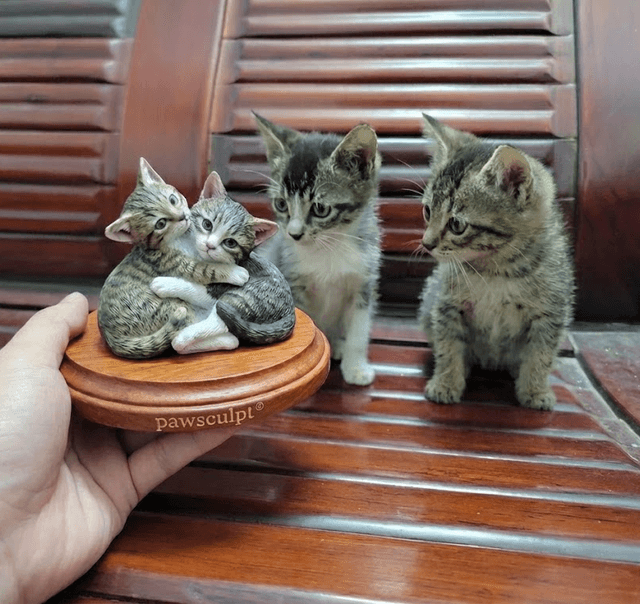
How to Photograph a French Bulldog So Every Wrinkle Survives in Resin
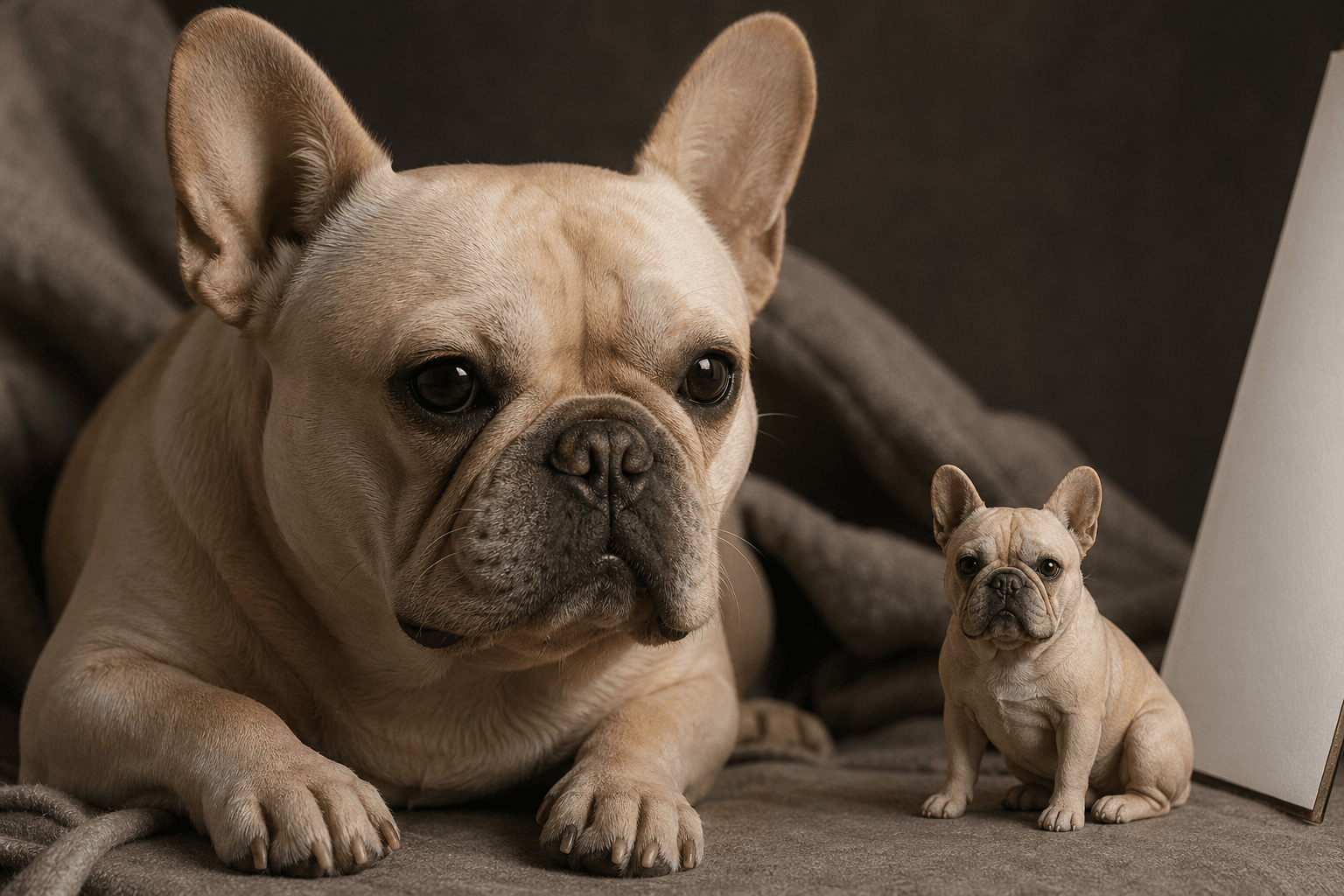
French Bulldogs make up only a small slice of the dog population, yet in one customer’s basement the loudest sound after loss was the soft jingle of a collar against a concrete floor—and that’s often when families first try to photograph French Bulldog for figurine work before tiny face folds fade from memory.
Quick Takeaways
- Shoot wrinkle-rich angles first — front, three-quarter, and profile views preserve muzzle folds best
- Use soft side lighting — shadows reveal facial structure without hiding dark brindle detail
- Photograph standing at eye level — distortion from above flattens chest, ears, and expression
- Review examples from custom pet figurines — seeing finished results helps you capture usable source photos
- Take more coat-closeups than you think — color transitions are often harder than anatomy
Why photographing a French Bulldog for a figurine is harder than it looks
A French Bulldog is a compact contradiction. Broad chest. Short muzzle. Tall ears. Deep-set expression. Skin folds that can look comic in one photo and noble in the next. Most phone snapshots flatten those contrasts, and flattening is the enemy of a good figurine.
That’s the first thing many families don’t realize. A figurine is not built from “cute photos.” It’s built from readable information. Those are not the same thing.
One of our customers—let’s call her Marissa—came to us after her blue fawn Frenchie, Louie, passed unexpectedly. The photos she loved most were the ones where he was rolling on a basement rug, snorting at the hum of an old freezer. Beautiful memories. Terrible sculpt references. His ears were bent backward, his neck disappeared into his shoulders, and the overhead bulb blew out the pale stripe on his chest.
And that’s common.
Most online advice says to capture personality first and sort the rest out later. We’ll be real: for a 3D printed resin pet figurine, structure comes first, personality rides on top of it. If the anatomy is wrong, the expression won’t feel like your dog no matter how heartfelt the source photo is.
The counterintuitive part: wrinkles are easier to lose than fur
People assume fluffy dogs are the hard ones. Sometimes yes. But in 3D printed resin pet figurine details, French Bulldogs present a different problem: the face landmarks are shallow, close together, and easy to wash out with bad light.
A Pomeranian’s fluff gives you obvious volume cues. A Frenchie’s forehead crease, nose rope, lip line, and cheek transitions can vanish in a single overexposed image. If that happens across most of your photo set, the digital sculptor has to infer shape rather than confirm it.
That’s where likeness starts drifting.
What the sculptor is actually looking for
When our team reviews photos for a custom piece, we’re not only admiring the dog. We’re checking whether the image answers very specific questions:
- How wide is the skull relative to the muzzle?
- Do the ears stand straight or angle outward slightly?
- Where does the forehead break into the stop (the step-down from forehead to muzzle)?
- How deep is the nose wrinkle and does it split evenly?
- How does the chest project when the dog stands naturally?
- What is the coat flow around the cheeks, spine, and haunches?
- Are the eyes round, almond, or slightly hooded in a resting expression?
That may sound clinical. It isn’t. It’s how affection becomes form.
"Likeness lives in the transitions—the fold into the muzzle, the ear into the skull, the chest into the stance."
If you’ve ever looked at a keepsake and thought, “The markings are right, but it doesn’t feel like him,” this is usually why. The colors may be correct, but the proportions or facial planes are not.
Why Frenchies break generic photo rules
Generic pet photography advice often says “get low, use treats, snap candidly.” Fine for social media. Less useful for production.
French Bulldogs are front-heavy, low to the ground, and expressive in stillness. Their signature look often appears not when they’re running, but when they pause—listening to a refrigerator kick on, a leash clasp click, or footsteps upstairs. Sound matters with them. They tilt. They brace. Their whole face reorganizes around attention.
That is the expression you want.
And because their muzzles are short, camera lens distortion becomes a serious issue. A wide phone lens shot from 10 inches away can balloon the nose and shrink the back of the head. It feels “adorable” in a post. In a figurine workflow, it can lead to a sculpt that reads more cartoonish than true.
The production truth most people never hear
Here’s the part you won’t find in most consumer guides: the better your photos, the less guesswork gets baked into the digital sculpt before printing. Once a likeness is modeled, the figure is then prepared for full-color resin 3D printing—which means geometry, color map, orientation, support strategy, and post-processing all build on that initial reference set.
If the starting images are vague, every downstream step gets harder.
Not impossible. Just harder.
At PawSculpt, the physical figurine is digitally sculpted, then precision 3D printed in full color. The color is not brushed on afterward; it’s printed directly into the resin material as part of a multi-color additive manufacturing workflow. That distinction matters, because printed color can preserve markings beautifully—but only if the source reference clearly shows where those markings begin, soften, and end.
So before we talk about cameras and angles, hold onto one idea: you are not taking pretty pictures for a scrapbook. You are collecting evidence of shape.
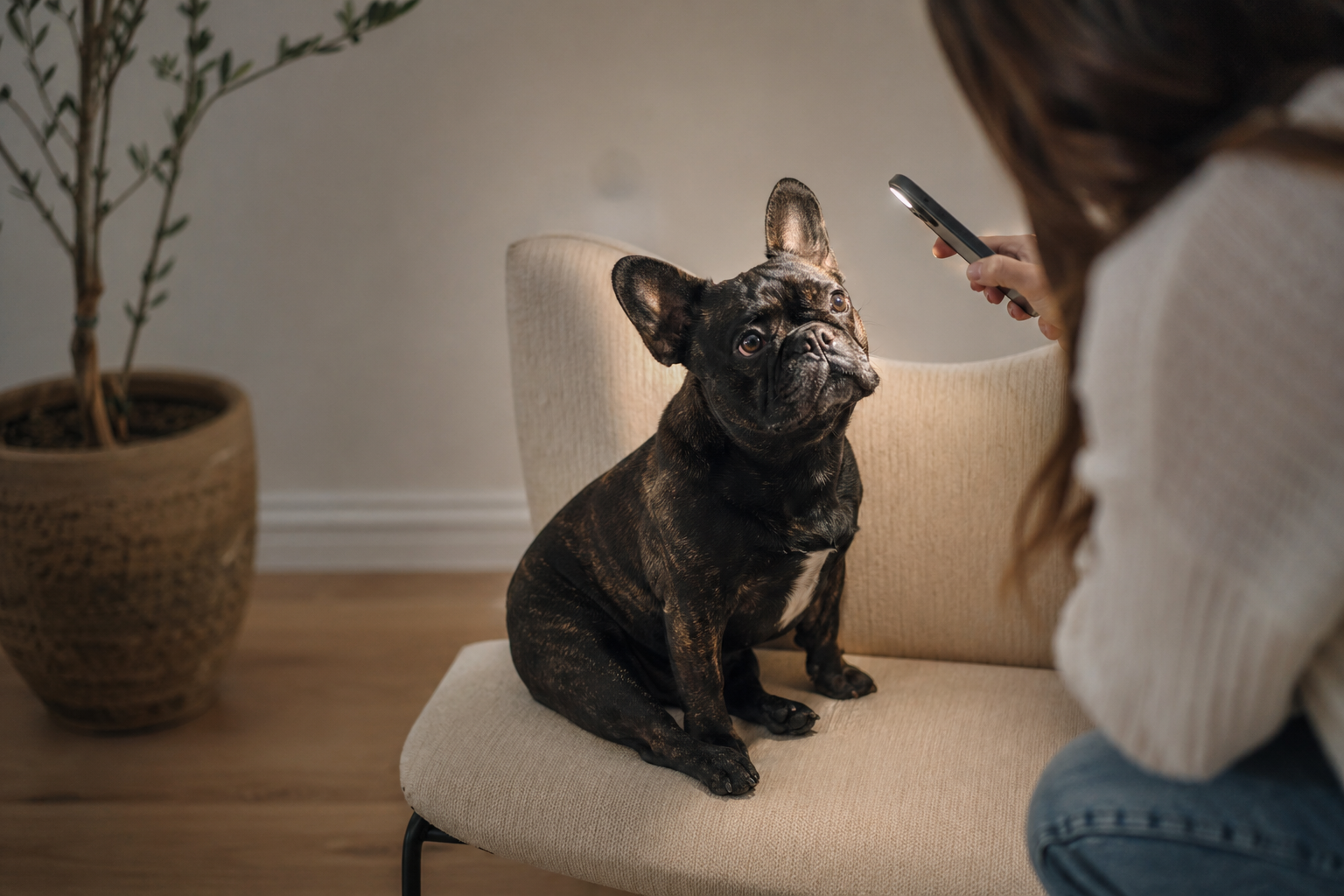
How to photograph French Bulldog for figurine accuracy: the shots that matter most
If you only remember one section, make it this one. A complete reference set doesn’t need fancy gear. It needs discipline.
Start with the “identity six”
We recommend what we call the identity six—six baseline views that give a sculptor enough information to establish the dog before expression shots are layered in.
- Front standing
- Left profile standing
- Right profile standing
- Three-quarter front left
- Three-quarter front right
- Rear three-quarter or back view
Those six images do more for a figurine than fifty random closeups.
Marissa learned this the hard way. Her first upload folder had 87 photos. Only 9 were truly usable for modeling. After we guided her to reshoot with Louie’s brother standing in a similar posture for scale comparison and to pull older daylight images from her phone, the difference was immediate: chest width made sense, ear placement read correctly, and the facial wrinkles stopped collapsing into one muddy shadow.
Photo priority by purpose
This table shows what each image type contributes to the final sculpt.
| Photo Type | Why It Matters | Common Mistake | Best Tip |
|---|---|---|---|
| Front standing | Establishes ear spacing, chest width, facial symmetry | Shooting from above | Kneel to eye level |
| Side profile | Defines topline, neck thickness, leg proportion | Dog sitting instead of standing | Use a treat to hold stance for 2 seconds |
| Three-quarter view | Reveals depth of muzzle and cheek shape | Lens too close, causing distortion | Step back and zoom slightly |
| Close face detail | Captures wrinkle depth, eye shape, lip line | Harsh flash flattening folds | Use window light from the side |
| Body markings | Shows coat pattern transitions | Motion blur on darker coats | Tap to focus and use burst mode |
| Back/rear angle | Helps sculpt hip width and tail set | Ignoring this angle entirely | Take one clean shot, even if it feels unimportant |
Eye level is not optional
Shoot at the dog’s eye level whenever possible. This is the simplest rule and the one people break most.
A top-down phone photo shortens the legs, widens the head, and obscures the neck. For French Bulldogs, it also deepens shadows in the face folds in all the wrong places. The sculptor sees dark shapes but not clean topography.
Topography is just the surface map—where things rise, dip, and turn. In resin work, that map becomes everything.
If kneeling is awkward, put the dog on a stable ottoman or low bench with someone spotting them. Not for drama. For geometry.
Use sound to hold expression
Frenchies are often better listeners than posers. Instead of waving toys wildly, try small sound cues:
- a soft squeak once, not repeatedly
- the rustle of a treat bag
- a familiar word spoken quietly
- keys jingled from behind the camera
You’re not trying to excite the dog into motion. You’re trying to create a one-second alert stillness—ears up, eyes attentive, mouth natural.
That one second often produces the most recognizable face.
Don’t aim for the happiest expression
This is the overlooked aspect that surprises people most: the best figurine reference is rarely the dog’s biggest smile.
Panting opens the mouth, changes the lip line, narrows the eyes, and pulls facial wrinkles into different positions. It can be charming in life and misleading in sculpture. A calm, closed-mouth expression usually preserves identity better.
There are exceptions. Some dogs truly “live” with their tongues out. But for most French Bulldogs, neutral attention reads more truthfully than exuberance.
Resolution matters, but clarity matters more
You do not need a studio camera. Modern phones are usually enough if:
- the lens is clean
- the dog is still
- the lighting is soft
- you avoid digital zoom extremes
- the image isn’t compressed to death before upload
We’d take a sharp phone image over a blurry DSLR shot every time.
If you’re sending files for a figurine project, use the highest original resolution you have. Screenshots and heavily filtered social posts are usually weaker references because they crush fine tonal transitions—the subtle changes between cream, fawn, brindle, and white that full-color printing can actually reproduce when the source is clear.
Build a reference set, not a highlight reel
Think in layers:
- Baseline anatomy photos
- Face closeups
- Marking closeups
- Personality shots
- Context photos (favorite bed, bandana, harness, toy if relevant)
That last category matters more than people think. A figurine is small. Context clues help the sculptor understand whether your Frenchie carried themselves like a little tank, a comedian, or a solemn old soul.
And yes, those distinctions show up in posture.
Lighting, wrinkles, and coat color: preserving 3D printed resin pet figurine details
Light is where many likenesses are quietly won or lost.
For French Bulldogs, soft directional light is your friend. Not flat light from every direction. Not a bright flash blasting the face. You need enough shadow to reveal wrinkle depth, but not so much that the face becomes a cave.
That balance is what tells a sculptor where the form actually turns.
The best lighting setup is often embarrassingly simple
A north-facing window, a cloudy day, or open shade outdoors often beats a room full of lamps. Put the dog so the light comes from the side-front, not directly behind you and not directly overhead.
This creates gentle shadow edges along:
- forehead folds
- the nose rope
- lip corners
- cheek bulge
- chest roundness
The result is dimensional information. The camera stops lying so much.
One order that stuck with us came from a family who had only indoor evening photos of their cream Frenchie, Pippa. Under warm kitchen bulbs, her pale fur merged into the tile and her face looked almost featureless. Then they found three older morning images near a patio door. Suddenly her brow fold, eye rims, and tiny asymmetry in one ear became obvious. Those three photos did more work than thirty indoor ones.
Lighting guide by coat color
Different coats need different exposure discipline. Here’s a practical reference.
| Coat Color/Pattern | Main Risk | Best Lighting | Avoid |
|---|---|---|---|
| Brindle | Dark areas merging into one mass | Bright open shade or window side light | Deep indoor shadows |
| Cream/Fawn | Wrinkles washing out | Soft side light with mild shadow | Overhead bulbs, overexposure |
| Pied | White patches clipping too bright | Even daylight with exposure reduced slightly | Direct noon sun |
| Blue/Gray | Cool coats looking flat and muddy | Neutral daylight, gray card if available | Heavy warm indoor lighting |
| Black | Loss of facial detail | Side light plus lighter background | Flash straight-on |
Why flash is usually a bad trade
Direct flash reduces texture contrast by filling every crease with the same bright value. In plain English, it makes everything look flatter.
For figurine production, that’s bad reference. It also creates shiny hotspots on noses and eyes, which can confuse the reading of surface boundaries. The dog’s nose may look larger than it is; the muzzle may look smoother than it is.
There are situations where supplemental light helps, especially in dim homes. But diffuse it. Bounce it. Move it off-axis. A ring of hard white light from the phone? We’re not huge fans.
Backgrounds matter because edges matter
The right background isn’t about aesthetics. It’s about silhouette separation.
If your black Frenchie stands in front of a dark couch, the sculptor loses the belly line and rear leg break. If your cream dog stands against a white wall in bright sun, the ear edges disappear.
Use backgrounds that contrast gently with the coat:
- medium gray blanket for very light dogs
- beige or pale floor for dark dogs
- uncluttered walls
- no patterned rugs if possible
Why? Because clean edges help define the silhouette, and the silhouette carries more likeness than many owners realize.
"A good pet portrait captures emotion. A good figurine reference captures structure first, then emotion."
Small wrinkles need shadow, not drama
Many people hear “show wrinkles” and think they need strong contrast. Not quite.
Deep dramatic shadows can make wrinkles look deeper and sharper than they are, which may push a sculpt too far. What you want is modest relief—enough tonal difference to indicate a fold, not to turn the face into a canyon map.
This is especially important because digital sculpting for collectible-style figurines often includes proportional checks at small scale. Some facial micro-detail that reads beautifully on a large screen may need to be simplified slightly for durability and print clarity at final size.
That doesn’t mean losing character. It means respecting scale.
The truth about color capture in full-color resin printing
Because PawSculpt uses full-color 3D printing, the model is printed with color embedded directly into the resin rather than added afterward. In a typical UV-cured photopolymer resin with embedded pigments workflow, the machine reproduces mapped color data voxel by voxel or layer by layer depending on the system architecture.
For pet owners, the plain-English version is this: clear color reference matters enormously, because the printer can preserve subtle markings if the digital model contains them accurately.
But color printing has tradeoffs.
Very soft transitions—say, a faint cream-to-white shift under the chin—can be visually delicate. Fine freckling inside a white patch may reproduce more softly than you expect. And glossy noses or wet eyes won’t look literally wet; they’re interpreted through geometry, color mapping, and final clear coat sheen.
That’s why we ask for both broad-view images and closeups. One tells us placement. The other tells us softness and edge quality.
If your dog has passed and you only have imperfect photos
This deserves its own moment, because many families arrive here grieving and worried that they “didn’t document enough.”
Please exhale.
We’ve worked with many pet families who had only candid photos, old phone images, or screenshots from videos. Usable figurines can still come from imperfect sets, especially if you can gather variety:
- multiple ages
- several angles, even if some are casual
- one clear standing shot
- one close face photo
- one image that shows chest and legs
- one image that shows coat pattern in daylight
If your source material is limited, honesty helps. Tell the team which features matter most to you: the widow’s peak, the asymmetrical blaze, the little underbite, the one ear that drifted outward. Those emotional priorities often guide sculpt decisions when the photography is incomplete.
For breed reference and structural language, the American Kennel Club’s French Bulldog breed guide can also help owners identify what is “breed-typical” versus what was uniquely their dog. That distinction is surprisingly useful when selecting the most representative photos.
The photo-to-sculpt workflow most owners never see
This is where the process becomes less magical and more meaningful. Not less beautiful. Just more honest.
A custom figurine begins with reference interpretation. Then comes digital sculpting, then print preparation, then full-color printing, then post-processing. The emotional object on a shelf starts as a chain of practical decisions.
And every one of those decisions depends on the quality of the photo set.
Step 1: reference sorting and proportional checks
Before any sculpting happens, good teams sort photos by reliability. Not all images tell the truth equally.
A straight side view under daylight is highly reliable for body proportion. A close front selfie on a phone’s wide lens is much less reliable for muzzle length. A resting image might reveal the real eye shape better than an action photo. We compare these against one another and look for repeated truths.
This is a kind of triangulation.
We’ll ask questions like:
- Does the head width stay consistent across three angles?
- Is the chest broad in all standing photos or only in low-angle shots?
- Does one ear always cant outward?
- Are the facial folds symmetrical, or is one side heavier?
- Is the dog naturally square and compact, or just crouching in photos?
That is how a digital likeness begins—not with software tricks, but with discernment.
Step 2: digital sculpting of anatomy, expression, and coat flow
The figurine itself is hand-modeled digitally in 3D software such as ZBrush or Blender. That means an artist builds the form in virtual space—blocking in the skull, chest, legs, and pose, then refining the face, folds, ears, paws, and surface transitions.
This is not a button you press.
The strongest sculptors know canine anatomy well enough to understand what a photo hides. French Bulldogs are especially dependent on that understanding because their structure is compact and visually compressed. A tiny error in muzzle projection or leg spacing changes the whole personality of the piece.
Marissa told us later that seeing Louie’s digital preview was the first time she heard herself laugh in weeks. Not because grief had vanished. Because the shape of his shoulders was right. The set of his ears was right. And somehow that rightness made the room sound less hollow.
Step 3: color mapping for full-color printing
Once the geometry is established, artists build the color information for print. Again, this is not manual brushwork on a physical model. It is digital color preparation for a full-color additive manufacturing system.
The artist identifies:
- coat base colors
- patch boundaries
- muzzle shading
- nose and eye rims
- paw color changes
- collar or accessory colors if included
For Frenchies, subtle muzzle shading and chest markings can be more important than dramatic patterning. The little dark bloom around the lips, the faint pinkish-beige inside the ears, the way cream fur cools slightly near the nose—these are small things, but they push a figurine toward recognition.
Step 4: print preparation—where engineering quietly protects emotion
This section gets ignored in most articles, but it matters. A sculpt that looks perfect on screen still has to survive real manufacturing.
Depending on the printer platform, engineers think through:
- orientation: how the model is angled in the build
- supports: temporary structures that hold overhangs during printing
- hollowing: removing interior material in some workflows to reduce mass and stress
- drain holes: openings that let uncured resin escape in hollow prints
- minimum feature thickness: making sure ears, tails, or tags don’t become too fragile
For pet owners, here’s the translation: some details must be balanced against durability.
Frenchie ears are a classic example. Sharp, thin ear tips may look elegant in digital form, but if they’re too thin they can become vulnerable in handling. So the goal is not abstract perfection. It’s a faithful shape with enough structural integrity to last.
That’s what seasoned production teams think about all day.
Real-world failure modes people rarely hear about
If you want to understand why reference quality matters, it helps to know what can go wrong downstream.
In resin-based additive manufacturing, teams watch for issues like:
- warping — parts bending slightly during curing or from uneven stress
- support pitting — tiny marks where supports were removed
- over-cure or under-cure — too much or too little UV exposure, affecting surface or strength
- bloom — cloudy residue or surface haze from improper processing
- suction cup effects — pressure issues in some resin print geometries that can distort or fail sections
- layer visibility — fine print texture that may show more on broad smooth surfaces
A true practitioner doesn’t pretend these things never exist. We manage them.
That includes orienting a dog’s face to protect its visible surfaces, choosing support placement strategically, and accepting that every manufacturing method has tradeoffs. More detail can mean more fragility. Smoother support access can mean less ideal orientation for a hidden area. Tougher materials can behave differently than more brittle ones.
No serious shop tells you otherwise.
Typical print-tech context, in plain English
Consumers often hear acronyms—SLA, MSLA, DLP, PolyJet, MJF—and understandably tune out.
Here’s the simplified view:
- SLA/MSLA/DLP are resin-based methods that cure liquid photopolymer with light.
- PolyJet-style full-color printing jets and cures tiny droplets, allowing rich color and smooth transitions.
- MJF-style systems are powder-based and known for strength, though full-color execution depends on platform and finishing path.
PawSculpt’s process is best described as full-color resin 3D printing or multi-color additive manufacturing. The important thing is that the figurine is digitally sculpted, then printed in full color directly—not printed plain and later colored by brush.
That’s why your original photo set carries so much weight.
Typical resolution and detail expectations
For small figurines, print layers in resin workflows are often in the 25–50 micron range (a micron is one-thousandth of a millimeter), though visible result depends on far more than the raw number. Orientation, material, surface finish, and the nature of the detail all matter.
Wrinkles, nostrils, toe separation, and ear ridges can reproduce beautifully. But there is a difference between excellent collectible-level detail and the look of a physically textured, manually finished miniature. They are different mediums. Different strengths.
The most honest expectation is this: you’ll get vibrant, recognizable full-color detail with natural fine print texture, protected by a clear coat—not an artificially airbrushed surface.
That authenticity is part of the charm.
"The photos don’t need to be perfect. They need to tell the truth about your dog from enough angles."
— The PawSculpt Team
What to expect from print prep, post-processing, and quality control
Once the digital work is approved, the file still has a journey ahead of it. And this is where manufacturing discipline earns trust.
Orientation logic: why the dog may not print upright
Owners sometimes imagine their figurine being printed standing normally on the platform. Sometimes yes. Often no.
In resin systems, the model may be angled to reduce visible support contact on the face and chest, improve drainage if hollowed, and lower peel forces during printing. Peel force is the stress created when each cured layer separates from the film or tray in certain printer types.
If a broad flat area faces the wrong direction, it can create stronger suction effects, rougher release, or failed layers. So we orient for print success and surface preservation, not for visual intuition.
This matters because French Bulldog heads are broad and rounded. The face is also the emotional focal point. Experienced technicians will often prioritize support strategy that protects the most scrutinized surfaces, even if it complicates cleanup elsewhere.
Supports: necessary, useful, and never truly invisible
Supports are temporary material structures that hold up overhangs during printing. Ear tips, chins, collars, and belly transitions may all need them depending on pose and platform.
The tradeoff is simple: where supports touch, cleanup follows.
Good support strategy means:
- placing contact points in less visible zones
- using enough support for reliability, not excess
- balancing delicate areas against access for removal
- protecting color-critical surfaces where possible
After removal, small marks may be minimized through careful finishing. But if someone promises a support-free miracle on a complex resin print, be skeptical. Physics is still in the room.
Hollowing and drain holes—why some figurines aren’t solid bricks
On certain resin workflows, figurines may be hollowed to reduce material use, shrink internal stress, and help curing. If a part is hollow, it may require drain holes so uncured resin can escape and cleaning solution can move through the cavity.
These holes are positioned as discreetly as possible, then managed in finishing.
For pet owners, the important point is not the hole itself; it’s what the decision represents. A well-made figure is engineered, not merely shaped. Durability and stability are part of the likeness, too. A figurine that captures your Frenchie but later distorts, cracks, or feels precarious has failed in a deeper way.
Washing, curing, and the fine line between enough and too much
After printing, resin parts are typically cleaned to remove uncured residue. Then they are UV cured, which means exposed to controlled ultraviolet light to fully harden the photopolymer.
This stage sounds straightforward. It isn’t.
Too little cure can leave surfaces weak, tacky, or unstable. Too much can increase brittleness, yellowing risk in some materials, or surface stress. In production, teams learn the behavior of each material family through repetition, testing, and frankly some hard lessons.
Frenchie ears again become a useful example. Thin sections can react differently than a broad torso. A seasoned post-processing tech knows to watch for that.
Surface inspection under raking light
One of our favorite quality-control habits is inspecting under raking light—light cast from a low angle across the surface. It reveals things overhead lighting hides:
- micro scratches
- support cleanup marks
- uneven sheen
- surface bloom
- subtle print lines on smooth planes
This is where many “looks fine from a distance” issues get caught.
Because French Bulldogs have broad foreheads, smooth chest areas, and tight curved shoulders, raking light can reveal whether the figurine surface feels clean and intentional or slightly disturbed. It’s not glamorous work. It’s careful work. The kind customers feel even if they can’t name it.
Clear coat: protection, not disguise
After cleanup and final inspection, the figurine receives a clear coat or protective varnish. This is the only manual surface-finishing step we describe in the standard process. Its job is to protect color, even out sheen where appropriate, and help the piece hold up over time.
It is not there to conceal a poor print. It is not there to add manually applied color. And it is not the same thing as a thick glossy shell.
The best clear coats respect the printed detail. They protect without drowning.
What quality control actually checks
A good custom figurine workflow includes multiple checkpoints. At minimum, teams should be evaluating:
- dimensional accuracy relative to approved scale
- pose stability on the base or feet
- symmetry checks for ears, face, and stance
- surface integrity after support removal
- color placement accuracy
- clear coat consistency
- overall likeness to reference photos
If a family’s emotional focus is on “that exact forehead fold” or “her little white socks,” those become quality checkpoints too. Not because every molecule can be duplicated—but because care has to be specific to be real.
For general pet health concerns while photographing brachycephalic breeds like French Bulldogs, especially in warm weather or during longer sessions, the AVMA’s pet care resources are a useful non-commercial reference. We’re a figurine team, not veterinarians, and comfort always comes first.
Common photo mistakes that erase Frenchie likeness—and how to fix them fast
By this point, you can probably see the pattern: most mistakes aren’t dramatic. They’re subtle. That’s why they slip through.
Mistake 1: sending only sleeping photos
Sleeping Frenchies are irresistible. Their snores, the little puffing breath, the lip stuck on the blanket—we get it.
But sleep changes everything:
- ear position softens
- neck compresses
- facial folds flatten differently
- body mass spreads into the bed
- eyes disappear, and eyes are half the recognition
Use sleeping photos as personality references, not primary sculpt references.
Mistake 2: relying on ultra-close phone selfies
A close selfie can make the nose enormous and the skull strangely narrow. That distortion is lens-based, not anatomy-based.
Fix: Step back 3 to 6 feet and use a mild zoom if needed. The shape becomes more honest. This one change alone often improves reference quality dramatically.
Mistake 3: photographing only from your own height
Humans love looking down at Frenchies because they are built for upward adoration. But that affectionate angle hides body truth.
Fix: Take at least half your photos from the dog’s eye or shoulder height. If your knees protest, sit on the floor. Worth it.
Mistake 4: choosing a chaotic background
A laundry pile, bright patterned rug, dark sofa edge, and one sliver of window light—this is the natural habitat of many pet photos. It’s also a nightmare for silhouette reading.
Fix: Move the dog two feet. That’s often all it takes. A blank wall, open doorway, or simple bedspread can make the outline instantly usable.
Mistake 5: chasing motion instead of waiting for stillness
Most people try to “get the dog interested” by escalating energy. More noise. More waving. More movement.
But what actually helps more than excitement is brief calm attention.
Wait for the moment after the sound. The beat after the treat bag rustles. The tiny held pause before the wiggle returns. That’s your frame.
Mistake 6: forgetting scale cues
A French Bulldog’s compactness is part of its identity. In some close photos, that compactness gets lost.
Fix: Include one or two full-body shots with the dog standing naturally on the floor, not curled in furniture. A familiar object nearby can help proportionally, but don’t clutter the frame.
Mistake 7: not documenting special asymmetries
The slightly crooked jaw. The one eyebrow patch. The ear with a notch. The paw that toed out a little. These are not imperfections to hide. They are anchors of recognition.
Marissa’s favorite note to our team was only eight words: “Please keep the left ear slightly lazier.” That sentence probably mattered more than twenty extra photos.
"Recognition often lives in the so-called flaws we’d never remove."
A practical “good enough” checklist before you upload
Here’s a simple gut-check. You likely have a workable set if you can answer yes to most of these:
- Can we see both sides of the dog clearly?
- Is there at least one standing front photo?
- Is there at least one side profile in decent light?
- Can we tell where the main coat markings begin and end?
- Can we see the eyes without blur or deep shadow?
- Are the signature wrinkles visible in at least two angles?
- Is there one photo that simply feels most like your dog?
That last question matters. Sometimes the technically best photo isn’t the emotional north star. Send both.
What to expect if your photos are mixed quality
That’s normal. Most real photo sets are mixed quality.
A strong workflow uses the best images for proportion, the next-best for markings, and the most emotionally resonant for expression. This is why a company with real digital sculpting experience matters. Interpreting reference is a skill, not just software proficiency.
If you’re gathering photos and want a sense of what a professional workflow generally asks for, PawSculpt’s FAQ page and contact page are sensible places to start. Not because every family needs the same thing—they don’t—but because the right questions early can spare you frustration later.
A better way to think about memory, likeness, and making something that lasts
We’ve spent a lot of time on wrinkles and lighting and support marks. Necessary things. But they sit inside a larger question: why do we care so much about getting the face right?
Because pets reorganize the soundtrack of a home.
A French Bulldog is not only a shape. It is the snort from the hallway. The nails ticking on the basement step. The grunt before settling onto a blanket. The impatient huff when dinner is late by six minutes. After they are gone—or even while they’re still joyfully with us—what we miss is not generic “companionship.” It is the exact pattern of presence.
And presence is made of details.
That is why a figurine can matter in a way outsiders don’t always understand. Some families make framed albums. Some keep a collar in a drawer. Some commission portraits. And increasingly, some choose 3D pet sculptures or memorial keepsakes because form occupies space the way memory does: stubbornly, tenderly, physically.
Not everyone needs that. But many do.
The common mistake is to assume preservation is about resisting time. We don’t think so. In our years working with pet families, what we’ve learned is almost the opposite: the best keepsakes don’t deny impermanence—they answer it. They say yes, this was brief, and yes, this was real enough to deserve shape.
So if you are preparing to photograph your Frenchie, don’t think only about perfection. Think about accuracy with affection.
Your last practical checklist
Before you take photos, do this:
- Clean your phone lens.
- Choose soft daylight near a window or outdoors in open shade.
- Capture the identity six angles first.
- Get 3–5 close face images showing wrinkle structure.
- Take marking closeups of chest, muzzle, paws, and any unique patching.
- Wait for one calm, alert expression.
- Upload a few personality images too.
That’s enough for most families to start well.
And if your dog has already passed, gather what you have without shame. Old files. Family texts. Holiday snapshots. Video stills. Memory is often scattered. It still counts.
Frequently Asked Questions
What photos work best for a French Bulldog figurine?
The strongest photo set includes front, side, and three-quarter standing views in soft natural light. Add a few closeups of the face so the sculptor can read the wrinkle pattern, muzzle shape, and eye expression clearly.
If you can, include both neutral-expression shots and a couple of personality photos. The first group builds structure; the second helps capture spirit.
Can I use phone photos for a custom pet figurine?
Absolutely. Most current smartphones can produce reference images that are perfectly workable for a custom figurine if they are sharp, well lit, and not overly distorted.
The key is technique, not expensive equipment. Clean the lens, step back slightly, shoot at eye level, and avoid screenshots or heavily filtered social-media versions whenever possible.
Why do wrinkles disappear in some dog photos?
Usually because the light is wrong. Flat lighting wipes out shallow facial folds, while harsh direct light can create blown highlights and dark pits that hide the true shape.
Soft side lighting is the sweet spot. It gives wrinkles enough shadow to read as form without turning them into exaggerated trenches.
Are PawSculpt figurines colored after printing?
No. PawSculpt uses full-color resin 3D printing, which means the colors are printed directly into the material during production. The figurine is first digitally sculpted, then precision printed in full color.
After printing, the piece is cleaned, cured, and finished with a clear coat for protection and sheen. There is no manual color application step.
What if my French Bulldog has already passed and I only have old photos?
That situation is more common than you might think, and older photos can still be enough. What matters most is gathering multiple angles, one clear face photo, and a few images that show markings and body shape.
Even imperfect reference sets can be useful when they are varied. If one image shows the ears well and another shows the chest and stance, they can work together.
Ready to Celebrate Your Pet?
Every pet has a story worth preserving. Whether you're honoring a beloved companion who's crossed the rainbow bridge or celebrating your furry friend's unique personality, a custom PawSculpt figurine captures those details that make your pet one-of-a-kind.
If you're ready to photograph French Bulldog for figurine creation, start with honest light, quiet patience, and the angles that tell the truth. That small effort now can become something lasting later.
Create Your Custom Pet Figurine →
Visit pawsculpt.com to learn more about our process and guarantees