How to Photograph a Hyper Cocker Spaniel's Floppy Ears for a 3D Sculpt
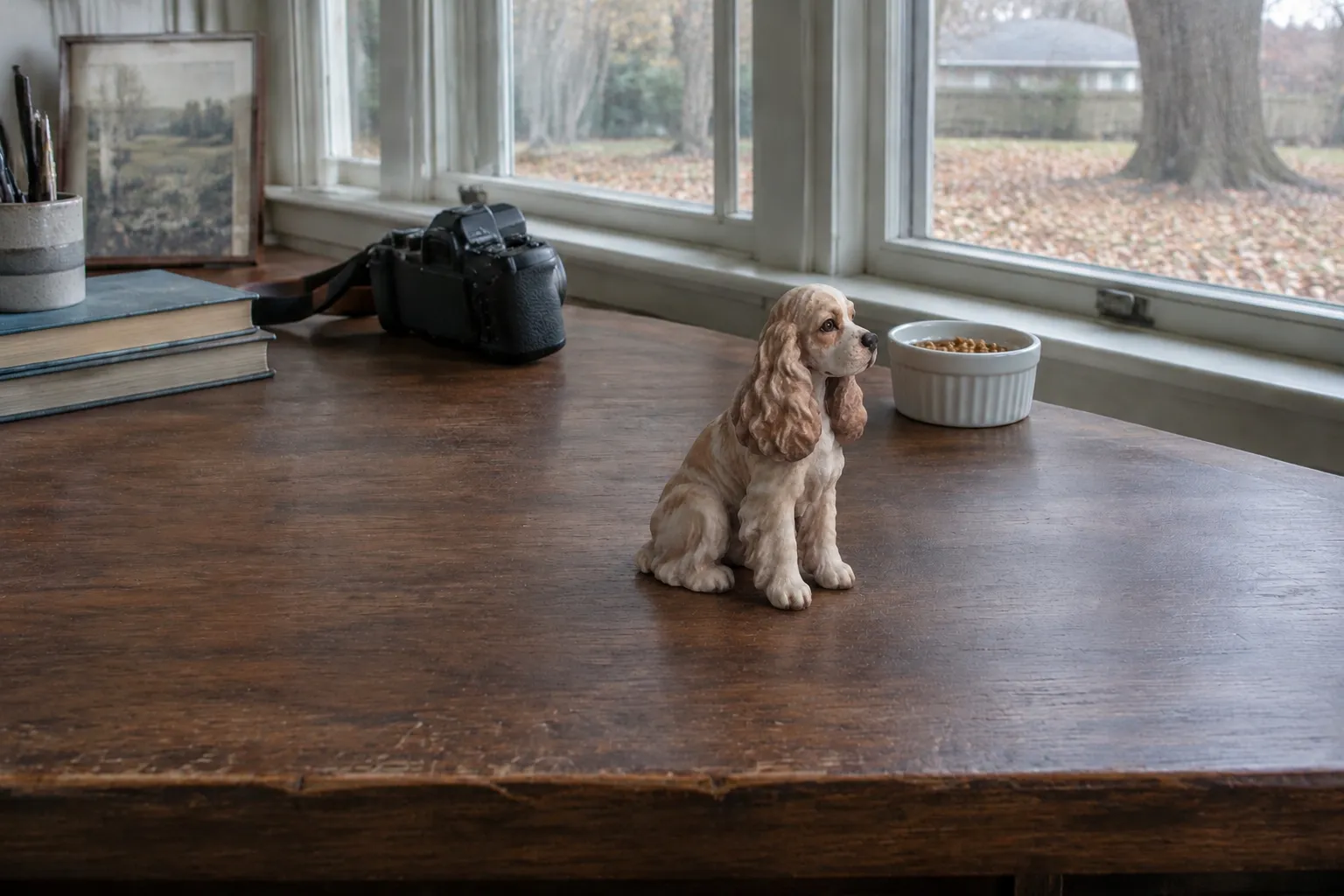
Picture the bedroom floor at seven in the morning, and a young Cocker Spaniel who has decided the camera is the most interesting object in the house. Antoine de Saint-Exupéry wrote in The Little Prince that what is essential is invisible to the eye — a line anyone who has tried to photograph a cocker spaniel will recognize.
Short answer: you don't need a calm dog or a studio. You need one evenly lit side view of each ear, a head-on shot, a three-quarter view, and a scale cue. Shoot in bursts, use a decoy, and treat the artist preview as your checkpoint.
Quick Takeaways
- Floppy ears are hard to photograph because they have no fixed shape. An ear is an event, not an object — it changes with every head tilt.
- Four to eight sharp, differently angled frames beat fifty near-duplicates. Ambiguity, not scarcity, is what slows a sculptor down.
- Shoot two rounds: one when the dog is alert and listening, one when it has settled and the ears hang at rest. Then say which one is "your dog."
- Ordinary window light beats flash. Direct flash blows out fur texture and puts a white spot where the iris should be.
- The likeness is decided while the portrait is sculpted, not by the printer. The preview before printing is the moment your input counts most.
Why Floppy Ears Break the Rules of Pet Photography
A Cocker Spaniel's ear is a long, heavy flap of soft tissue with feathering at the bottom edge, hinged near the skull. That last part is the problem. Because the ear has no bone in it, its silhouette is not a property of the dog the way a tail length or a muzzle shape is. It's a position. In any single photograph you have captured one position out of hundreds, and nothing in the frame tells a stranger which position is the dog's default.
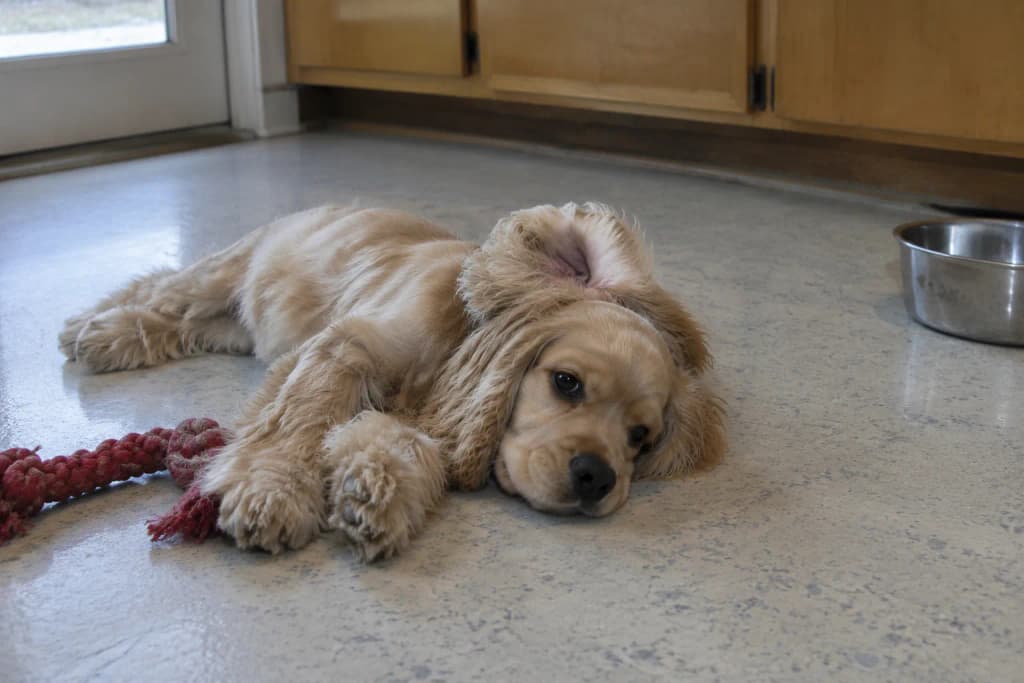
This is what people mean when they say their dog "doesn't photograph like itself." The camera isn't lying. It's just answering a narrower question than the one you're asking.
Think about how fast recognition works. You identify your own dog in a fraction of a second, from a handful of landmarks: the set of the ears, the length of the muzzle, the spacing of the eyes, the way the head tilts. That speed is the same thing that makes it hard to describe what needs fixing. You can recognize your dog instantly and still be unable to say whether the left ear hangs a centimeter lower than the right. Recognition and description are different jobs, and a sculptor is doing the second one.
So the working goal changes. You are not trying to capture your dog's ears. You are trying to hand over enough evidence that an artist can find the ears' resting shape — the position they hold in the quiet hours, when the dog is neither listening nor shaking nor rolling on the rug. That resting shape is the one that will read as your dog on a shelf, because it's the one you see most often in your own peripheral vision.
Two specifics make this harder than it sounds.
Depth is invisible in a flat photo. When the ear lies against the neck, the gap between ear and shoulder disappears. The artist can't tell how thick the ear is, how much it curves away from the skull, or where the feathering ends and the neck begins. Separation is information.
Color changes with light more than people expect. The same dog in direct sun and in shade can look like two different dogs, especially across the browns and golds and the deep liver shades. If your reference set mixes harsh sun with indoor tungsten, the artist is now guessing about coat color as well as form.
Myth vs. Reality: Three Assumptions Worth Dropping
Myth: a photo-exact figurine is the goal, and a good photo set gets you there.
Reality: a sculpted portrait is an artistic interpretation built from your references. It is not a copy of a photograph, and the process is not designed to be one.
Myth: more photos always means a better result.
Reality: the enemy is not a shortage of frames, it's ambiguity. Fifty versions of the same angle still leave the artist blind to the angle you skipped. A sharp photo of the ear from below is worth more than a hundred blurry ones from the front.
Myth: the printer is what makes it look like your dog.
Reality: likeness is made during sculpting. Full-color 3D printing renders what the model already contains. Color range is real and useful — the equipment supports more than 10 million colors, per Mimaki's product information for the 3DUJ-553 — but that number describes a capability of the machine, not a promise about how any particular order will look. A wider palette cannot invent an ear shape that was never sculpted.
The Reference Set: What Actually Helps
You don't need a professional shoot. You need coverage. Here's a set that answers most of the questions an artist will have, taken over two or three short sessions rather than one long one.
- Head-on. Camera at the dog's eye level, not looking down. This establishes the face's proportions and how the ears frame the head.
- A side view of each ear. Left and right separately, with the ear clear of the body — on a sofa edge or the arm of a chair, where gravity can pull the ear free rather than letting it pool against the shoulder.
- One three-quarter view. Standing slightly off-center compresses the head just enough that the artist can read depth.
- One full-body frame. Sitting or standing. This is the only shot that says how long the dog is relative to its head, which matters more than people expect when a figurine is scaled to 2.5–6 inches.
- One close-up of the ear's underside or feathering, with the ear flipped back if your dog tolerates it. Inside color and the ragged edge of the feathering are where most sculpts either convince or don't.
- One close-up of the face: eyes, nose, muzzle markings, the little blaze or the ticking if your dog has one.
- A scale cue. Something familiar in the frame — a standard leash clip, a tape measure, your own hand — or simply a note about the dog's weight and height. "Medium Cocker Spaniel" is not actionable.
Label the files if you can. "Left ear, 4pm, window light" costs you ten seconds and saves an artist a guess.
There's one honest limit to all of this. A scent can't be photographed. The cornmeal-and-warm-dust smell that lives in the fur behind a dog's ears, the way a damp ear carries the smell of rain on the porch back inside with you, the smell of the blanket in the corner of the bedroom that still holds the shape of a sleeping dog — none of it fits in a JPEG. A figurine is one channel of memory, not the whole archive. Photographs, a written page, a video with sound, a favorite collar in a box: they hold different things. Knowing which thing you're trying to keep is what makes the choice of keepsake easier.
How to Photograph a Cocker Spaniel Who Won't Sit Still
Hyper dog photography is mostly scheduling. The dog doesn't need to be calm; the frames need to be sharp. Those are different problems with different solutions.
Work with the day's natural rhythm. The twenty minutes after a long walk, the half hour after a meal, and the last slow hour before bed are the windows when most dogs stop treating the camera as prey. Puppies have short attention spans, so keep each session to three or five minutes and come back later. Five short sessions produce better references than one forty-minute fight.
Pick a place the dog already understands. The rug by the window where it naps, not the kitchen where food happens. Familiar territory lowers the odds that you're photographing excitement instead of a dog.
Get to eye level. Kneel, sit on the floor, or set the dog on a low stool so you can shoot across rather than down. Looking down shortens the muzzle and flattens the ears against the skull — two errors you'd rather not send to an artist.
Use a second person as a decoy. One person holds a toy or makes the noise just behind the photographer's shoulder; the photographer stays silent and shoots. Two people, one job each, and the dog's attention lands where you want it.
Shoot in bursts and cull later. Hold the shutter, take thirty frames, keep the four that are sharp. Deleting is easy. Re-creating a moment that has passed is not.
Then do the opposite round. A squeaky toy is a trap for this particular job, because an alert dog lifts its ears, and lifted ears are not the ears you're trying to document. So finish the session by letting the dog lose interest. Put the toy away, sit down, and wait. When your Cocker Spaniel settles back into itself — head low, ears hanging heavy, one ear maybe flipped — start shooting again. Those frames are usually the ones that carry the resting shape, and they're the ones that make a sculpt read as a portrait rather than a snapshot of excitement.
Some other frames to avoid: the post-bath shake (a spectacular photo and a useless reference), the yawn, and the enthusiastic roll. A short video can be a useful supplement — you can pull stills from it when a single natural hang never shows up — but deliberate, sharply focused photos usually read better than extracted frames.
Let the dog sniff the camera first. A camera that smells like your hands is furniture. A camera that clicks and beeps is a small animal worth chasing.
Keep other pets out of frame, or say clearly which animal the order is for. A helpful cat wandering behind the subject adds a second set of ears for an artist to untangle.
Light, Color, and the Details That Carry Identity
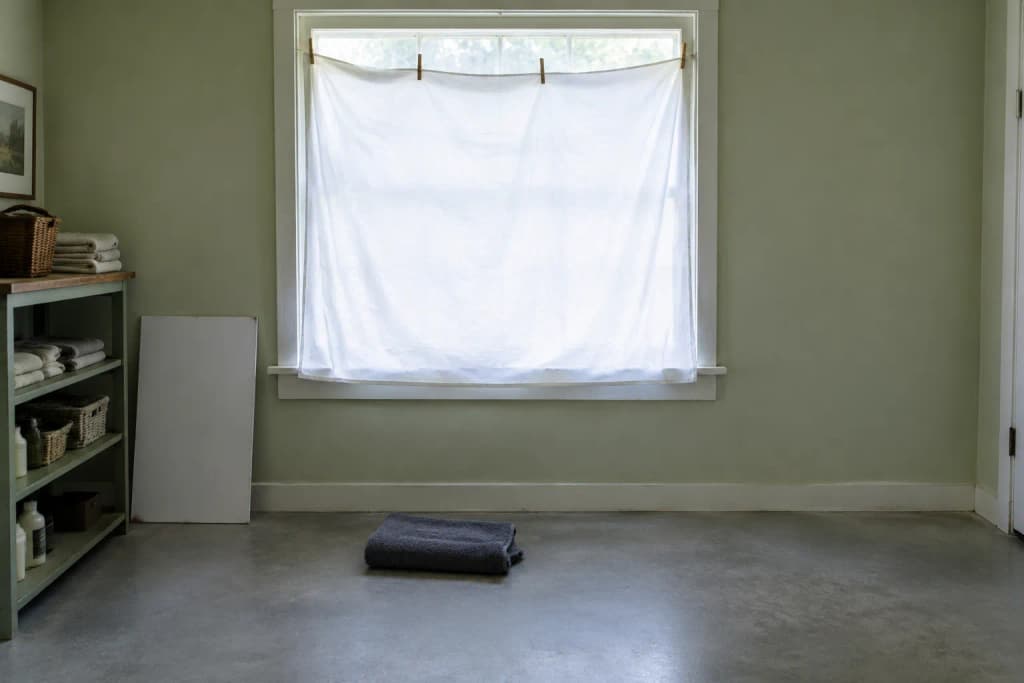
Indirect daylight is the whole technique. A north-facing window, or any window on an overcast afternoon, gives soft light that keeps fur texture visible instead of flattening it into a smooth blob. If the light is coming through bare glass and the shadows are hard, drape a white sheet or bounce light off a pale wall rather than adding a second flash.
Turn the phone's or camera's flash off. Beyond the color shift, flash puts a bright spot in the eye where the iris used to be — and the eye is the first place a human checks for likeness.
Watch your color defaults. Phone cameras love warm tones, and warm tones push a dark brown Cocker toward orange. If the coat in the photo doesn't match what you see with your eyes, say so when you send the references. Send the original files, not the filtered versions. A vintage filter is a nice thing to do to a picture on your phone and a bad thing to do to a color reference.
Then, deliberately, get close to the things that make this animal and not a generic spaniel:
- The eye: shape, and the coat color immediately around it.
- The nose: color, texture, the slight gloss.
- The leather of the ear versus the inside of the ear — often a different tone entirely.
- Markings: the blaze down the muzzle, ticking on the chest, white feathering on the legs.
- The feet and the tail, which anchor a full-body pose.
Dark-coated dogs deserve one extra shot. Black and deep-chocolate Cockers photograph as a single silhouette unless light grazes across the body at an angle. Walk around the dog while it holds still and watch where the highlights fall; shoot from that side.
What Happens After You Send the Photos
This part matters for your decision, because it's where money changes hands and where the risk sits.
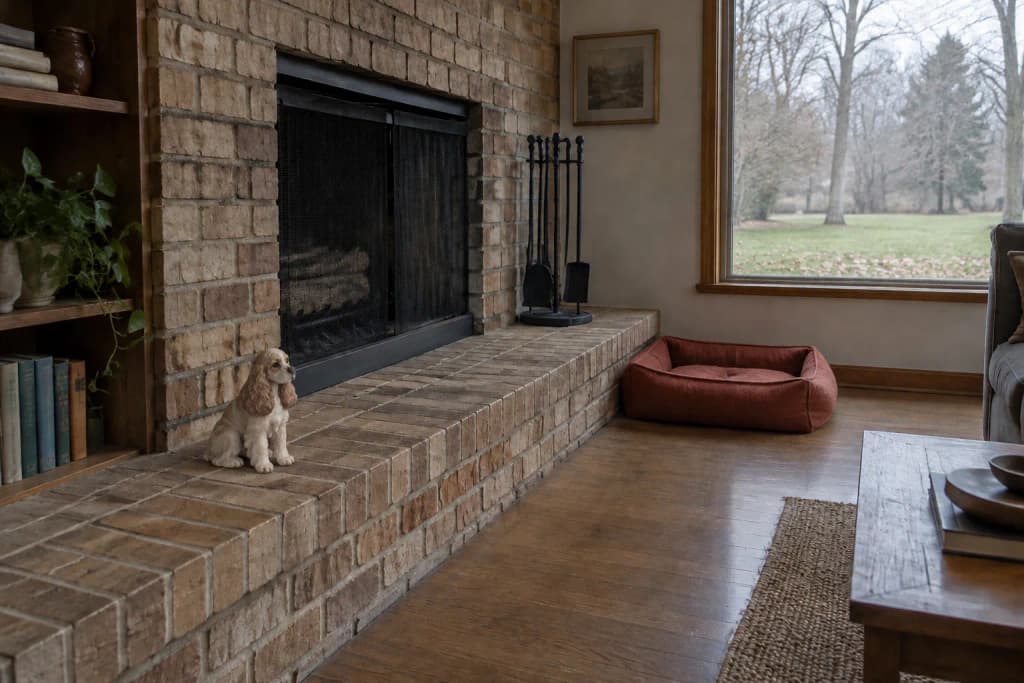
At PawSculpt, and at any studio doing this kind of work, the sequence is roughly the same. Reference photos are reviewed first — this is where a set of images either succeeds or gets sent back with questions. Then an artist digitally sculpts the portrait. You receive that artist preview before anything is printed, and you confirm it. Only the approved model goes to print, in full color, on the Mimaki 3DUJ-553. After printing, the supports are removed, the surface is inspected, and a transparent protective coat is applied.
The preview is the real checkpoint, and it's worth planning around. It typically arrives within 7 days after complete references are available and the order enters the studio's recorded design status. Five revisions are included. If the ear doesn't look right, this is the moment to say so — not after the box arrives.
On payment: a 40% deposit starts the work. A full refund is available before the order enters that server-recorded in-design status. Once the artist starts modeling, the deposit becomes non-refundable. Read that boundary twice before you pay, because it's a genuine dividing line rather than a formality.
After the final payment, delivery runs 27–40 days within the United States and 33–47 days internationally. No separate shipping fee is added at checkout for worldwide delivery; international customers remain responsible for local customs duties, taxes, or import fees. If the figurine is meant as a holiday gift, the last order-by dates are November 10 for US orders and November 3 for international orders, with the preview and balance handled promptly. Orders placed after those dates are delivered in January — and the artist preview, which arrives within about 7 days of the order entering design, can be shared as the gift in the meantime.
| Figurine size | Single figurine | Set of 12 |
|---|---|---|
| 2.5 inch | $429 USD | $4499 USD |
| 3 inch | $489 USD | $4999 USD |
| 4 inch | $589 USD | $5999 USD |
| 5 inch | $789 USD | $7999 USD |
| 6 inch | $999 USD | $9999 USD |
Add-ons, if you want them: a second pet at $179, an extra pet on 4-inch and larger pieces at $199, a nameplate at $9, an extra toy at $30, a rush option at $29, a diamond glass base at $29, and a black crystal base at $39.
Frequently Asked Questions
How many photos do I need to send for my dog's ears?
Usually seven to ten: a head-on shot, a side view of each ear with the ear clear of the body, a three-quarter view, a full-body frame, a close-up of the face, and a scale cue. Sharp and varied beats numerous and repetitive.
My dog will not hold still. Is that a dealbreaker?
No. Sharpness matters more than stillness. Shoot in bursts during your dog's calm hours, use a second person as a decoy, and let the dog settle so the ears hang naturally before you shoot the second round.
Will the figurine look exactly like my dog?
No, and it is not meant to. The result is an artistic interpretation of your pet, sculpted from your references and confirmed by you at the preview stage. It is a sculpted portrait rather than a copy of a photograph.
Can I use older photos, or photos of a pet who has passed away?
Yes. Older references are reviewed the same way as new ones. Send whatever clear images you have from different angles and different years, and note which ones feel most like your pet. The preview lets you check the interpretation before anything is printed.
What if I do not like the artist preview?
That is what the preview is for. Five revisions are included, so you can ask for changes to shape, posture, or detail before the model is approved and printed. Nothing goes to print until you confirm it.
What does the whole process cost, and how long does it take?
Single figurines run from $429 USD at 2.5 inches to $999 USD at 6 inches, with a 40% deposit to begin. The first artist preview typically arrives within 7 days of the order entering design, and delivery follows 27–40 days after final payment in the US, or 33–47 days internationally.
Choosing What to Keep
Photographing a hyper dog well is a small skill, and most of it is patience with timing rather than equipment. Get to eye level. Use the window instead of the flash. Shoot the alert dog, then wait for the settled one, because the settled ear is the ear you actually want. Send the originals, label the awkward ones, and say out loud what you're hoping the sculptor will notice.
Then decide what the images are for. A phone album holds thousands of frames. A written page holds the smell of the bedding and the sound of tags on the porch, the rain coming in with wet ears. A custom pet sculpture holds the shape of the animal in three dimensions, which is the one thing a flat photograph can never do — at 2.5 to 6 inches, it sits on a desk or a mantel where your eye finds it without being asked.
The right choice depends on what you're trying to keep, and those are different answers for different people. If a figurine is the one that makes sense for you, the practical next steps are straightforward: send the reference set, watch for the preview within about 7 days, and use your revisions. If you're still sorting out the details — size, add-ons, timing around a holiday — the FAQ covers the logistics, and the studio is reachable through the contact page if something about your particular dog doesn't fit a standard answer.
And photograph the ears regardless of what you decide. Even if no one ever sculpts them, you'll have the pair of images that finally look like the dog asleep on the bedroom rug at seven in the morning.