
8 Grooming Mistakes New Owners Make With Poodle Puppies (And the Checklist That Fixes All of Them)
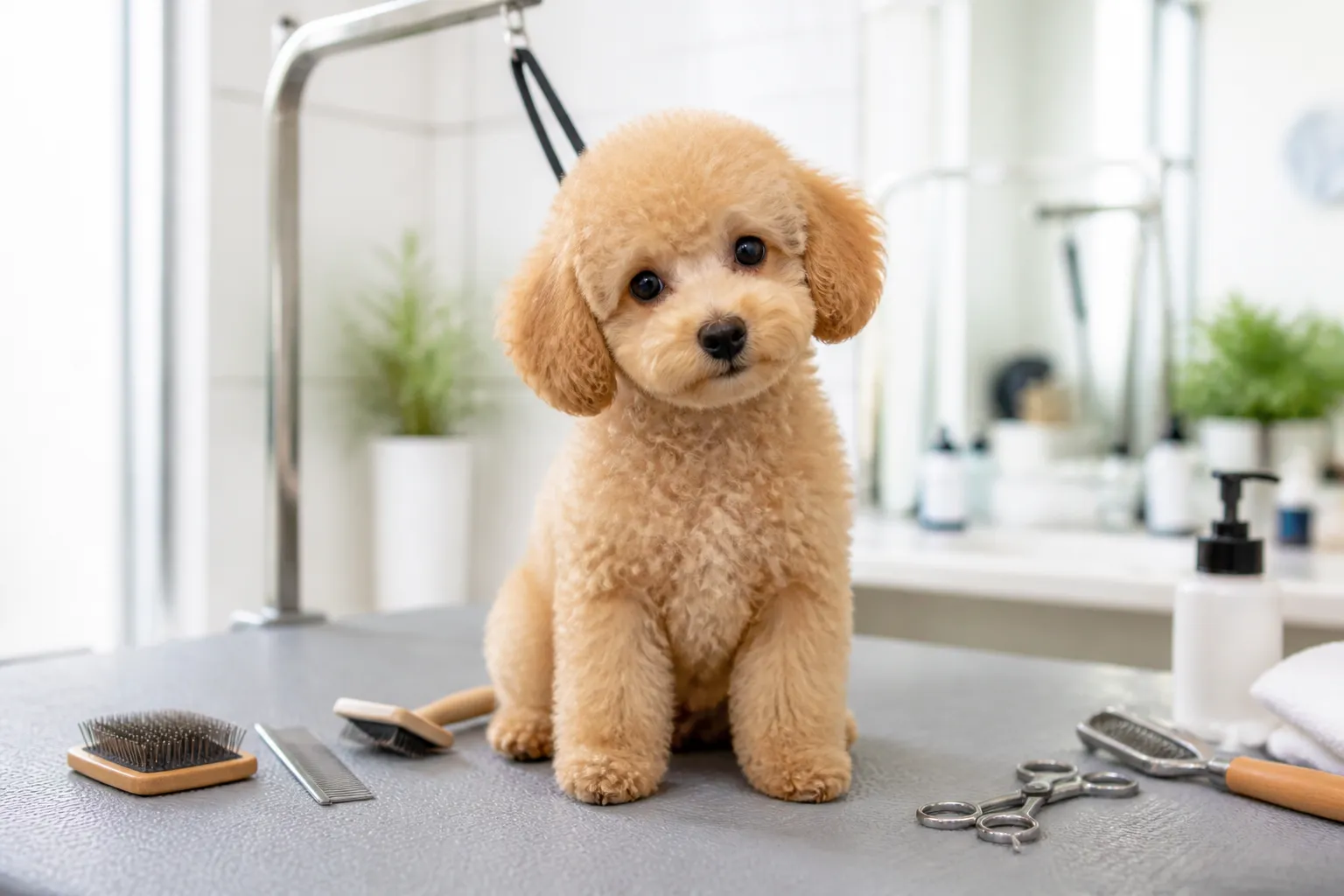
The pet store smells like cedar shavings and something faintly sweet — and right there, under the fluorescent lights, your new Poodle puppy is squirming in your arms, that cloud of dark curls already matting at the ears. You've got maybe six weeks before those curls become a problem. Poodle puppy grooming tips aren't optional — they're the foundation of everything.
Quick Takeaways
- Start grooming before it's necessary — desensitization at 8 weeks prevents fear responses that last years
- The coat type changes at 9-16 months — most guides skip this transition entirely, and it blindsides new owners
- Clipper heat causes more trauma than blade sharpness — check temperature every 90 seconds
- Capture this fleeting puppy stage — families who want to preserve their Poodle's puppy look before the adult coat arrives often turn to custom pet figurines as a permanent keepsake
- Your grooming checklist isn't about aesthetics — it's about building a dog who trusts human hands for life
The Mistake Nobody Talks About: You're Grooming the Wrong Dog
Here's the thing most grooming guides miss entirely. They assume you're working with a stable, cooperative adult dog. They give you blade numbers and scissor angles. They tell you to use a slicker brush in long, sweeping strokes.
But you have a puppy. And puppies aren't small adult dogs.
A Poodle puppy's nervous system is still wiring itself. Every sensation — the vibration of clippers, the cold of a metal table, the smell of grooming spray — is being catalogued and filed under "safe" or "threatening." You're not just grooming a coat. You're programming a response pattern that will define every grooming session for the next 12 to 15 years.
That's the frame. Hold it.
The eight mistakes below aren't about technique. They're about understanding what's actually happening in that small, curly-headed brain — and why getting it wrong in the first few months costs you years of struggle.
Mistake #1: Waiting Until the Coat "Needs" It
Most new Poodle owners wait until the coat is visibly tangled before they pick up a brush. Understandable. The puppy is tiny, the curls are adorable, and it feels almost cruel to interrupt that softness with grooming tools.
But the window between 8 and 16 weeks is neurologically irreplaceable. Behavioral research consistently shows that puppies exposed to novel stimuli during this socialization window accept them as normal for life. Miss it, and you're fighting uphill forever.
The goal at this stage isn't a clean coat. It's a calm dog.
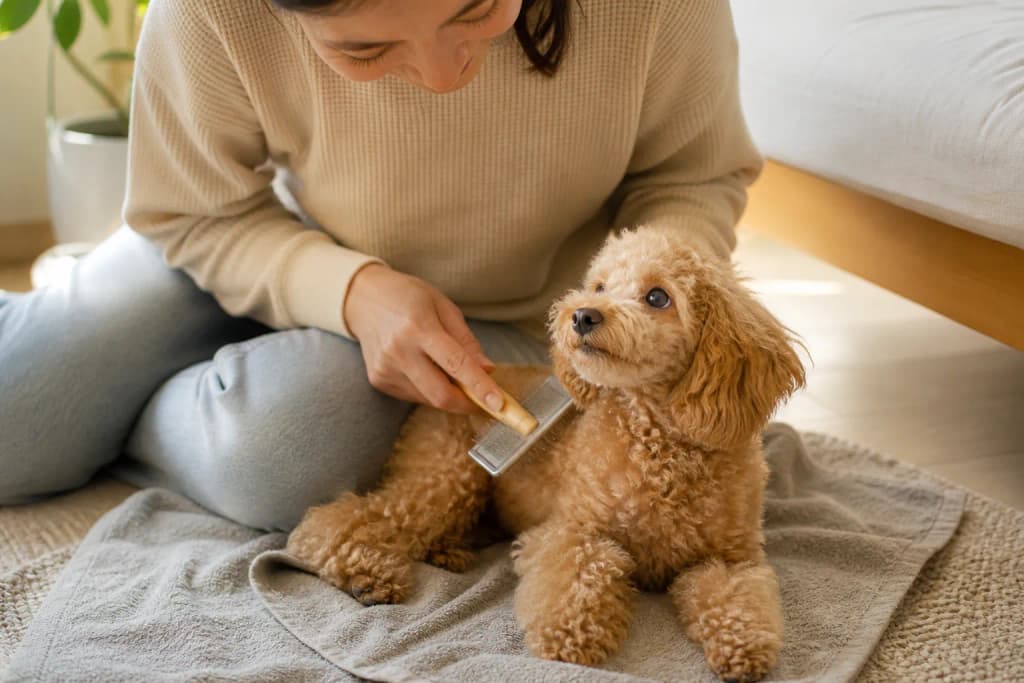
Start with your hands. Run them over every inch of the puppy — between toes, inside ears, along the belly, around the muzzle. Do this daily. Then introduce a soft bristle brush, not to detangle, just to touch. Let the puppy sniff the clippers while they're off. Let them hear the sound from across the room before it ever comes near their body.
This is called desensitization, and it's the single highest-return investment in your Poodle's grooming future.
One customer we worked with — a family in Colorado who'd raised three Poodles — told us their first dog had been a nightmare at the groomer for a decade. Their second, they started handling at eight weeks. Night and day difference. Same breed, same groomer, completely different experience.
Mistake #2: Skipping the Coat Transition Briefing
Here's the counterintuitive insight that almost no beginner guide mentions: the coat your Poodle puppy has right now is not the coat they'll have as an adult.
Poodle puppies are born with a soft, wavy, loosely curled coat. Somewhere between 9 and 16 months — the range varies by individual — that coat transitions to the dense, tightly curled adult coat. During this transition, the two coat types exist simultaneously. Old coat and new coat, tangled together at the root.
This is the period when matting becomes catastrophic almost overnight.
Owners who don't know this happens come home one day to find their dog's coat has essentially felted from the inside out. The mats are so close to the skin that the only option is a full shave-down. It's distressing for the dog, expensive at the groomer, and completely avoidable.
The fix is simple: increase brushing frequency to daily during the transition period, and schedule a professional groom specifically timed to the coat change.
The table below gives you a rough timeline to work from:
| Age | Coat Stage | Brushing Frequency | Key Action |
|---|---|---|---|
| 8–12 weeks | Soft puppy coat | 2–3x per week | Desensitization focus |
| 3–6 months | Puppy coat, growing | 3–4x per week | Introduce slicker brush |
| 6–9 months | Pre-transition | Daily | Watch for texture change |
| 9–16 months | Active transition | Daily, thorough | Increase groomer visits |
| 16+ months | Full adult coat | Daily or every other day | Establish adult routine |
Print this. Put it on the fridge. The transition window is the most dangerous grooming period in a Poodle's life, and most owners walk into it completely unprepared.
Mistake #3: Using the Wrong Tools for the Wrong Stage
Walk into any pet store and the grooming aisle is overwhelming. Slicker brushes, pin brushes, dematting combs, undercoat rakes — and none of the packaging tells you which one is right for a 10-week-old Poodle puppy.
Here's the honest breakdown.
For puppies under 4 months: A soft bristle brush and a wide-tooth comb. That's it. The coat is too fine and the skin too sensitive for anything more aggressive. A slicker brush at this stage can scratch the skin and create a negative association with grooming that's hard to undo.
For puppies 4–9 months: Introduce a slicker brush with flexible pins (not rigid). The coat is thickening and you need something that can reach the base of the curl. Pair it with a metal greyhound comb to check for tangles after brushing — if the comb doesn't pass through freely, you haven't finished.
For the transition period and beyond: A high-quality slicker brush, a greyhound comb, and a dematting tool for emergencies. At this stage, a professional-grade pin brush can also help with the longer sections.
The mistake most people make is buying adult grooming tools for a puppy coat. The tools are too aggressive, the experience becomes unpleasant, and the puppy learns that grooming means discomfort.
"Healthy, well-handled pets make the best subjects — and the most joyful owners. We love seeing the confidence in a Poodle who's been groomed with patience from day one."
— The PawSculpt Team
One more thing: always brush before bathing, never after. Water tightens a Poodle's curls and locks in any existing tangles. A mat that was manageable before the bath becomes a solid knot after it. This is one of those things that seems obvious in retrospect but catches almost every new owner at least once.
Mistake #4: Bathing Too Often (Or Not Enough)
The Poodle's coat is unique in the dog world. It doesn't shed in the traditional sense — dead hair stays in the coat rather than falling to the floor. This is why Poodles are often described as hypoallergenic (though, to be precise, no dog is truly hypoallergenic — it's the reduced dander and shedding that makes them more tolerable for allergy sufferers).
This non-shedding quality means the coat accumulates oils, debris, and dead hair differently than most breeds. Bathing too infrequently allows buildup that accelerates matting. Bathing too frequently strips the natural oils that keep the coat healthy and the skin from drying out.
For most Poodle puppies, every 3–4 weeks is the right bathing frequency. Between baths, a light spritz of diluted conditioner or a leave-in detangling spray can help manage the coat without a full wash.
When you do bathe, use a shampoo formulated for curly or wavy coats — not a generic dog shampoo. The pH balance matters. Human shampoo is too acidic for dog skin, and bargain dog shampoos often contain sulfates that strip the coat.
Rinse longer than you think you need to. Shampoo residue left in a Poodle's coat is a direct cause of skin irritation and itching — which leads to scratching — which leads to matting. Rinse, then rinse again.
Dry thoroughly. A damp Poodle coat is a matting machine. Use a high-velocity dryer if you have one, or a regular blow dryer on a low heat setting while brushing through the coat. Never let a Poodle air-dry without brushing simultaneously.
Mistake #5: Ignoring the Ears
Poodle ears are a trap. They're floppy, they're covered in curly hair, and they look fine — right up until they don't.
The anatomy is the problem. Poodle ears hang close to the head, limiting airflow to the ear canal. The hair inside the ear canal (yes, Poodles grow hair inside their ears) traps moisture and debris. This creates a warm, dark, humid environment that's essentially a welcome mat for yeast and bacterial infections.
Ear infections are one of the most common health issues in Poodles, and most of them are preventable with basic maintenance.
The maintenance has two parts:
First, clean the ears every 2–3 weeks with a veterinarian-approved ear cleaning solution. Squeeze a small amount into the canal, massage the base of the ear for 30 seconds, then let the dog shake. Wipe away the debris with a cotton ball. Never use cotton swabs inside the canal.
Second, remove the hair from inside the ear canal. This is the part that makes new owners nervous. You can use ear powder (which gives grip) and your fingers or hemostats to gently pull small amounts of hair from the canal. Many groomers do this as a standard part of a Poodle groom. If you're uncomfortable doing it yourself, ask your groomer — but don't skip it.
Signs of an ear infection: head shaking, scratching at the ear, a dark discharge, or a yeasty smell. If you notice any of these, see your vet. We're not vets, and ear infections that go untreated can cause permanent hearing damage.
According to the American Kennel Club's breed health resources, Poodles are specifically predisposed to ear issues due to their coat and ear structure — making this maintenance non-negotiable for the breed.
Mistake #6: Letting Clipper Heat Go Unchecked
This one causes real harm, and it's almost never mentioned in beginner guides.
Electric clippers generate heat. The faster the blade speed and the longer the continuous use, the hotter the blade gets. A blade that's been running for five minutes can reach temperatures that cause contact burns on a dog's skin — burns that look like razor burn or a rash, and that the dog can't tell you about.
Puppies are especially vulnerable because their skin is thinner and more sensitive than adult dogs.
The rule is simple: touch the flat side of the blade to the inside of your wrist every 60–90 seconds. If it's uncomfortable for you, it's too hot for the dog. Stop, switch to a second blade (always have two), or use clipper coolant spray.
Clipper coolant spray does two things: it cools the blade and lubricates it. Keep a can within reach during every grooming session. Spray, wipe, continue.
The other clipper mistake is using a dull blade. A dull blade doesn't cut cleanly — it pulls and tugs at the hair, which is painful and creates a negative association with clippers that's very hard to reverse. Blades should be professionally sharpened every 3–6 months depending on use frequency.
Here's a complete puppy grooming checklist to keep near your grooming station:
| Task | Frequency | Tool | Notes |
|---|---|---|---|
| Full body brush | Daily (transition) / 3x week (puppy) | Slicker brush + greyhound comb | Always before bathing |
| Bath | Every 3–4 weeks | Curl-specific shampoo | Rinse twice, dry thoroughly |
| Ear cleaning | Every 2–3 weeks | Ear solution + cotton balls | Watch for infection signs |
| Ear hair removal | Monthly | Ear powder + hemostats | Or ask your groomer |
| Nail trim | Every 2–3 weeks | Scissor or guillotine clippers | Avoid the quick |
| Eye area trim | Every 4–6 weeks | Blunt-tip scissors | Prevents tear staining |
| Full clip/trim | Every 6–8 weeks | Professional or home clippers | Check blade temp constantly |
| Teeth brushing | 2–3x per week | Dog toothbrush + enzymatic paste | Start early for acceptance |
Mistake #7: Skipping the Nail and Paw Maintenance
Nails and paws are the most neglected part of Poodle puppy grooming. They're also the part that causes the most long-term structural damage when ignored.
Overgrown nails change the way a dog walks. When nails are too long, they push the toes upward with each step, altering the angle of the foot and eventually the alignment of the leg. In a breed like the Poodle — which is athletic, active, and prone to joint issues as they age — this matters more than most owners realize.
Trim nails every 2–3 weeks. The goal is to keep them short enough that you don't hear clicking on a hard floor. If you can hear the nails, they're too long.
The fear of cutting the quick — the blood vessel inside the nail — is real and valid. But it's also manageable. Use a bright light to see the quick in lighter nails. For dark nails, trim small amounts at a time and look at the cut surface: when you see a small dark dot appear in the center of the nail, you're close to the quick and should stop.
Keep styptic powder nearby. If you nick the quick, it bleeds more than you'd expect, but it's not dangerous. Apply styptic powder, hold gentle pressure for 30 seconds, and move on. Don't make a big deal of it — your reaction teaches the puppy how to feel about the experience.
The hair between the paw pads also needs attention. Poodles grow hair between their toes that can mat, collect debris, and cause the dog to slip on smooth floors. Trim this hair flush with the pads every 4–6 weeks using blunt-tip scissors or a small clipper.
"A dog who trusts your hands is a dog who can be cared for. That trust is built in the first months — and it lasts a lifetime."
Mistake #8: Treating Every Poodle the Same
Standard, Miniature, and Toy Poodles are the same breed in terms of coat type and grooming needs — but they're not the same dog in terms of temperament, energy, and stress response.
Toy Poodles, in particular, are more prone to anxiety during grooming. Their smaller size means the grooming table feels more precarious. The vibration of clippers is proportionally more intense relative to their body mass. They fatigue faster during long sessions.
For Toy and Miniature Poodle puppies, keep early grooming sessions under 15 minutes. End on a positive note — even if you haven't finished everything. A session that ends with the puppy calm and rewarded is worth more than a complete groom that ends with a stressed, trembling dog.
Standard Poodles have more physical confidence but can be more stubborn. They respond well to clear, consistent handling — not force, but calm authority. If a Standard Poodle puppy learns that thrashing gets the grooming to stop, they'll thrash every time.
The mistake most people make is assuming that because Poodles are intelligent, they'll naturally cooperate with grooming. Intelligence cuts both ways. A smart dog learns quickly — including learning that certain behaviors make uncomfortable things stop.
Reward cooperation, not completion. Treat for standing still, not for finishing the session. This distinction matters enormously.
What We Wish We Knew Sooner
A candid sidebar from the PawSculpt team — things we've heard from hundreds of Poodle families over the years:
- "We wish we'd started nail trims at 8 weeks, not 8 months." The longer you wait, the more the quick grows into the nail, making short trims impossible without causing pain.
- "We didn't know the puppy coat was temporary." The transition blindsided so many families we've worked with. Knowing it's coming changes everything.
- "We wish we'd taken more photos during the puppy coat stage." That soft, loose-curled puppy look disappears forever when the adult coat comes in. Several families have told us they wish they'd captured it — some have used those early photos to commission a custom 3D figurine that preserves exactly how their Poodle looked at 12 weeks.
- "We thought professional grooming was optional." For Poodles, it's not. Even if you do everything at home, a professional groom every 6–8 weeks catches what you miss and maintains the coat structure.
- "We underestimated how much the grooming relationship matters." A Poodle who loves their groomer is a different dog than one who dreads it. That relationship starts with you, at home, in the first weeks.
"Every whisker, every curl, every marking tells a story. Our job — whether we're capturing a dog in full-color 3D resin or helping a family understand their pet — is to honor the details that make them irreplaceable."
— The PawSculpt Team
Building the Routine That Actually Sticks
Grooming routines fail not because owners don't care, but because they're built around the ideal version of the week rather than the real one.
Here's what actually works: anchor grooming to something you already do. Brush the puppy while you watch the evening news. Do a quick ear check every Sunday morning with your coffee. Trim nails on the first of every month — put it in your phone calendar like a bill payment.
The families who maintain consistent grooming routines aren't more disciplined than the ones who don't. They've just made the routine frictionless.
Invest in a dedicated grooming station. It doesn't need to be elaborate — a non-slip mat on a stable surface, good lighting, and a small caddy with your tools. When everything is in one place and ready to go, the activation energy to start is much lower. When you have to hunt for the brush and the nail clippers and the ear solution, you'll find reasons to skip it.
The grooming station also matters for the dog. Poodles are creatures of association. When the puppy learns that a specific spot means grooming, they begin to mentally prepare before you even pick up a tool. That preparation — that anticipation without panic — is the goal.
According to VCA Animal Hospitals' behavioral resources, consistent location and routine are among the most effective tools for reducing grooming-related anxiety in dogs. The environment itself becomes a cue for calm.
One last thing about routine: don't groom when you're rushed or frustrated. Dogs read emotional states with extraordinary accuracy. A tense owner creates a tense dog. If you're running late and you notice the puppy needs a brush-out, do a quick pass and schedule the full session for tomorrow. A partial groom done calmly is better than a complete groom done anxiously.
The Deeper Thing About Grooming a Poodle Puppy
There's a reason this feels like more than maintenance.
When you sit down with a Poodle puppy and work through their coat with patient hands — when you check their ears and trim their nails and dry them warm after a bath — you're doing something that goes beyond hygiene. You're establishing a physical language between you. A vocabulary of touch that says: I will handle you carefully. You are safe with me. My hands mean care, not harm.
That language, built in the first weeks and months, becomes the foundation of the entire relationship.
The Poodle is a breed that has been in close partnership with humans for centuries — bred not just for their coat or their intelligence, but for their attunement to human emotion. They notice everything. They remember everything. The grooming sessions you have now, in these early months, are being filed away in a memory that will shape how this dog moves through the world.
Some families we've worked with have told us that grooming became one of their favorite rituals with their Poodle. Not because it was easy, but because it was intimate. A quiet 20 minutes where the world narrowed to just the two of them — the smell of the dog's warm fur, the sound of the brush moving through curls, the weight of a trusting animal leaning into your hands.
That's worth protecting. That's worth getting right from the beginning.
And when the puppy coat gives way to the adult coat — when that soft, loose-curled cloud of fur that greeted you in the pet store is gone forever — you'll be glad you paid attention. You'll be glad you took the photos. You'll be glad you built the trust.
Some families choose to preserve that puppy stage in a more tangible way. The soft, loose curls of a Poodle at 10 or 12 weeks look nothing like the tight adult coat that follows — and that specific look, that specific moment in time, disappears permanently. A few families we've worked with have used early puppy photos to commission a custom figurine at PawSculpt, capturing the exact coat texture and coloring of their dog before the transition. The figurines are digitally sculpted by master 3D artists and precision 3D printed in full-color resin — the color printed directly into the material, not applied on top — so the markings and coat pattern are reproduced with a specificity that photographs alone can't quite hold in your hands.
It's not for everyone. But for the families who do it, it becomes one of those objects that carries a whole chapter of a life.
The Checklist That Ties It All Together
Before we close, here's the complete reference — the puppy grooming checklist that addresses every mistake above:
Weekly (or more during transition):
- Full brush-out with slicker brush, confirmed with greyhound comb
- Quick visual check of ears, eyes, and paws
- Reward-based handling of feet, muzzle, and ears (even if no grooming needed)
Every 2–3 weeks:
- Nail trim
- Ear cleaning with veterinarian-approved solution
- Paw pad hair check and trim if needed
Monthly:
- Ear hair removal (or professional grooming appointment)
- Full assessment of coat condition — watch for texture changes signaling transition
Every 3–4 weeks:
- Full bath with curl-specific shampoo
- Thorough blow-dry while brushing
- Eye area trim with blunt-tip scissors
Every 6–8 weeks:
- Professional groom or full home clip
- Blade sharpness check
- Clipper maintenance (oil, coolant spray stock)
Ongoing:
- Monitor for signs of ear infection (shaking, scratching, odor)
- Track coat texture changes between 9–16 months
- Keep grooming sessions positive — end before the dog is stressed
The checklist isn't magic. But it's a map. And a map is what most new Poodle owners are missing when they walk out of that pet store with a squirming cloud of curls and the best intentions in the world.
Start early. Stay consistent. Build trust first, technique second.
The coat will follow.
Frequently Asked Questions
When should I start grooming my Poodle puppy?
Start the moment you bring them home. At 8 weeks, the goal isn't a clean coat — it's desensitization. Handle the puppy's feet, ears, and muzzle daily. Introduce tools gradually: let them sniff the brush, hear the clippers from a distance. The neurological window between 8 and 16 weeks is when novel experiences get filed as "normal." Miss it, and you're working against the grain for years.
How often should I brush a Poodle puppy?
During the puppy coat stage (roughly 8 weeks to 9 months), 2–3 times per week is sufficient. Once you notice the coat texture beginning to change — usually around 9 months — increase to daily brushing. The transition period is when matting can go from manageable to catastrophic in a matter of days.
When does a Poodle puppy coat change to adult coat?
The transition typically happens between 9 and 16 months, though individual dogs vary. You'll notice the coat becoming denser, tighter, and more prone to tangling. Some dogs transition gradually over several months; others seem to change almost overnight. Daily brushing and more frequent professional grooming appointments during this window are non-negotiable.
Can I groom my Poodle puppy entirely at home?
You can handle most of the routine maintenance at home — brushing, bathing, nail trims, ear cleaning. But professional grooming every 6–8 weeks is still strongly recommended for Poodles, even if you're doing everything else right. A professional groomer catches early matting, maintains the coat structure, and handles the technical clipper work that's genuinely difficult to do well without training.
How do I prevent ear infections in my Poodle?
Clean the ears every 2–3 weeks with a veterinarian-approved ear cleaning solution, and have the hair inside the ear canal removed monthly — either by your groomer or carefully at home with ear powder and hemostats. Watch for head shaking, scratching at the ears, dark discharge, or a yeasty smell. Any of those signs warrant a vet visit, not a home remedy.
How do I keep my Poodle puppy calm during grooming?
Keep early sessions short — under 15 minutes for Toy and Miniature Poodles especially. Reward the puppy for standing still, not for finishing the session. End before the dog becomes stressed, even if you haven't completed everything. A calm, incomplete session builds more trust than a thorough, anxious one. Consistency of location also helps — the grooming spot itself becomes a cue for calm over time.
Ready to Celebrate Your Poodle?
Every Poodle puppy has a look that exists only once — that soft, loose-curled puppy coat before the adult transformation. Whether you're in the thick of those early grooming sessions or watching your dog grow into their full adult coat, these are the moments worth holding onto.
At PawSculpt, master 3D sculptors digitally model your pet's unique markings, coat texture, and personality — then bring it to life through advanced full-color 3D printing, with color reproduced directly in the resin material. The result is a figurine that captures your Poodle's specific look at a specific moment in time.
Visit pawsculpt.com to explore the full process, preview options, and service details — including everything you need to know about submitting photos for the best Poodle puppy grooming results.