
Rabbit Photography Myths, Busted: 5 'Rules' Experienced Owners Should Finally Ignore
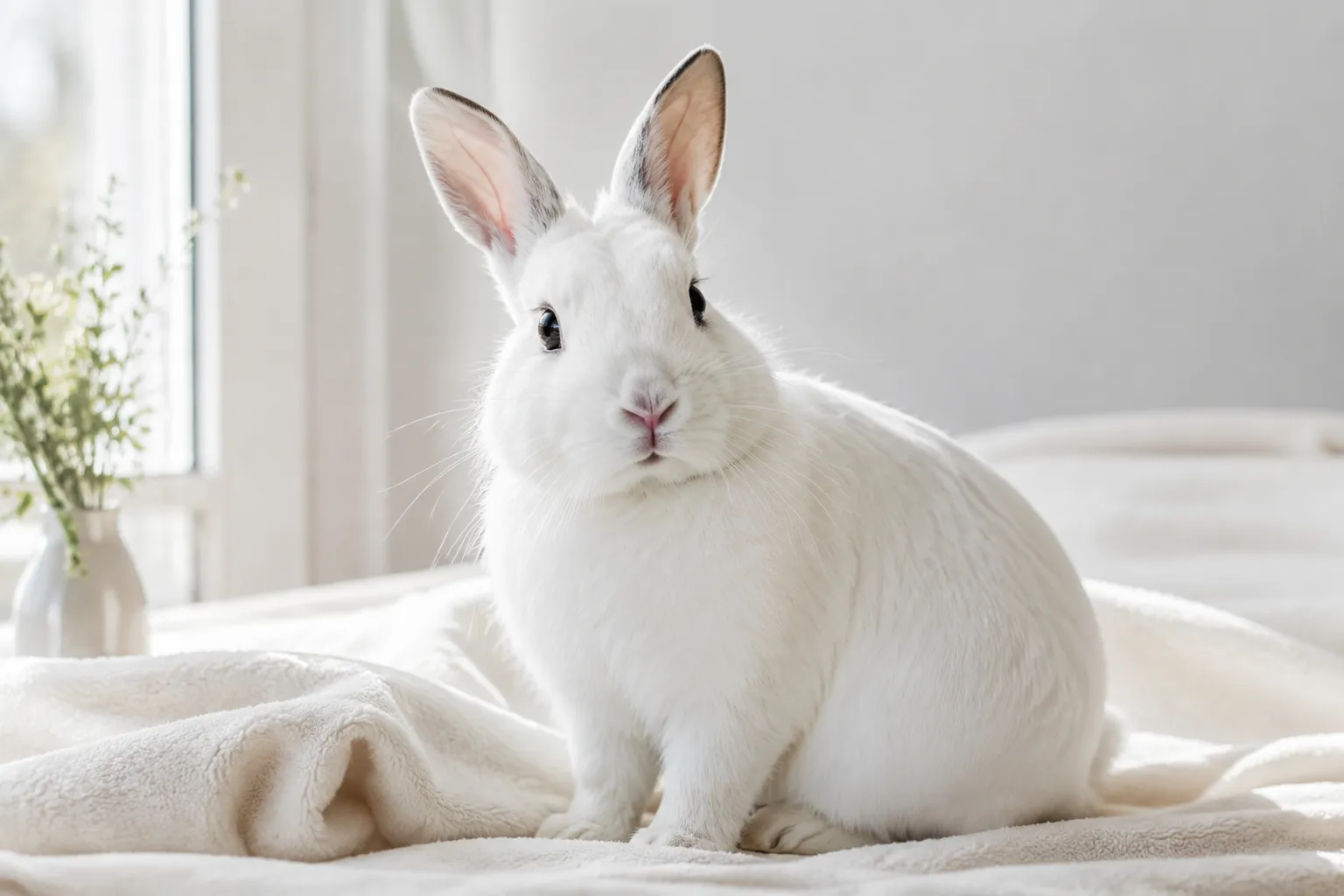
The camera slips off the workbench and cracks against the basement concrete, and your rabbit rockets under the shelving unit—the exact instant every one of those tidy rabbit photography tips you memorized this morning goes completely useless.
Quick Takeaways
- Bright light stresses rabbits — shoot in soft dawn or dusk light to match their crepuscular biology.
- Frontal eye contact reads as predator — approach from the side and let them see you in their periphery.
- Treats create frantic, not calm — familiar scent beats bribery for capturing real personality.
- Stillness tells the story — the loaf, the flop, and the periscope beat any action burst shot.
- Personality-rich photos become keepsakes — the images that show who your rabbit truly is make the best reference for custom pet figurines later on.
Here's the thing about rabbit photography advice: most of it was written for dogs and then quietly reformatted for smaller animals. Swap the noun, keep the rules. Nobody stopped to ask whether a prey animal with near-360-degree vision and a nose that runs its entire emotional life actually responds the same way a Labrador does to a treat and a "look here."
They don't. And if you've been photographing rabbits for a while, you already feel it. The advice keeps almost working. Close, but off. Like a song played half a step flat.
So let's fix that. Not with more rules—with the reasons the old rules keep letting you down.
Why the Standard Pet Photography Myths Fall Apart With Rabbits
Start with the animal, not the camera. That's the shift.
A rabbit is prey. Everything about its body is engineered around not being eaten—eyes set high and wide on the skull for a nearly panoramic field of view, ears that swivel independently, and a nervous system tuned to detect threat faster than it can think. When something feels off, a rabbit's body floods with cortisol, the stress hormone, and it does one of three things: freeze, flee, or, in the worst cases, go into a state so overwhelmed it simply shuts down.
Now hand that animal to a photography guide that says "get close, make eye contact, use bright light, hold their attention." You've just described, from a rabbit's point of view, a predator closing in during daylight with nowhere to hide.
"You can't out-technique a stressed rabbit. Calm the animal first, and the photo takes itself."
The experienced rabbit owner usually senses this intuitively but blames themselves for the results. "My rabbit hates the camera." Honestly? Your rabbit doesn't know what a camera is. Your rabbit knows what your body is doing, and the standard rules are asking you to move like a threat.
There's also a sensory mismatch nobody mentions. We photograph with our eyes because sight is our dominant sense. But a rabbit's world is built on smell. That warm, faintly sweet, hay-and-clean-laundry scent your rabbit carries—the one that clings to the fleece blanket they've claimed—that's their emotional anchor. Move a rabbit somewhere that doesn't smell like them, and no amount of good lighting will bring back the relaxed animal you know at home.
Once you see photography through the rabbit's senses instead of yours, the "rules" don't just soften. Several of them flip completely.
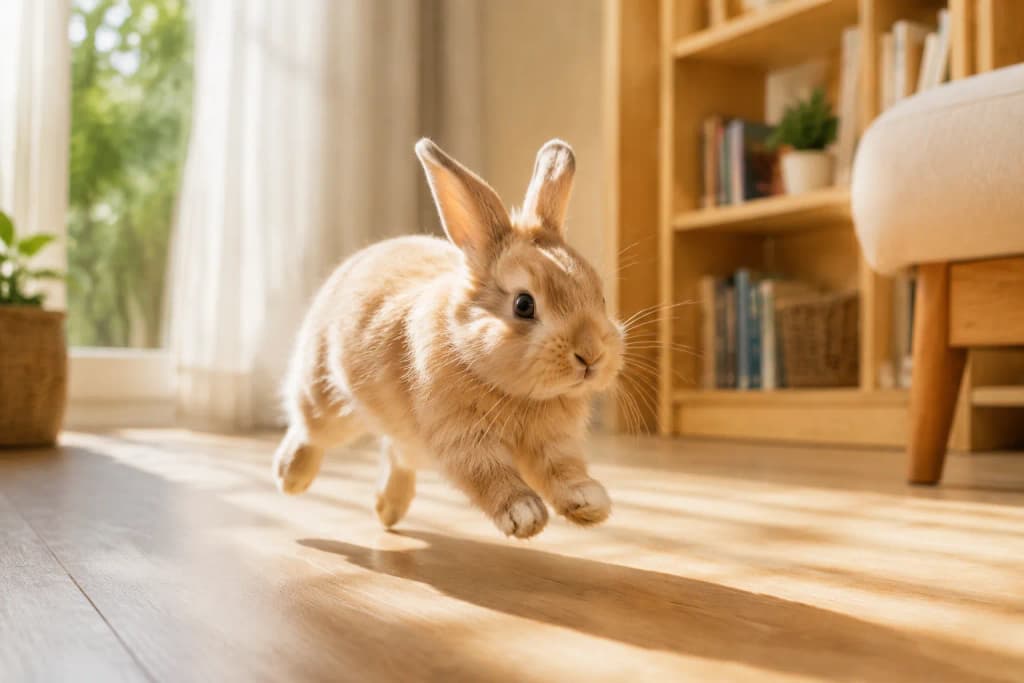
Myth 1: "Shoot in the Brightest Light You Can Find"
Picture this. It's noon, you've hauled your rabbit onto the sun-warmed windowsill for "great natural light," and instead of a glowing portrait you get a squinting, flattened animal who looks like they'd rather be anywhere else. You bump the exposure. Still flat. You give up.
Bright, direct light is the first myth to burn.
Rabbits are crepuscular. They're built to be most active and most comfortable at dawn and dusk—low, slanting, gentle light. Their large pupils are adapted for those dim edges of the day, which means harsh midday sun is not just unflattering, it's physically uncomfortable. A squinting rabbit isn't posing. It's coping.
There's a technical bonus to trusting their biology, too. Soft directional light—the kind you get near a north-facing window, on an overcast afternoon, or in that golden 30-minute window after sunrise—wraps around fur instead of blasting it. Rabbit fur is astonishingly dense (some breeds pack over 10,000 hairs per square inch), and soft light reveals that texture: the individual guard hairs, the way the undercoat glows, the little topographic map of a rosette on a Rex.
So what? Because the entire appeal of a rabbit photo is texture and softness. Blow it out with hard light and you've thrown away the one thing that made the subject worth shooting.
Here's the counterintuitive part. Slightly underexposing—shooting a touch darker than "correct"—often produces a moodier, richer rabbit portrait than the bright, even lighting every tutorial demands. Shadow gives fur dimension. Flat light erases it.
Myth 2: "Get Down Low and Lock Eyes for the Perfect Portrait"
We remember a customer telling us she'd spent an entire weekend crawling around her living room floor, phone extended, trying to get her Netherland Dwarf to "look at the camera." She got dozens of shots of a rabbit turned pointedly away from her. She thought the rabbit was being difficult.
The rabbit was being a rabbit.
Getting on their level is genuinely good advice—that part holds. Shooting down at a rabbit from human height makes them look small, cowering, and oddly like a potato. Eye level restores their dignity and lets you into their world.
But the eye contact instruction is where it goes wrong.
A rabbit's eyes sit on the sides of the head, giving them close to a full circle of vision. The catch is a blind spot directly in front of their nose and a moment of predator-alarm when a large face turns straight toward them and holds still. In the wild, a frontal, motionless, eye-locked approach is exactly what a fox does before it commits. Your rabbit's nervous system doesn't know you're just trying to nail focus on the eyes.
What actually works:
- Approach from the side, letting the rabbit see you enter their peripheral vision rather than looming head-on.
- Break your own stare. Look at your rabbit's feet or the wall past them while you shoot. Rabbits relax faster when they're not being watched by a big frontal face.
- Let them turn to you. The three-quarter angle—rabbit's body facing away, head turned back toward you—is not only calmer for them, it's a far more elegant, curious-looking pose than a flat frontal stare.
"The best rabbit portraits aren't the ones where they look at you. They're the ones where they forget you're there."
That's the whole trick. A rabbit who has forgotten the camera will give you the periscope, the nose-twitch, the ear-flick, the slow blink of genuine contentment. A rabbit locked in a staring contest gives you a photo of an animal deciding whether to run.
Myth 3: "Bribe Them With Treats to Get the Shot"
Treats feel like the obvious hack. Wave a piece of banana, get attention, snap. And for a single "looking at the lens" frame, sure, it can work.
But watch what a treat actually does to a rabbit's face and body. The ears pin slightly forward, the nose goes into overdrive, the whole animal leans into that food-focused, slightly frantic intensity. You've captured a rabbit thinking about banana. You have not captured your rabbit.
This is the difference between an attention shot and a personality shot, and it matters more than any camera setting.
The deeper issue is behavioral. Food rewards spike a quick burst of arousal, not the settled calm that produces the images you'll actually treasure—the flop, the grooming, the drowsy half-lidded loaf. You cannot bribe a rabbit into looking relaxed. Relaxation isn't a behavior you reward. It's a state you create.
And you create it through smell, not sugar.
Try this instead. Photograph your rabbit in the spot that smells most like them—their pen, their favorite corner, the fleece they've flattened into a nest. Bring that claimed blanket into your frame. Rub your hands with a bit of their used hay before you settle in so you don't smell alien. A rabbit surrounded by their own scent markers reads the environment as safe, and a safe rabbit does the things that make you fall in love with them all over again.
There's real science underneath this. Rabbits are territorial scent-communicators; they mark their space with chin glands (that's the "chinning" behavior when they rub objects). A space that smells like them is a space where their cortisol stays low. Low cortisol equals natural behavior. Natural behavior equals the photo you actually wanted.
For a deeper look at how rabbits communicate through body language and scent, the behavior resources at PetMD are a solid, vet-reviewed starting point.
Here's a quick comparison of what the old rule delivers versus what the rabbit-first approach gives you:
| The Standard Rule | What It Actually Produces | What Works Better |
|---|---|---|
| Shoot in bright light | Squinting, flat, stressed rabbit | Soft dawn/dusk or window light |
| Lock eyes with the lens | A frontal "predator stare" reaction | Side approach, three-quarter turn |
| Use treats for attention | A food-frantic face, not personality | Familiar scent and home territory |
| Freeze the action | Blurry chaos and a tired rabbit | Wait for stillness and trust poses |
| Clean neutral background | A generic, context-free image | Familiar objects that tell the story |
Myth 4: "You Need Burst Mode to Freeze Every Bit of the Action"
The binky is the holy grail, right? That mid-air twist of pure joy where a rabbit leaps and kicks its heels sideways. So the advice goes: crank the shutter speed, hold down burst, spray and pray.
We're not going to tell you never to chase a binky. When you catch one, it's magic. But betting your whole session on frozen action is where most people photographing small pets burn out and get nothing.
Here's what the action-obsessed guides miss: rabbits communicate more in stillness than in motion. Their entire emotional vocabulary lives in tiny, quiet gestures. And a rabbit at rest is a rabbit who trusts you—so those still images carry an emotional weight that a random mid-hop blur never will.
The single most meaningful rabbit photo you can take is the flop. When a rabbit throws itself onto its side, sometimes so dramatically that new owners panic and think something's wrong, it is broadcasting total, defenseless security. A prey animal only exposes its belly and goes limp when it feels completely safe. Capturing that isn't about shutter speed. It's about being calm and boring enough, for long enough, that your rabbit decides to flop in the first place.
So slow down. The counterintuitive move is to put the camera down and wait. Sit in the room. Let ten, fifteen minutes pass with nothing happening. Read a book. The rabbit needs to habituate to you and the equipment before the good stuff comes out. Rush this and you'll spend an hour photographing a vigilant, upright rabbit who never once relaxes.
Learning to read the poses tells you what you're even waiting for:
| Rabbit Pose | What It Means | Why It Photographs Beautifully |
|---|---|---|
| The loaf (feet tucked) | Content, settled, at ease | Clean silhouette, peaceful mood |
| The flop (thrown on side) | Total trust and safety | The ultimate "my rabbit loves me" shot |
| The periscope (standing tall) | Curious, alert, investigating | Dynamic, expressive, full-body |
| Nose twitch mid-groom | Relaxed self-maintenance | Intimate, candid, real |
| Ears back + relaxed body | Calm and comfortable | Soft, sleepy, tender |
When you do want motion, one practical setting beats blind burst mode: raise your shutter speed to at least 1/500th of a second and let your ISO climb to compensate, but frame wide and shoot in the low, energetic light of early morning when rabbits naturally get the zoomies. A little grain from a high ISO is nothing. A missed moment is everything.
A Word From Our Team
We spend our days turning pet photos into something families can hold, so we look at thousands of rabbit pictures. The ones that stop us cold are never the technically perfect ones.
"A rabbit's whole soul lives in the nose twitch and the flop. Capture those, and you've captured everything that matters."
— The PawSculpt Team
Myth 5: "A Clean, Neutral Background Always Looks Most Professional"
The seamless white backdrop. The advice is everywhere: eliminate distractions, isolate the subject, keep it clean. And for a product shot of a shoe, fine.
For a rabbit? It often strips away the very thing that made the photo matter.
Think about a picture that actually moves you years later. It's rarely the sterile studio frame. It's your rabbit half-buried in a mountain of timothy hay, or curled on the exact worn corner of the couch they always claimed, or peeking out from under the coffee table where they used to ambush your ankles. Context is memory. The background isn't clutter. It's the story.
There's a practical layer, too. Dragging a rabbit onto an unfamiliar seamless backdrop means dragging them somewhere that doesn't smell like them—straight back into the scent problem from Myth 3. That pristine white sweep you set up? To the rabbit it's a blank, exposed, scentless plain with no cover. Prey animals hate open ground. You've traded emotional truth and the rabbit's comfort for a "professional" look that mostly serves other photographers.
The move that beats a clean background is intentional context. Keep the familiar object that tells the story, and control the distraction instead of eliminating the setting. Widen your aperture (a lower f-number like f/2.8 or f/4) so the background softens into a blur while your rabbit stays sharp. Now you get both: the honesty of their real world and the focus of a portrait.
"The messy blanket in the corner of the frame isn't a flaw. It's proof this rabbit was loved in a real home."
One overlooked detail from our years of looking at these photos: the objects a rabbit chooses—the specific chewed corner, the flattened bed, the toy they never let go of—are the details that make a rabbit that rabbit and not a generic bunny. Keep them in frame. Future-you will be grateful.
The Counter-Point: When These "Wrong" Rules Are Suddenly Right
Now let's be honest, because pretending the old rules are always wrong would be its own kind of lazy.
There's one situation where clean backgrounds, even lighting, and clear frontal angles genuinely matter: when you're photographing your rabbit as reference to have something made from them. A memorial keepsake. A birthday commission. A 3D pet sculpture meant to capture their exact markings.
That's a different job with different rules.
If the goal is a keepsake that reproduces your rabbit faithfully, you actually do want:
- Even, soft light with no harsh shadows, so true colors and markings read clearly.
- Multiple angles—front, both sides, top, and a three-quarter—so the shape of the body, ears, and face is fully documented.
- A relatively uncluttered setting near the rabbit, so the details aren't lost in background chaos.
- Sharp focus on the fur patterns, especially any unique rosettes, spots, or color breaks.
See the tension? For an emotional portrait, you break the rules and chase personality. For a reference set, you follow them and chase accuracy. The mistake is thinking there's one correct way to photograph a rabbit. There are at least two, and they serve completely different purposes.
Smart owners do both in the same session. Get your soulful, rule-breaking personality shots first, while the rabbit is fresh and relaxed. Then, if you ever want a keepsake, spend the last five minutes capturing the clean, well-lit reference angles before your rabbit's patience runs out.
Here's a quick reference for what those keepsake photos need:
| Angle Needed | What to Capture | Quick Tip |
|---|---|---|
| Front / face | Symmetry, eye color, ear set | Soft even light, no squint |
| Both side profiles | Body length, fur pattern flow | Keep the whole rabbit in frame |
| Top-down | Ear placement, back markings | Shoot from directly above |
| Three-quarter | Overall proportion and posture | The most natural, lifelike angle |
| Detail close-up | Unique markings, rosettes, spots | Fill the frame, keep it sharp |
Turning Rabbit Photography Into Something You Can Hold
Photographs fade into camera rolls of ten thousand other pictures. That's just how it goes—the images we swear we'll never lose get buried under everyday clutter.
Which is why more rabbit families are turning their favorite frames into something physical. Some make photo books. Some frame a single print for the wall. And increasingly, people are turning that one perfect image—the flop, the periscope, the specific little face—into a custom pet figurine that sits on the desk where you can actually see it every day.
Here's where the manufacturing genuinely matters, because it's often misunderstood. A PawSculpt figurine isn't painted. It's digitally sculpted by master 3D artists from your photos, then precision 3D printed in full color, where the color is printed directly into the resin itself, voxel by voxel—part of the material, not a coat on top. The only manual step afterward is a protective clear coat for durability and sheen.
Why does that matter for a rabbit? Because rabbit coats are all about subtle color transitions and dense texture, and full-color 3D printing reproduces those markings and fur patterns directly in the resin with a natural, authentic finish—fine layer texture and all, not a glossy plastic fake. That soft break where a Dutch rabbit's color meets white, or the peppered agouti of a wild-type coat, comes through because the color is baked into the print, not brushed on afterward.
This is exactly why your photos matter so much. A great reference photo—sharp, well-lit, showing true markings—gives the 3D artists everything they need. Blurry or badly lit shots make their job harder. The better your rabbit photography, the more your rabbit's real personality survives the leap into three dimensions.
We're not going to quote you prices or turnaround times here, because those things shift and we'd rather you get the current details straight from the source. If a keepsake is on your mind, the full process, materials, and guarantees are all laid out at pawsculpt.com.
Bringing It All Together
Go back to that basement for a second. The dropped camera, the rabbit vanished under the shelving, the frustration of rules that just wouldn't cooperate.
Now you know why. Those rules were never written for a prey animal who navigates the world through scent and stillness and the constant, quiet math of staying safe. You were fighting your rabbit's biology and calling it a lack of skill.
Put the rules down. Get low, but look away. Trade the noon sun for the soft edges of the day. Skip the treats and fill the room with their own hay-sweet smell instead. Then be patient enough, boring enough, still enough that your rabbit forgets you're there—and flops.
That's the shot. Not the one where they perform for you. The one where they trust you enough to stop performing at all.
Your next step is simple: tonight, in the last soft light of the day, sit on the floor with your rabbit and your camera down at your side. Wait. Don't chase anything. Photograph the first moment they truly relax. These are the best rabbit photography tips we know, because they're not really about photography at all—they're about seeing your rabbit clearly, and letting the picture follow.
That's what you'll want to hold onto. Long after the light changes.
Frequently Asked Questions
What is the best time of day to photograph a rabbit?
Early morning and the hour before sunset are ideal. Rabbits are crepuscular, meaning they're naturally most comfortable and active in low, soft light. That same gentle light also wraps around their dense fur and reveals texture that harsh midday sun flattens out.
Should I make eye contact with my rabbit when taking photos?
It's better not to hold a direct frontal stare. A large face turned straight toward a rabbit and holding still mimics how a predator approaches, which triggers their alarm response. Approach from the side, look slightly past them, and let your rabbit relax into a natural three-quarter turn instead.
Why does my rabbit run away every time I bring out the camera?
Your rabbit isn't afraid of the camera itself—it's reacting to how you move. Reaching quickly, looming overhead, or staring head-on all read as threat to a prey animal. Slow your movements, approach from the side, sit quietly, and give your rabbit time to get used to you and the equipment before expecting good shots.
What photos work best if I want a custom rabbit figurine?
Aim for soft, even lighting with no harsh shadows and capture several clear angles: front, both side profiles, top-down, and a three-quarter view. Keep the focus sharp on unique markings and fur patterns. These reference photos help 3D artists reproduce your rabbit accurately, and you can see the full process at pawsculpt.com.
Do I need an expensive camera to take great rabbit photos?
Not at all. Reading your rabbit's behavior and creating a calm, familiar setting matters far more than your gear. A relaxed rabbit in soft natural light will photograph wonderfully on a recent smartphone. Understanding the animal beats upgrading the equipment every time.
Is it normal for my rabbit to flop over dramatically during a photo session?
Yes, and it's a wonderful sign. A sudden flop onto the side means your rabbit feels completely safe, since a prey animal only exposes its belly when it fully trusts its surroundings. It's one of the most meaningful rabbit photos you can capture.
Ready to Celebrate Your Pet?
Every rabbit has a story worth preserving—the specific flop, the nose twitch, the way they claimed one corner of the couch as their own. Whether you're honoring a companion who's crossed the rainbow bridge or celebrating your rabbit's quirky personality right now, a custom PawSculpt figurine captures the details that make your bunny one-of-a-kind. Put your best rabbit photography tips to work, then let those photos become something you can hold.
Visit pawsculpt.com to learn more about our full-color 3D printing process, revisions, and quality guarantee