
Resin Bengal Figurine vs Memorial Jewelry: Which Actually Survives 50 Years?
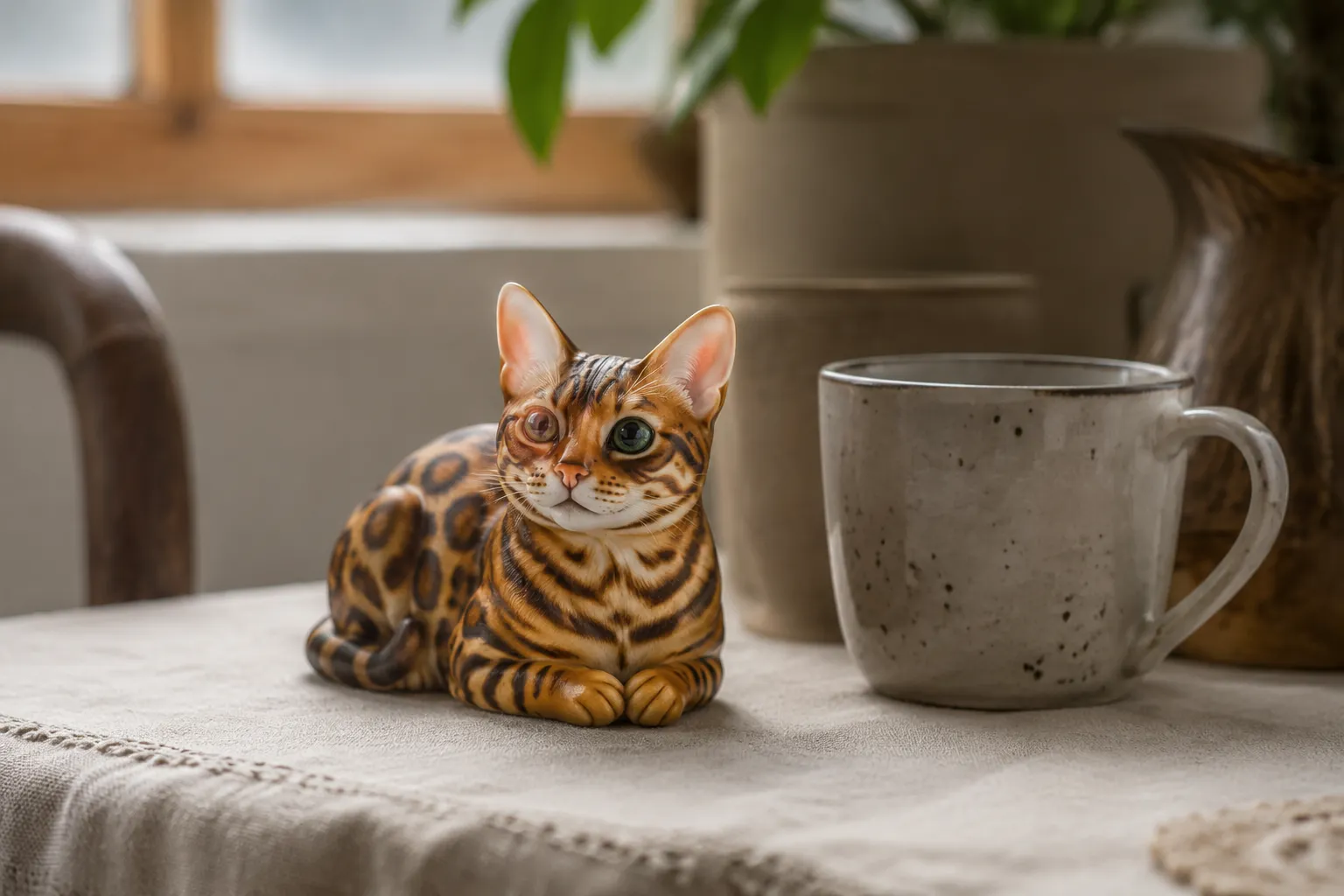
You're standing in the pet store keepsake aisle, phone lit, thumb frozen between two browser tabs: a resin Bengal figurine in one, a locket of memorial jewelry in the other. The memorial figurine vs jewelry question isn't really about price. It's about which one your grandkid finds in a drawer in fifty years.
A well-made full-color resin figurine and quality memorial jewelry can both survive 50 years, but they age differently. Resin resists corrosion and won't tarnish, while jewelry risks clasp failure, loss, and wear from daily contact. For a bengal cat keepsake meant to last generations, resin durability edges out jewelry, provided it's kept out of direct sun.
Quick Takeaways
- Resin doesn't tarnish or corrode — its main enemy is UV light, not time.
- Jewelry's biggest 50-year risk is loss — small objects wander, clasps fail, drawers get cleaned out.
- A figurine gets displayed; jewelry gets stored — visibility changes how a keepsake survives.
- Match the format to the person, not the trend — some grieve by wearing, others by seeing.
- Compare longevity honestly before you buy — our breakdown of custom pet portrait options lays out the tradeoffs.
The 50-Year Question Nobody Asks at Checkout
We've filled thousands of keepsake orders, and here's the pattern that surprised us most: almost nobody asks how long the thing will last. They ask about likeness, about turnaround, about price. Longevity comes up maybe once in fifty conversations.
That's a mistake, and it's a very human one.
Grief compresses your time horizon. In the raw weeks after a loss, you're not thinking about 2075. You're thinking about tonight, about the empty spot on the bed, about the smell of your Bengal's fur that's already fading from the blanket you can't bring yourself to wash. Your brain, flooded with cortisol (the stress hormone that spikes during acute grief), pulls your focus to the immediate. Planning for decades feels impossible when you can barely plan for dinner.
But a keepsake isn't for the raw weeks. It's for the long, quiet after.
"The keepsake you buy in week one is for the person you'll be in year twenty. Buy for her, not just for tonight."
So the real question at checkout should be the one nobody asks. Which of these actually survives the moves, the spring cleanings, the estate sales, the well-meaning relative who "tidied up"? Let's get into what we've actually seen.
Resin Durability: What Actually Happens Over Decades
Let's clear up the biggest myth first, because it costs people real peace of mind.
People hear "resin" and think "cheap plastic that yellows." That's true of some resins. It is not true of the full-color resin used in professional 3D printing, and the difference comes down to chemistry and one specific enemy.
The real threat isn't age. It's ultraviolet light.
Quality resin doesn't rot. It doesn't rust. It doesn't attract moths or absorb moisture the way paper or fabric keepsakes do. Left in a drawer, a good resin figurine in 2075 will look almost exactly like it did the day it arrived.
The one thing that degrades it is UV exposure. Direct sunlight, day after day, year after year, breaks down polymer chains and can shift color or cause brittleness. This is why UV-resistant materials and a protective clear coat matter so much. It's also why we tell customers something that sounds counterintuitive.
Don't display your figurine on the sunniest windowsill in the house. That bright south-facing ledge feels like the place of honor. It's actually the one spot most likely to fade any pigment over decades. A bookshelf across the room, catching indirect light, will preserve it far longer.
Here's how the common keepsake materials actually hold up over a 50-year span:
| Material | Main 50-Year Threat | Realistic Longevity | Best Kept |
|---|---|---|---|
| Full-color resin (UV-treated) | Direct sunlight | 50+ years indoors | Indirect light, on display |
| Sterling silver jewelry | Tarnish, clasp wear, loss | 50+ years if maintained | Worn or in anti-tarnish storage |
| Gold jewelry | Loss, deformation | Indefinite, but easily lost | Secure storage |
| Printed photo/canvas | Fading, humidity | 20-40 years | Away from sun and damp |
| Cremation ash glass | Breakage | 50+ years if unbroken | Stable, low-traffic shelf |
Notice the resin row. Its weakness is a single, avoidable variable. Most other materials fight multiple enemies at once.
Memorial Jewelry: The Honest Case For and Against
We're not here to talk you out of jewelry. For a lot of people, it's genuinely the better choice, and we'd be doing you a disservice to pretend otherwise.
Jewelry has one thing a figurine never will: contact. A pendant rests against your sternum. You touch it in a meeting without anyone knowing why. There's a reason attachment theory research keeps circling back to physical proximity. We soothe ourselves through touch, and a keepsake you can hold against your body taps into something older than language.
One customer told us she'd rub her thumb across her cat's paw-print pendant during her father's funeral, two years after the cat died. The cat had gotten her through worse than this, she said. That's what jewelry does well. It travels with you into the hard rooms.
But here's what the jewelry ads won't tell you.
The number one reason memorial jewelry doesn't survive 50 years has nothing to do with the metal. It's loss. Small things vanish. A clasp fails on a bus. A ring slips off during dishes and goes down the drain. A pendant gets "put somewhere safe" and is never seen again.
Silver tarnishes and needs polishing (which, done carelessly, wears down engraved details over the decades). Cremation-ash jewelry carries an emotional weight that's harder to talk about: some people find that keeping ashes on their body keeps a wound open longer than they expected. That's not a flaw in the product. It's a mismatch between the object and where the person is in their grieving.
The American Kennel Club's guidance on coping with pet loss makes a point worth repeating here: there's no single correct way to memorialize. The best object is the one that fits how you actually process loss.
The Bengal Factor: Why Markings Change Everything
Here's where the two options split in a way most comparison guides completely miss.
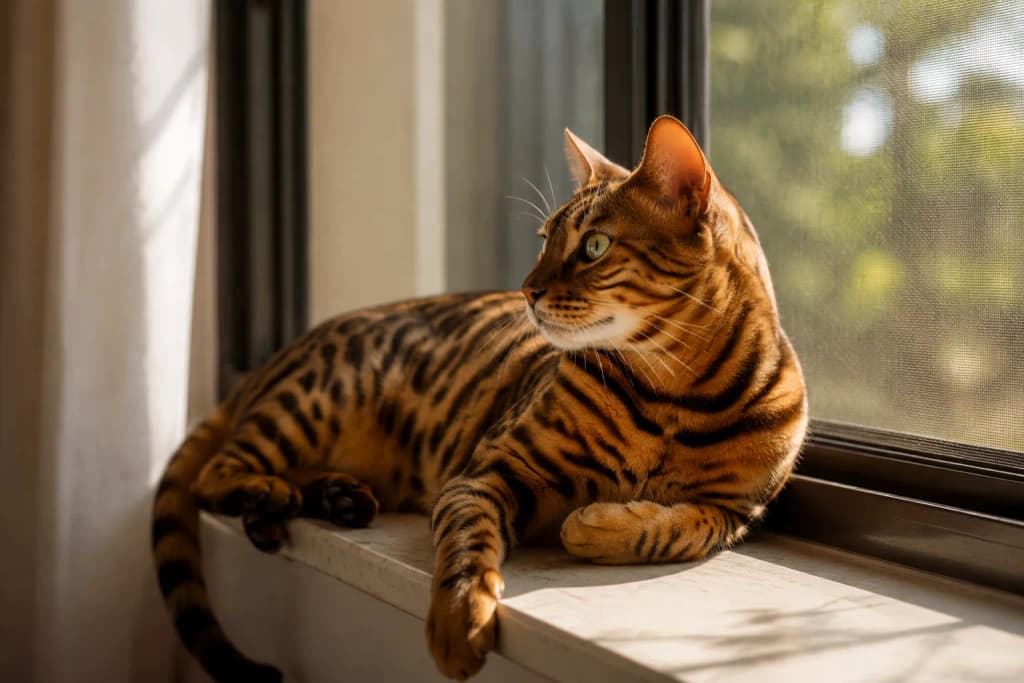
A Bengal is not a solid-color cat. That's the whole point of the breed. Those rosettes, the marbling, the glitter-tipped coat, the way the spots stretch and warp across the shoulders like something half-wild. A Bengal's markings are as individual as a fingerprint.
Jewelry struggles with this. Engraving is linear. A paw print, a name, a date, a silhouette. Beautiful, but it captures the fact of your cat, not the pattern of your cat. You can't engrave a rosette field into a locket and have it read as your specific Bengal.
A bengal cat keepsake in full-color resin can hold those markings. Advanced 3D printing technology reproduces fur patterns and colors directly in the resin, voxel by voxel, so the color is part of the material itself rather than a layer sitting on top. That's why it doesn't chip off the way surface color would.
This is where a studio like custom cat figurines from PawSculpt fits the Bengal specifically. The figurine is digitally sculpted by 3D artists, then precision-printed in full color. It's a portrait, not a photocopy. An artist's read on your cat's posture and expression and that unmistakable coat, not a mechanical clone.
"A Bengal's coat is a fingerprint. A keepsake that can't hold the pattern is holding the wrong cat."
— The PawSculpt Team
There's a subtle psychological reason this matters. When a keepsake carries enough specific detail, it triggers what memory researchers call cue-dependent recall. The rosettes don't just represent your cat. They pull up the actual memory: the warmth of him on your chest, the chirp he made at birds, the specific smell of his fur after he'd been sleeping in the sun. Generic keepsakes can't unlock that. Detailed ones can.
What About Displaying Both? The Counter-Point
Now let me argue against my own premise for a minute, because the honest answer isn't always "pick one."
I've been framing this as figurine versus jewelry, survival of the fittest. But some of the most at-peace families we've worked with didn't choose. They did both, and each object did a different job.
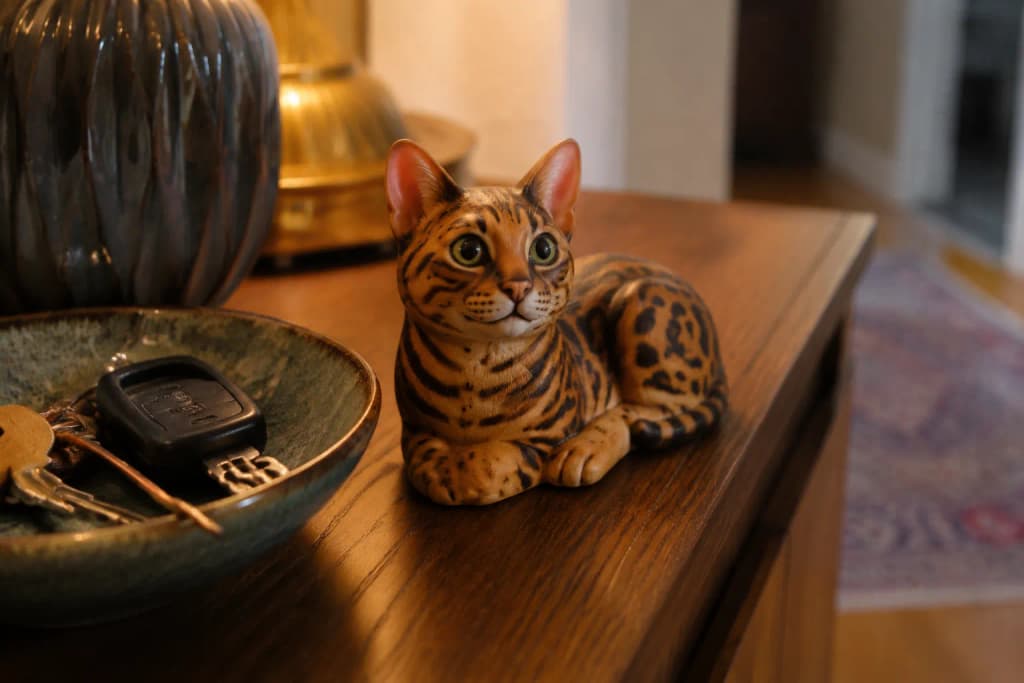
The jewelry went to the person who needed contact. The daughter who moved across the country wore the pendant. The figurine stayed on the family bookshelf, the fixed point everyone came home to. One traveled, one anchored. Neither was competing.
And here's the genuinely counterintuitive part: the figurine sometimes protects the jewelry's memory. When there's a visible, displayed object that everyone in the household recognizes, the small worn pendant in the drawer doesn't get thrown out during an estate cleanup, because the story stays alive. The figurine keeps the narrative in the room. Objects survive when their meaning is visible to the people around them, not just to the one who bought them.
So if your budget genuinely only stretches to one, this whole article helps you choose. But if the choice is tearing you up, know that "both" is a legitimate answer, and the two objects often make each other last longer.
That said, don't buy both out of guilt. Guilt-buying is its own trap, and we'll get to that.
Matching the Keepsake to the Griever
Grief isn't one experience. Broadly, people lean toward two coping styles, and the research on this is fairly consistent.
Some are loss-oriented: they turn toward the pain, want to feel it, want the reminder close. Others are restoration-oriented: they cope by re-engaging with life and prefer a memorial that sits gently in the background rather than confronting them daily.
This isn't a personality flaw either way. It's just wiring. And it should drive your choice more than price or trend.
| If you're... | You'll likely prefer | Because |
|---|---|---|
| Loss-oriented (want closeness) | Wearable jewelry | Constant physical contact soothes |
| Restoration-oriented (want gentleness) | A displayed figurine | Present but not confrontational |
| Detail-driven / breed-proud | Full-color resin figurine | Captures markings, not just outline |
| Highly mobile / relocating often | Jewelry | Travels with you anywhere |
| Building a family memory | Figurine | Stays a shared, visible anchor |
The mistake most people make is buying for the griever they think they should be, not the one they are. If daily contact would reopen the wound faster than you can heal, a piece you must wear is the wrong call, no matter how lovely. Match the object to your actual nervous system.
What to Expect When You Choose a Figurine
If you land on the figurine side, here's the honest shape of the process, without the invented promises you'll see elsewhere.
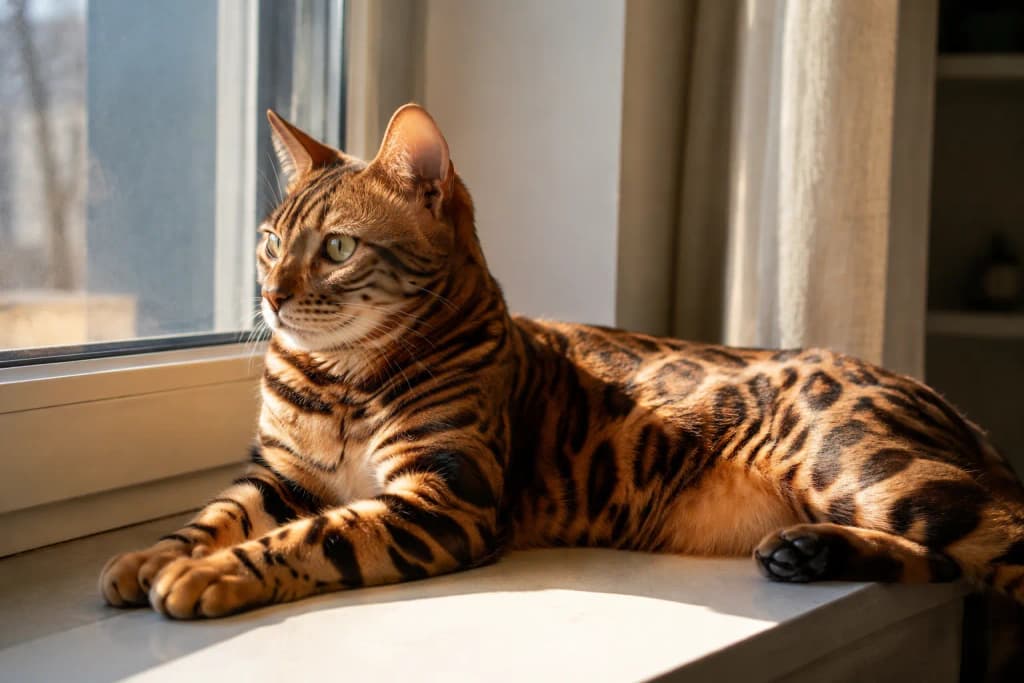
You start with photos. The best reference shots are taken at your cat's eye level, in soft natural light, showing the markings clearly. Overhead phone shots flatten the rosettes. A few angles beat one perfect front-facing portrait, because the artist needs to understand the coat wrapping around the body.
At PawSculpt, you can generate a free instant AI preview on the website to get a feel for it, and after a deposit, an artist's 3D preview typically comes within 7 days so you can react before anything is printed. Delivery generally runs 27 to 40 days in the US and 33 to 47 days internationally after final payment. We won't quote you anything faster, because keepsakes done right aren't rushed, and we won't pretend otherwise.
For the full breakdown of the sculpting workflow, the pet portrait comparison page walks through it without the sales gloss.
Caring for resin so it lasts the 50 years
- Keep it out of direct, sustained sunlight — this is the single most important rule.
- Dust with a soft dry cloth, not chemical cleaners that can dull the clear coat.
- Avoid extreme heat (no radiators, no hot car dashboards) since resin can soften.
- Handle by the base when moving it, to protect thin details like tail tips and ears.
Do those four things and the resin's biggest weakness is neutralized. That's the whole care routine. It's genuinely that simple, which is part of why it holds up.
Frequently Asked Questions
Which lasts longer, a memorial figurine or jewelry?
Both can realistically reach 50 years. Resin doesn't tarnish or corrode, so its survival depends mostly on keeping it out of direct sun. Jewelry's real enemies are loss, clasp failure, and slow wear from daily contact. If unattended longevity matters most, resin has the edge. If closeness matters most, jewelry wins.
Does resin yellow or degrade over time?
Cheap craft resin can. Professional UV-treated full-color resin protected by a clear coat does not rot, rust, or attract pests. The only meaningful threat is prolonged direct sunlight, which can shift color over many years. Display it in indirect light and it will look nearly unchanged for decades.
Can a figurine really capture a Bengal's markings?
Yes, and this is where figurines pull ahead of engraved jewelry. Full-color 3D printing places color voxel by voxel, so the rosettes and marbling become part of the resin itself. It's an artist's sculpted interpretation of your cat, a portrait rather than a photocopy, but it holds the pattern that makes a Bengal a Bengal.
Is a custom figurine worth it if I already have photos?
Photos live on screens you scroll past. A physical keepsake occupies space in the room and pulls memory differently, engaging touch and presence. Many families keep both. The figurine becomes the shared anchor everyone recognizes, while photos stay personal and private.
What if I want closeness, not a display piece?
Then jewelry is probably your better fit, honestly. A pendant or ring you wear delivers the physical contact that soothes acute grief. Some people pair a worn piece with a displayed figurine so one travels with them and one anchors the home.
Ready to Celebrate Your Pet?
Every pet has a story worth preserving. Whether you're honoring a beloved companion who's crossed the rainbow bridge or celebrating your furry friend's unique personality, a custom PawSculpt figurine — a sculpted portrait, not a photocopy — captures the character that makes your pet one-of-a-kind. When you weigh the memorial figurine vs jewelry decision for a bengal cat keepsake meant to outlast you, resin durability and those unmistakable markings are worth seeing up close.
Start with a free instant AI preview, review your artist's 3D proof before anything is printed, and receive your finished piece insured, tracked, and carefully packed.