
You Already Ordered — Here's the Resin Science That Proves Your Ragdoll Figurine Will Outlast the Competition
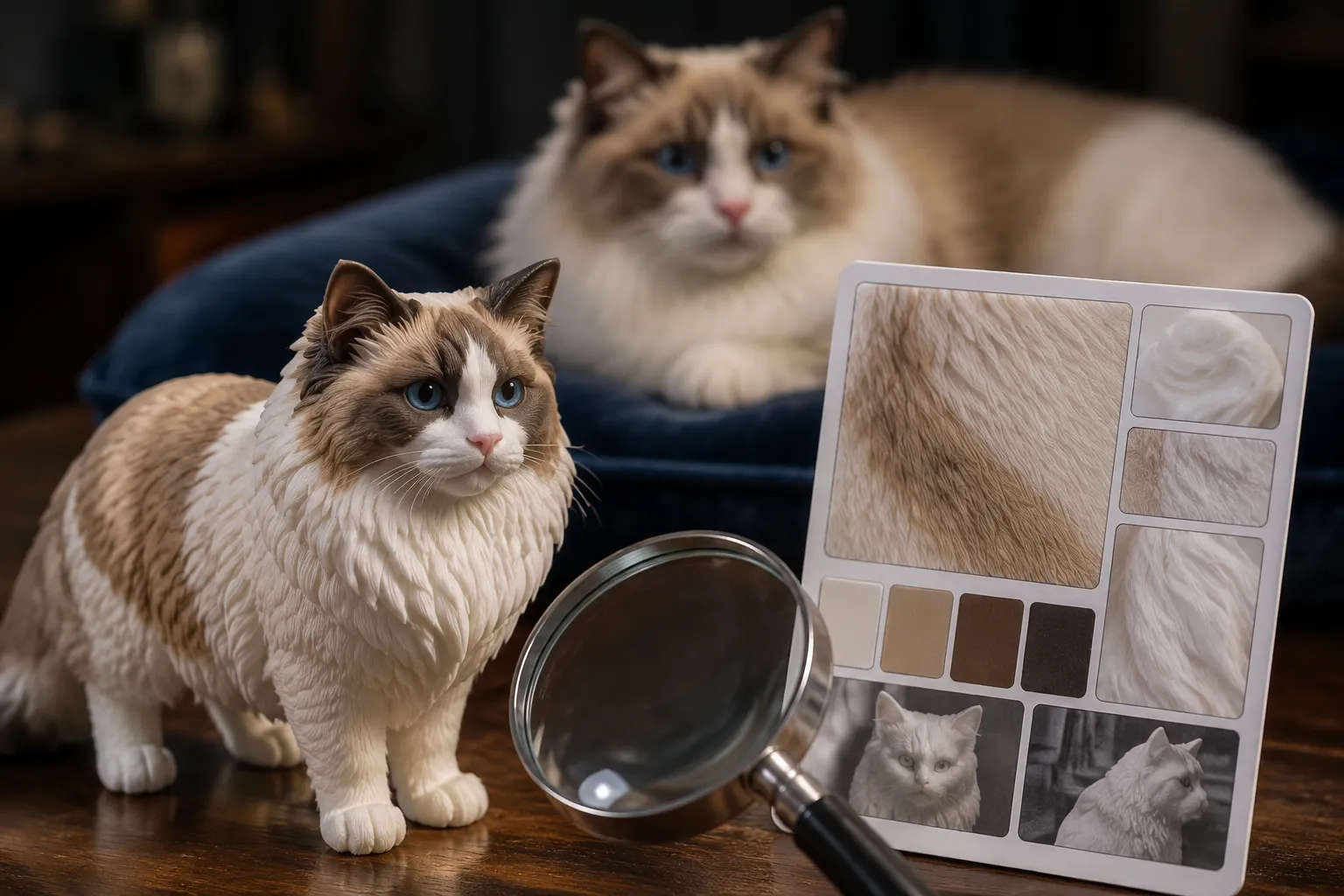
"The best material is the one that outlasts the memory of choosing it." — Charles Eames, on the quiet permanence of good design.
A woman stood in the figurine aisle of a pet store last month—one of our customers, as it turned out—holding a mass-produced ragdoll cat figurine in each hand. One was ceramic. The other, painted resin. She set both down and pulled out her phone. What she searched was telling: custom pet figurine quality. Not "cute cat statue." Not "cheap ragdoll gift." She wanted to know what would last. That search led her to us, and the question she asked our team is the same one this article answers in full.
Quick Takeaways
- Full-color resin outlasts painted alternatives — color fused into the material won't chip, peel, or fade like surface coatings
- UV-resistant resin formulations matter more than thickness — a thin UV-stable print beats a thick unprotected one every time
- Not all 3D printed resin is equal — PolyJet-style voxel printing produces dramatically different results than FDM or basic SLA
- Your ragdoll's specific markings are reproducible — PawSculpt's full-color 3D printing process captures bicolor points, lynx taby overlays, and mitted patterns directly in resin
- The clear coat is the unsung hero — post-processing sealant determines long-term durability more than most buyers realize
The Resin Landscape: Why Most "Durable" Figurines Aren't
Here's the thing most comparison articles won't tell you: the word "resin" on a product listing is almost meaningless without context. It's like saying a car is "metal." Sure. But what metal? What alloy? What treatment?
The figurine market uses "resin" as a catch-all for at least four fundamentally different material categories, and they perform nothing alike over five, ten, or twenty years on a shelf.
| Resin Type | Color Method | Chip Resistance | UV Stability | Best For |
|---|---|---|---|---|
| Polyurethane cast resin | Surface paint applied after casting | Low — paint layer separates from substrate | Poor without topcoat | Mass-produced figurines |
| Standard SLA photopolymer | Surface paint or dye bath | Moderate — but yellows over time | Poor — notorious for UV degradation | Protyping, short-term display |
| Full-color PolyJet resin | Color printed voxel-by-voxel INTO material | High — no paint layer to separate | Good — UV-resistant formulations available | Archival-quality figurines, museum models |
| FDM thermoplastic (PLA/ABS) | Surface paint | Low-Moderate | Moderate (ABS) to Poor (PLA) | Budget prints, functional parts |
That third row is where things get interesting for anyone ordering a ragdoll cat figurine they expect to keep for decades.
The Voxel Difference Nobody Explains
When color is printed into the material at the voxel level—think of voxels as 3D pixels—there is no interface between "color layer" and "structural layer." They're the same thing. This is a fundamentally different engineering reality than painting a surface.
A painted figurine has what materials scientists call an adhesion boundary. Two different materials meeting at a surface. Over time, differential thermal expansion (your house gets hot in summer, cold in winter), humidity cycling, and UV exposure all stress that boundary. Paint lifts. Paint cracks. Paint yellows where the figurine faces a window.
Full-color resin printing eliminates that boundary entirely. The blue of your ragdoll's eyes isn't sitting on the resin. It is the resin.
"The color goes all the way through—like a stick of rock candy. You could sand the surface and the pattern would still be there."
That's not marketing language. That's materials science.
What Makes Ragdoll Markings Particularly Demanding
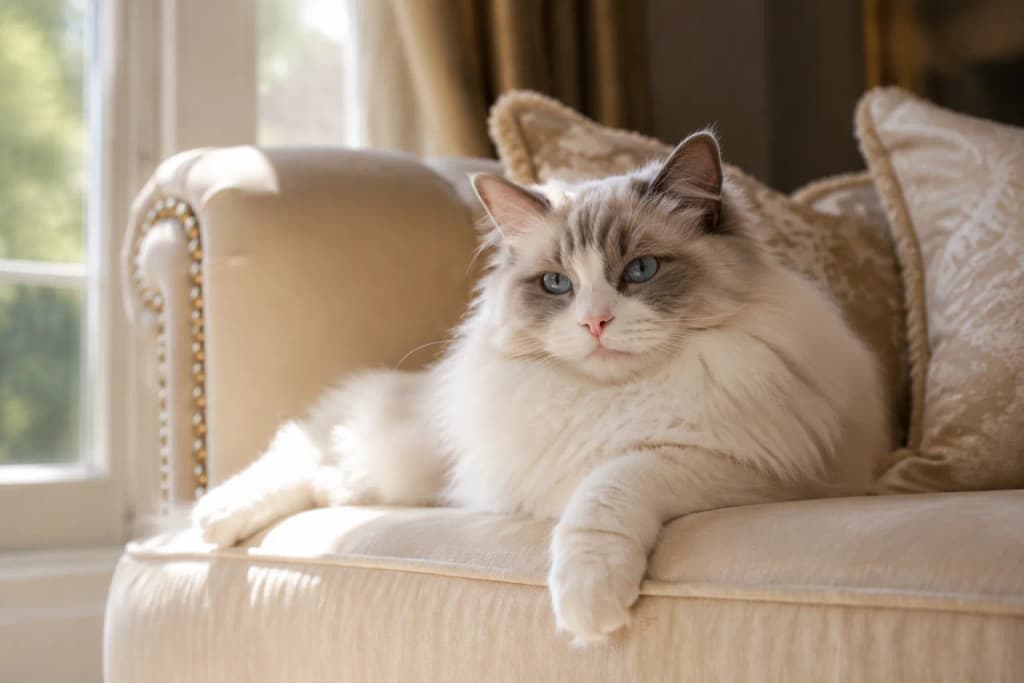
Ragdols are, from a reproduction standpoint, one of the more challenging breeds. And this is the counterintuitive insight most figurine buyers miss: the difficulty isn't in the blue eyes or the fluffiness—it's in the gradient transitions.
A tuxedo cat has hard edges. Black meets white. Done. A ragdoll's colorpoint pattern involves subtle thermal gradients where cream transitions into seal, chocolate, blue, or lilac across millimeters of fur. The mask bleds into the cheks. The points darken toward the extremities in a way that isn't a line—it's a field.
Why This Matters for Manufacturing Method
- Painted figurines require an artist to approximate these gradients with blending techniques. Results vary by the painter's skill that day. Two "identical" figurines from the same mold will look different.
- Full-color 3D printing reproduces gradients mathematically. The digital sculptor maps color values across the mesh, and the printer deposits exactly those values. The transition from cream chest to seal point happens at the resolution of the printer—typically 600-1200 DPI in the color plane.
For mitted ragdols (white paws, chin stripe), the precision matters even more. That clean white mitten edge against the darker leg? It's either crisp or it isn't. There's no "close enough" when you're looking at a figurine of your specific cat and you know exactly where the white stops.
"Every ragdoll's mask is a fingerprint. Two seal-points from the same litter will have different mask shapes, different ear shading, different degrees of nose leather coloring. We treat each one as a unique specimen."
— The PawSculpt Team
3D Printed Resin Durability: The Numbers That Matter
Let's get specific. When we talk about 3D printed resin durability, we're really talking about four measurable properties:
1. Tensile Strength
Full-color PolyJet-style resins typically achieve tensile strengths between 50-65 MPa. For context, that's comparable to ABS plastic (the stuff LEGO bricks are made from). Your figurine can survive a fall from a standard shelf height onto hardwood without shattering—though we'd rather you didn't test that.
2. UV Resistance
This is where formulation matters enormously. Early photopolymer resins were notorious for yellowing. Modern UV-resistant formulations incorporate stabilizers that dramatically slow photodegradation. Combined with a UV-protective clear coat, color shift over a decade of indirect light exposure is minimal—we're talking imperceptible to the human eye under normal display conditions.
3. Thermal Stability
Full-color resins maintain structural integrity across normal household temperature ranges (-10°C to 60°C). Your figurine won't warp on a sunny windowsill the way a cheap PLA print might. It won't become brittle in an unheated garage over winter.
4. Moisture Resistance
Cured resin is effectively waterproof. The clear coat adds an additional barrier. Humidity cycling—the silent killer of painted figurines—has negligible effect on color-integrated resin.
| Durability Factor | Painted Cast Resin | Full-Color3D Print + Clear Coat | Winner |
|---|---|---|---|
| Color longevity (10+ years) | Paint fading/chipping likely | Color integrated, UV-stabilized | Full-color 3D print |
| Impact resistance | Britle — shatters on hard impact | Moderate flex before failure | Full-color 3D print |
| Humidity cycling | Paint adhesion degrades | No paint boundary to fail | Full-color 3D print |
| Repairability | Can be repainted (changes appearance) | Surface scratches buffable with clear coat | Depends on damage type |
| Initial appearance | Smooth, traditional look | Fine layer texture with gloss coat | Subjective preference |
That last row deserves its own discussion.
The Counter-Point: When "Perfect" Isn't the Goal
Here's where we challenge our own argument, because intellectual honesty matters more than a sales pitch.
Full-color 3D prints have a characteristic surface texture. Fine layer lines. A subtle grain. Under the clear coat, this creates something that looks and feels different from a traditionally molded and painted figurine. Some people describe it as "organic." Others might call it "less polished."
If what you want is the glassy-smooth, almost porcelain-like finish of a high-end painted ceramic figurine, a 3D print won't give you that. It gives you something else—something we'd argue is better for representing a living creature covered in fur—but "better" is subjective.
The texture actually works in favor of ragdoll figurines specifically. That fine grain mimics the visual complexity of semi-long fur in a way that a perfectly smooth surface never could. A smooth surface reads as "plastic." The textured surface reads as "alive." But we acknowledge: this is an aesthetic judgment, not a scientific one.
The honest assessment: If you prioritize absolute surface smoothness above all else, a master-painted porcelain piece by a skilled artisan will look smother. It will also cost significantly more, take significantly longer, be significantly more fragile, and its paint will eventually degrade. Tradeoffs exist. We think the tradeoff favors full-color resin for most people. But "most people" isn't everyone.
Pet Figurine Company Comparison: What to Actually Evaluate
We've seen dozens of pet figurine company comparison articles that focus on the wrong things. They compare prices. They compare turnaround times. They compare how many photos you need to submit.
Those things matter. But they're secondary to the question that determines whether you'll still love your figurine in 2035: what is it made of, and how was the color applied?
The Three Questions That Actually Predict Long-Term Satisfaction
1. Is the color in the material or on the material?
This is the single most important question. Ask it directly. If a company says "hand-painted" or "painted after printing," you now know there's an adhesion boundary that will eventually fail. If they say the color is printed into the resin itself, you're in different territory.
2. What post-processing is applied?
A clear coat isn't optional for longevity. It's the difference between a figurine that looks great for two years and one that looks great for twenty. The clear coat protects against:
- Micro-scratches from dusting
- UV penetration to the color layer
- Fingerprint oils (yes, the oils from handling can degrade unprotected resin over years)
- Ambient pollutants (cooking oils, cigarette smoke if applicable)
3. What's the resolution of the color reproduction?
This determines whether your ragdoll's subtle lilac points will read as "lilac" or "vaguely purple-gray." Higher DPI in the color plane means more accurate color transitions. Ask about print resolution. If a company can't tell you, that's information in itself.
What Most Comparison Sites Get Wrong
Most comparison articles rank companies by customer service responsiveness, website design, and social media presence. Those are nice. They're not what determines whether your figurine survives a move across the country in a cardboard box, or whether the color still looks right after five years near a window.
We'll be real: we're biased. We make these things. But the bias comes from the material science, not despite it. We chose full-color resin 3D printing specifically because it solves the longevity problems that plague painted alternatives. Visit pawsculpt.com to see the process in detail—the technology page explains the voxel-level color integration better than we can in a blog post.
The Clear Coat: Your Figurine's Invisible Armor
The only manual step in PawSculpt's process is applying the clear coat after printing. And honestly, it's the step that deserves more attention than it gets.
Think of the clear coat as sunscreen for your figurine. The resin underneath is already UV-resistant, but the clear coat adds a sacrificial layer—it takes the environmental punishment so the color beneath doesn't have to.
What a Good Clear Coat Does
- Optical enhancement: Increases color saturation and depth. Your ragdoll's blue eyes pop more under a gloss coat.
- Physical protection: Creates a harder surface layer that resists micro-scratches from normal handling and dusting.
- Chemical barrier: Prevents oils, moisture, and airborne contaminants from reaching the printed resin.
- UV filtering: Modern clear coats include UV absorbers that block the wavelengths most damaging to color stability.
What Happens Without One
We've seen uncoated 3D prints after two years of shelf display. The color doesn't disappear—remember, it's integrated into the material—but the surface develops a slight haze. Micro-scratches accumulate. The vibrancy duls. It's the difference between looking through a clean window and a dusty one. The view is the same; the clarity isn't.
"A figurine without a clear coat is like a photograph without glass over it—technically fine, practically vulnerable."
Caring for Your Resin Figurine: The Practical Guide
This is the section where we get genuinely useful. You've ordered (or you're about to order) a custom ragdoll figurine. Here's how to make it last.
Display Placement
Best locations:
- Enclosed display cabinets (minimal dust accumulation)
- Bookshelves away from direct sunlight
- Mantels on north-facing walls (in the Northern Hemisphere)
- Bedroom shelves (typically less temperature variation than living rooms)
Avoid:
- Direct sunlight for more than 2hours daily
- Above radiators or heating vents
- Bathrooms (humidity cycling)
- Kitchens (grease vapor, temperature swings)
Cleaning Protocol
- Weekly: Light dusting with a soft, dry microfiber cloth. No pressure. Let the cloth do the work.
- Monthly: If needed, slightly damp microfiber cloth. Distilled water preferred (no mineral deposits). Pat dry immediately.
- Never: Glass cleaner, alcohol-based cleaners, abrasive cloths, compressed air at close range (can chip clear coat edges).
The Spatial Reality of Display
Here's something nobody talks about: where figurine sits in a room changes how you relate to it. A memorial figurine placed at eye level on a shelf you pass daily becomes part of your routine—a brief moment of connection each morning. The same figurine placed high on a bookcase becomes background. Neither is wrong. But the choice is worth making consciously.
For ragdoll figurines specifically, consider the sight line. Ragdolls are known for their relaxed, flopy posture. A figurine capturing that characteristic sprawl looks most natural at a lower elevation—coffee table height, or a low shelf—where you'd naturally look down at a cat lounging on the floor.
The corner of a room, where two walls meet, creates a natural alcove that draws the eye. A figurine placed there gets noticed without dominating the space. It occupies the room the way a real cat does—present but not demanding.
The Science of Color Matching: Your Ragdoll's Specific Shade
Ragdolls come in six primary colors (seal, blue, chocolate, lilac, red, cream) and three patterns (colorpoint, mitted, bicolor), plus lynx and tortie variations. That's a matrix of dozens of possible combinations, each with its own specific color values.
The challenge isn't reproducing "blue point." It's reproducing your blue point—the specific shade that your cat's genetics and age have produced. A young blue point ragdoll has cooler, lighter points than a mature one. The color deepens with age. A figurine made from a photo of your cat at age three should look like your cat at age three, not a generic breed standard.
How Digital Color Matching Works
The process starts with your photos. Multiple photos under different lighting conditions allow the digital sculptor to triangulate the actual color of your cat's fur, compensating for:
- Camera white balance variations
- Indoor lighting color temperature (warm tungsten vs. cool LED)
- Flash vs. natural light differences
- Screen calibration differences between your phone and the artist's monitor
This is why companies that work from a single photo often produce less accurate results. More reference images mean better color triangulation. The PawSculpt FAQ page covers photo submission guidelines in detail—what angles help most, what lighting to aim for.
The Aging Question
One question we get regularly: "Will the figurine's colors stay accurate as my cat ages and darkens?"
The figurine captures a moment in time. Like a photograph, it preserves your cat as they were when reference photos were taken. Some owners order a second figurine years later to capture the change. Others prefer the younger version as a permanent record. There's no wrong answer—just a choice about which version of your companion you want preserved in three dimensions.
Material Longevity: A 20-Year Projection
Based on accelerated aging tests (UV exposure chambers, thermal cycling, humidity chambers) performed on full-color resin materials by manufacturers like Stratasys, here's what the data suggests for a properly clear-coated, normally displayed figurine:
| Timeframe | Expected Condition | Maintenance Needed |
|---|---|---|
| 0-5 years | Indistinguishable from new | Regular dusting |
| 5-10 years | Minimal change; possible slight mellowing of clear coat sheen | Optional re-coating if desired |
| 10-20 years | Clear coat may show micro-wear in handled areas; color remains stable | Spot re-coating of worn areas |
| 20+ years | Structural integrity maintained; surface may benefit from professional refresh | Professional re-coating recommended |
Compare this to a painted figurine's typical trajectory:
| Timeframe | Expected Condition (Painted) | Maintenance Needed |
|---|---|---|
| 0-2 years | Looks great | Dusting |
| 2-5 years | Paint beginning to yellow near light sources; possible micro-chipping at edges | Touch-up painting (changes appearance) |
| 5-10 years | Noticeable color shift; paint adhesion weakening | Professional repaint (significantly alters piece) |
| 10+ years | Substantial degradation without intervention | Full restoration or replacement |
The gap widens with time. And time is exactly what a memorial figurine needs to survive.
What "Museum-Quality" Actually Means
We use the term "museum-quality" deliberately, not as marketing fluff. Museums face the same challenge figurine owners face, scaled up: how do you preserve color and form across decades?
Museum conservation standards according to the American Institute for Conservation prioritize:
- Material stability: The object shouldn't degrade under normal display conditions
- Color permanence: Lightfastness ratings that predict minimal color shift over time
- Structural integrity: Resistance to environmental cycling without becoming brittle
- Minimal intervention: The less maintenance required, the better
Full-color resin 3D prints meet these criteria in ways that painted objects fundamentally cannot, because painted objects always have that adhesion boundary—that interface between substrate and color—that museums spend enormous resources trying to preserve.
Your living room isn't a museum. But your figurine doesn't know that. It faces the same physics.
The Order You Already Placed (Or Are About To)
Look, if you've read this far, you're either deeply into materials science (respect) or you're trying to validate a purchase decision. Either way, here's the practical summary:
If you ordered a full-color resin figurine from a company usingPolyJet-style technology:
- Your color won't chip because there's no paint to chip
- Your figurine will handle normal household conditions for decades
- The clear coat is your maintenance surface—protect it and everything beneath stays pristine
- Your ragdoll's specific color gradients are reproduced at printer resolution, not approximated by a human hand having a good or bad day
If you're still comparing options:
- Ask every company what their color application method is
- "Hand-painted" means an adhesion boundary that will eventually fail
- "Full-color 3D printed" means integrated color that won't separate from the structure
- The price difference between these approaches is smaller than the longevity difference
For the full breakdown of how PawSculpt's process works from photo submission to finished figurine, the process page on our blog walks through each stage visually.
The Room After
There's a spatial reality to pet loss that nobody prepares you for. The corner where the cat bed sat. The windowsill with the permanent indent from years of bird-watching. The specific spot on the couch—always the left cushion, always the same corner—where your ragdoll draped herself like a fur blanket every evening.
Those spaces don't fill themselves. They remain, for a while, conspicuously empty. The eye travels to them out of habit. The hand reaches toward them before brain catches up.
A figurine doesn't fill that space. Nothing does. But it can occupy a new space—a shelf, a desk corner, a mantel—that becomes its own point of connection. Not a replacement for presence, but anchor for memory. Something three-dimensional that catches light the way fur catches light. Something that exists in the room the way your cat existed in the room: quietly, beautifully, without demanding anything.
The resin science matters because it determines whether that anchor endures. Whether, in fifteen years, when you glance at that shelf on your way to make coffee, the colors still look right. Whether the seal points are still rich. Whether the blue eyes still catch the morning light the way your cat's eyes caught it.
That's what custom pet figurine quality ultimately means. Not perfection in the abstract. Permanence in the specific. Your cat. Your colors. Your memory Lasting.
Frequently Asked Questions
How long does a full-color resin pet figurine last?
With proper display conditions (away from direct sunlight, normal household temperatures) and the protective clear coat intact, a full-color resin figurine maintains its appearance and structural integrity for 20+ years. The color is integrated into the material, so there's no paint layer to degrade. The clear coat may need refreshing after 10-15 years of regular handling, but the underlying piece remains stable indefinitely under normal conditions.
Will the colors on my 3D printed figurine fade over time?
This is the key advantage of full-color resin printing over painted alternatives. Because the color exists within the material rather than on its surface, it doesn't "fade" in the traditional sense. UV-resistant formulations combined with a UV-filtering clear coat mean that color shift under normal indoor display is imperceptible to the human eye over a decade or more. Direct, prolonged sunlight exposure should still be avoided—as with any colored object—but the degradation timeline is dramatically longer than painted pieces.
What is the difference between a painted figurine and a full-color 3D printed one?
The fundamental difference is where the color lives. A painted figurine has color applied as a separate layer on top of a neutral substrate—creating an adhesion boundary that's vulnerable to chipping, peeling, yellowing, and humidity damage. A full-color 3D print has color deposited voxel-by-voxel during the printing process, making color and structure one unified material. There's no boundary to fail. Think of it as the difference between a dyed fabric and a painted fabric—one is color through, the other is color on.
How should I clean my resin pet figurine?
Keep it simple. Weekly dusting with a soft, dry microfiber cloth handles90% of maintenance. If something sticky or stuborn appears, a slightly damp microfiber cloth with distilled water works—pat dry immediately afterward. Never use glass cleaner, rubing alcohol, or abrasive cloths, as these can damage the clear coat that protects the color beneath. Compressed air is fine from a distance (12+ inches) but can chip clear coat edges at close range.
Can a 3D printed figurine capture my ragdoll's specific markings?
Absolutely—and this is where the technology genuinely excels for ragdols specifically. The subtle gradients between cream body and colored points, the precise edges of mitted paws, the unique shape of each cat's facial mask—these are reproduced at 600-1200 DPI in the color plane. Multiple reference photos under different lighting help the digital sculptor map your cat's exact coloring, compensating for camera white balance and lighting variations. The result captures your ragdoll's specific genetics, not a generic breed approximation.
What photos work best for ordering a custom pet figurine?
More is better. Provide photos from multiple angles (front, both sides, above) under different lighting conditions. Natural daylight photos are most color-accurate, but indoor photos help show how your cat looks in typical viewing conditions. Close-ups of distinctive markings—face mask shape, paw patterns, eye color—give the sculptor critical detail. Avoid flash-only photos (they wash out color) and heavily filtered images. The goal is showing your cat's true colors as your eyes see them, not as Instagram enhances them.
Ready to Celebrate Your Pet?
Every ragdoll has markings as unique as a fingerprint—the specific sweep of their mask, the exact shade where cream meets seal, the particular blue of their eyes in morning light. A custom PawSculpt figurine captures those details in full-color resin that won't fade, chip, or degrade the way painted alternatives do. It's custom pet figurine quality built to outlast decades on your shelf.
Visit pawsculpt.com to learn more about our process, materials, and guarantees