5 Pet Photography Myths That Ruin Mid-Life Shiba Inu Portraits (and the Fixes)
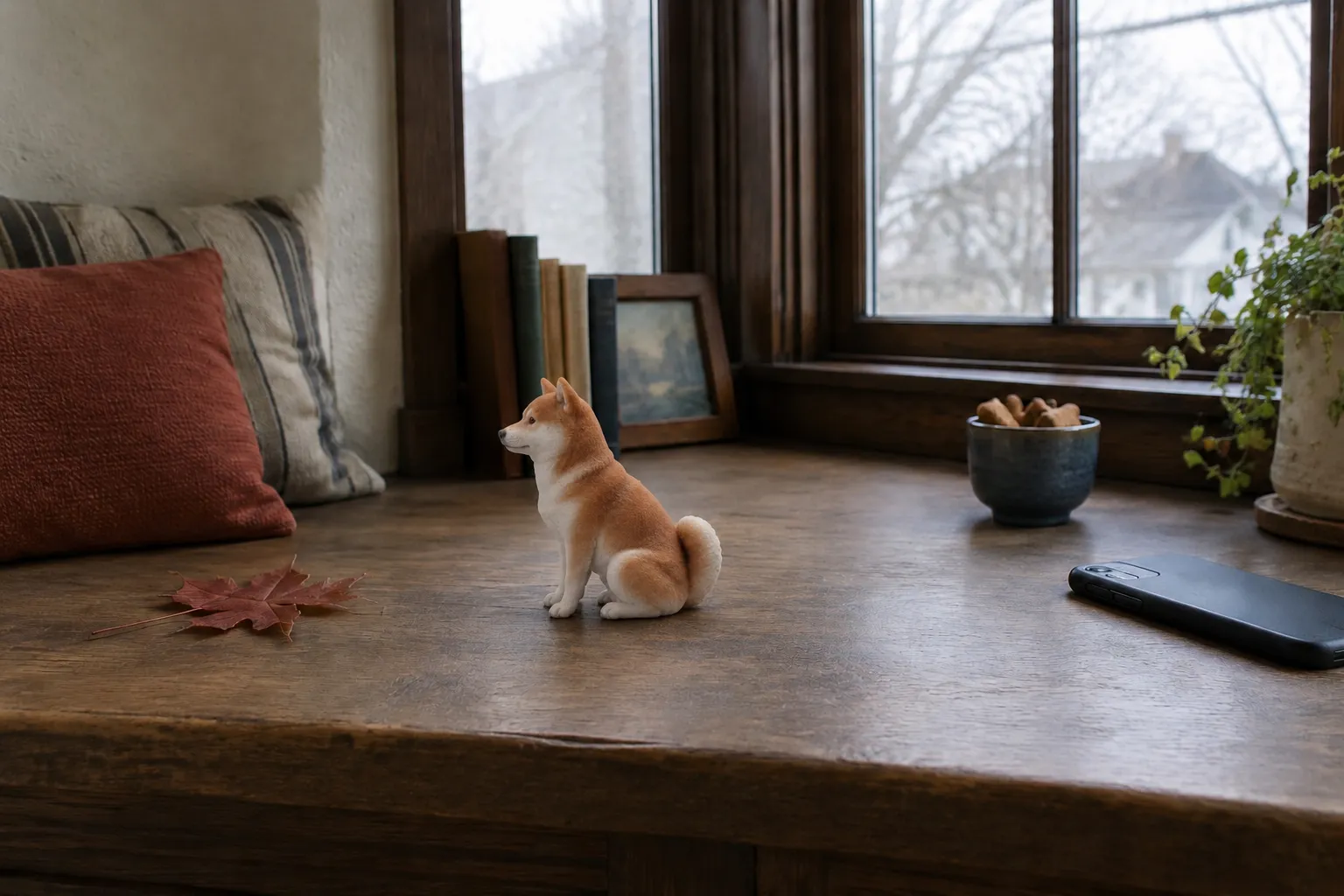
Picture two evenings in the same home office, six years apart: one smelling of puppy shampoo and fresh coffee, the other of rain-damp fur and the old blanket under the desk. It's the same dog, but the chin has gone pale, and the photo habits that suited a young Shiba Inu now flatten everything.
The five myths are that you need a pro camera, closer is better, direct sun is best, one hero shot is enough, and mid-life changes should be edited out. The fixes are to use your phone deliberately, step back and zoom slightly, shoot in soft window light, capture a full reference set, and photograph the dog you have today.
Quick Takeaways
- Your phone is almost certainly good enough. Light, distance and timing decide the result more than the camera does.
- Step back and use your phone's 2x option, if it has one, instead of pushing the lens into your dog's face. Crop afterward.
- Soft window light or open shade keeps texture in pale fur and detail in dark fur. Midday sun usually loses both.
- If the photos will become a painting, a sculpture or any other portrait, one hero shot isn't enough. Shoot a full set of angles.
- Photograph your mid-life dog as it is now. If you notice a change in behavior or movement, take it to your veterinarian, not to a filter.
Myth 1: "You Need a Real Camera for a Real Portrait"
When a photo disappoints, you can see one suspect: the phone in your hand. The causes you can't see are the light direction, the distance to your dog, the moment you pressed the shutter and the processing your camera app applied on its own. Blaming the thing you can see is natural. Buying new gear also feels like progress, while changing your technique feels like homework.
The cause-and-effect chain usually runs the other way. A sharp eye, readable fur texture and accurate color depend on a few controllable conditions, and a phone can meet all of them. A bigger sensor won't save a frame taken in harsh light from the wrong height.
The phone fix, in order
- Wipe the lens. A phone lives in pockets and hands, and a thin smudge softens everything into a haze that no edit fully removes.
- Get to eye level. Sit on the floor, or if your dog is on a windowsill or sofa, lower the phone to match. Shooting down from standing height mostly shows the top of the head.
- Tap to focus on the nearest eye. If the eye is sharp, viewers forgive softness almost anywhere else.
- Nudge the exposure down if pale fur turns into flat white. Most camera apps let you adjust brightness after you tap to focus. A slightly darker frame that keeps strand-level texture is more useful than a bright frame that has lost it.
- Use burst mode or rapid shots. Ears move, heads tilt and eyes blink. Ten frames in two seconds often give you one where everything lines up.
- Turn off filters and smoothing. For reference frames, also turn off portrait or background-blur modes, which can soften edges like ear tips and whiskers.
If-then check: if the eyes are crisp and you can see individual hairs on the lightest part of the coat, your phone did its job. If not, the cause is almost always one of the six steps above rather than the hardware.
Myth 2: "The Closer the Phone, the Better the Face"
A face that fills the screen feels intimate, as though you're capturing more of the dog. What you're actually capturing is a different shape.
Perspective depends on the distance between the lens and the subject. When the phone is a few inches from your dog's face, whatever is nearest the lens, usually the nose, looks larger compared with the parts farther away, like the ears and the back of the skull. This is a property of perspective, not a fault in your phone. It explains why so many close-up pet photos show an oversized snout and ears that seem to shrink backward.
This matters most for a dog whose look depends on proportion. If your dog has a compact face and upright ears, the balance between muzzle and ears is much of what makes it recognizable. A close wide-angle shot changes that balance.
Run the two-frame test
You don't have to take this on faith. Try it once:
- Shoot one frame with your phone's main lens from about arm's length.
- Step back several feet. Switch to 2x or 3x if your phone offers it, and frame the same head-and-shoulders view.
- Put the two images side by side and compare the length of the muzzle with the size of the ears.
The second frame usually looks more like the dog you see from across the room, which is the dog you actually know. Avoid pinching to zoom far beyond your phone's labeled lens options, because heavy digital zoom throws away detail. Stand back at a native zoom level and crop later.
The head tilt is easier to catch from a distance too. A phone hovering right in front of your dog's face is an odd object to tolerate. From a few feet away, you're simply a person sitting on the floor.
Myth 3: "Bright Sunshine Makes the Coat Glow"
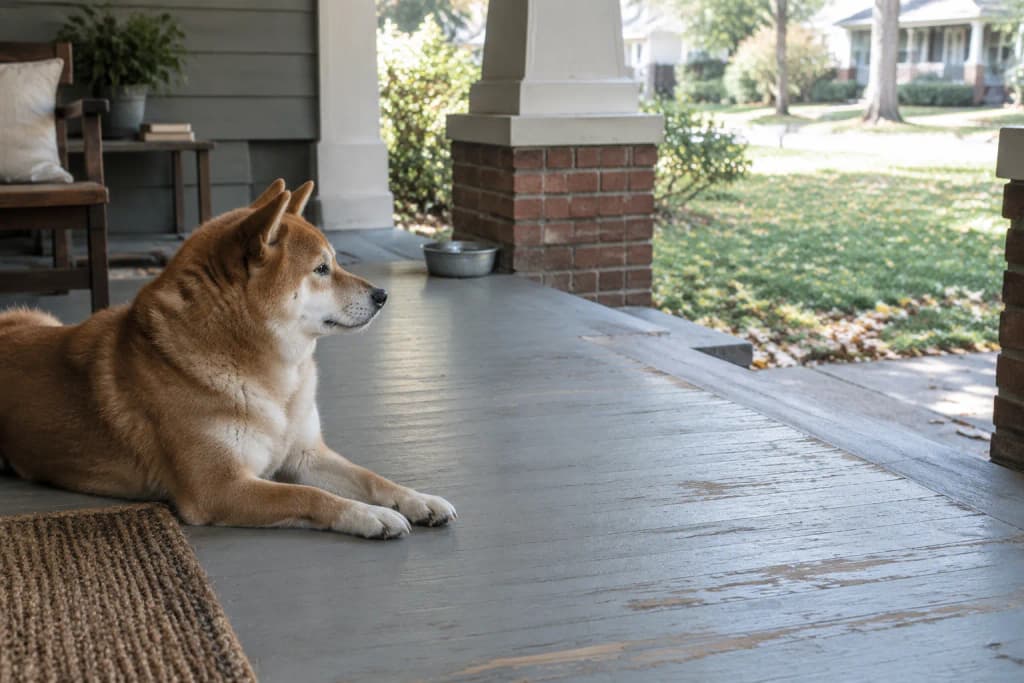
Sunny photos look cheerful at thumbnail size, and that's why this myth survives. Zoom in, though, and the problems show. Direct sun creates hard shadows and intense highlights at the same time. A phone can only hold so much range between bright and dark in one frame, so something gives way. Pale areas such as a lighter chin, chest or cheeks can wash out to flat white. Darker areas can sink into featureless shadow. If your dog is squinting in the frame, you also lose the eyes, which are the one detail you most need sharp.
The softer-light fix
- Window light from the side. Place your dog near a window, but don't put the window directly behind it. Side light shapes the face and keeps texture. Back light turns your dog into a silhouette with a glowing outline.
- Overcast days. Clouds act like a giant diffuser, and they're one of the best conditions for color you can trust.
- Open shade. Outdoors, try the shaded side of a building or a covered porch that still faces open sky.
- One light source for color shots. A warm table lamp mixed with cool daylight can tint parts of the coat in different directions. When you want frames that show true color, switch off the indoor lamps and use daylight only.
Imagine… it's Saturday, a little after eight, and the living room still smells of toast and of the rope toy that lives by the radiator. Your Shiba has claimed the sunlit windowsill, so you sit on the rug six feet back with the phone at 2x and the exposure eased down a notch, then take twenty frames in about four minutes. When your dog yawns and hops down, you stop. That evening, scrolling through the set, you find three frames where the eyes are clear and the pale chin still shows every hair.
Notice what the scene leaves out: there's no squeaky toy, no "sit, sit, SIT" and no hour-long session. You had good light, kept your distance and stopped when the moment ended. Short sessions also give you more chances, because you can repeat them on any morning when the light cooperates.
Myth 4: "One Perfect Shot Is All You Need"
Our sharing habits reward a single frame. One great photo gets posted and set as a lock screen, and it starts to feel like the definitive image of the dog. For a print, that might be enough.
For any portrait made from references, especially a three-dimensional one, a single photo is like describing a house from the front door. It hides the sides, the back and the top of the head. It doesn't show how the tail carries or where the markings change. An artist working from one photo has to guess at everything outside it, and guesses drift away from your dog.
A complete reference set
Shoot these in soft, indirect light, unfiltered, across one or two short sessions:
- Straight-on face at eye level, with both eyes visible and sharp.
- Left profile and right profile. Markings are rarely perfectly symmetrical, so photograph both sides.
- Three-quarter views from both sides. These often show the face most naturally.
- Full body from the side while standing, to show proportions and posture.
- Back view and top of the head, including ear shape from behind and how the tail sits.
- Close-ups of the details you'd miss: chin, chest, paws, any patch where color shifts and any small mark that is unmistakably your dog's.
- One color-truth frame in daylight only, with no lamps and no filter.
- One personality frame: the head tilt, the favorite toy, the posture your family would recognize instantly.
Add notes the camera can't record
Photos don't capture everything. A short written note can fill the gaps: how your dog holds its ears when content compared with when it's alert, which way the head usually tilts, and whether the toy in the photos belongs in the portrait. These notes are useful to any artist, and they also make a small keepsake in their own right.
Myth 5: "Mid-Life Changes Should Be Edited Out"
This myth starts from a comparison. You see your dog every day, and gradual change is easy to overlook at that pace. Then an old puppy photo surfaces, and the contrast is sudden: the paler muzzle, the softer outline. The quick fix is a smoothing filter or a color slider that tints the gray back toward the old shade.
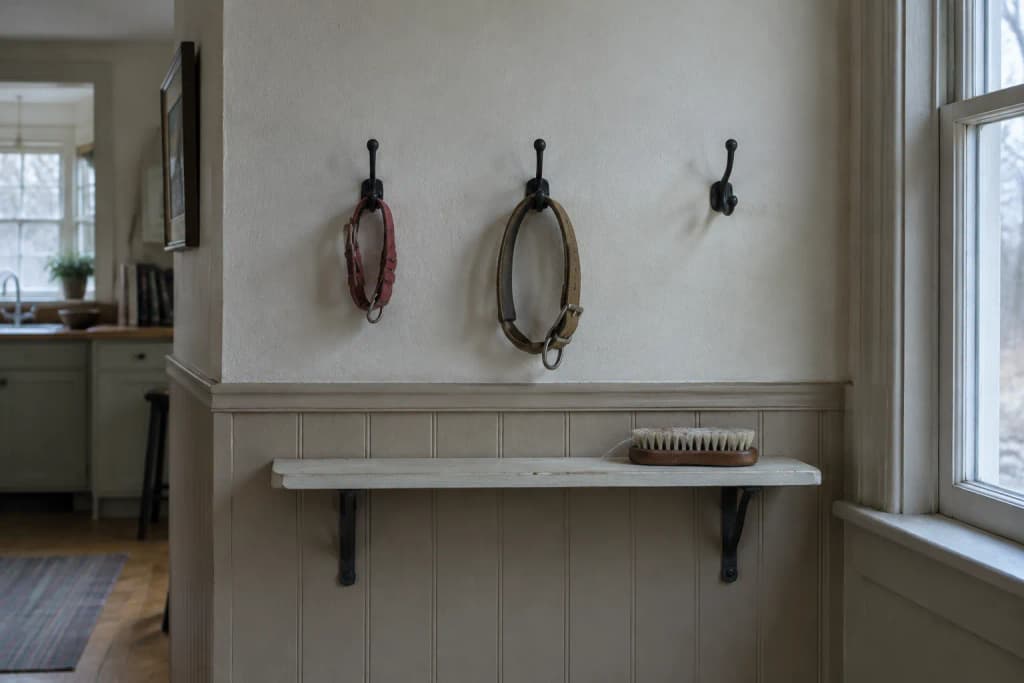
The trouble is that edited references describe a dog that never existed. The result is neither the puppy nor the mid-life companion on your rug, but a blend of the two.
Choose the era on purpose
The fix is a decision, not an edit:
- If you want the dog you have now, photograph it now, without filters, and make sure the paler areas show clearly. A changing face is part of the portrait.
- If you want an earlier era, collect the clearest photos from that period and label them. You may have fewer angles to work with, so say which details matter most.
- If you can't choose, that's a real answer too. Some families keep the puppy photos in an album and commission a portrait of the dog as it is today.
When the photo session tells you something
A photo session can also be an observation session. If your dog no longer wants to jump onto the windowsill it used to love, holds a sit differently or responds to you in a new way, don't try to interpret it yourself; mention it to your veterinarian.
The American Animal Hospital Association's preventive care guidance describes regular veterinary examinations, life-stage-specific discussions and early professional evaluation of health or behavior changes as foundations of preventive care. It also notes that recommendations vary with age and individual risk. That's why your veterinarian, not a checklist, is the right person to put a change in context. Until then, move the photo spot to floor level so your dog doesn't have to climb for you.
For more on mid-life care and everyday life with pets, browse our pet care and keepsake guides.
From Camera Roll to Keepsake: Choosing What to Make
A good reference set has value on its own. Once you have one, the question becomes what, if anything, to make from it. Each option suits a different need:
- A printed photo book or a single framed print. This is the simplest choice and the lowest commitment, and it uses exactly what you shot. It works best if your favorite image already exists.
- Written field notes. These record the details photos can't hold: the smell of warm fur after a nap in the sun, the rope toy carried from room to room, the exact sound at the door. They work best if memory, not appearance, is what you want to keep.
- Commissioned two-dimensional art. This is an artist's interpretation on paper or canvas, and it works best if you want a wall piece that goes beyond what a photograph shows.
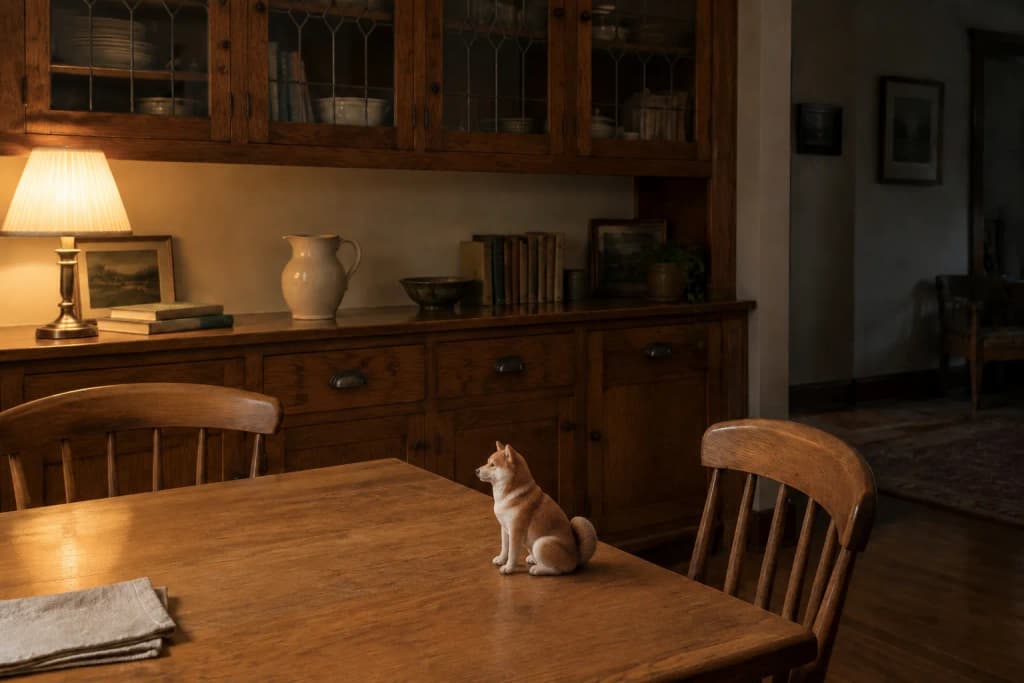
- A sculpted figurine. This is a three-dimensional interpretation for a desk or shelf, and it works best if you want something you can see from every side. This is where your full reference set pays off most.
If you choose a figurine, it helps to know exactly how one is made. PawSculpt's custom pet sculptures are full-color 3D printed resin figurines between 2.5 and 6 inches tall. They're sculpted portraits, not photocopies, so expect an artistic interpretation rather than a photo-exact copy. The workflow follows a fixed sequence:
- Your reference photographs are reviewed.
- An artist digitally sculpts the portrait.
- You confirm the artist preview before anything is printed. The first preview typically arrives within 7 days after complete references are available and the order enters IN_DESIGN status. Five revisions are included.
- The approved model is printed in full color on a Mimaki 3DUJ-553, equipment that supports more than 10 million colors. That's a capability of the machine, not a promise about how any particular coat will render, which is another reason your color-truth frame matters.
- Supports are removed, the surface is inspected and a transparent protective coat is applied.
Money and timing work like this. A 40% deposit starts the order. A full refund is available until the order enters the server-recorded IN_DESIGN status. Once the artist starts modeling, the deposit becomes non-refundable, so settle on your era and your photos before that point.
| Size | Single figurine | Set of 12 |
|---|---|---|
| 2.5-inch | $429 USD | $4,499 USD |
| 3-inch | $489 USD | $4,999 USD |
| 4-inch | $589 USD | $5,999 USD |
| 5-inch | $789 USD | $7,999 USD |
| 6-inch | $999 USD | $9,999 USD |
Add-ons are a second pet ($179), a nameplate ($9), rush ($29), an extra pet on 4-inch and larger figurines ($199), an extra toy ($30, for that rope toy), a diamond glass base ($29) and a black crystal base ($39).
Delivery takes 27–40 days after final payment in the US and 33–47 days internationally. No separate shipping fee is added at checkout for worldwide delivery, but international customers are responsible for local customs duties, taxes or import fees.
For Christmas 2026, the last order-by date is November 10 in the US and November 3 for international orders. Confirm your preview and pay the balance promptly after ordering. Orders placed after the cutoff are delivered in January, but the artist preview arrives within about 7 days of IN_DESIGN and can be shared as the gift itself.
Frequently Asked Questions
Is a smartphone good enough for Shiba Inu portrait photos?
Yes, for most purposes. Clean the lens, shoot at your dog's eye level in soft indirect light, tap to focus on the nearest eye, and turn off filters so the coat's real colors come through.
How many angles should I photograph for a custom figurine?
Aim for a full set: straight-on face, both profiles, both three-quarter views, a full-body side view, the back and top of the head, and close-ups of markings. One photo hides too much of a three-dimensional dog.
Should I edit out my Shiba's graying muzzle in reference photos?
Only if you deliberately want an earlier era. If you want the dog you have now, send unfiltered photos that show the paler areas clearly, and say so in your notes to the artist.
My dog no longer wants to jump onto the windowsill for photos. Should I worry?
Don't guess. AAHA advises raising behavior changes with your veterinarian early and discussing your dog's life stage at regular checkups. Choose a floor-level photo spot in the meantime.
Will the figurine look exactly like my photos?
No. It is a sculpted portrait, an artistic interpretation built from your references. You confirm the artist preview before printing, and five revisions are included.
When does the deposit stop being refundable?
A full refund is available before the order enters IN_DESIGN status. The 40% deposit becomes non-refundable once the artist starts modeling, so finalize your era and photo choices first.
Ready When Your Reference Set Is
Start with the photos. A few short morning sessions in window light, a full set of angles and an honest look at the dog you have now will improve whatever you decide to make, whether that's an album, a page of notes, a framed print or a sculpture.
If a portrait you can see from every side sounds right, look at PawSculpt's custom pet sculptures, check the sizes against your shelf, and send your references when you're ready. You'll see and approve the artist preview before anything is printed. If you're aiming for this Christmas, the last order-by dates are November 10 in the US and November 3 internationally.