
What Your Vet Wishes You Knew About Grooming Your Geriatric Chinchilla
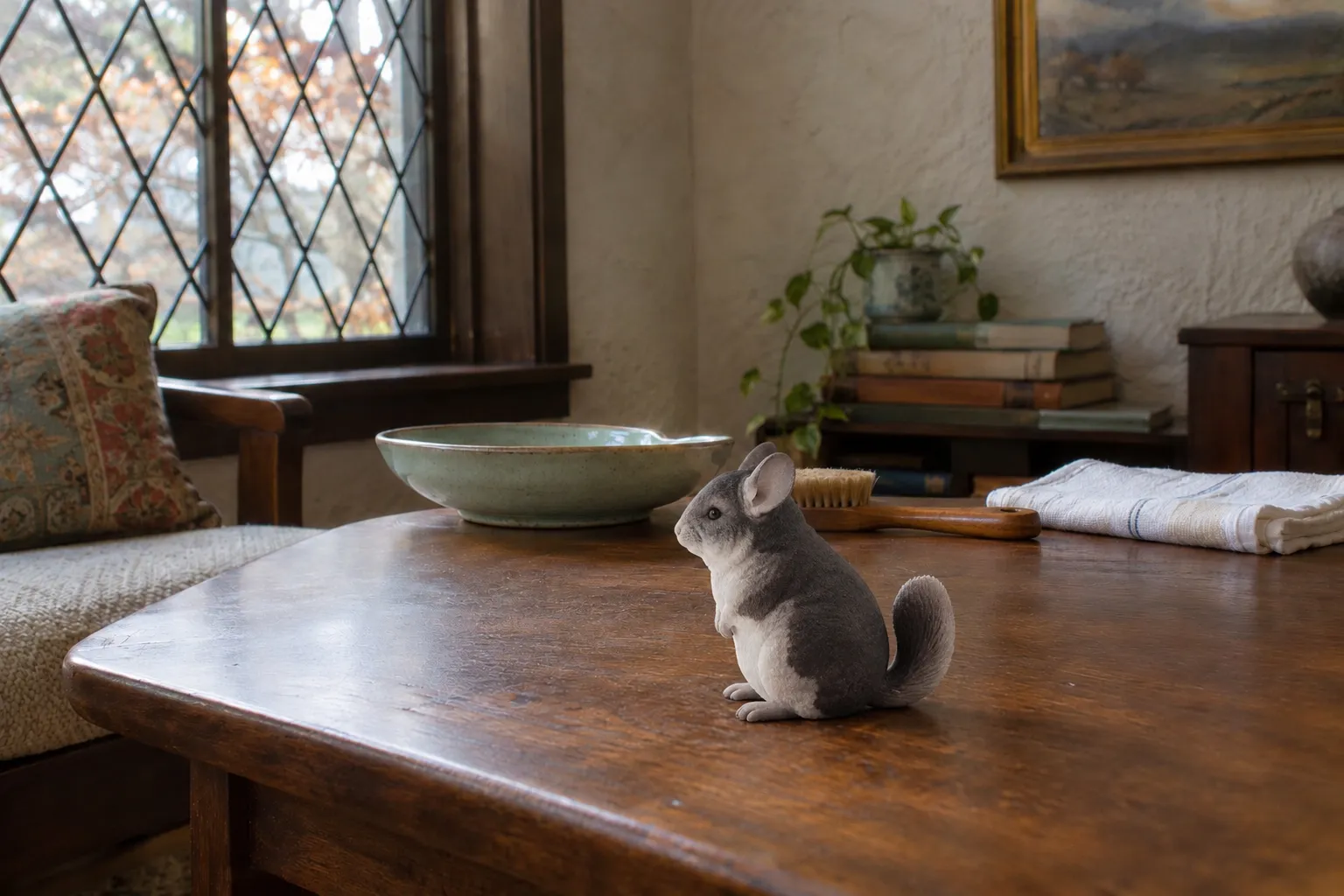
You're sitting in the exam room with Pepper on the padded table, her grey fur a little thinner than it used to be, her front paws tucked close. The vet is gentle. And somewhere in that moment, you realize your old friend needs you differently now.
Geriatric chinchilla grooming is about adapting the familiar — especially the dust bath — to an aging body that gets stressed and chilled more easily, while letting your veterinarian guide the pace. Shorter, calmer sessions, careful observation, and professional check-ins matter more than any single tool or product.
Quick Takeaways
- A senior chinchilla's grooming routine should become shorter, gentler, and more observational — you're watching as much as you're cleaning.
- Routine veterinary checkups support preventive care, and care recommendations vary by age and individual risk, according to the American Animal Hospital Association.
- The dust bath stays central, but timing and supervision deserve fresh attention as your chinchilla ages.
- Let your veterinarian evaluate any health or behavior change early — not after it worsens.
- Keepsakes, from photographs to a sculpted portrait, can hold this chapter of your bond in a way that lasts.
The Grooming You Once Did on Autopilot Now Asks for Your Full Presence
There was a time when caring for Pepper was almost thoughtless in the best way. You set out the dust tray, she rolled and flipped, and the little cloud of fine powder settled over everything like it always did. You knew that smell — faintly mineral, clean, a scent that meant home the way a familiar blanket does.
That autopilot is gone now. And honestly? That's not a loss. It's an invitation.
When a chinchilla gets older, the grooming you do becomes less of a chore and more of a ritual — a quiet, repeated act of noticing. You're not just maintaining a coat anymore. You're checking in on a soul you've shared years of mornings with.
Here's what shifts, practically speaking:
You slow down. A younger chinchilla might bounce through a dust bath. An older one may tire faster, feel the cold more, or startle more easily. You're reading the room now — her room, her energy, her pace.
You watch more than you touch. Chinchillas are prey animals, and they're masters at hiding discomfort. So your eyes do a lot of the work. Is she grooming herself less? Is her fur matting in places it never did? Is she holding one side differently? These are the things you tuck away to mention to your vet.
You let the vet lead. The AAHA is clear that owners should discuss life stage and behavior changes with a veterinarian, and that care recommendations vary by age and individual risk. For a geriatric chinchilla, that guidance isn't a formality. It's the backbone of everything.
The sacred part of senior pet care is that it slows you down enough to actually be there. You stop rushing through the routine and start inhabiting it.
The Dust Bath, Reconsidered for an Aging Body
The chinchilla dust bath isn't optional — it's how these animals keep their dense coats healthy. But for a geriatric chinchilla, the way you offer it deserves a gentler hand.
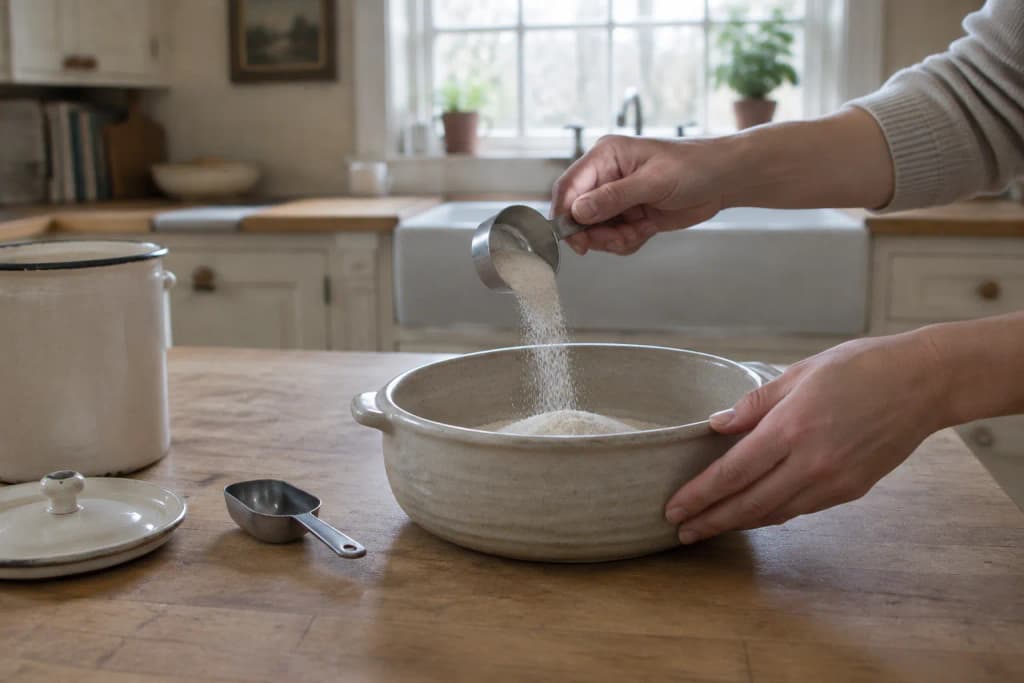
Think about what's changed in her body. An older chinchilla may regulate temperature less efficiently and may get more easily stressed by handling or by a cold room. So the environment around the bath matters as much as the bath itself.
A few thoughtful adjustments:
Mind the room temperature. A chilled, damp space is hard on an older animal. You want the area calm and comfortable before you ever set the tray down.
Keep sessions brief. A long, drawn-out dust bath can tire a senior chinchilla or chill her if the room is cool. Shorter and more attentive beats long and distracted.
Supervise, always. This was good advice when she was young. It's non-negotiable now. You're watching her balance, her breathing, how quickly she tires, whether she seems to be enjoying it or just enduring it.
Notice the coat afterward. Run your eyes — and, gently, your hands — over her fur. Senior animals can develop matting, greasy patches, or thinning they didn't have before. None of that is for you to diagnose. All of it is worth noting for your veterinarian.
Personal aside: If I'm being honest, the hardest tradeoff with senior grooming is knowing when to do less. Our instinct is to do more — more brushing, more fussing, more intervention, because it feels like love. But sometimes the kinder choice is a shorter session and a quiet observation, trusting your vet to tell you what actually needs doing. Restraint can be its own form of devotion.
Reading the Signals Your Chinchilla Can't Say Out Loud
This is where grooming stops being a grooming task and becomes something closer to a conversation.
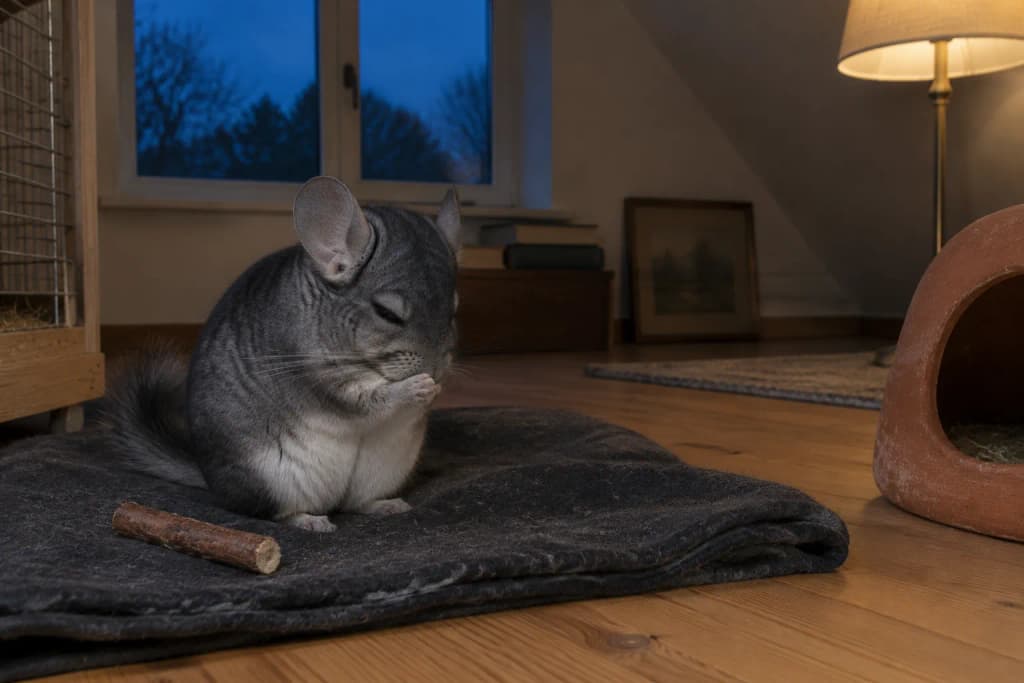
Your chinchilla can't tell you she's uncomfortable. But her body does, in a language you've spent years learning without realizing it. The grooming session — those few quiet minutes together — is one of your best windows into how she's really doing.
Pay attention to:
- Changes in self-grooming. An animal that stops tending to herself may be telling you something. So may one that over-grooms a single spot.
- Coat condition. New matting, dullness, bald patches, or a greasy texture are worth a vet conversation.
- Energy during the bath. Is she slower to start? Quicker to quit? Less interested than she used to be?
- Any shift in behavior. The AAHA specifically recommends early professional evaluation of health or behavior changes. "Early" is the operative word.
None of this is about you playing doctor. It's the opposite. It's about you being the person who notices first and brings those notes to someone qualified to act on them.
There's a quiet dignity in that role. You become the keeper of the small details — the one who knew, before anyone else, that something had shifted. That attentiveness is a kind of sacred contract you entered into the day she became yours.
Nutrition and the Whole-Animal View of Senior Care
Grooming doesn't happen in a vacuum. A chinchilla's coat reflects what's going on inside her, which is why senior small pet care has to zoom out from the dust tray to the whole animal.
The World Small Animal Veterinary Association treats nutrition as the fifth vital sign and recommends a nutrition assessment for every pet at every veterinary visit. Their guidance is that pets should be fed according to an individually tailored nutrition plan set with a veterinary team — and that diet and feeding needs vary by life stage, body condition, and health risk factors.
For your aging chinchilla, that means the diet that served her well at two years old may not be exactly what she needs now. That's not something you guess at. It's a conversation you have with your veterinary team, who can account for her body condition and her particular health picture.
Why does this belong in a grooming article? Because a healthy coat and a healthy diet are tangled together. When you notice her fur looking different during a dust bath, that observation feeds directly into the nutrition conversation. You're not working two separate problems. You're caring for one whole, aging creature — and every small signal connects to the others.
Think of it as a loop: you groom, you observe, you report to your vet, your vet adjusts the plan, and you watch the results in the next grooming session. Round and round, a rhythm of care that honors her at this stage of life.
Keeping the Space Sacred: Grooming as Ritual, Not Task
Here's something nobody puts in a care guide, but it belongs here.
The grooming sessions with a senior pet carry a weight they didn't before. You know, somewhere in you, that this chapter is finite. Every chapter is. And that awareness has a way of making the ordinary feel luminous.
So let the dust bath be a ritual.
Set aside the few minutes without your phone. Breathe in that familiar mineral scent. Watch her tuck her paws, tilt her head, settle into the powder the way she has a thousand times before. Let it be slow. Let it be present.
This isn't sentimental fluff. There's a real practical benefit — a calm, unhurried human makes for a calmer animal, and a calmer animal is easier to observe and less stressed by handling. But it's also just true that these moments matter beyond their function.
You're building a legacy of care, one quiet session at a time. The way you show up now — gentle, attentive, unrushed — is part of the story of who she was and who you were to each other.
When the Chapter Starts to Close
There's no graceful way to say this, so I'll just say it plainly: part of loving a senior pet is holding the awareness that your time together is precious.
Many people find comfort in marking this chapter while their companion is still with them. Some keep a running collection of photographs. Some write down the small things — the way she flipped in the dust, the particular tilt of her head, the softness of her aging grey coat. Some commission art or a sculpted keepsake that captures her presence in three dimensions.
There's no right way to honor a bond. There's only your way.
If a physical keepsake speaks to you, a studio like PawSculpt creates custom full-color 3D printed resin figurines from your reference photographs — a sculpted portrait, an artistic interpretation of your companion rather than a photocopy. It's one option among many, and it's worth saying: a shoebox of good photos is also a treasure. The keepsake matters less than the intention behind it.
How a Sculpted Keepsake Actually Comes Together
If you're curious about the figurine route, it helps to understand what you're actually getting — because a sculpted portrait is a specific kind of thing.
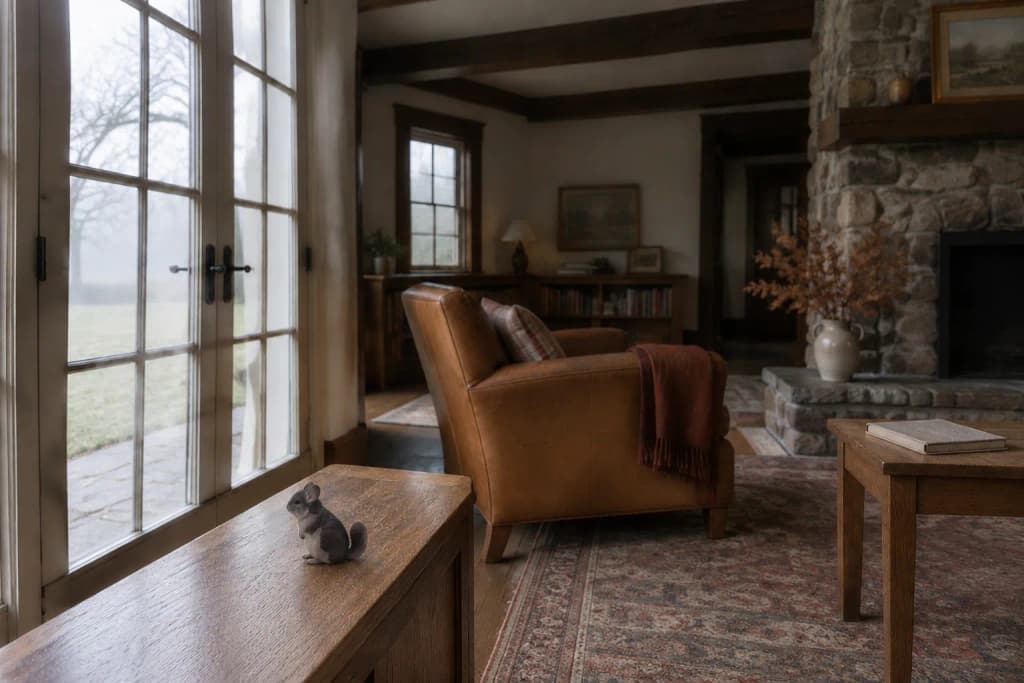
At PawSculpt, the process works like this: your reference photographs are reviewed, an artist digitally sculpts the portrait, and you confirm the artist preview before anything is printed. That approval step is yours. The first artist preview is typically delivered within 7 days after complete references are available and the order enters the design stage, and five revisions on that preview are included so you can refine the likeness toward what feels right.
Once you approve, the model is printed in full color on a Mimaki 3DUJ-553, a printer whose equipment supports more than 10 million colors — which matters for capturing something as subtly shaded as an aging grey chinchilla's coat. Supports are removed, the surface is inspected, and a transparent protective coat is applied. The result is a sculpted interpretation, not a photo-exact replica — something that holds her presence rather than mechanically copying it.
A note on caring for a resin keepsake, because this is a grooming article and the parallels are real. Resin and plastics don't love sunlight. The Canadian Conservation Institute notes that light and UV exposure cause yellowing in plastics, and that keeping objects cool, dark, and out of direct sunlight improves long-term durability. Resin-specific guidance from Raise3D echoes this: UV exposure breaks down cured resin and leads to yellowing, while a clear protective coating with UV inhibitors slows yellowing and fade, and standard resin prints kept indoors away from direct UV are expected to last years. So if you keep your figurine on an indoor shelf, away from a sunny window, you're giving it the best shot at staying true.
Thinking about sizing and cost before you decide? PawSculpt figurines run from 2.5 to 6 inches tall, priced at $429 for 2.5-inch, $489 for 3-inch, $589 for 4-inch, $789 for 5-inch, and $999 for 6-inch. Add-ons include a nameplate at $9 — so Pepper's name could sit right beside her likeness. A 40% deposit starts the order, and you can get a full refund before the order enters the design stage; once the artist begins modeling, that deposit becomes non-refundable. You can browse more on the PawSculpt blog if you want to sit with the idea.
For U.S. delivery, figurines arrive 27 to 40 days after final payment; internationally, 33 to 47 days. There's no separate shipping fee added at checkout for worldwide delivery, though international customers remain responsible for local customs duties, taxes, or import fees. And if you're thinking of this as a holiday keepsake, the 2026 Christmas order-by dates are November 10 for the U.S. and November 3 internationally — with the reminder to confirm your preview and pay the balance promptly. Orders placed after the cutoff arrive in January, and the artist preview can be shared as the gift in the meantime.
Frequently Asked Questions
How often should I give my geriatric chinchilla a dust bath?
Dust baths remain essential for coat health, but a senior chinchilla benefits from shorter, closely supervised sessions. Because care recommendations vary by age and individual risk, work out the right frequency with your veterinarian rather than sticking to the old routine on autopilot.
What grooming changes matter most for an older chinchilla?
Slow the pace, keep the room comfortable rather than cold, and use each session to observe — looking for new matting, dullness, thinning, or reduced energy. The AAHA recommends early professional evaluation of health or behavior changes, so bring anything you notice to your vet promptly.
Does my senior chinchilla's diet affect her coat?
They're connected. The WSAVA treats nutrition as the fifth vital sign and recommends a nutrition assessment at every visit, with feeding tailored to life stage, body condition, and health risk. Changes you spot during grooming can inform that conversation with your veterinary team.
How do I keep a resin pet figurine from yellowing over time?
Display it indoors, away from direct sunlight, and keep it cool and dark when you can. UV and light cause yellowing in resin and plastics, while a clear protective coating with UV inhibitors slows yellowing and fade — which is why shaded indoor display helps most.
How does a sculpted pet figurine actually get made?
At PawSculpt, your reference photographs are reviewed, an artist digitally sculpts the portrait, and you confirm the artist preview — with five revisions included — before printing. The approved model is printed in full color, supports are removed, the surface is inspected, and a transparent protective coat is applied.
Is a figurine better than photographs for remembering a pet?
Neither is "better" — it's about what speaks to you. Photographs, written memories, and sculpted portraits all hold a bond in different ways. A figurine offers a three-dimensional presence on a shelf; a shoebox of good photos is just as meaningful.
A Gentle Next Step
Right now, the most important thing you can do for Pepper is exactly what you're already doing — paying attention, slowing down, and letting your veterinarian guide the care that fits her age. That attentiveness is the real gift, and no product replaces it.
When and if you're ready to hold onto this chapter in a more tangible way, know that you have options, and no deadline but your own heart's. A collection of photographs. A few written-down memories. Or, if it feels right, a sculpted portrait that captures her presence — the tilt of her head, the soft grey of her coat — as an artistic interpretation you can keep on a shelf for years.
If that last idea resonates, you can explore custom pet sculptures at PawSculpt whenever the timing feels right. Until then, go give her a gentle dust bath, breathe in that familiar mineral scent, and let the quiet ritual of care be enough. It is.