
Stuffed Replica vs. Resin Figurine: What Shiba Inu Owners Say About True-to-Life Detail
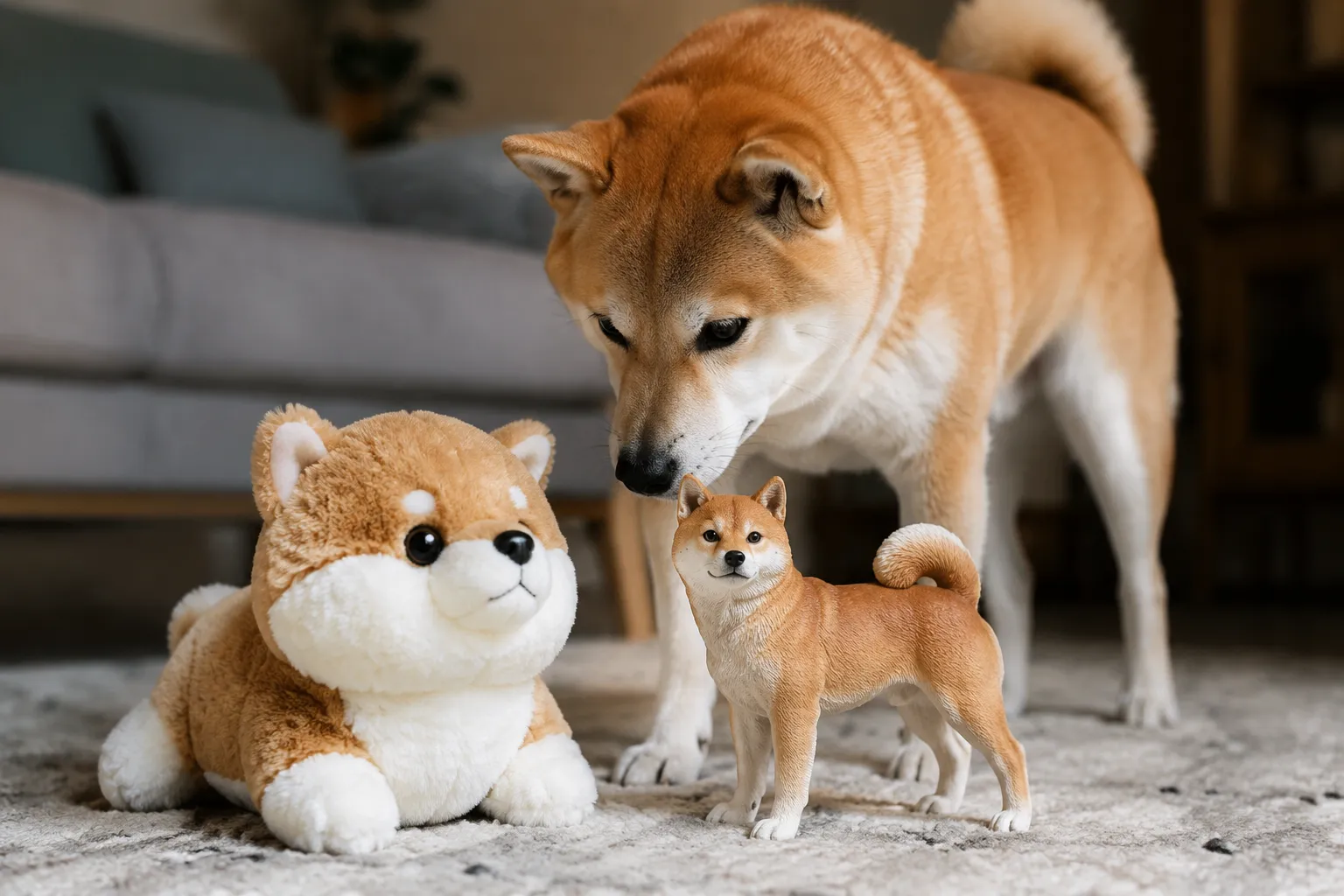
Three summers ago, a Shiba Inu named Yuki would flop across the warm boards of the front porch, tail curled like a question mark. Now that same porch holds a debate her owner never expected: shiba inu figurine vs stuffed animal—which one actually looks like her?
Quick Takeaways
- Stuffed replicas win on tactile comfort, but blur the details that define a Shiba's identity.
- Resin figurines hold precise markings like urajiro and ear-set that owners scan for first.
- Reviews consistently rank "expression accuracy" above color accuracy—a counterintuitive pattern most guides miss.
- Your reason for buying should drive the format, not the price tag or the shelf space.
- If lifelike detail is the goal, explore how full-color 3D printed pet sculptures capture a Shiba's exact fur pattern before deciding.
Why "Realistic" Means Something Different to Shiba Inu Owners
Here's the thing most comparison articles get wrong. They treat "realistic" as one measurement, like it's a single dial you turn up or down. For Shiba Inu owners, it isn't.
We've worked with thousands of pet families, and Shiba owners are their own category. They notice things. The exact width of the urajiro (the cream-white markings on the cheeks, chest, and belly). The set of the ears—too far forward and the dog looks anxious, too far back and it looks like a different breed entirely. The tilt of the tail curl, called maki-o in the breed standard.
When Yuki's owner first reached out to us, she didn't ask about size or base color. She asked whether we could capture "the smug look." That specificity is the whole ballgame.
So when a Shiba owner asks "does this look like my dog," they're not asking about a generic red-and-white fox-dog. They're asking about the twelve small features that make their Shiba theirs. A stuffed replica and a resin figurine answer that question in completely different ways.
"A Shiba owner doesn't want a Shiba. They want their Shiba—down to the eyebrow patch."
Let's break down why the format matters so much, because the difference isn't about quality. It's about physics.
The Fur Problem
Shibas have a double coat with sharp color transitions. The red fades to cream along a defined line, not a gradient. That hard edge is the single hardest thing to reproduce in any medium.
Plush fabric can't hold a crisp line. Fibers migrate, blend, and fuzz at the boundary. So a stuffed replica of a red sesame Shiba tends to look softer and more uniform than the real dog—cuddlier, sure, but less them.
A full-color resin 3D print handles that hard edge differently, because the color is printed directly into the material rather than dyed into fabric. We'll get to why that matters in a minute.
The Expression Problem
This one surprised us when we started tracking it. Owners forgive a lot of color drift. What they don't forgive is a wrong expression.
A Shiba's face reads as confident, sometimes borderline aloof. Get the eye shape slightly round instead of almond, and the whole thing tips into "generic puppy." One of our customers described a mass-produced plush she'd tried first as looking "friendly in a way my dog has never been in his life."
That's the counterintuitive core of this entire comparison. Realism for a Shiba lives in the face and the markings, not the softness. Keep that in mind as we compare formats, because it flips a lot of conventional advice.
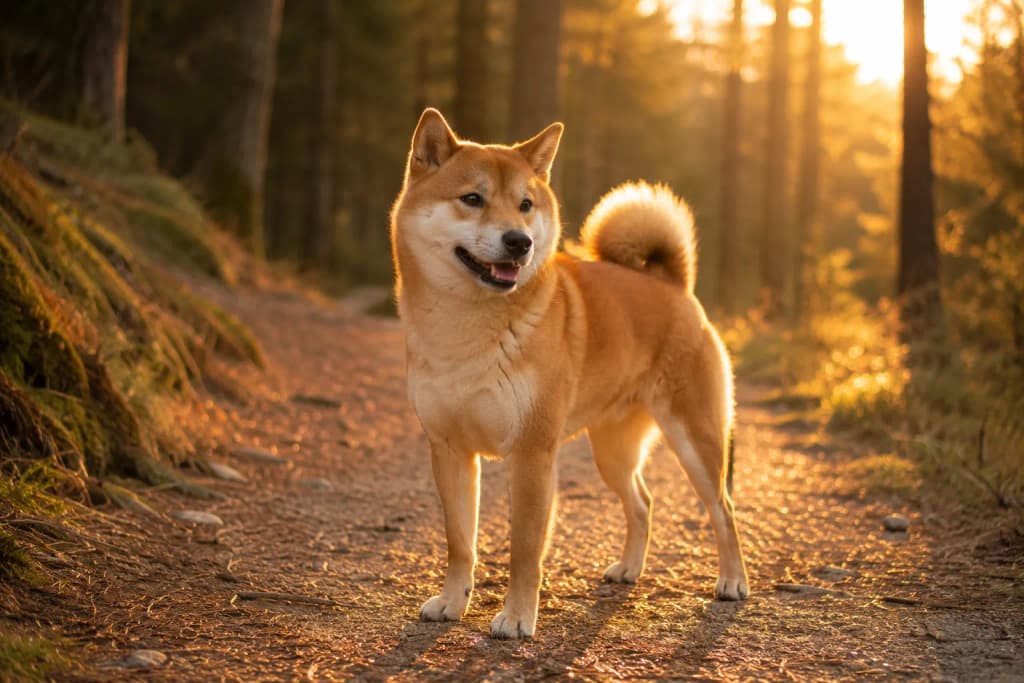
Shiba Inu Figurine vs Stuffed Animal: The Detail Test
Let's put the two formats side by side using the dimensions Shiba owners actually talk about. Not marketing categories—the stuff that comes up in real reviews.
This table maps how each format performs on the features that define a Shiba's likeness:
| Detail Dimension | Stuffed Replica | Resin Figurine |
|---|---|---|
| Urajiro edge sharpness | Soft, blended boundary | Crisp, defined transition |
| Ear-set precision | Approximate (fabric shifts) | Exact, holds its angle |
| Facial expression | Generalized, "friendly" | Captures individual look |
| Tail curl accuracy | Stuffed, rounded | Sculpted to the exact curl |
| Tactile comfort | High—made to hold | Low—display object |
| Durability over years | Flattens, fades, pills | Stable, UV-resistant resin |
| Best emotional use | Comfort, children, cuddling | Display, memorial, legacy |
Notice the pattern. Neither format wins outright. They win at different things.
If you want something to hold at night—something a grieving child can squeeze—the stuffed replica has a real advantage that no figurine can match. We're not going to pretend otherwise. A hard resin sculpture is not a comfort object.
But if the goal is a lasting, accurate likeness that stops looking like your dog five years from now, the math tilts hard toward resin. And that's where shiba inu owner reviews get interesting.
The Micro-Story That Illustrates It
A family we worked with ordered both. A plush version for their seven-year-old and a resin figurine for the mantel. Six months later, the mom sent us a note.
The plush had become the kid's inseparable sleep companion—matted, loved, exactly as intended. But she said the figurine was the one that stopped her in the hallway. "The plush is for holding him. The sculpt is for seeing him," she wrote. That single sentence explains the whole market better than any spec sheet.
"The plush is for holding him. The sculpt is for seeing him."
What Shiba Inu Owner Reviews Actually Reveal
When you read enough reviews across both formats, patterns emerge that no single review tells you. We've read a lot of them. Here's what surfaces again and again.
Complaint #1 for stuffed replicas: "It doesn't look like my dog." This shows up far more for Shibas than for, say, Golden Retrievers or Labs. Why? Because a Lab is more forgiving—broad color, simple markings. A Shiba's identity lives in fine detail, and plush production smooths detail away.
Complaint #2: color drift over time. Fabric fades. The vivid red-sesame coat that looked right at delivery goes dusty within a year or two, especially near a window. Owners describe it as "watching him fade twice."
That line still gets to us, honestly.
For resin figurines, the complaints run different. The top concern isn't accuracy—it's fragility during shipping, and the fear that a photo won't translate into 3D. Those are legitimate worries, and they're solvable ones (more on photos below).
Here's the counterintuitive insight buried in the review data: owners who bought the "cuter" or "softer" option more often reported later regret than owners who prioritized accuracy. The comfort of plush is immediate. The satisfaction of accuracy compounds over years. We tend to underestimate future-us and overvalue the version that feels good in the cart.
Reading Reviews Like an Insider
Most people scan reviews for the star rating. Do this instead. Filter for the reviews that include a photo of the actual dog next to the product. Those are gold.
- If the review photo shows the dog and the item is a plush, look at the face-to-face comparison, not the overall vibe.
- If it's a resin piece, zoom in on the markings and the tail curl.
- Ignore reviews that only show the product with no reference dog—they tell you nothing about accuracy.
So what? Because a five-star review from someone with a solid-colored dog tells you almost nothing about how a format handles Shiba complexity. Match the reviewer's dog to yours.
Here's a quick framework for weighting what you read:
| Review Signal | What It Actually Tells You |
|---|---|
| Star rating alone | Very little—too subjective |
| Photo of dog + product | The single most reliable signal |
| Mentions markings/expression | High relevance for Shiba owners |
| "Cute" with no detail | Low relevance—vibe, not accuracy |
| Complaint about fading | Format's long-term weakness |
The Realistic Custom Pet Sculpt Difference
Let's talk about how the accurate option actually gets made, because there's a lot of confusion here—and understanding the process tells you what's possible.
A realistic custom pet sculpt starts as a digital model. At PawSculpt, master 3D artists build your Shiba in software first, shaping the muzzle, the ear-set, that specific tail curl, working from your photos. This is digital sculpting, not clay and not a mold pulled from a template.
Then comes the part that makes the accuracy possible. The model is precision 3D printed in full-color resin, using technology that prints color directly into the material, voxel by voxel. The color is part of the material, not a coating applied over the top.
That's the technical reason a resin figurine can hold a Shiba's hard urajiro line. The red and the cream aren't blended by a brush or a dye bath—they're printed as distinct data at distinct points. The only manual step afterward is a protective clear coat that seals the piece and gives it a natural sheen.
The result has a subtle, authentic texture—fine grain from the print process—rather than a slick, plastic-perfect surface. Owners tend to describe it as looking "real, not manufactured." Which is the point.
"Every Shiba has a signature—the eyebrow dot, the tail curl, the exact cream line. Our job is to print the signature, not a stereotype."
— The PawSculpt Team
Why the Coat Type Changes Everything
Not all Shibas are the same to reproduce, and this is where the technology earns its keep. A red sesame Shiba—with black-tipped guard hairs scattered through red—is genuinely difficult in any medium. Plush can't render individual hair variation at all. Full-color printing can approximate the salt-and-pepper effect because it's working with per-point color data.
If you're comparing options, it helps to understand which coat types push each format to its limit:
| Shiba Coat Type | Stuffed Replica Difficulty | Resin Print Advantage |
|---|---|---|
| Solid red | Moderate—soft markings | Crisp urajiro edges |
| Black & tan | High—three color zones | Handles zone transitions |
| Red sesame | Very high—hair variation | Renders speckled effect |
| Cream | Moderate—low contrast | Preserves subtle shading |
So what? If you have a red sesame or black-and-tan Shiba, the format gap widens dramatically. For a solid cream Shiba with low contrast, honestly, a good plush gets closer than it would for the harder coats. Know your dog's coat before you decide.
The Photos That Make or Break the Result
This is the practical part nobody explains well. A custom sculpt is only as good as the reference you provide. We've learned this from thousands of orders, and Shibas have specific quirks here.
Use these when photographing your Shiba for any custom piece:
- Shoot at eye level, not from above. A top-down phone shot flattens the muzzle and distorts the ear-set—the two things that define a Shiba's expression.
- Get one clear profile. The side view captures the tail curl and the topline, which front shots hide completely.
- Photograph in natural, indirect light. Harsh sun blows out the urajiro; dim light muddies the red. A shaded porch or a window on a bright-but-cloudy day is ideal.
- Capture the markings up close. A dedicated shot of the face and chest lets the artist place the cream line exactly.
- Include a "signature expression" photo. That smug look, the play bow, whatever is unmistakably your dog.
Why it matters: the difference between "looks like a Shiba" and "looks like my Shiba" is almost always decided at the photo stage, not the sculpting stage. Better references, better result. It's that direct.
If you want the full breakdown of what our team looks for, the details on the custom pet figurine process are worth a read before you shoot your photos.
Choosing Based on Your Actual Reason
Step back for a second. The format question is really a purpose question wearing a disguise. Most people argue about stuffed versus resin when they should be asking why they want the object at all.
We've noticed owners fall into a handful of situations. Match yours honestly and the answer usually resolves itself.
If it's for a young child. Get the plush. A seven-year-old processing the loss of the family Shiba needs something to hold, and a resin figurine is a hazard, not a comfort. This is the one scenario where we'll actively steer you away from a figurine. Accuracy matters less than a squeezable presence at bedtime.
If it's a memorial for the adults in the house. The resin figurine usually wins. A memorial piece gets looked at, and accuracy is what makes it feel like your dog is still occupying his corner of the room rather than a generic stand-in.
If it's celebrating a living Shiba. Either works, but consider a figurine for the shelf and, if there are kids, a plush too. They serve different rooms and different moments.
If it's a gift and you're unsure. Lean toward the accurate custom sculpt if you can get good photos, because a generic plush risks the "doesn't look like him" letdown that dominates the negative reviews.
Yuki's owner, back on that porch, landed here after weeks of going back and forth. She realized she wasn't looking for something to hold. She was looking for something that would still stop her in the hallway in ten years—still recognizably Yuki, smug look intact. That clarity made the choice obvious.
The Overlooked Middle Ground
Here's something the "versus" framing hides: it was never actually either-or. A meaningful number of families we've worked with buy both, deliberately, because the two formats do genuinely different jobs.
The plush handles the emotional, tactile need in the early, raw weeks. The figurine handles the long-term legacy. Treating them as competitors misses that they're teammates for a lot of households. If your budget allows, the "and" often beats the "or."
"Grief needs something to hold. Memory needs something to see. Sometimes you need both."
What to Expect From a Custom Figurine
If you decide accuracy is your priority and you go the custom route, here's the general shape of the journey—without pretending to know the exact timelines, which change and are best confirmed directly.
The process generally moves through a few stages. You submit photos. A digital artist sculpts a 3D model of your Shiba. You typically get to preview and request adjustments—the ear-set looks off, the tail curl needs more hook, the urajiro line should sit higher. Once approved, the piece is printed in full-color resin and sealed with a protective clear coat.
For specifics on preview turnaround, revision options, and guarantees, check the current details on the PawSculpt FAQ rather than trusting a number in a blog post that might be outdated.
A few honest caveats, because we'd rather set expectations than oversell:
- A sculpt reflects your photos. Blurry or top-down shots limit what any artist can do. Garbage in, garbage out—we say it gently, but we mean it.
- Resin is a display object, not a toy. It's durable and UV-resistant, but it's not built to survive a toddler's grip or a fall onto tile.
- It won't be plastic-perfect, and that's intentional. The fine print texture is part of what makes it read as real rather than synthetic.
Care and Longevity
One advantage worth stating plainly: a properly made full-color resin piece doesn't fade the way plush does. The clear coat resists UV, so your red sesame stays red-sesame.
Keep it out of direct, prolonged sunlight anyway (nothing is truly immortal), dust it with a soft dry cloth, and skip the harsh cleaners. That's genuinely the whole maintenance routine. Compared to watching a beloved plush flatten and dull over the years, it's a low-effort way to keep a likeness stable for a long, long time.
For breed-specific grooming and coat information that helps you describe your Shiba's exact coloring to an artist, the American Kennel Club's Shiba Inu breed guide is a solid, non-commercial reference.
The Emotional Math Nobody Talks About
Let's name the thing under all of this. You're not really weighing fabric against resin. You're weighing how you want to carry this dog forward.
Many owners tell us the same thing, almost word for word: they didn't understand what they needed until the house went a little too still and their eyes landed on the corner where the dog used to sleep. That empty spot on the floor does more emotional work than any product page.
A stuffed replica fills your arms. A figurine fills that corner. Neither fills the actual absence—we'd never claim that—but they give the missing weight somewhere to land.
It's common to feel a little foolish caring this much about getting the ears right. You're not foolish. In our years working with pet families, the people who obsess over the small details are the ones who loved the small details in the living dog. The eyebrow dot mattered because everything about that dog mattered. Getting it right is a form of respect.
You are not alone in this, and there's no wrong reason to want something that looks like your dog.
Frequently Asked Questions
Is a resin figurine or a stuffed animal more realistic for a Shiba Inu?
For Shibas specifically, a resin figurine usually reads as more realistic. It holds the crisp urajiro line, the exact ear-set, and the individual expression that fabric tends to soften. Plush wins on cuddle-factor, not on likeness.
Why do stuffed Shiba replicas often not look like the real dog?
Because a Shiba's identity lives in fine detail, and plush production smooths detail away. Fabric can't hold the hard boundary between the red coat and the cream markings, and the face tends to default to a generic "friendly" look that most Shibas don't actually have.
Are custom resin pet figurines hand-painted?
No. The piece is digitally sculpted by 3D artists, then precision 3D printed in full-color resin, where the color is part of the material itself. The only manual step is applying a protective clear coat for durability and sheen.
What photos work best for a custom Shiba Inu figurine?
Shoot at eye level rather than from above, use natural indirect light (a shaded porch is perfect), and include a clean side profile so the artist can capture the tail curl. Add a close-up of the face and chest markings, plus one photo of your dog's signature expression.
Should I buy both a plush and a figurine of my Shiba?
Honestly, a lot of families do, and it's a smart move. The plush handles comfort and works beautifully for kids, while the figurine handles long-term display and accuracy. They live in different rooms and serve different emotional needs.
Ready to Celebrate Your Pet?
Every Shiba has a signature—the eyebrow dot, the exact cream line, that unmistakable smug look. Whether you're honoring a companion who's crossed the rainbow bridge or celebrating the ridiculous, wonderful dog currently ignoring your commands, the right keepsake preserves the details that make them one-of-a-kind. When the debate comes down to a shiba inu figurine vs stuffed animal, a full-color 3D printed sculpt is how you keep the likeness that lasts.
Visit pawsculpt.com to explore our full-color 3D printing process, preview options, and quality guarantee.