
Telling Your Child the Rabbit Isn't Coming Home: A Grief Map for the Hardest Conversation
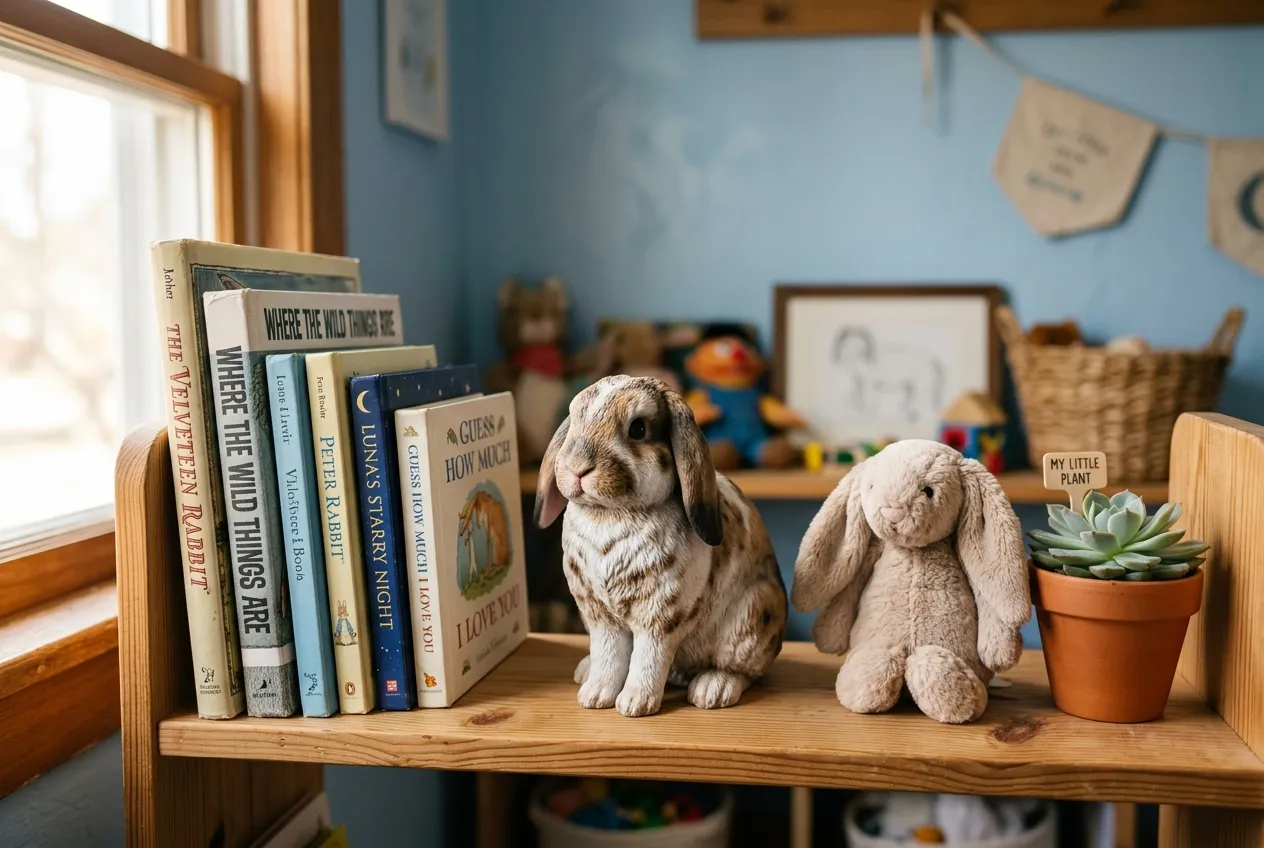
A survey by the Human Animal Bond Research Institute found that 94% of pet owners consider their animal a member of the family—yet fewer than one in five parents feel prepared to explain that family member's death to a child. The gap between love and language has never been wider than on the morning you find your rabbit's hutch still and quiet, and a small voice behind you asks, "Why isn't Biscuit moving?"
Quick Takeaways
- Use clear, honest words like "died" instead of euphemisms — softened language creates confusion and fear in young children
- Let your child's age guide the conversation depth — a four-year-old needs different truths than a ten-year-old
- Create a tangible memorial together within the first week — physical rituals anchor abstract grief into something a child can hold, including options like custom pet figurines that preserve your rabbit's likeness
- Watch for behavioral shifts for 6-8 weeks after the loss — regression, clinginess, and anger are normal grief responses in children
- Your own visible emotion gives your child permission to grieve — hiding tears teaches them grief is shameful
The Conversation Nobody Rehearses: Why Explaining Pet Death to a Child Feels Impossible
Here's what most parenting guides won't tell you: the hardest part of this conversation isn't your child's reaction. It's yours.
You're standing at the intersection of your own grief and your child's innocence, and every instinct screams to protect them from the sharp edges of what just happened. But protection and honesty pull in opposite directions, and in the space between them, most parents freeze. They stall. They say the rabbit "went to sleep" or "went to a farm" or "went away for a while," and they watch their child's face shift from sadness to something worse—confusion. Uncertainty. A low hum of anxiety that can last months.
The counterintuitive truth is this: children handle death better than they handle mystery. A child who hears "Clover died, and her body stopped working, and she isn't coming back" will cry. Hard, probably. But a child who hears "Clover went to live somewhere else" will spend weeks scanning the yard, checking the hutch, wondering what they did to make Clover leave. The first child grieves. The second child worries. And worry, in a young mind, metastasizes in ways grief does not.
We've seen this pattern play out hundreds of times through the families who reach out to us at PawSculpt—parents searching for a way to make something tangible out of an absence, often weeks or months after the loss, once they've realized the euphemism didn't land the way they hoped.
So before we talk about what to say, let's talk about why you're afraid to say it.
The Three Fears That Keep Parents Silent
Most parents who delay the conversation aren't being avoidant—they're being strategic, or at least they think they are. The fears tend to cluster into three categories:
- "I'll traumatize them." The belief that exposure to death will damage a child's sense of safety. In reality, developmental psychologists note that age-appropriate honesty about death helps children build emotional resilience rather than fragility.
- "I'll say it wrong." The pressure to find perfect words. There are no perfect words. There are only honest ones.
- "I can't hold it together." The fear that your own tears will frighten your child. But children are remarkably perceptive—they already know something is wrong. Your tears don't scare them. Your silence does.
That third fear deserves more attention. Many parents—and honestly, this is something we hear more from fathers, though certainly not exclusively—feel a deep shame about the intensity of their own grief over a rabbit. A rabbit. Not a dog, not a horse. A small, soft creature that fit in the crook of your arm. The internal monologue goes something like: It's just a rabbit. Why am I this wrecked? How can I explain this to my kid when I can barely explain it to myself?
Here's your permission slip: the size of the animal has nothing to do with the size of the hole it leaves. The bond was real. The grief is proportional to the bond, not the body.
"Grief doesn't measure the animal. It measures the love."
A Grief Map by Age: What Your Child Can Understand About Their Rabbit's Death
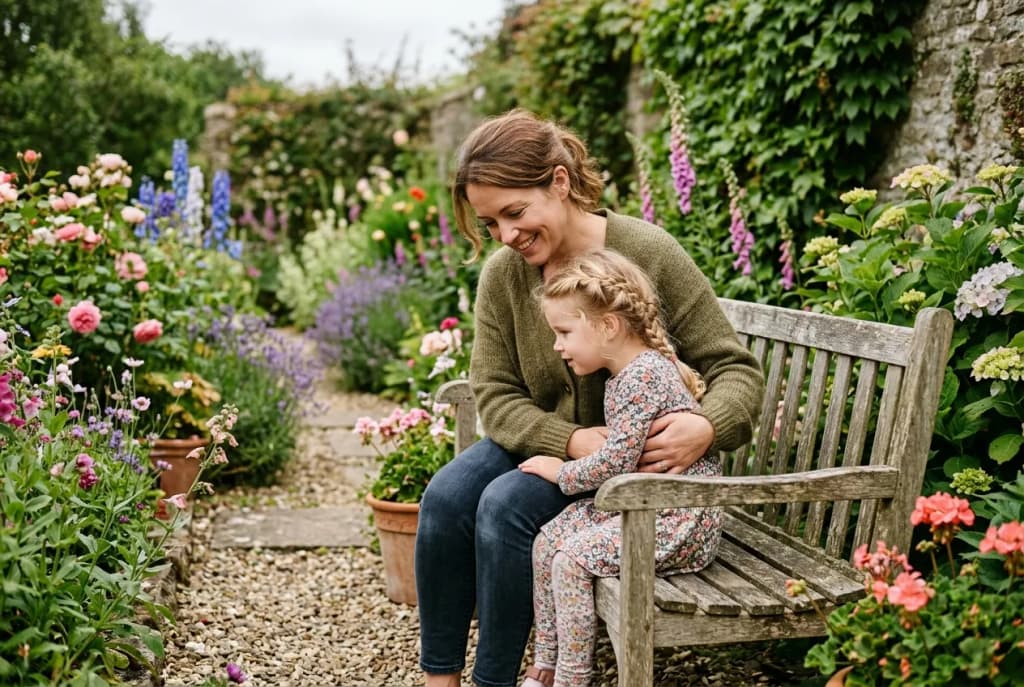
Not every child needs the same conversation. A three-year-old processes death in fundamentally different ways than an eight-year-old, and a twelve-year-old may surprise you with questions that cut deeper than you expected. Here's a framework—not a script, because scripts feel false and children can smell false from across the room.
| Age Range | Understanding of Death | What to Say | What to Expect |
|---|---|---|---|
| 2-4 years | Death is temporary and reversible; thinks rabbit will "come back" | "Pepper's body stopped working. She died. She can't hop or eat or breathe anymore." | Repetitive questions ("But when is she coming back?"), brief sadness followed by play |
| 5-7 years | Beginning to grasp permanence; may personify death as a figure | "Pepper died. That means her body can't work anymore, and she won't be alive again. It's okay to feel really sad." | Magical thinking ("Did I cause it?"), nightmares, clinginess |
| 8-10 years | Understands death is permanent, universal, and irreversible | Full honesty about cause of death; invite their questions; discuss what death means to your family | Anger, withdrawal, philosophical questions ("Will I die too?") |
| 11-13 years | Adult-like understanding; may intellectualize to avoid feeling | Treat them as a partner in grief; ask what they need; don't minimize | Sarcasm as defense, isolation, comparing grief to peers' experiences |
The 2-to-4 Crowd: Repetition Is the Point
If your toddler asks "Where's Bun-Bun?" fourteen times in one afternoon, they're not being difficult. They're learning. At this age, the concept of permanence is still under construction. Each time they ask, they're testing the answer, the way they might test whether the block tower falls every time they push it.
Answer the same way each time. Don't embellish, don't add new metaphors, don't get creative. Consistency is the scaffolding their brain needs. "Bun-Bun died. His body stopped working. He's not coming back, and we miss him." Say it gently. Say it the same way. Say it as many times as they need.
A morning might look like this: Your three-year-old wakes up, pads to the kitchen, looks at the corner where the hutch used to be—you moved it last night, which was the right call—and says, "Where's Bun-Bun?" You kneel. You say the words. They nod. They ask for cereal. Twenty minutes later, mid-bite, they ask again. You say the words again. This is the work. It doesn't feel like enough, but it is.
The 5-to-7 Window: Guarding Against Magical Thinking
This is the age where guilt can quietly take root. Children between five and seven are deeply egocentric—not in a selfish way, but in a developmental way. They believe they are the center of cause and effect. If the rabbit died, something they did (or didn't do) must have caused it.
You need to name this before they do.
"Clover didn't die because you forgot to give her water that one time. She didn't die because you were too loud. She didn't die because you wished for a puppy instead. Her body got sick in a way that nobody could fix."
Even if your child hasn't voiced this fear, say it anyway. The guilt children carry about pet death is one of the most overlooked aspects of childhood grief, and it can shape their relationship with animals—and with responsibility—for years.
The 8-and-Up Conversation: Honesty as Respect
Older children don't need protection from the truth. They need you to respect them enough to share it. If the rabbit was euthanized, say so—using language appropriate to their maturity. "The vet helped Maple die peacefully because she was in a lot of pain and there was no way to make her better. It was the kindest thing we could do for her, even though it was the hardest."
This age group may also ask the question that stops you cold: "Did she suffer?"
Answer honestly. If she did, briefly, say so—and immediately follow with what was done to help. "She was uncomfortable for a little while, but the vet gave her medicine so she wasn't in pain at the end." If you don't know, say that too. "I'm not sure, but I know we did everything we could."
"Children don't need you to be unbreakable. They need you to be honest."
The Words That Help and the Words That Haunt: Language That Matters When a Rabbit Dies
Language is architecture. The words you choose will build the room your child grieves in—spacious and well-lit, or cramped and confusing. Here's a direct comparison of phrases that help versus phrases that harm, and why the distinction matters.
| Avoid Saying | Why It's Harmful | Say Instead |
|---|---|---|
| "Snowball went to sleep" | Child becomes afraid of bedtime; sleep = death | "Snowball died. Her body stopped working." |
| "God took Snowball because He needed her" | Child becomes angry at God or afraid God will "take" them too | "Snowball's body couldn't keep working. It wasn't anyone's choice." |
| "Snowball ran away" | Child waits, searches, blames themselves for not being "enough" | "Snowball died, and she's not coming back. We can be sad together." |
| "Snowball is in a better place" | Implies home wasn't good enough; child may want to go to "better place" too | "Snowball isn't alive anymore, but we can remember her and talk about her whenever we want." |
| "Don't cry, Snowball wouldn't want you to be sad" | Teaches child to suppress grief; imposes emotion rules | "It's okay to cry. I'm sad too. We loved her so much." |
| "We'll get a new rabbit" | Implies pets are replaceable; invalidates the bond | "No other rabbit will be Snowball. When you're ready, we can talk about what comes next." |
The "Went to Sleep" Trap
This one deserves its own moment because it's the most common mistake, and the consequences are the most immediate. A family we worked with once shared that their four-year-old refused to nap for three weeks after being told the family cat "went to sleep and didn't wake up." The child began screaming at bedtime, terrified that closing her eyes meant dying. It took a child therapist, honest re-explanation, and considerable patience to undo the damage.
Sleep metaphors feel gentle. They are not. They are landmines dressed in soft language.
When You've Already Said the Wrong Thing
And look—maybe you've already used one of these phrases. Maybe in the shock of the moment, "Flopsy went to a farm" came out before you could think. That's okay. You can go back.
"Remember when I told you Flopsy went to a farm? I wasn't telling the truth, and I'm sorry. I was sad and scared to tell you what really happened. Flopsy died. That means her body stopped working and she's not coming back. I should have told you the truth from the beginning, and I want you to know you can always ask me questions."
Correcting a euphemism is uncomfortable but not damaging. Leaving it uncorrected is.
The Room Where It Happened: Managing the Physical Space After Your Rabbit Dies
Nobody talks about the geography of grief. But children are spatial creatures—they understand the world through where things are, not just what happened. And right now, there's a corner of your home that holds an empty hutch, a water bottle with yesterday's water still in it, scattered hay on the floor, maybe a chew toy wedged behind a table leg.
That space is going to speak louder than anything you say.
To Remove or Not to Remove
Here's where you'll find conflicting advice online, so let us offer what we've observed: there's no universally right answer, but there is a right process. Involve your child.
For children under five, it's often best to remove the hutch before the conversation—its absence will prompt the question naturally, and you won't have to navigate grief while staring at the empty cage together. But for children five and older, consider asking: "Would you like to help me put Clover's things away, or would you rather I do it while you're at school?"
The act of dismantling the space can be a ritual in itself. Folding the fleece liner. Washing the food bowl one last time. Sweeping up the hay. These are small, physical acts of farewell, and children who participate in them often process the loss more concretely than children who come home to find the corner simply... empty.
The Phantom Space
Here's the part no one warns you about: even after the hutch is gone, the space remains. The corner of the living room where you'd hear the thump of hind legs at 6 AM. The spot on the couch where your daughter would sit with the rabbit on her lap, stroking those long ears while watching cartoons. The kitchen floor where you'd scatter parsley and watch the rabbit zoom.
Your child will return to these spaces. They'll stand in the corner and look at the floor. They'll sit on the couch and reach for a weight that isn't there. This is normal. This is how bodies remember what minds are still processing.
Don't rush to fill the space. Don't rearrange the furniture the next day. Let the absence have its season.
"Sometimes the most sacred thing a family can do is sit together in an empty room and let the missing be enough."
— The PawSculpt Team
What Grief Looks Like in Children (It Doesn't Look Like You Think)
Adults cry. Children act. That's the simplest way to understand childhood grief, and it's the insight that will save you from weeks of misinterpretation.
A grieving child might:
- Regress: Bedwetting, thumb-sucking, baby talk, wanting to be carried. Their emotional resources are being used for grief, so they borrow from developmental milestones they'd already passed.
- Act out: Hitting, yelling, refusing to cooperate. Anger is grief's bodyguard—it's easier to be mad than sad, especially when you're seven.
- Become clingy: Following you from room to room, refusing to go to school, sleeping in your bed. If one thing they loved disappeared, they need to make sure you won't too.
- Seem fine: Playing, laughing, asking for snacks. This isn't denial—it's grief in doses. Children can only hold sadness for short bursts before their brains redirect them to normalcy. They'll circle back.
- Develop physical symptoms: Stomachaches, headaches, fatigue. Grief lives in the body, even small bodies.
The 6-to-8 Week Window
Behavioral changes related to pet loss in children typically peak within the first two weeks and gradually ease over six to eight weeks. If your child's behavior hasn't begun to stabilize after two months—if the nightmares are intensifying, if school performance is declining, if they're withdrawing from friends—it may be worth consulting a child therapist who specializes in grief. The Association for Pet Loss and Bereavement maintains resources specifically for families navigating this terrain.
But within that window? Almost everything you're seeing is normal. The anger is normal. The weird jokes about death are normal. The sudden obsession with whether you're going to die is normal. Meet each moment with honesty and patience, and the storm will pass.
The Emotion You're Not Expecting: Your Child's Guilt
We touched on this earlier, but it warrants its own space because of how frequently it's missed.
Children between four and nine are particularly prone to believing they caused the death. Maybe they squeezed the rabbit too hard once. Maybe they forgot to close the cage. Maybe they said "I hate you, Biscuit" during a tantrum last Tuesday. In a child's logic, these moments become causal. And they won't tell you about it—they'll just carry it, quietly, like a stone in their pocket.
Ask directly. Not once, but periodically over the following weeks: "Sometimes when someone we love dies, we wonder if we did something to cause it. Do you ever feel that way about Biscuit?" Give them the opening. Then fill it with truth: "Nothing you did made this happen. Biscuit's body just couldn't keep going."
Building Rituals: How Families Create Meaning After a Rabbit's Death
Grief without ritual is like rain without a river—it has nowhere to go. It pools. It stagnates. Children especially need structured ways to express what they're feeling, because they don't yet have the vocabulary to do it with words alone.
Here are rituals that work. Not theoretical ones—ones we've seen families actually do, and return to tell us about.
The Memory Box
Find a shoebox or small wooden box. Let your child decorate it however they want—stickers, drawings, glitter, whatever feels right. Inside, place:
- A tuft of fur (if you saved one)
- A favorite toy or chew stick
- A photograph
- A drawing your child makes of the rabbit
- A written note or letter (even scribbles count for young children)
Put the box somewhere accessible, not hidden in a closet. The point isn't to archive the grief—it's to give it a home. Your child should be able to open it whenever they want, add to it, hold things, put them back.
The Goodbye Letter
For children who can write (or dictate to you), a goodbye letter is remarkably powerful. It doesn't need to be long. "Dear Pepper, I miss you. I liked when you licked my nose. I hope you have lots of carrots. Love, Emma." That's enough. That's everything.
The Memorial Garden
If you have outdoor space, planting something together—a flower, a small shrub, even a pot of herbs—creates a living marker. Children can water it, tend it, watch it grow. It transforms the narrative from "something ended" to "something continues."
A Physical Keepsake That Lasts
Some families want something more permanent than a box or a garden. Something they can set on a shelf and see every day—a three-dimensional reminder that this small creature was real, was here, was loved.
This is where custom memorial figurines can carry a weight that photographs alone can't. A photo is flat. A figurine occupies space—the same kind of space the rabbit used to. You can hold it. Turn it. Notice the way the ears tilt, the specific brown patch over the left eye, the way the nose was always a slightly different shade than the rest of the face.
At PawSculpt, our team digitally sculpts each figurine based on your photos, then brings it to life through full-color 3D printing in resin—the color is built into the material itself, voxel by voxel, so your rabbit's unique markings are captured with a permanence that won't fade or chip. The result has a natural texture and warmth that feels authentic, not plastic-perfect. For families with children, having something tangible to hold during the conversation—and in the weeks after—can make the abstract concrete in a way nothing else quite does.
You can explore the full process and options at pawsculpt.com.
Choosing the Right Ritual for Your Family
| Ritual | Best For | Effort Level | Longevity | Child Involvement |
|---|---|---|---|---|
| Memory Box | All ages; immediate comfort | Low | Years (if maintained) | High—they build it themselves |
| Goodbye Letter | Ages 5+; verbal processors | Low | Permanent (if kept) | High—their words, their voice |
| Memorial Garden | Families with outdoor space | Medium | Seasonal/ongoing | Medium—planting + tending |
| Photo Album/Book | Visual families; multiple children | Medium | Permanent | Medium—selecting + arranging |
| Custom Figurine | Families wanting a lasting 3D keepsake | Low (you provide photos) | Permanent (UV-resistant resin) | Medium—choosing the pose, placing it |
| Donation in Pet's Name | Older children; action-oriented families | Low | One-time but meaningful | Low-Medium |
The Emotions You Didn't Expect to Feel (And Why They're Normal)
We need to talk about you for a moment. Not as a parent navigating your child's grief, but as a person navigating your own.
The Relief You're Ashamed Of
If your rabbit was elderly, or ill, or had been declining for weeks—if you'd been administering medication, or cleaning up after incontinence, or watching them struggle to move—there may have been a moment, right after the death, when you felt something other than sadness.
Relief.
And then, almost immediately, the guilt crashed in like a wave behind it. What kind of person feels relieved that their pet died?
The kind of person who loved their pet enough to carry the burden of their suffering. The relief isn't about wanting them gone. It's about the weight of caregiving finally lifting—the hypervigilance, the 2 AM checks, the constant calibration of "is today the day?" That wave of relief doesn't make you a monster. It makes you someone who was holding more than anyone saw.
The guilt that follows the relief is one of grief's cruelest tricks. Name it. Say it out loud to a partner, a friend, even to yourself in the mirror: "I feel relieved, and I feel guilty about the relief, and both of those feelings are allowed to exist at the same time."
The Second-Guessing
If euthanasia was involved, the second-guessing can be relentless. Was it too soon? Should we have waited another week? What if the new medication would have worked? Did she know what was happening? Was she scared?
These questions don't have answers that will satisfy you. Not because the answers don't exist, but because the questions aren't really about information—they're about control. You're trying to retroactively manage a situation that was, by its nature, unmanageable. You made the best decision you could with the information you had at the time. That's all any of us can do.
The Fear of Forgetting
This one creeps in later—sometimes weeks, sometimes months. You realize you can't quite remember the exact shade of her fur. The specific way she'd binky across the living room. The sound of her teeth grinding contentedly while you stroked her forehead. The details start to blur, and it feels like a second loss.
This fear is why tangible memorials matter so much. Not just for children, but for you. A photograph preserves a moment. A figurine preserves a presence. A memory box preserves the textures. Build your own rituals alongside your child's. You need them just as much.
When Your Other Pets Grieve: The Conversation Your Child Isn't Expecting
If you have other animals in the home—another rabbit, a dog, a cat—your child may witness something that complicates their grief: another creature mourning.
Bonded rabbits, in particular, grieve visibly. A surviving rabbit may stop eating, become lethargic, or search the house for their companion. This can be deeply distressing for a child who is already struggling.
Be honest about what's happening: "Hazel is sad too. She's looking for Pepper because she doesn't understand where Pepper went. We need to give her extra love right now."
This can actually become a healing mechanism. Caring for a grieving animal gives your child a role—a way to be useful in a situation that feels helpless. Let them offer the surviving rabbit extra greens, sit quietly nearby, speak softly. Purpose is one of the most effective antidotes to helplessness, and helplessness is one of grief's heaviest companions.
The Timeline Nobody Gives You: What to Expect in the Weeks After
Here's a rough map. Every child is different, but patterns exist, and knowing them can keep you from panicking when week three looks harder than week one.
| Timeframe | What You Might See | What Helps |
|---|---|---|
| Days 1-3 | Shock, tears, repeated questions, seeming "fine" at odd moments | Honesty, physical closeness, maintaining routines |
| Week 1 | Sleep disruption, appetite changes, clinginess, anger outbursts | Patience, the memory box ritual, letting them talk (or not) |
| Weeks 2-3 | Grief may seem to "disappear"—child resumes normal play | Don't assume they're over it; keep the door open for conversation |
| Weeks 4-6 | Unexpected resurgences—a song, a smell, seeing another rabbit triggers a wave | Normalize the wave: "Grief comes and goes. That's how it works." |
| Months 2-3 | Gradual stabilization; may begin asking about getting another pet | Follow their lead; don't rush or delay based on your own timeline |
| Anniversaries/Holidays | Grief can resurface on the rabbit's birthday, adoption day, or holidays | Acknowledge the date: "I've been thinking about Biscuit today too." |
The thing about this timeline that surprises most parents? Week three is often harder than week one. The initial shock has worn off, the casseroles of sympathy have stopped coming (metaphorically—nobody brings casseroles for a rabbit, which is its own kind of loneliness), and the world has moved on. But your child hasn't. They're just now beginning to understand what "not coming back" actually means.
Be present for week three. And week six. And month three. Grief is not a sprint with a finish line. It's a spiral—you pass through the same emotions at different altitudes.
The Question That's Coming: "Can We Get Another Rabbit?"
It might come the same day. It might come six months later. Either way, it's coming, and your answer matters.
The mistake most parents make is treating this question as logistical when it's actually emotional. Your child isn't asking about pet ownership. They're asking: Can I love something again without it disappearing?
Don't say yes immediately (it bypasses the grief). Don't say no immediately (it closes a door they need to know is open). Say: "That's a really good question. Let's sit with it for a while and see how we feel."
Then, over the following weeks, check in. "Have you been thinking about getting another rabbit?" Let the conversation evolve naturally. When the desire shifts from "I want to replace what I lost" to "I want to love something new," they're ready. You'll feel the difference.
And when the time comes—the new rabbit is not a replacement. Make this explicit. "This is a different rabbit with a different personality. We're not trying to get Pepper back. We're making room for someone new." Give the new rabbit its own name, its own space, its own story. The old rabbit's memory doesn't get overwritten. It gets company.
Carrying It Forward: What This Loss Teaches Your Child
Here's the perspective that reframes everything: this is your child's first lesson in love's full curriculum.
They've already learned that love feels good—the warmth of a rabbit on their lap, the tickle of whiskers, the silly binky jumps that made them laugh until they couldn't breathe. Now they're learning that love has a cost. That caring for something means eventually releasing it. That grief is not the opposite of joy but its echo—proof that the joy was real.
This is not a lesson you'd choose to teach. But it's one of the most important they'll ever learn, and how you walk through it with them will shape how they handle every loss that follows. The grandparent. The friend. The relationship. The dream. They'll reach back to this moment—to the rabbit, to the conversation on the kitchen floor, to the way you held them and told the truth—and they'll know that grief is survivable. That honesty is kinder than silence. That love doesn't end when the body does.
The corner where the hutch used to be will eventually hold something else—a bookshelf, a plant, a new rabbit's pen. But the shape of what was there will remain, invisible and indelible, the way all first loves do.
And on some ordinary Tuesday morning, years from now, your child—taller, older, carrying their own keys—will see a rabbit in a pet store window and stop. They'll stand there for a moment, caught in a current of memory so specific they can almost feel the fur. And they'll smile. Not because the grief is gone, but because the love outlasted it.
That's the whole point. That's always been the whole point.
Frequently Asked Questions
How do I explain my rabbit's death to my child?
Use clear, direct language. Say "died" and "body stopped working" rather than euphemisms like "went to sleep" or "went to a better place." Match the depth of your explanation to your child's age—a preschooler needs simple, repeated truths, while a ten-year-old can handle more detail about what happened and why. The most important thing is honesty paired with warmth: hold them, let them ask questions, and don't be afraid to say "I don't know" when you genuinely don't.
Is it normal for my child to seem completely fine after our pet rabbit died?
Absolutely. Children grieve in short bursts—they might sob for ten minutes, then ask for a popsicle and go play. This isn't callousness or denial. Their developing brains process heavy emotions in doses, cycling between grief and normalcy as a protective mechanism. They'll circle back to the sadness, sometimes at unexpected moments. The key is keeping the door open for conversation without forcing them through it.
Should I let my child see me cry?
Yes. Your visible emotion models healthy grieving and gives your child explicit permission to feel what they're feeling. You can frame it simply: "I'm crying because I miss Pepper, and that's okay. It means we loved her." The goal isn't to perform grief or to collapse in front of them—it's to show that sadness is a natural, non-frightening response to loss.
How long does grief over a pet typically last for children?
Behavioral changes—sleep disruption, clinginess, anger, regression—tend to peak in the first two weeks and gradually stabilize over six to eight weeks. But grief isn't linear. Expect resurgences around anniversaries, holidays, or random triggers like seeing another rabbit. If symptoms are intensifying rather than easing after two months, consider consulting a child therapist who specializes in grief.
When is the right time to get a new rabbit?
There's no universal timeline. The readiness signal isn't about calendar days—it's about emotional tone. When your child's desire shifts from "I want Biscuit back" to "I think I'd like to meet a new rabbit," they're approaching readiness. Make it explicit that the new pet isn't a replacement. And check your own readiness too—you deserve to grieve fully before taking on new caregiving.
What's the best way to memorialize a pet rabbit for a family with young children?
Tangible, participatory rituals work best: memory boxes they can build and revisit, goodbye letters they can write or dictate, garden plantings they can tend. For a lasting keepsake, some families choose custom 3D-printed figurines that capture the rabbit's exact markings and personality—something a child can hold and place in their room. The best memorial is whichever one your child helps create, because involvement transforms passive grief into active remembrance.
Honoring Your Rabbit's Memory
Every rabbit leaves a mark—on the carpet, yes, but more so on the hearts of the family who loved them. Whether you're navigating the hardest conversation about explaining pet death to a child or finding ways to keep your rabbit's memory alive in your home, the goal is the same: to honor what was real.
A custom PawSculpt figurine captures your rabbit exactly as they were—every marking, every tilt of the ears—digitally sculpted and precision-printed in full-color resin that lasts. It's a small, solid thing to hold when the missing feels too big for words.
Visit pawsculpt.com to explore the full process, see examples, and learn about current options