The Ultimate Guide to Senior Rabbit Disaster Plans That Actually Reduce Panic
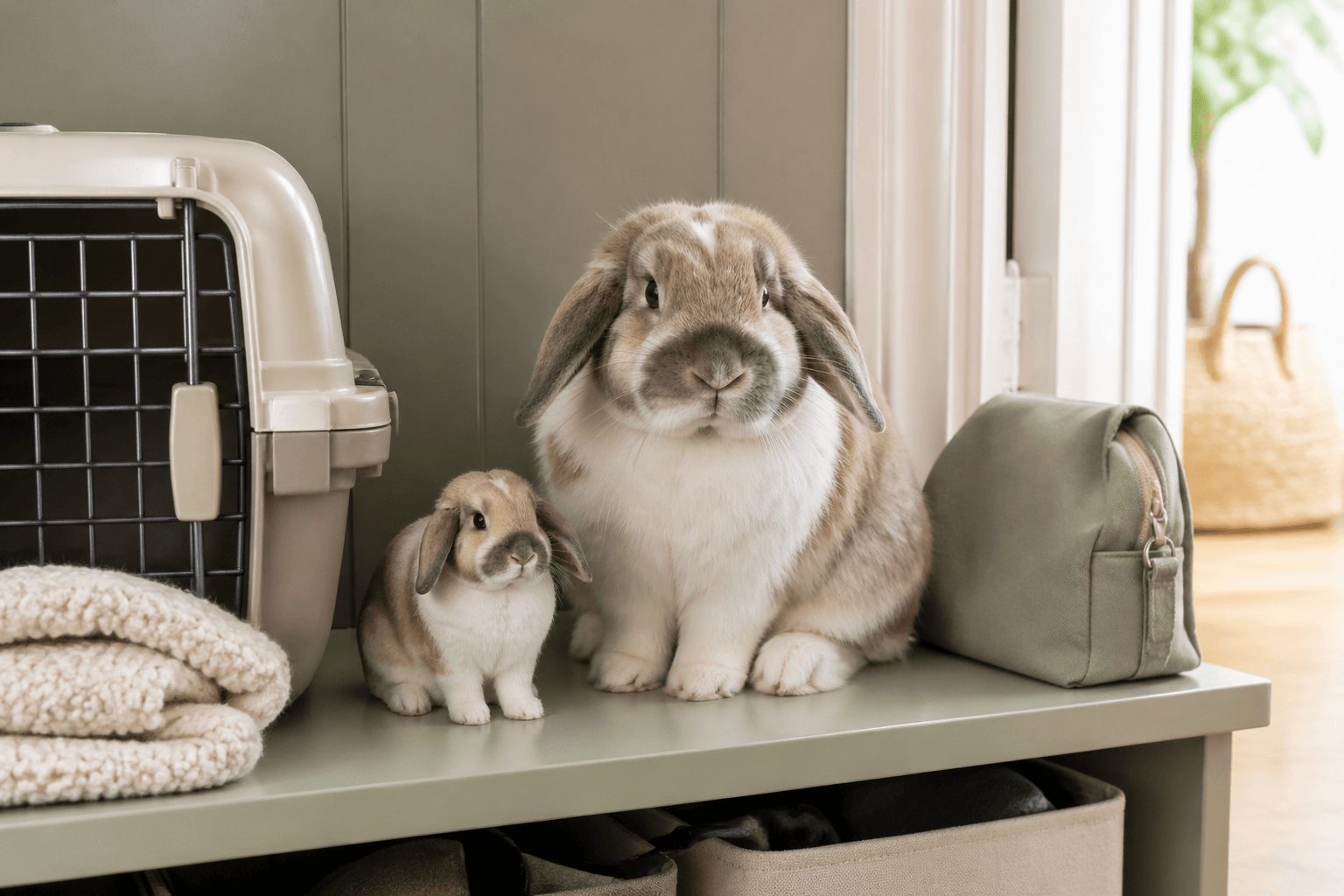
“Rabbits are not our whole life, but they make our lives whole.” — Roger Caras. At 2 a.m., with the bedroom lamp throwing a hard yellow square across the floor, senior rabbit disaster preparedness stops being a theory and becomes the difference between a rabbit who copes and one who crashes.
Quick Takeaways
- Build for immobility, not just evacuation — most rabbit emergencies involve sheltering in place first.
- Stage a low-entry senior setup — pain, arthritis, and stress make jumping dangerous fast.
- Practice your rabbit emergency checklist monthly — panic shrinks when your hands already know the order.
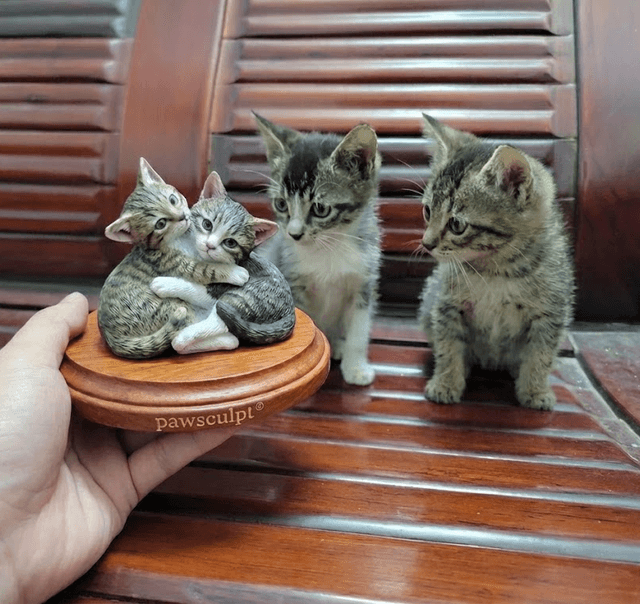
- Preserve clear reference photos now — they help with identification and meaningful keepsakes like custom pet figurines.
- Pack the boring stuff first — meds, hay, flooring, and records matter more than cute travel gear.
Most senior rabbit disaster preparedness advice misses the real problem
Here’s the thing: most disaster guides are written as if the hard part is getting out the door. For older rabbits, that’s only part of it. The bigger problem is what stress does to an aging body in the next 6 to 24 hours—reduced appetite, gut slowdown, temperature instability, pain flare-ups, and disorientation from being moved into a strange corner, crate, car, or guest room.
That’s the angle people miss.
A young, healthy rabbit might bounce back from a noisy move with a grudge and a skipped nap. A senior rabbit often pays interest on that stress. We’ve seen pet families panic because their rabbit “made it through the evacuation,” then stopped eating by evening. That’s the moment that matters.
So this guide is built around one idea: your disaster plan should reduce physiological stress, not just logistical chaos. Different priority. Better outcome.
A family we once heard from after a storm had done a lot right. Carrier? Ready. Water bottles? Packed. Phone charger? Of course. But they hadn’t thought about traction. Their elderly rabbit was placed on a slick hotel bathroom floor, splayed, got frightened, and then refused food for hours. Not because they were careless. Because nobody tells people the floor matters.
And honestly, the floor matters a lot.
The mistake most people make
Most people build a plan around speed. We think older rabbits need a plan built around friction, familiarity, and digestive continuity.
That means:
- Traction before toys
- Hay before treats
- Pain medication before backup bowls
- A hide with the same scent as home before a “roomy” new setup
- A plan for staying put before a plan for driving away
If that sounds less dramatic than emergency checklists usually do, good. Boring is what works.
Why senior rabbits are a category of their own
Aging rabbits often have one or more of these issues already simmering in the background:
- Arthritis or spondylosis
- Reduced vision or hearing
- Dental disease
- Chronic GI sensitivity
- Urine scald or reduced grooming
- Heart, kidney, or mobility concerns
- Muscle loss that makes slipping harder to recover from
In normal life, you can compensate. You add rugs. You trim the setup. You keep the litter box entry low. During a disaster, those supports vanish unless you planned for them.
That’s why senior rabbit disaster preparedness can’t be a generic “pet go-bag” article with hay tossed in at the end.
It needs to be surgical.
Start with your rabbit’s actual weak point
Don’t begin with a giant shopping spree. Begin by answering one blunt question:
When your rabbit gets stressed, what fails first?
For some rabbits, it’s appetite.
For others, it’s balance.
Some stop drinking.
Some stop tolerating handling.
Some become frantic if they can’t hide.
Your plan should be built around that first failure point.
Here’s a simple way to map it:
| Stress Trigger | What Fails First | What to Pack/Prep First | Why It Matters |
|---|---|---|---|
| Car travel | Appetite drops | Favorite hay, usual pellets, critical feeding supplies approved by vet | GI slowdown can escalate quickly |
| Slippery surfaces | Mobility collapses | Non-slip mats, fleece, low-entry pen setup | Falls and splaying increase pain and fear |
| Strange rooms | Hiding behavior spikes | Familiar hide box, used blanket, covered carrier sides | Familiar scent lowers alert-state intensity |
| Noise/power outage | Freezing or panic | Quiet interior room plan, battery fan/heat support as season requires | Senior rabbits struggle more with temperature and stress |
| Handling | Resistance or thrashing | Towel wrap plan, two-person move protocol | Prevents spine injury and rough grabs |
That table is your blueprint. Not a generic checklist from the internet. Your rabbit’s pattern.
"In a rabbit emergency, the first win is not movement. It’s keeping the body calm enough to keep eating."
— The PawSculpt Team
The counterintuitive insight: bigger spaces can be worse
People assume a larger temporary setup is always kinder. Not necessarily.
For a senior rabbit in crisis, a smaller, stable, familiar zone often works better than a roomy but exposed one. Big space can mean more slipping, more pacing, more corners to wedge into, and more effort to reach hay, water, and the litter area.
What actually helps more than square footage is smart proximity:
- Hay within one body-length of the resting area
- Water at shoulder-height reach if using bowls
- Litter entry low enough for sore joints
- A hide close enough that the rabbit doesn’t have to choose between safety and food
Think studio apartment, not open-concept loft.
And yes, that applies in your bedroom, office, bathroom, or wherever you may need to set up during a storm. Put the essentials close. Close is mercy for an older rabbit.
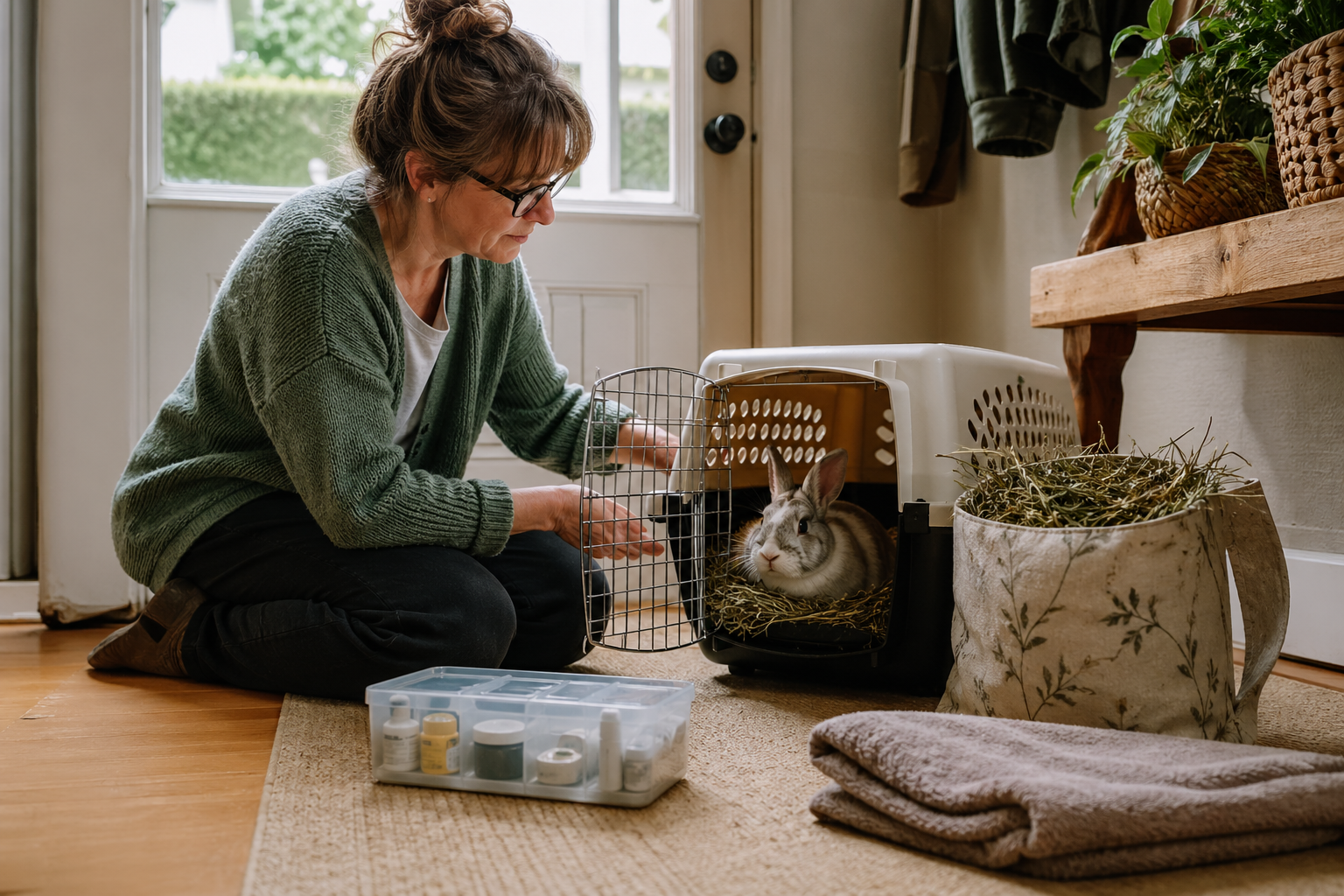
Build a rabbit emergency checklist around the room, not the bag
A lot of people love a go-bag. We get it. It feels productive. But your rabbit emergency checklist should be split into two parts:
- Grab-and-go bag
- Rapid room conversion plan
Because many real emergencies—wildfire smoke, hurricanes, blizzards, heat waves, tornado warnings, extended outages—mean you may be sheltering inside your home or a nearby home first.
The rabbit doesn’t care whether the crisis is “evacuation” or “shelter in place.” The rabbit cares whether the corner they land in is cold, loud, bright, slick, or unfamiliar.
Part 1: The grab-and-go bag
Keep this in one container by the exit. Not distributed across three drawers because you’ll remember where things are. You won’t. Not under pressure.
Your bag should include:
- A week of usual hay, packed in sealed bags
- Usual pellets in pre-measured portions
- Daily medications and dosing instructions
- Your vet’s contact information and nearest emergency exotics clinic
- A printed care sheet with your rabbit’s baseline habits
- Soft towels and fleece liners
- Non-slip bath mats or yoga mat pieces
- Portable pen panels or a compact enclosure
- Water bowl plus backup bottle if your rabbit uses both
- Nail scissors or grooming basics only if essential
- A familiar hide item
- Cleaning supplies for urine, stool, and litter changes
- Photos of your rabbit from multiple angles
- Carrier tags with your name, phone, and rabbit’s name
If your rabbit is under veterinary care, ask your clinic what should be included for your specific case. We’re not vets, and medication guidance should come from them—not a blog post.
For rabbit-specific health basics, resources from VCA Hospitals on rabbit care can help you sanity-check your setup.
Part 2: The rapid room conversion plan
This is where most guides go thin, and honestly, it’s the part that actually reduces panic.
Pick one room in your home that can become a senior-rabbit-safe zone in under 10 minutes. For many people, that’s a bedroom, laundry room, large closet area, or office corner. The point isn’t elegance. It’s control.
Your room conversion plan should answer these questions:
- Where does the pen go?
- What surface goes under it?
- Where is the darkest, quietest side?
- How will you block drafts?
- Where does the litter box sit relative to hay?
- Can you move through the room without stepping over the enclosure?
- Is there a nearby outlet for a fan, air purifier, or heating support if needed?
A customer once described clearing a guest room during a power outage and realizing the only open floor was between a rocking chair and a mirrored closet door. Their rabbit could see movement from all directions and never settled. They later shifted the setup against one wall, covered one side, and the rabbit finally started nibbling hay. Same supplies. Different geometry.
That’s the stuff people don’t tell you.
The “one armful” rule
Your setup should be possible in one armful of supplies plus the carrier. If it takes six trips and two extension cords and a shelving unit, it won’t happen cleanly in an emergency.
Use this test once a month:
- Put your rabbit supplies in their emergency bin.
- Carry the bin and carrier to your backup room.
- Set up the temporary zone.
- Time yourself.
If it takes more than 10 minutes, simplify.
That practice run does more for panic reduction than reading 20 articles.
A practical senior setup checklist
This is the no-nonsense version we’d actually want a friend to use.
| Zone Item | Senior Rabbit Standard | Common Mistake | Better Fix |
|---|---|---|---|
| Flooring | Non-slip fleece over grippy mat | Bare tile or hardwood | Layer bath mat under fleece |
| Litter box | Low-entry side, easy turn radius | High-sided box they must jump into | Cut-entry senior box or shallow tray |
| Food placement | Hay and pellets within easy reach | Spreading items apart for “enrichment” | Keep essentials tight during emergencies |
| Water | Heavy bowl, easy to find | New bottle only | Offer familiar bowl and backup |
| Hiding | One covered retreat, open exit | Too many tunnels in tiny space | One stable hide is enough |
| Lighting | Dim, indirect | Bright overhead lights all night | Use low lamp or cover part of pen |
The single paper sheet that saves you time
Make a one-page rabbit profile and tape a copy inside your emergency bin.
Include:
- Rabbit’s name, age, sex, weight
- Primary vet and emergency exotics contact
- Medications and exact schedule
- Typical eating pattern
- Normal stool output description
- Mobility issues
- Favorite foods that reliably tempt appetite
- Handling warning: “doesn’t like being lifted,” “vision limited on left side,” etc.
If someone else has to help you—neighbor, pet sitter, family member—that sheet is gold. In our experience, families assume they’ll be the one doing the care. Disasters don’t always honor that plan.
"The best checklist is the one a tired stranger can follow correctly."
Senior rabbit disaster preparedness at home: the corners, floor paths, and hidden hazards
Let’s talk about space. Actual space. Corners, doorways, bed frames, vents, wires, and that chair nobody sits in but somehow blocks the only clear path.
This is where a lot of panic starts. Not because you forgot love. Because your home wasn’t mapped for urgency.
Walk your evacuation route at rabbit height
Seriously. Get lower if you have to.
A senior rabbit carrier is awkward, and emergencies happen when hallways are darker, narrower, or more cluttered than you think. Shoes left near the bed. Laundry basket by the dresser. Phone cord on the floor. That little bench at the foot of the bed. In daylight it’s nothing. At 3 a.m. with weather alerts going off, it’s a snag point.
Your route from rabbit area to exit should be:
- Clear enough for one smooth carry
- Free of trip hazards
- Wide enough for carrier plus your knees turning corners
- Not dependent on opening a jammed storage door
- Practiced once in daylight and once at night
One of the most useful drills is a lights-low carry test. Not in total darkness—don’t be reckless. But do one run with only the lamps or hallway night lights you’d realistically have during an outage.
You’ll notice things fast.
Safe room placement matters more than decor
For shelter-in-place events, choose a room or zone that avoids:
- Exterior-facing drafty windows if temperature is unstable
- Loud appliance rumble
- Foot traffic
- Strong cooking smells
- Air fresheners, cleaners, or smoke exposure
- Direct HVAC blast
Rabbits have sensitive respiratory systems. The ASPCA’s emergency preparedness advice for pets is broad, but the principle applies here too: plan for air quality, containment, and easy transport ahead of time.
For seniors, also avoid distance inside the room. If the litter box is in one corner, hay in another, water in a third, and the hideout across the pen, you’ve created a little obstacle course for a body that may already hurt.
Set up “micro-zones”
This works ridiculously well.
Instead of one open area with scattered stuff, create a compact cluster:
- Resting pad
- Hide
- Hay
- Water
- Litter
All within 18 to 24 inches of one another if your rabbit has mobility issues.
That layout reduces decision fatigue and physical strain. People don’t usually think of animals having “decision fatigue,” but older rabbits do show it. If every essential requires crossing exposed space, some simply won’t bother.
And then humans say, “He’s not acting like himself.”
Right. Because the setup asked too much.
Temperature planning is not optional
Senior rabbits tend to handle extremes poorly. Heat is dangerous. Cold is stressful too—especially for thinner rabbits, those with reduced movement, or those already under the weather.
Make a seasonal room plan:
In hot weather
- Identify the coolest room in advance
- Keep frozen water bottles wrapped in fabric ready
- Use battery backup fans only to circulate air nearby, not blasting directly
- Close blinds before the room heats up
- Monitor for reduced appetite or lethargy
In cold weather
- Choose an interior room
- Add extra fleece layers
- Block floor drafts
- Keep carrier or pen off icy tile with insulating layers
- Watch for stiff movement worsening overnight
We’re not huge fans of improvising temperature control in the moment. Prep it before the season starts.
Noise planning: the part nobody thinks to rehearse
Thunder, sirens, generators, roofing noise, people talking loudly on speakerphone in the same room—these can keep an older rabbit in a high-alert state for hours.
What helps more than trying to “comfort” constantly is sound buffering:
- Put the setup against an interior wall
- Cover one or two sides of the pen or carrier with breathable fabric
- Use steady background sound if your rabbit is used to it
- Keep human movement predictable and slow
Counterintuitive, but true: over-checking can increase stress. If you keep looming over the enclosure every three minutes, your rabbit never gets a chance to settle.
Check intake, stool, temperature of the room, and posture. Then back off.
Personal Aside
We’ve seen this in pet families over and over: the chair by the window, the open middle of the room, the “nice big area” they thought would feel generous. But the rabbits that stabilize fastest are often in tighter, quieter setups with one wall behind them and everything within reach. Less Instagram. More nervous-system friendly.
"A senior rabbit doesn’t need a perfect room. It needs a room that asks less of its body."
The overlooked senior-rabbit supplies that matter more than the fancy stuff
If you search emergency pet gear, you’ll get a parade of backpacks, collapsible gadgets, and travel accessories. Some are useful. A lot are just product-shaped anxiety relief.
Here’s what actually earns its spot for senior rabbit disaster preparedness.
1. Traction layers
This is number one for a reason.
Pack at least two surface layers:
- A grippy base like yoga mat sections or bath mats
- A washable top like fleece or towels
Why two? Because senior rabbits may have urine accidents, cecotrope mess, or stress-related spills. You need a swap-out option without losing traction.
The mistake most people make is using only towels. Towels shift. The rabbit slips anyway.
2. A low-entry litter setup
If your rabbit already uses a modified litter box at home, your emergency setup should match that logic. Don’t assume they’ll adapt in a crisis.
A good emergency litter setup for a senior rabbit is:
- Stable
- Easy to step into
- Large enough to turn around
- Placed close to hay
- Easy to clean quickly
If your rabbit has chronic mobility problems, keep a backup shallow tray specifically for emergency use.
3. Familiar scent anchors
This one is underestimated because it sounds soft, not practical. But it is practical.
Pack one or two items that smell like home:
- A used blanket
- A fleece from the usual nap spot
- A hide box from the home setup
- A towel from under the bed or favorite corner
Familiar scent can reduce the “where am I?” alarm response enough to encourage eating. Not magic. But it helps.
4. Printed records, not just phone photos
Phones die. Service drops. Apps freeze.
Print:
- Recent rabbit photos
- Vet contact list
- Medication list
- Feeding notes
- Care instructions
And put them in a waterproof sleeve.
A rabbit emergency checklist on your phone is great. A printed copy is better when your battery is at 9%.
5. Appetite prompts your rabbit already trusts
Disaster time is not when you test a trendy “healthy treat.”
Keep a small stash of known safe, familiar appetite prompts your rabbit reliably accepts, based on your vet’s guidance and your rabbit’s history. The reason is simple: older rabbits often need a nudge to start nibbling. Once they begin, more normal intake sometimes follows.
But don’t overdo treats and accidentally replace fiber intake. Hay still does the heavy lifting.
6. Duplicate essentials in the carrier
This is the boring professional trick: put a micro-kit inside or attached to the carrier.
Include:
- ID card
- Small hay pack
- Pee pad or liner
- Towel
- Medication note
- Emergency contact number
If you have to leave in seconds, your carrier isn’t empty. That gap matters.
7. Photos that do double duty
Take clear current photos now—not during the emergency. Front, both sides, top, and a close-up of distinctive markings.
Those photos help with:
- Identification if you get separated
- Veterinary communication
- Care instructions for others
- And, later, tangible remembrance if you choose one
We’ve worked with many pet families at PawSculpt who came to us after a scare or after loss and realized the only photos they had were blurry couch snapshots. A sharp side profile, a favorite loaf pose, the white blaze between the eyes—those details matter. If you ever want a keepsake, full-color pieces from PawSculpt’s 3D pet sculptures are digitally sculpted by master 3D artists, then precision 3D printed in full color, which means markings are reproduced directly in the resin rather than added afterward. But even if you never order anything, those photos are worth taking now.
Your supply priorities, ranked
If you had to reduce the pile fast, use this order:
| Priority | Item | Why It Comes First |
|---|---|---|
| 1 | Carrier + ID + rabbit | Nothing else matters without safe transport |
| 2 | Hay + water setup | GI stability starts here |
| 3 | Medications + printed schedule | Missed doses hit seniors harder |
| 4 | Non-slip flooring | Prevents falls, pain, and panic |
| 5 | Low-entry litter option | Maintains normal elimination habits |
| 6 | Familiar scent/hide | Helps the rabbit settle enough to eat |
Not glamorous. Very effective.
Practice the rabbit emergency checklist before you need it
The ugly truth? Panic loves novelty. If every step is new, your body burns time deciding what to do next. Practice strips the drama out.
And that’s what you want. Less drama. More muscle memory.
Run a 12-minute drill once a month
That’s enough. You don’t need a military operation.
Set a timer and do this:
- Load the carrier
- Grab the emergency bin
- Move to your safe room or exit path
- Set up the temporary senior zone
- Place hay, water, litter, traction, and hide
- Check medication pouch and papers
- Write down what slowed you down
That last part matters. Most plans fail at the friction points people don’t notice until they rehearse them.
Common friction points:
- Carrier stored too high
- Pen panels tangled
- Hay bag ripped
- Meds expired
- No scissors for opening packaging
- Litter stored in a heavy container
- Emergency clinic number missing
- Room doubles as storage and can’t be cleared quickly
One family we heard from did their first drill and realized the rabbit’s carrier couldn’t fit cleanly through the half-open bedroom door because a shoe rack blocked the swing path. That sounds minor. It isn’t minor at 1 a.m. with smoke nearby.
Train for handling, not just transport
Aging rabbits often dislike being lifted even more than they used to. Pain changes tolerance.
So part of your rabbit emergency checklist should be a low-stress handling plan:
- Who lifts?
- Who opens doors?
- Is a towel wrap needed?
- Does the rabbit enter the carrier more calmly front-first or rear-supported?
- Can you lure in with hay rather than grab?
Practice brief, calm carrier entries when nothing bad is happening. Not constantly. Just enough that the carrier isn’t only associated with stress.
That’s one of the most overlooked pieces of senior rabbit disaster preparedness. You are not just preparing stuff. You are preparing associations.
Build a “24-hour away-from-home” test
If your rabbit is medically stable, consider a controlled practice setup in another room for a short period—not to stress them out, but to verify your plan works.
Observe:
- Do they find water quickly?
- Will they use the litter box?
- Do they settle with the hide placement?
- Are they slipping on turns?
- Can they reach hay without hopping farther than is comfortable?
You’re looking for setup flaws, not endurance.
Don’t forget the human side of the checklist
Here’s something the pet industry often won’t say straight: many pet emergency plans fail because the human is under-fueled, underslept, and disorganized. You can love your rabbit deeply and still make bad sequence decisions when your blood sugar is in the basement.
So put these on your checklist too:
- Shoes by the bed
- Flashlight where you can find it
- Phone battery pack charged
- Car keys in the same place every night
- A written list taped inside a cabinet or on the bin lid
This is not selfish. It protects your rabbit.
A simple monthly review template
Use this at the start of each month:
- Check meds for refill needs and expiration
- Refresh hay and pellets
- Wash and re-fold fleece and towels
- Update photos
- Review weather-season needs
- Confirm clinic numbers
- Inspect carrier hardware
- Do one timed drill
That’s maybe 20 to 30 minutes total.
And it’s worth it.
After the emergency: the first 48 hours matter most for seniors
People relax too early. That’s the trap.
Once the storm passes or the power returns or you reach a friend’s house, you may feel the crisis is over. For a senior rabbit, the aftershock period is often where problems surface.
This is especially true if they seemed “fine” during the event. Rabbits are prey animals. They can hold it together until they can’t.
What to monitor right away
For the first 48 hours, track:
- Appetite
- Water intake
- Fecal output
- Posture
- Willingness to move
- Breathing effort
- Ability to get in and out of litter area
- Signs of pain, such as tooth grinding, reluctance, hunched posture, or unusual irritability
If anything feels off, contact your vet or emergency exotics provider. We’re not going to play vet on the internet. With rabbits, waiting too long because you hope it will “settle” can go badly.
Keep the environment boring on purpose
After a disruption, people often want to “make it up” to the rabbit with extra handling, treats, a new room arrangement, more freedom, visitors checking in, or letting kids hover.
Don’t.
What usually helps is boring consistency:
- Same hay
- Same bowl
- Same hide
- Same approximate layout
- Minimal handling
- Quiet room
- Dim light overnight
Counterintuitive, but true: affection can be overstimulating in recovery. Calm beats cuddly.
Watch for delayed mobility issues
A senior rabbit may not show pain immediately after a move. But within a day, you may notice:
- Slower turns
- Hesitation entering the litter box
- Less grooming
- More time pressed into one corner
- Subtle slipping on surfaces they normally navigate
That can mean the setup aggravated arthritis or strain. Adjust the floor, reduce travel distance between essentials, and check in with your vet if symptoms persist.
Rebuild the normal map of the house
If your home was disrupted—furniture moved, rugs removed, cords exposed, blocked corners—you need to restore the rabbit’s navigation map quickly.
Older rabbits rely heavily on consistency. A shifted coffee table or a missing rug runner can genuinely throw them off.
Do a room reset:
- Put traction back first
- Return litter area to the familiar location
- Restore the usual food station
- Re-open only known-safe movement paths
- Remove temporary hazards before giving roaming time
We’ve heard from families who were shocked that their rabbit seemed “grumpy” for days after a home emergency. Often it wasn’t mood. It was orientation stress.
The emotional side no one likes to admit
Sometimes the emergency ends and you crash emotionally. You may feel guilt for fumbling, guilt for not leaving sooner, guilt for leaving too soon, guilt because your rabbit got stressed, guilt because another pet got more attention, guilt because you were scared and not perfectly gentle.
That’s common.
And honestly, the healthiest response is to turn that emotion into revision, not self-punishment. Update the checklist. Fix the setup. Replace the weak points.
That’s how care gets real.
"Preparedness isn't proof you expect disaster. It's proof you respect fragility."
If the worst happens, preserve what matters while it’s still close
This is the hard section, but it belongs here because practical care includes emotional reality.
For some families, a disaster or emergency is the moment they realize how little documentation they have of an older rabbit’s actual presence—the curve of the ears, the whisker pads, the color shift along the back, the tucked front paws under the dresser, the way they claimed the near corner of the bedroom rug.
If your rabbit is in advanced age, take the photos now. Not staged perfection. Real angles. Clear daylight. Favorite resting positions. The little asymmetries that made them them.
Some families make albums. Some keep a paw print. Some choose a tangible remembrance like memorial keepsakes for pets or a figurine after loss or after a close call. We’ve seen how grounding it can be to hold something physical after months of only seeing an empty pen corner or a food bowl no one bumps anymore. If that path feels right, PawSculpt creates full-color resin 3D prints that capture markings directly in the material, then receive a protective clear coat for durability and sheen. No one option is “best.” The best one is the one that gives your grief somewhere honest to land.
What to update after every incident
Even a minor one.
After any emergency, ask:
- What took too long?
- What item did we not use?
- What item did we desperately need?
- Did the room setup work?
- Did the rabbit eat within the first few hours?
- Were surfaces stable enough?
- Did we have enough medication?
- Were our photos current?
- Could another person have followed the plan?
Then rewrite the checklist that same week. Not “sometime later.” Memory gets generous. It starts telling you things went smoother than they did.
A realistic senior rabbit disaster plan for the next seven days
If all this feels like a lot, good news: you do not need to build the perfect system by tonight. You need a workable seven-day plan.
Here’s the direct version.
Day 1: Identify the weak point
Write down:
- Your rabbit’s age
- Known health issues
- What fails first under stress
- Current meds
- Best emergency room or exotics vet
That takes 10 minutes.
Day 2: Assemble the core bin
Put together:
- Hay
- Pellets
- Meds
- Towels/fleece
- Grippy mats
- Water setup
- Low-entry litter option
- Printed records
Don’t organize for social media. Organize for speed.
Day 3: Choose and clear the room
Pick one room or one corner. Remove hazards. Mark where the pen goes. Test the flooring.
Day 4: Update rabbit photos
Get:
- Front view
- Left side
- Right side
- Top view
- Favorite resting pose
- Distinctive markings close-up
These images are practical. They’re also precious later.
Day 5: Build the one-page profile
Tape a copy to the bin. Save another in your phone. Give one to anyone who might help.
Day 6: Run the 12-minute drill
Time it. Fix what’s annoying. Annoying becomes disastrous under pressure.
Day 7: Sit on the floor and look at the setup
Not joking. Sit where your rabbit would be.
What do you see? Draft under the door? Bright lamp? Big exposed gap? Water too far from hay? Litter box turn too tight?
That final floor-level check catches things standing adults miss.
The point isn't control. It's less panic and more dignity.
Disaster prep can slide into fantasy—the fantasy that if you buy enough things and make enough lists, nothing bad will happen. That’s not the promise.
The promise is smaller and more honest.
A good rabbit emergency checklist helps your hands work when your head is racing. Good senior rabbit disaster preparedness gives an older body softer landings: fewer slips, fewer harsh transitions, fewer hours spent trying to orient in a room that suddenly feels a mile wide.
And if you do one thing after reading this, do this: set up the room before you need the room. Clear the path from the bed. Put the mats where they’ll go. Pack the meds. Print the page. Take the photos.
Because the square of lamplight on the floor at 2 a.m. will look very different when you already know your next five moves.
Frequently Asked Questions
What should be in a rabbit emergency checklist for a senior rabbit?
Focus on function over volume. Your basics are a carrier, hay, pellets, water bowl, medications, printed records, non-slip flooring, a low-entry litter option, and one familiar hide or scent item.
For seniors, traction and medication matter more than fancy travel accessories. If your rabbit has mobility or GI issues, build the checklist around those first.
How often should I update senior rabbit disaster preparedness supplies?
Monthly is the sweet spot for most households. That’s frequent enough to catch low food, stale supplies, outdated medication notes, or old contact information before it becomes a problem.
Do one short drill during that monthly check. A checklist you’ve rehearsed works better than a beautiful one you’ve never used.
Why do senior rabbits need a different disaster plan than younger rabbits?
Because age changes what stress does to the body. Older rabbits are more likely to have arthritis, reduced balance, lower resilience, and appetite disruption after a move or loud event.
A younger rabbit may tolerate novelty and bounce back faster. A senior often needs tighter spacing, softer footing, and more careful observation in the first 24 to 48 hours.
Is it better to shelter in place or evacuate with a senior rabbit?
It depends on the threat. If your home is unsafe, leave. No question. But many real events start with a period of sheltering in place, which is why you need a room plan as much as a travel plan.
The strongest approach is to prepare for both: one packed bin, one ready carrier, and one safe room that can be set up fast.
What photos should I keep for my senior rabbit in an emergency?
Keep clear, current photos from the front, both sides, and above, plus close-ups of unique markings. Add one or two full-body shots in normal posture and one favorite resting pose.
These images help with identification, vet communication, and care instructions. They also become deeply valuable if you later decide to create a photo album, printed memory piece, or a figurine through a service like PawSculpt’s custom pet figurines.
Ready to Celebrate Your Pet?
Every pet has a story worth preserving. Whether you're honoring a beloved companion who's crossed the rainbow bridge or celebrating your furry friend's unique personality, a custom PawSculpt figurine captures those details that make your pet one-of-a-kind.
If this guide pushed you to take better photos, document markings, or think more seriously about senior rabbit disaster preparedness, that’s already a meaningful step. Those same careful details can also become a lasting tribute through a piece that’s hand-modeled digitally with care, then brought to life through full-color 3D printing.
Create Your Custom Pet Figurine →
Visit pawsculpt.com to learn more about our process and guarantees