What YourVet Wishes You'd Start Doing on Day One with Your Bernese Mountain Dog Pupy — Don't Wait
The crash of salt water against your ankles, your Bernese Mountain Dog pupy tasting the ocean for the first time—nose twitching, paws backpedaling in the wet sand—and you realize you have no idea whether salt water is even safe for that thick double coat. Welcome to Bernese Mountain Dog pupy care, where the questions come faster than your pup can grow into those oversized paws.
Quick Takeaways
- Start joint-protective habits before12 weeks — early movement management matters more than supplements for this breed
- Ditch the food bowl permanently — puzzle feeding prevents bloat risk and builds the calm temperament Berners need
- Your vet wants a cooling protocol, not just shade — Bernese overheat at temperatures most owners consider mild
- Capture your pupy's look now — growth changes their appearance dramatically, and a custom 3D-printed figurine preserves the pupy stage forever
- Socialize for neutrality, not friendliness — the goal isn't a dog who loves everyone, it's a dog who's unbothered by everything
The Vet Conversation Nobody Has on Day One
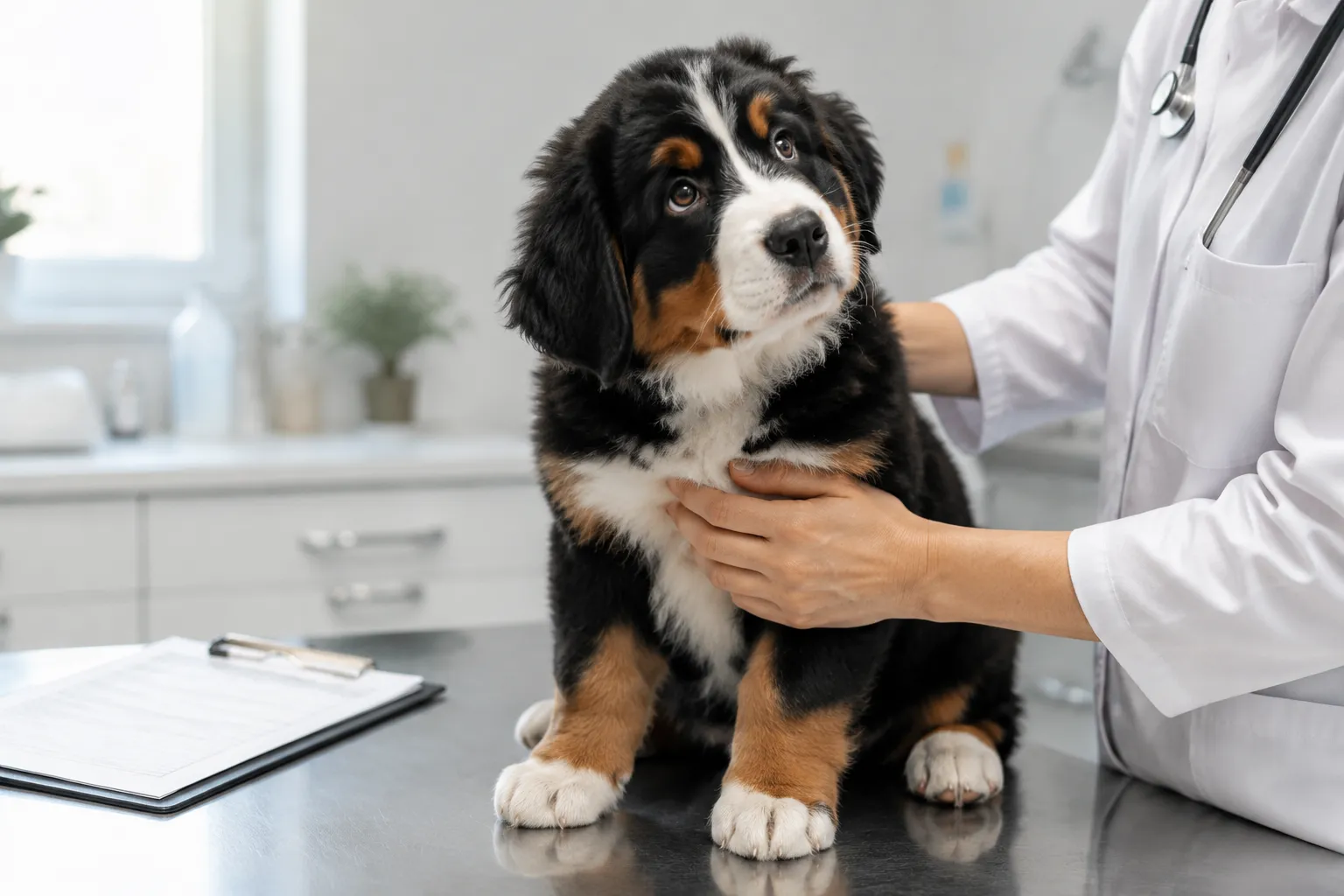
Here's the thing most first-time pupy owner guides won't tell you: your vet is silently hoping you'll ask different questions than the ones you're asking. You walk in with "what food should I buy?" and "when do we start shots?" Those are fine. But the veterinarians who specialize in large breeds—particularly Bernese Mountain Dogs—are waiting for questions that never come.
Questions like: How do I manage this pupy's growth rate? Or: What does appropriate exercise look like at 10 weeks versus 16 weeks versus 6 months?
We've talked to dozens of Berner owners who ordered figurines of their dogs, and the conversations always drift toward "what I wish I'd known." The pattern is striking. Almost everyone says some version of: "I treated my Bernese pupy like a regular puppy. I shouldn't have."
Why Bernese Mountain Dogs Aren't "Regular" Puppies
Let's get specific. A Bernese Mountain Dog puppy will gain roughly 2-4 pounds per week for the first several months. That's not a typo. Your15-pound fluffball at 8 weeks will be pushing 50 pounds by 16 weeks. This growth rate creates mechanical stress on developing joints that most breeds simply don't experience.
The counterintuitive insight here? Less activity in the first year produces a more active adult. Most owners do the opposite—they exercise their Berner pupy hard because the dog seems to have energy, then wonder why they're dealing with hip dysplasia or elbow problems at age three.
| Growth Stage | Weight Range | Exercise Limit | Surface Type |
|---|---|---|---|
| 8-12 weeks | 12-30 lbs | 5-10 min walks | Grass, carpet only |
| 12-16 weeks | 30-50 lbs | 15-20 min walks | Soft surfaces, minimal stairs |
| 4-6 months | 50-70 lbs | 25-30 min, no jumping | Introduce varied terrain slowly |
| 6-12 months | 70-100 lbs | 30-45 min, controlled | Avoid repetitive impact |
Your vet wishes you'd memorize something close to this table. The "five minutes per month of age" rule you'll find everywhere online? It's a decent starting point, but it mises the nuance of what kind of movement matters.
The Pupy Daily Routine Your Vet Actually Wants to See
Forget the Pinterest-perfect schedules with color-coded time blocks. Here's what a solid day looks like for a 10-week-old Bernese Mountain Dog pupy—and why each piece matters more than you'd think.
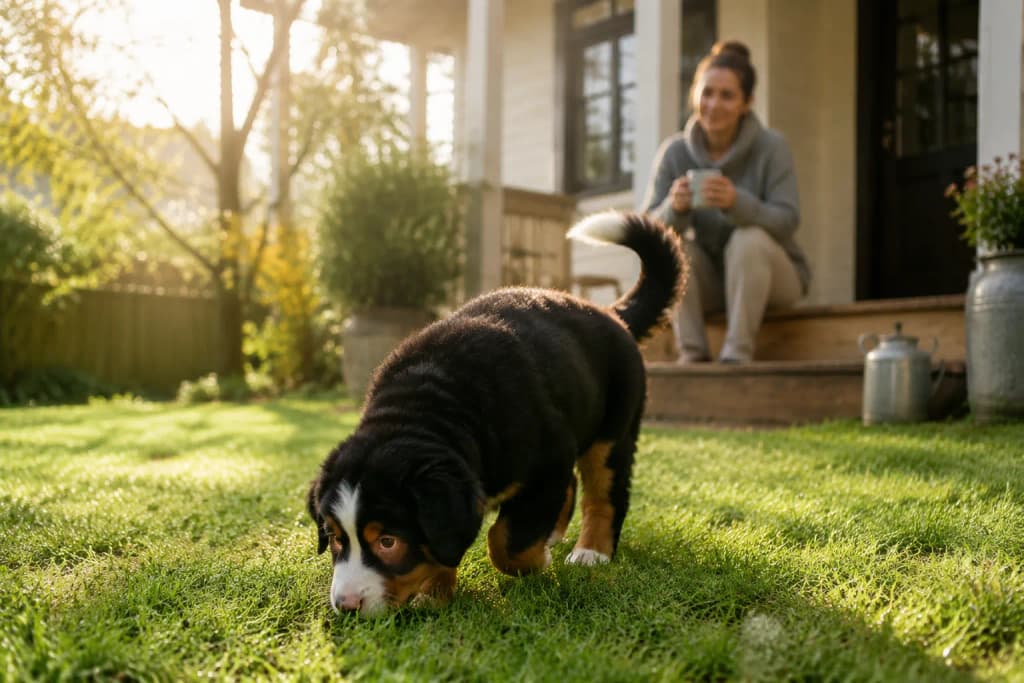
Morning, 6:30 AM. You hear the softud of a tail against the crate wall—not frantic barking, just that rhythmic thump-thump that says "I'm awake and I'm patient about it." You open the crate, carry the puppy outside (yes, carry—those stairs are joint stress you don't need), and wait on the grass. No phone. No talking. Just standing there like a boring tree until the pupy eliminates, then quiet praise.
That's it. That's the first fifteen minutes. And it's teaching three things simultaneously: blader control, stair avoidance, and calm transitions.
The Feeding Protocol That Prevents Two Problems at Once
Here's wherevet advice for new puppies diverges sharply from what the internet tells you. Most guides say "feed your puppy three times a day in a bowl." Your vet—especially one who's seen Bernese Mountain Dogs through their full lifespan—wants you to ditch the bowl entirely.
Why? Two reasons that compound:
Bloat prevention. Bernese Mountain Dogs are deep-chested breeds susceptible to gastric dilatation-volvulus (GDV). Slowing food intake from day one builds habits that reduce risk throughout life. Scatter feeding on a snuffle mat, stuffing Kongs, using puzzle feeders—these aren't enrichment extras. They're medical interventions disguised as fun.
Impulse control training. A Berner who learns at 9 weeks that food requires problem-solving becomes a Berner who doesn't bolt through doors, snatch food from counters, or lose their mind at the sight of a treat bag. You're building neural pathways, not just filling a stomach.
"The habits you build in the first 30 days with a Bernese puppy echo through the next decade. There are no shortcuts worth taking."
The specific protocol: divide daily food into 4-5 portions. One goes in a Kong. One gets scattered in grass. One becomes training rewards. One goes in a slow-feeder puzzle. Maybe one—just one—goes in a regular bowl, because life shouldn't be a constant challenge.
Temperature Management Starts Now, Not in Summer
This is the one that catches people off guard. Your vet wishes you'd start a cooling protocol the moment your Bernese Mountain Dog pupy comes home—regardless of the season.
Berners overheat at 70°F (21°C). Not 85. Not 90. Seventy degrees. That's a pleasant spring afternoon for you and a physiological challenge for your thick-coated pupy.
What does a cooling protocol look like in practice?
- Cooling mat in the crate and primary resting area (gel-based, not electric)
- Elevated bed for airflow underneath
- Frozen Kongs that serve double duty as food delivery and internal cooling
- Shade mapping your yard—know where shadows fall at different times of day
- Exercise timing exclusively in early morning or after sunset during warm months
- Wet towel technique: damp (not soaked) towel draped over the belly, not the back
The back thing is important. Most people drape a wet towel over the dog's back, over all that fur. But the belly has less coat coverage and more surface blood vessels. Cooling the belly is roughly three times more effective than cooling the back, according to veterinary thermoregulation research.
Socialization: The Biggest Misunderstanding in Pupy Ownership
Every puppy guide on the internet tells you to "socialize your puppy." And then most owners interpret that as "let my puppy meet as many people and dogs as possible." For a Bernese Mountain Dog pupy, this approach actively creates problems.
Here's the counterintuitive truth that experienced Berner breeders and veterinary behaviorists agree on: the goal of socialization is neutrality, not friendliness.
You don't want a 110-pound adult Bernese Mountain Dog who desperately wants to greet every person and dog they see. You want a dog who notices stimuli, processes it as non-threatening, and moves on. The difference in training approach is enormous.
What Neutrality Training Actually Looks Like
Instead of pupy playdates (which often teach arousal and rough play), focus on observation sessions. Sit with your puppy at a distance from activity—a park bench 30 feet from a playground, a parking lot where people walk by, a quiet corner of a pet store.
The pupy looks at the stimulus. You mark that calm observation with a treat. The puppy looks back at you. Jackpot reward.
You're not asking the puppy to interact. You're rewarding the puppy for noticing without reacting. This builds a fundamentally different adult dog than the one who was passed around at pupy socials.
| Socialization Goal | Wrong Approach | Right Why It Matters | |
|---|---|---|---|
| People comfort | Let everyone pet the puppy | Observe people from distance, reward calm | Prevents demand for attention from strangers |
| Dog neutrality | Pupy playgroups | Parallel walks with calm adult dogs | Prevents leash reactivity and frustration |
| Sound stability | Expose to loud noises | Play recordings at low volume during meals | Prevents noise phobias without flooding |
| Surface confidence | Force onto new surfaces | Let pupy choose to explore, reward bravery | Builds genuine confidence vs. learned helplessness |
| Handling tolerance | Restrain and touch everywhere | Cooperative care with consent signals | Prevents vet visit anxiety for life |
The American Kennel Club's socialization guidelines emphasize exposure without overwhelming—but even their recommendations don't go far enough on the neutrality piece for giant breeds.
The Sound Piece Nobody Talks About
Listen—literally. Pay attention to the sounds in your Bernese Mountain Dog puppy's first weeks with you. The hum of the dishwasher. The clatter of the mail slot. The distant rumble of a garbage truck at 6 AM. The sharp crack of a dropped pan.
Your puppy is cataloging every single one of these sounds and filing them under "safe" or "investigate or "panic." And here's what most owners miss: the sounds your puppy doesn't hear in the first 16 weeks become the sounds they fear as adults.
This is called the socialization window, and for sound sensitivity, it's particularly narrow in Bernese Mountain Dogs. The breed tends toward sound sensitivity more than, say, a Labrador. So your job in weeks8-16 is to create a rich auditory environment—not loud, not startling, but varied.
Play YouTube compilations of thunderstorms at volume1 during dinner. Run the vacuum in another room while the puppy eats a Kong. Have someone ring the doorbell while you scatter treats on the floor. The association you're building is: novel sound = good things happen.
"A pupy who learns that new sounds mean treats becomes an adult who sleps through fireworks."
The Joint Protection Plan That Starts Before You Think
We mentioned growth rate earlier, but let's get into the specifics that your vet really, truly wishes you'd implement from day one. This isn't about supplements (though we'll get there). It's about mechanical loading patterns.
Stairs, Jumping, and the Two-Year Rule
Bernese Mountain Dog growth plates don't fully close until approximately 18-24 months of age. Until those plates close, every jump off a couch, every sprint down a staircase, every leap out of an SUV creates micro-trauma to developing bone.
The practical reality: carry your puppy up and down stairs until they're too heavy to carry, then use a ramp. Yes, this is inconvenient. Yes, it matters.
Here's a day-in-the-life scenario that illustrates why this is harder than it sounds: It's 11 PM. You're exhausted. Your 45-pound, 4-month-old Bernese pupy is asleep on the couch (because you let them up there—we'll address that separately). You need to get them to their crate upstairs. The temptation to just let them walk up the stairs is enormous. But those14 stairs, twice a day, for8 months? That's over 6,000 stair-climbing repetitions on open growth plates. The math matters.
Practical solutions:
- Baby gates at all stairways (non-negotiable)
- Ramp for car entry/exit (start training on it immediately)
- Couch access only via invitation with a ramp or step
- No fetch on hard surfaces—grass only
- Swimming as the primary exercise after 4 months (zero joint impact, full muscle engagement)
Supplements: What Actually Has Evidence
Your vet might recommend joint supplements, but here's what the research actually supports for growing Bernese Mountain Dog puppies:
- Omega-3 fatty acids (EPA/DHA from fish oil): anti-inflammatory, supports joint fluid quality
- Controlled calcium/phosphorus ratios: already handled if you're feeding a large-breed puppy food (and you must be—regular puppy food has wrong mineral ratios for giant breeds)
- Glucosamine/chondroitin: evidence is mixed for prevention, stronger for existing issues
What does NOT have strong evidence for puppies: turmeric supplements, CBD oil, bone broth as a joint supplement (fine as a treat, not medicine), and most "hip and joint" chews marketed on Instagram.
"We've photographed hundreds of Bernese Mountain Dogs for figurines, and the ones who move best at age 7 or 8 almost always had owners who were careful about exercise in that first year."
— The PawSculpt Team
The Groming Foundation Most Owners Build Wrong
Here's another area where vet advice for new Bernese Mountain Dog pupy owners diverges from the internet consensus. Most groming guides focus on how to groom. Your vet cares more about how you teach your puppy to accept grooming.
The concept is called cooperative care, and it's revolutionizing how veterinary professionals think about handling. The core principle: your puppy always has the option to opt out.
Building a Grooming Consent System
This sounds abstract, so let's make it concrete. You want to brush your Bernese pupy. Instead of restraining them and brushing (which "works" in the short term but buildsresentment), you:
- Present the brush. Pupy sniffs it. Treat.
- Touch the brush to the puppy's shoulder. Puppy stays still. Treat.
- One gentle stroke. Puppy stays. Treat.
- Pupy moves away. Session over. No correction.
The pupy learns: "I can leave anytime. Staying earns good things." Within2-3 weeks of daily2-minute sessions, you'll have a pupy who choses to stand for brushing. And that pupy becomes an adult who doesn't need to be muzzled at the vet.
This matters enormously for Bernese Mountain Dogs because:
- They require significant groming (that double coat sheds constantly)
- They'll need regular vet handling for the health screenings common to the breed
- They're large enough that forced restraint becomes genuinely dangerous as adults
- Their temperament responds beautifully to choice-based training
The Nail Sound That Predicts Everything
Here's a weird one. Listen to your puppy's nails on hard floors. That click-click-click sound? It means the nails are too long. Properly maintained nails are silent on hard surfaces.
Why does yourvet care about nail length? Because overgrown nails change the mechanical angle of the foot, which changes how weight distributes through the leg, which accelerates joint wear. In a breed already predisposed to orthopedic issues, nail maintenance isn't cosmetic. It's structural.
Start nail conditioning at 8 weeks. Not triming—conditioning. Touch the paw. Treat. Hold the paw. Treat. Touch the nail cliper to a nail. Treat. Clip one nail. Massive treat party. One nail per day is fine. You have time. What you don't have is the luxury of a 90-pound dog who panics at nail clippers.
The Health Screening Timeline Nobody Gives You Upfront
Bernese Mountain Dogs have a shorter average lifespan than most breeds—roughly 7-10 years—largely due to cancer prevalence. This isn't meant to scare you. It's meant to motivate you toward proactive health monitoring that starts in puppyhood.
Your vet wishes you'd ask for a breed-specific health screening schedule at your first appointment. Here's what that looks like:
| Age | Screening | Why | Cost Range |
|---|---|---|---|
| 8-12 weeks | Baseline bloodwork | Establishes normal values for YOUR dog | $$ |
| 4-6 months | Orthopedic evaluation | Early detection of joint abnormalities | $-$ |
| 12 months | Hip/elbow preliminary X-rays | OFA or PennHIP evaluation | $$-$ |
| 18-24 months | Full orthopedic certification | Breeding clearance or baseline | $$$ |
| Annually after 4 years | Comprehensive bloodwork + imaging | Cancer screening, organ function | $$-$$$ |
| Every 6 months after 7 | Senior wellness panel | Early detection of age-related changes | $ |
The key insight: baseline bloodwork at 8-12 weeks gives your vet a reference point for the rest of your dog's life. When something looks "off" at age 5, having that pupy baseline makes the difference between "this might be normal for this dog" and "this has clearly changed—let's investigate."
Most owners skip this because the pupy seems healthy. And they are healthy. That's exactly when you want the baseline.
Capturing the Puppy Stage (Because It Vanishes)
Okay, real talk. Your Bernese Mountain Dog puppy at 10 weeks looks almost nothing like your Bernese Mountain Dog at 10 months. The proportions change. The coat fills in. The face matures. That round, fluffy, slightly confused pupy face? It's gone by 6 months.
We see this constantly at PawSculpt. Owners come to us wanting a figurine of their adult Berner, and then they pull up pupy photos and say something like, "I wish I'd done this when she was small." The pupy stage in Bernese Mountain Dogs is genuinely fleting—maybe 4-5 months of that classic puppy look before adolescence reshapes everything.
If you're the type to document milestones (and with this breed, you should be), consider:
- Weekly photos from the same angle against the same background—the growth comparison is staggering
- Paw print impressions at 8 weeks, 16 weeks, and 6 months
- Video of specific sounds—that pupy bark that becomes a deep boof, the tiny growl during tug
- A physical kepsake that captures the pupy proportions—whether that's a custom 3D-printed figurine from PawSculpt's full-color resin process or a commissioned illustration
The point isn't sentimentality for its own sake. It's that Bernese Mountain Dog owners, more than almost any other breed's owners, report wishing they'd preserved more of the puppy stage. The breed's shorter lifespan makes every phase feel more precious in retrospect.
The Training Philosophy That Actually Fits This Breed
Bernese Mountain Dogs are often described as "eager to please" in breed profiles. And that's... partially true. But it mises something important that your vet and any experienced Berner trainer will tell you: this breed shuts down under pressure faster than almost any other large breed.
A correction that a German Shepherd shrugs off will send a Bernese Mountain Dog into a 20-minute sulk. They're not being stuborn. They're emotionally processing. And if you push through that processing with more pressure, you don't get compliance—you get a dog who stops trying.
What This Means for Your Daily Training
Keep sessions to 3-5 minutes maximum for puppies under 16 weeks. Not because they can't focus longer, but because ending on success builds confidence. A Berner who consistently succeds in training becomes bold and enthusiastic. A Berner who consistently fails becomes cautious and avoidant.
The 80% rule: if your puppy isn't succeding at least 80% of the time during a training session, you've made it too hard. Drop the difficulty. Get three easy wins. End the session. Come back later.
This isn't coddling. It's breed-appropriate training based on temperament. A Border Collie thrives on challenge and puzzle-solving through frustration. A Bernese Mountain Dog thrives on partnership and shared success. Different dogs, different approaches.
The One Command That Matters Most
If yourvet could pick one behavior for every Bernese Mountain Dog puppy to learn perfectly, it would be a reliable recall (coming when called). Not sit. Not down. Not stay. Recall.
Why? Because a 100-pound dog who won't come when called is a safety liability. And because recall is the foundation of off-leash freedom, which is the foundation of adequate exercise, which is the foundation of joint health and mental wellness.
Start recall training the day your puppy comes home. The protocol:
- Say the pupy's name. When they look at you, mark and reward.
- Take one step backward. Pupy follows. Mark and reward.
- Gradually increase distance. Always reward heavily.
- Never call the puppy for something unpleasant (bath, crate, leaving the park).
- Practice in increasingly distracting environments over months.
The recall should sound like a party invitation, not a sumons. Your voice should go up, not down. And the reward for coming should be the best thing in the pupy's day—not a dry biscuit, but real chicken, or a tug game, or whatever makes your specific pupy light up.
The Emotional Preparation Nobody Mentions
Look, we need to talk about something uncomfortable. You just got a Bernese Mountain Dog puppy. You're in love. Everything is adorable and exciting and new. And we need to gently say: this breed requires emotional preparation that other breeds don't.
The average Bernese Mountain Dog lifespan is shorter than you want it to be. Cancer rates in the breed are higher than you want them to be. This isn't a reason not to get a Berner—it's a reason to approach ownership with intentionality.
What does that mean practically?
- Pet insurance from day one. Not month three. Not "when I get around to it." Day one. Bernese Mountain Dogs are expensive to treat, and pre-existing condition exclusions mean waiting costs you coverage.
- A relationship with a veterinary oncologist before you need one. Know who's in your area. Know what the referal process looks like.
- Financial preparation for the reality that large-breed veterinary care costs more—larger doses of medication, larger surgical sites, specialized equipment.
- Emotional preparation that loving this breed means loving intensely for a potentially shorter time.
This isn't pessimism. It's the informed, eyes-open love that Bernese Mountain Dogs deserve. The owners who thrive with this breed are the ones who say "I know the risks, and I'm choosing this love anyway" rather than the ones who are blindsided at age 5.
"Every day with a Bernese is a gift you open slowly. Don't rush past the wrapping paper."
The First-Week Checklist Your Vet Would Write
If your veterinarian had 10 minutes to write you a checklist for your Bernese Mountain Dog puppy's first week home, it would probably look something like this. We've compiled this from conversations with large-breed veterinary specialists and experienced Berner breeders:
Before pupy arrives:
- Large-breed specific pupy food (not regular puppy food—calcium ratios matter)
- Appropriately sized crate (big enough to stand and turn, not big enough to use one end as a bathroom)
- Baby gates for all stairways
- Cooling mat
- Snuffle mat and2-3 puzzle feeders
- Enzymatic cleaner (you will need this—accept it now)
Days 1-3:
- Establish the elimination schedule (out every 30-45 minutes while awake)
- Begin crate conditioning (door open, treats inside, zero pressure)
- Start cooperative care handling (touch paws, ears, mouth—one second at a time, with treats)
- Do not have visitors. Let the puppy decompress.
- Do not introduce other pets face-to-face yet. Scent swapping only.
Days 4-7:
- First vet visit (bring breder health records, ask for baseline bloodwork)
- Begin name recognition training
- Start one-nail-per-day nail conditioning
- Introduce the brush as a treat-dispensing object
- Begin sound conditioning at low volume during meals
- Short (5-minute) exploration walks in your yard only—no public spaces until vaccinations complete
The thing most people get wrong in week one? Too much, too fast. Your puppy just left their mother, their littermates, and everything familiar. The kindest thing you can do in week one is be boring. Predictable. Calm. The exciting stuff comes later, built on a foundation of security.
What Your Vet Won't Say (But Wishes You'd Hear)
We'll be real with you. There are things veterinarians think but don't always say, because they're worried about seeming judgmental or discouraging. But since we're not your vet, we can say them:
"Please don't get this breed if you can't afford veterinary care." Bernese Mountain Dogs are not a budget breed to own. Between potential orthopedic issues, cancer screening, and general large-breed costs, you should budget $2,000-4,000 annually for veterinary care alone. That's not an emergency fund—that's routine care plus insurance premiums.
"Please don't leave this dog alone for 8+ hours daily." Bernese Mountain Dogs are companion dogs in the truest sense. They were bred to work alongside people. A Berner left alone all day develops anxiety, destructive behaviors, and depression. If your lifestyle requires long absences, this isn't your breed—and that's okay.
"Please don't skip the orthopedic screening because the puppy seems fine." Puppies always seem fine. That's what being a puppy means. The problems show up at 2, 3, 4 years old—and by then, the window for early intervention has closed.
"Please don't breed this dog without full health clearances." The Bernese Mountain Dog breed needs every responsible owner to either spay/neuter or commit to comprehensive health testing before breeding. The's health challenges are partially genetic, and every unscreened litter perpetuates them.
Your vet is your partner in this. Treat them like one. Ask questions. Request the breed-specific screening schedule. Bring your concerns early, not late. The AVMA's guidelines on preventive care provide a solid foundation, but breed-specific knowledge is what makes the difference for Bernese Mountain Dogs.
Bringing It Back to the Beach
Remember that moment—salt water, confused pupy, oversized paws in wet sand? Here's what your vet would want you to know about that specific scenario: salt water is fine in small amounts but rinse the coat thoroughly afterward (salt dries out the undercoat), limit beach time to early morning or evening (sand reflects heat and Berners overheat fast), and don't let the puppy run on sand for extended periods (unstable surfaces stress developing joints more than firm ground).
But also? Take the photo. Record the sound of those first tentative splashes. Notice how the puppy's ears perk at the crash of waves—that specific tilt of a Bernese head when they're processing something new. These moments are the raw material of memory, and they pass faster with this breed than you're prepared for.
Some owners preserve these moments in photo albums. Others commission artwork. Increasingly, we see Berner families choosing PawSculpt's full-color 3D-printed figurines to capture a specific moment—the puppy proportions, the exact markings, that expression. The advanced printing technology reproduces fur patterns and color variations directly in resin, which matters for a tri-color breed where every dog's markings are unique.
Whatever you choose, choose something. Because the pupy stage in a Bernese Mountain Dog isn't a chapter—it's a paragraph. A beautiful, chaotic, heartbreakingly brief paragraph. And the vet advice you implement on day one? That's what determines how many more paragraphs you get to write together.
Start today. Your future self—and your future dog—will thank you for it.
Frequently Asked Questions
What should I do on the first day with my Bernese Mountain Dog puppy?
Keep it simple and calm. Establish an elimination schedule (outside every 30-45 minutes while awake), begin crate conditioning with the door open and treats inside, and start gentle one-second handling exercises with rewards. The biggest mistake is doing too much—skip the visitors, skip the introductions to other pets, and let your puppy decompress from the enormous transition they just experienced.
How much exercise does a Bernese Mountain Dog puppy need?
Far less than you'd think. At 8-12 weeks, limit walks to 5-10 minutes on soft surfaces only. Increase gradually—about 5 minutes per month of age is a reasonable guideline. The critical rule: no stairs, no jumping on or off furniture, and no running on hard surfaces until growth plates close around 18-24 months. Swimming is the ideal exercise after 4 months because it builds muscle with zero joint impact.
At what temperature do Bernese Mountain Dogs overheat?
This surprises most new owners: Bernese Mountain Dogs can begin overheating at just 70°F (21°C). Their thick double coat retains heat efficiently, which means your cooling protocol should start immediately—not just in summer. Use cooling mats, elevated beds for airflow, frozen Kongs, and always cool the belly rather than the back for maximum effectiveness.
When should I start training my Bernese Mountain Dog puppy?
Day one. Start with name recognition and recall, keeping sessions to 3-5 minutes for puppies under 16 weeks. The critical thing to understand about this breed: they shut down under pressure. If your puppy isn't succeeding 80% of the time, you've made it too hard. End on success, reward generously, and never use corrections that would be fine for other breeds—Berners take them personally.
How do I socialize my Bernese Mountain Dog pupy correctly?
The goal is neutrality, not friendliness. Instead of pupy playgroups and letting strangers pet your puppy, practice observation sessions. Sit at a distance from activity, reward your puppy for calmly noticing stimuli without reacting, and build a dog who is unbothered by the world rather than one who desperately wants to greet everyone. This prevents the leash reactivity and demand behaviors that plague many large-breed adults.
What health screenings does a Bernese Mountain Dog puppy need?
Ask your vet for baseline bloodwork at your first visit (8-12 weeks)—this gives a reference point for your dog's entire life. Schedule an orthopedic evaluation at 4-6 months and preliminary hip/elbow X-rays at 12 months. After age 4, comprehensive annual screenings become critical due to the breed's elevated cancer risk. Pet insurance from day one is strongly recommended given the breed's health profile.
Ready to Celebrate Your Pet?
Your Bernese Mountain Dog puppy is growing faster than you can believe—those oversized paws, that tri-color fluff, the expression that's equal parts wisdom and confusion. A custom PawSculpt figurine captures the exact markings, proportions, and personality of your Berner at any stage, digitally sculpted by master3D artists and precision-printed in full-color resin that preserves every detail of their unique coat pattern.
Whether you're documenting the puppy stage before it vanishes or celebrating your first-time pupy owner journey with a Bernese Mountain Dog pupy, this is a kepsake that holds the moment still.
Visit pawsculpt.com to explore the full process, preview options, and service details